
Finding the ideal writing instrument for school in the Philippines requires balancing smooth performance, neatness, and affordability. For students managing heavy workloads, a reliable erasable gel pen 12 pcs pack offers a practical solution to keep notebooks tidy and free of messy correction tape. The best option for local students must balance smooth gel ink flow with clean, tear-free erasability on standard school paper. Because Filipino classrooms often utilize a wide range of paper types—from thin, fibrous intermediate pads to smoother, higher-grade notebook sheets—the pen’s performance must remain predictable across different textures.
Opting for a 12-pack is a highly practical choice for school supplies. It provides a significant cost-efficiency advantage over buying single pens, ensures consistent ink quality across the entire set, and reduces the frequency of last-minute trips to the bookstore during busy academic semesters. Furthermore, quick-drying ink properties are vital to prevent smudging. This feature is especially critical for left-handed students or anyone taking rapid lecture notes in warm, humid classrooms where sweat and ambient moisture can easily smear slow-drying ink. Ultimately, true writing smoothness and clean erasing depend heavily on the specific paper-pen combination. Students should prioritize pens that offer predictable, real-world performance over flashy marketing claims.
Core Criteria for Choosing Student Erasable Pens
Selecting the right writing tools involves understanding how ink interacts with the paper surfaces commonly used in Philippine schools. Standard school stationery, such as intermediate pads, graphing paper, and spiral-bound notebooks, varies widely in quality, thickness, and fiber density. A high-quality erasable gel pen must deposit enough ink to create a clear, legible line without saturating the paper fibers to the point of tearing during erasure. When students write rapidly during lectures, the pen must glide effortlessly, requiring minimal hand pressure to prevent physical fatigue over long writing sessions.
Products mentioned in this guide
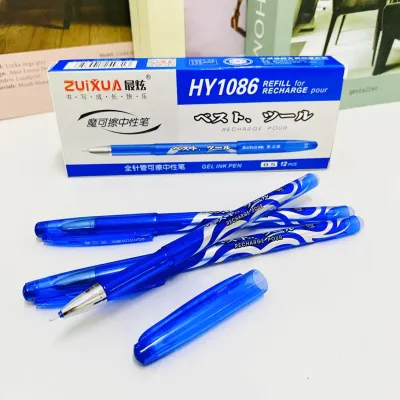
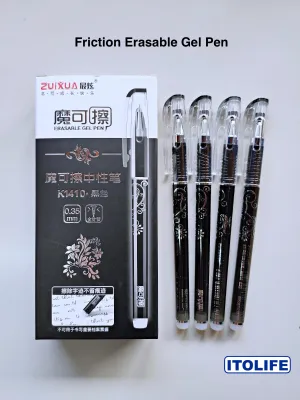
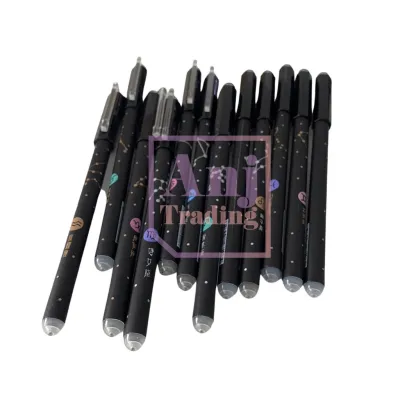
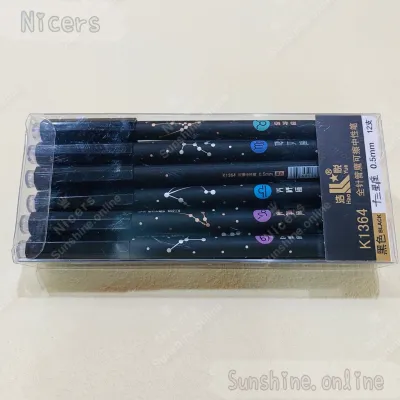
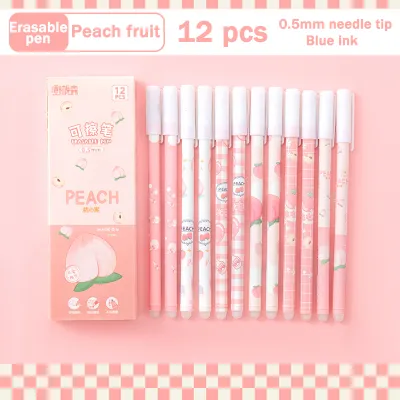
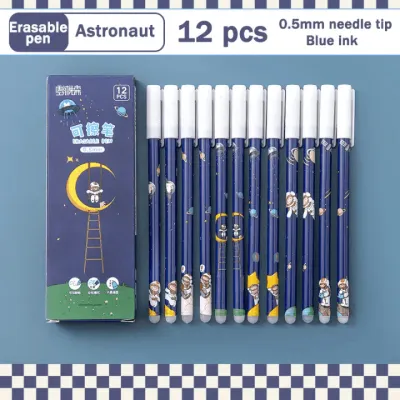
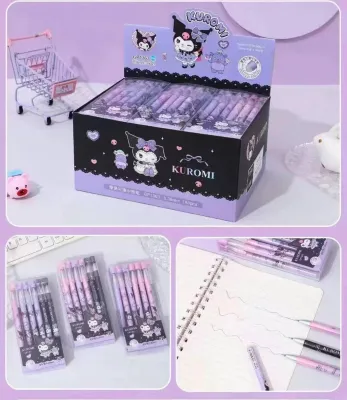
Prices are valid at publication and may change. Please refer to the product page for the latest price.
The practicality of purchasing an erasable gel pen 12 pcs set lies in its long-term economy and convenience. A typical student can easily consume several pens over a single semester through daily note-taking, homework assignments, and exam preparation. Buying a 12-pack ensures a continuous supply of identical writing instruments, eliminating the frustration of switching between different pen brands with varying line widths and ink behaviors. It also provides a buffer against accidental loss, a common occurrence in busy classrooms.
Drying speed is another critical factor that directly affects the usability of erasable gel pens. Gel ink is inherently water-based, meaning it requires time for the liquid carrier to evaporate or absorb into the paper. In the tropical climate of the Philippines, where relative humidity levels are consistently high, ink drying times can be significantly prolonged. This delay increases the risk of accidental smearing as hands move across the page. Students must seek formulas designed to dry rapidly upon contact with the paper, ensuring that notes remain pristine even during fast-paced dictations.
Ultimately, a pen’s performance is highly subjective and depends on the specific paper-pen pairing. A pen that writes smoothly on thick, coated bond paper may feather or bleed on thin, uncoated pad paper. Therefore, evaluating erasable pens should focus on finding a versatile option that delivers consistent, predictable results across multiple paper grades rather than relying solely on generic performance promises.
Essential Specs to Verify on 12-Pack Packaging
Before purchasing an erasable gel pen 12 pcs set, students should carefully inspect the product packaging and technical specifications to ensure the pens match their academic needs.

Tip Size
The choice between tip sizes significantly affects both writing style and ink consumption. A 0.5mm fine tip is ideal for students who have small, compact handwriting, need to write complex mathematical equations, or must squeeze detailed marginal notes into textbook borders. Fine tips consume less ink and are less likely to bleed through thin, low-grade school paper, such as typical newsprint notebooks. Conversely, a 0.7mm medium tip offers a bolder line and a generally smoother gliding sensation across the page. However, 0.7mm tips consume ink much faster and carry a higher risk of bleeding or feathering on thin paper, making them better suited for thicker bond paper or drawing tasks.
Erasing Mechanism Identification
It is crucial to identify whether the 12-pack utilizes friction-based (thermo-sensitive) or chemical-based erasing. This information is typically found in the product description, on the back of the carded packaging, or printed directly on the pen barrel. Friction-based pens feature a built-in hard silicone or rubber tip that generates heat when rubbed against the paper, rendering the ink invisible. Chemical-erasable pens rely on a softer, traditional rubber eraser to physically lift the ink pigment off the page. Knowing this distinction helps students predict how the ink will behave under different environmental conditions.
Refill Compatibility
To maximize the long-term value of a 12-pack, check if the pen body is compatible with standard, easily obtainable refills. Purchasing a bulk pack of pens whose barrels must be discarded once the ink runs out is neither cost-effective nor environmentally friendly. Verifying that standard refill cartridges fit the pen barrels allows students to reuse the outer shells throughout the entire school year, saving money in the long run.
Grip and Barrel Design
Long study sessions, essay writing, and multi-hour examinations can cause significant hand fatigue. Students should look for pens featuring ergonomic rubber grips or textured barrels that provide a secure, comfortable hold. A soft, slip-resistant grip is particularly beneficial in the tropical climate of the Philippines, where humid weather and warm classrooms can cause fingers to sweat and slide off smooth plastic barrels.
Friction vs. Chemical Erasable Ink: Which Fits Your Study Style?
Choosing the right erasable ink technology is not just about personal preference; it directly impacts how well notes survive over time and how cleanly mistakes can be corrected. The two primary erasable ink technologies available in the market perform very differently under various study environments, especially when subjected to local climate factors.
Friction-Erasable (Thermo-Sensitive) Pens
Friction-erasable pens utilize a specialized thermo-sensitive ink formula. When you rub the integrated silicone tip against the paper, the resulting friction generates localized heat. Once the temperature reaches a specific threshold (typically around 60°C), the ink undergoes a chemical reaction that makes it completely transparent. This process leaves the paper surface undamaged, allowing you to write over the erased area immediately without any paper tearing.
However, the primary limitation of thermo-sensitive ink is its vulnerability to heat. In the Philippines, where ambient temperatures can soar during the summer, leaving a notebook inside a parked car, under direct sunlight on a desk, or near a hot laptop exhaust can cause entire pages of notes to temporarily disappear. If this occurs, the ink can often be restored by placing the affected paper inside a household freezer for a short period, though this may also cause previously erased mistakes to reappear. Consequently, friction-erasable pens are highly recommended for everyday drafting, casual note-taking, and brainstorming sessions where permanent archival quality is not necessary.
Chemical-Erasable (Rubber-Erasable) Pens
Chemical-erasable pens use a different formulation where the ink pigment sits on top of the paper fibers rather than absorbing deeply into them. To erase mistakes, you use a specialized rubber eraser to physically lift and scrape the ink particles off the surface. Because this process is purely mechanical and does not rely on temperature, notes written with chemical-erasable pens will not fade or disappear when exposed to high heat or tropical weather.
The main drawback of this technology is the physical wear on the paper. Aggressive or repeated erasing in the same spot can cause thin school paper to pill, fray, or even tear. It can also leave behind “ghosting” or faint smudges if the eraser is dirty or if the ink has cured on the page for too long. Additionally, chemical-erasable pens generally offer fewer color options and a slightly scratchier writing feel compared to their thermo-sensitive counterparts. This type is best suited for students who prioritize heat-stable notes and do not mind taking extra care when erasing mistakes.
Testing and Maintaining Your New 12-Pack
To ensure a newly purchased erasable gel pen 12 pcs pack performs reliably throughout the school year, students should practice proper testing and maintenance.
Initial Testing
Upon receiving a new 12-pack, it is wise to test a single pen on the exact paper medium intended for daily school use, such as an intermediate pad or a standard spiral notebook. Observe how long the ink takes to dry completely to establish a baseline for preventing smudges. Check for feathering (where the ink spreads sideways along the paper fibers) and bleed-through on the reverse side of the sheet. Finally, perform a test erase to see how cleanly the ink lifts and whether the paper fibers remain intact. Practicing this trial before opening or using the entire pack helps verify compatibility with your school stationery.
Proper Storage
Gel pens should ideally be stored horizontally or tip-down in a pencil case or desk organizer. Storing them tip-up can cause the gel ink to flow away from the writing nib, leading to air pockets, skipping, or dry starts. For thermo-sensitive pens, store them in a cool, shaded area. Avoid leaving your pencil case on sunny window sills, near cooking appliances, or close to electronic devices that generate significant heat.
Reviving Clogged Tips
If a pen begins to skip or write faintly, the tip may have a minor clog or a tiny air pocket. A safe, reversible method to clear this is to scribble in continuous, gentle circles on a clean rubber surface, such as a clean eraser, or a slightly damp paper towel. This friction can help dislodge dried ink particles and restore smooth capillary flow. Avoid using harsh household chemicals, solvents, or extreme heat sources, as these can permanently damage the delicate ball-and-socket mechanism of the metal tip.
Cap Security
Gel ink is water-based and dries out much faster than oil-based ballpoint ink when exposed to air. Always click retractable pens closed or replace the cap tightly immediately after you finish writing. In high-humidity environments or classrooms with strong ceiling fans, an uncapped gel pen can begin to dry out at the tip within just a few minutes of inactivity, leading to frustrating writing performance.
Getting the Best Value from Online and In-Store 12-Packs
Purchasing school supplies in bulk requires a strategic approach to ensure you get authentic, high-quality products that last.
Unit Cost Calculation
To determine if a 12-pack is truly a good deal, calculate the unit cost by dividing the total price of the pack by twelve. Compare this price per pen against the cost of buying individual pens or smaller three-packs. Often, purchasing the erasable gel pen 12 pcs configuration offers a lower cost per unit, making it a highly economical choice for students on a budget. In the local market, a 12-pack of erasable gel pens typically ranges from ₱150 for budget-friendly student brands to over ₱600 for premium, imported thermo-sensitive options. Calculating the cost per pen helps determine if the pack offers genuine savings compared to buying individual units.
Checking Authenticity and Freshness
Gel ink has a limited shelf life; over time, the water content can evaporate, or the chemical components can separate, resulting in a scratchy writing experience or faded ink. When shopping on online marketplaces, look for reputable sellers with high ratings and positive customer reviews. If possible, check the product packaging for manufacturing or batch dates to ensure you are not buying old, dried-out stock that has been sitting in a warehouse for years.
Packaging Integrity
Always ensure that the 12-pack is factory-sealed in its original blister pack or box. Avoid buying unsealed, loose, or repackaged bulk pens online. Unsealed pens run a much higher risk of having been exposed to air, dropped, or previously tested, which can compromise the integrity of the gel ink and lead to premature failure.
Return Policies
Before finalizing a purchase from an online stationery store, verify their return or exchange policy regarding defective items. Occasionally, a pen within a factory-sealed pack may have a manufacturing defect, such as a damaged ball tip or a split cartridge. A flexible return policy ensures you can exchange the set if you discover any skipping or dried-out pens right out of the box.
Frequently Asked Questions (FAQ)
Do erasable gel pens fade over time?
Thermo-sensitive erasable gel inks are not archival and are highly susceptible to fading or becoming completely invisible when exposed to heat or light over extended periods. Because of this instability, erasable pens should never be used for signing legal documents, filling out permanent school records, or writing on official certificates. For documents that require long-term preservation, standard archival-quality gel pens or traditional ballpoint pens are the appropriate choice.
Can I use erasable pens for official school exams?
Students should always check their specific school, university, or national examination board guidelines before using erasable pens on formal tests. Many educational institutions and testing centers strictly prohibit the use of erasable ink on exam papers to prevent unauthorized alterations or tampering after grading. Additionally, computerized optical mark readers (OMR) used for grading multiple-choice sheets can be affected by the texture of erased areas, making standard black or blue non-erasable gel pens the safest choice for exams.

Community discussion
Share your experience or ask a question. Comments are reviewed before publication.