
Selecting the perfect fabric is the foundation of any successful needlework project. The choice between Aida, evenweave, and linen determines not only how easy a pattern is to stitch, but also the final size, texture, and overall aesthetic of your finished piece. By matching your stitching technique and skill level to the correct textile, you can ensure that your hard work results in a beautiful, durable piece of art.
Understanding Fabric Count and Weave Structure
To make an informed decision when browsing a specialty craft store or shopping online, you must first understand fabric count. Fabric count refers to the number of threads—or, in the case of Aida, the number of squares—per linear inch of material. For example, a 14-count fabric has exactly 14 stitches or threads per inch. This specification is critical because it dictates the final physical dimensions of your project. If a pattern is 140 stitches wide, stitching it on 14-count fabric will result in a design that is 10 inches wide, whereas stitching the same pattern on 20-count fabric reduces the finished width to 7 inches.
Weave structure is the second fundamental concept to master before starting. Fabrics generally fall into two categories: plain block weaves and counted thread weaves. In block weaves like Aida, the threads are bundled and woven together to create highly visible, pre-formed squares with clear holes at each corner. In contrast, evenweave and linen utilize a traditional over-and-under thread pattern where individual threads are exposed. To work on these fabrics, stitchers typically count individual threads manually, often stitching over two threads at a time to achieve the desired stitch size.
Products mentioned in this guide
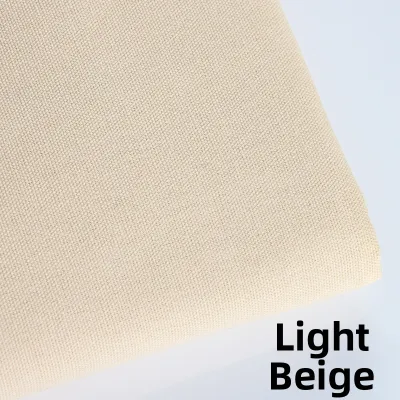
Prices are valid at publication and may change. Please refer to the product page for the latest price.
Before purchasing, always verify the fabric count by checking the manufacturer’s label, which is typically printed clearly on the front of the packaging. If you are buying fabric by the yard or from unlabelled bins, you can verify the count yourself using a physical fabric gauge or a standard ruler. Place the ruler flat against the material and count the number of individual threads or squares within a one-inch span. Confirming this specification ensures you do not accidentally purchase a count that is too small for your eyesight or too large for your intended frame.
Aida Cloth: The Beginner-Friendly Standard
Aida cloth is the most widely recognized and accessible fabric in the cross-stitching world. Invented in the late 19th century specifically to simplify counted thread work, it remains the go-to choice for hobbyists of all experience levels who appreciate structure and speed.

Weave Structure and Visibility
The defining characteristic of Aida is its rigid, grid-like weave. It is manufactured from 100% cotton threads that are grouped into blocks, creating a distinct checkerboard pattern. The spaces between these blocks form highly visible, open holes at the intersections, which naturally guide your needle through the fabric.
Common Aida counts include 14, 16, and 18, though you can occasionally find 11-count for larger, easier-to-see designs, or 20-count for highly detailed work. Because the block-weave structure handles the spacing for you, you do not need to count individual warp and weft threads. This makes Aida incredibly easy on the eyes and allows for rapid, rhythmic stitching.
Best Use Cases and Limitations
Aida is the undisputed champion for beginners, standard geometric cross-stitch patterns, and projects that feature full coverage, where the entire fabric is eventually obscured by floss. Its stiffness also makes it easier to stitch without an embroidery hoop if you prefer to hold the fabric loose in your hands.
However, Aida has distinct limitations when it comes to advanced techniques. Because the fabric is woven in dense blocks, executing fractional stitches—such as quarter or three-quarter stitches—requires you to pierce the middle of the stiff block with your needle, which can be difficult and result in uneven stitches. Additionally, Aida is poorly suited for surface embroidery or freeform crewel work, as the prominent grid holes disrupt the smooth flow of organic satin stitches and fine outlines.
Evenweave Fabric: Precision and Versatility
Evenweave fabric serves as a versatile middle ground for stitchers who want to transition away from the rigid grid of Aida without dealing with the natural irregularities of linen. It offers a smooth, refined surface that elevates the look of any finished piece.
Thread Structure and Stitching Over Two
Unlike Aida, evenweave is woven with single, uniform threads running horizontally and vertically. The term “evenweave” refers to the fact that the thread count is exactly the same in both directions, ensuring that your stitches remain perfectly square. Most evenweaves are made from cotton, rayon, or a blend of both, which gives them a soft drape and a subtle sheen.
Because the threads are fine and closely spaced, stitchers typically work “over two” threads. This means you skip one parallel thread and insert your needle into the second hole over and up. Common evenweave counts are 28 and 32. A simple mathematical rule applies here: stitching over two threads on a 28-count evenweave yields a finished stitch size identical to stitching on 14-count Aida. Similarly, 32-count evenweave stitched over two equals 16-count Aida.
Best Use Cases and Limitations
Evenweave is exceptional for patterns that feature a significant amount of unstitched background, as the exposed fabric looks like elegant, uniform linen rather than a utility grid. It is also the ideal choice for patterns containing numerous fractional stitches, as your needle can easily slip between the individual threads without piercing a dense block.
The primary limitation of evenweave is that it demands more concentration. Because there are no pre-formed blocks, you must manually count the fine threads for every single stitch. Maintaining consistent thread tension is also more critical; pulling your embroidery floss too tightly can distort the delicate weave and pull the threads out of alignment.
Linen: The Traditional and Textured Choice
Linen is the most traditional, premium choice for embroidery and cross-stitch. Made from natural flax fibers, it has been used for centuries and is highly prized for its organic beauty, historical authenticity, and heirloom quality.
Natural Fibers and Irregular Slubs
The hallmark of true linen is its natural irregularity. Flax fibers naturally vary in thickness, which creates “slubs”—thicker, slightly raised sections of thread scattered throughout the weave. These slubs are not defects; they are the defining feature of natural linen, giving the fabric a rustic, rich texture that synthetic or highly processed fibers cannot replicate.
Stitching on linen requires a patient hand and a keen eye. Because the threads vary in thickness, the holes between them are not perfectly uniform in size. When counting threads to execute your stitches, you must carefully guide your needle over the thicker slubs without letting them distort your tension or alter the shape of your crosses.
Best Use Cases and Limitations
Linen is the premier choice for historical samplers, reproduction pieces, delicate surface embroidery, and heirloom-quality table linens or wall hangings. The natural texture provides a stunning backdrop for negative space designs where large portions of the fabric remain exposed.
However, linen is generally the most expensive option on the market, with premium cuts often ranging from ₱300 to ₱1,200 or more depending on the size and brand. It is also the most challenging to work with due to its shifting threads and irregular weave, making it best suited for intermediate to advanced stitchers who have already mastered tension control on evenweave.
How to Match Fabric to Your Skill Level and Pattern
To select the best fabric for your next project, evaluate the design’s complexity alongside your personal comfort level.
| Fabric Type | Skill Level | Best Stitch Types | Common Counts | Texture/Feel |
|---|---|---|---|---|
| Aida | Beginner | Full cross-stitches, bold geometric patterns | 14, 16, 18 | Stiff, rigid, highly structured |
| Evenweave | Intermediate | Fractional stitches, specialty stitches, petite point | 28, 32, 36 | Soft, smooth, uniform drape |
| Linen | Advanced | Heirloom samplers, surface embroidery, negative space | 28, 32, 36, 40 | Crisp, textured, natural irregularities |
To ensure a flawless start, use this step-by-step selection checklist before cutting your fabric:
- Identify pattern requirements: Check if your pattern uses fractional stitches (quarter or three-quarter stitches). If it does, opt for evenweave or linen. If it consists entirely of full cross-stitches, Aida is highly efficient.
- Assess personal skill level: Decide whether you prefer the ease of a pre-formed grid or are willing to count individual threads. If you find thread counting tedious or strain your eyes, stick to 14-count Aida.
- Calculate the required fabric size: Never cut your fabric to the exact dimensions of the stitched design. Always add a standard margin of 2 to 3 inches (approximately 5 to 7.5 centimeters) of extra fabric to all four sides. This extra margin is essential for securing the fabric in your embroidery hoop or Q-snap frame, and it provides the necessary clearance for professional framing or finishing later.
Preparing and Storing Fabrics in Humid Climates
In tropical and highly humid environments like the Philippines, special care must be taken to preserve your fabrics and protect your hard work from environmental damage. High humidity can cause natural fibers to expand, warp, or attract mold and mildew.
Before starting any project, check the manufacturer’s care instructions for both your fabric and your embroidery floss. Pre-washing is highly recommended, especially if you are working with dark-colored linens or hand-dyed fabrics, as they are prone to color bleeding. Gently wash the fabric by hand in cool water with a mild, pH-neutral soap, rinse thoroughly, and lay it flat on a clean towel to dry. This process pre-shrinks the fabric and removes any excess dye or manufacturing sizing.
Once dry, iron the fabric on the appropriate heat setting (use a higher heat with steam for linen, and a medium setting for cotton evenweaves) to remove all wrinkles. Pressing your fabric flat before hooping ensures even stitch tension; stitching on wrinkled fabric can result in puckering once the completed piece is released from the hoop.
To protect your materials during long-term projects or while in storage, avoid sealed plastic containers, which can trap ambient moisture and create a breeding ground for mold, mildew, and yellowing. Instead, store your fabrics in breathable cotton project bags or clean pillowcases. Keep your storage area in a well-ventilated room, and consider placing silica gel packets or moisture absorbers nearby to keep the air dry. Always ensure your fabric is completely dry before packing it away for the day.
Frequently Asked Questions (FAQ)
These quick-reference answers address common queries regarding embroidery and cross-stitch fabrics.
Can I use regular cotton fabric for cross-stitch?
While regular quilting cotton or linen apparel fabric is excellent for surface embroidery, crewel work, or stamped patterns, it is not recommended for counted cross-stitch. Regular cotton lacks an even, open weave, meaning the warp and weft threads are packed too tightly to count accurately. Attempting counted cross-stitch on standard cotton makes it incredibly difficult to keep your stitches uniform, square, and properly aligned.
What is the difference between 14-count and 18-count Aida?
The difference lies in the size of the grid squares and the density of the stitches. 14-count Aida features 14 squares per inch, offering larger holes that are easy to see and stitch, making it the ideal choice for beginners. 18-count Aida features 18 squares per inch, resulting in smaller, tighter stitches. While 18-count Aida allows you to create highly detailed, compact designs, it requires greater precision, finer needles, and excellent lighting.
Do I need to hem my embroidery fabric before starting?
Yes, securing the raw edges of your fabric before you begin stitching is highly recommended for any project that will take more than a few days to complete. The constant handling and tension of stitching cause the cut edges of Aida, evenweave, and linen to fray rapidly. You can prevent this by running a simple zigzag stitch on a sewing machine along the edges, applying a thin line of liquid fray preventer, or binding the edges with low-tack masking tape.
Community discussion
Share your experience or ask a question. Comments are reviewed before publication.