
When it comes to keeping your essential documents safe from spills, dust, and daily wear, finding the right folder with plastic cover protection is one of the simplest yet most effective organizational decisions you can make. Whether you are a student managing a heavy load of school assignments or a homeowner safeguarding vital family certificates, the right folder acts as a shield against physical damage. Unlike traditional paper-based folders, plastic options offer excellent durability and a level of water resistance that is indispensable for daily transit and long-term storage.
Selecting the ideal folder requires looking beyond aesthetics to evaluate how a folder’s design matches your specific routine. The optimal choice depends on the volume of paper you need to carry, how frequently you need to access those pages, and the level of environmental protection required. By understanding the key material specifications and design features available, you can build a filing system that keeps your documents pristine, organized, and easily accessible whenever you need them.
Key Features to Evaluate When Choosing a Folder with Plastic Cover
To find a folder with plastic cover designs that truly fit your daily life, you must evaluate several practical dimensions. These features dictate not only how many sheets of paper a folder can hold, but also how well it survives being pulled in and out of bags, dropped, or stored in deep drawers over several years.
Products mentioned in this guide
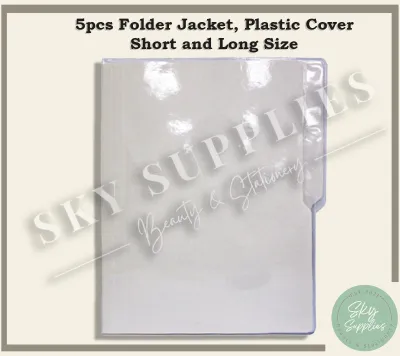
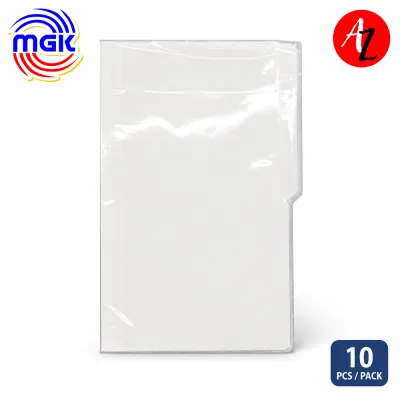
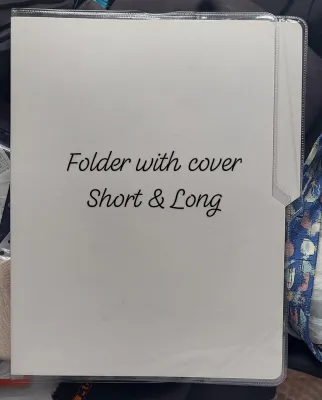
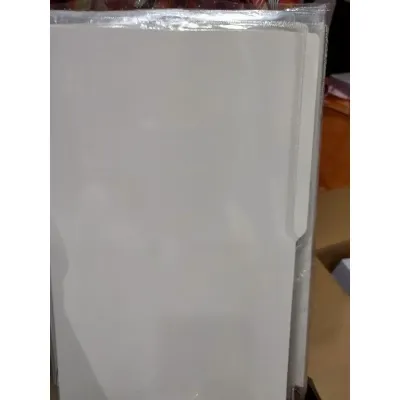
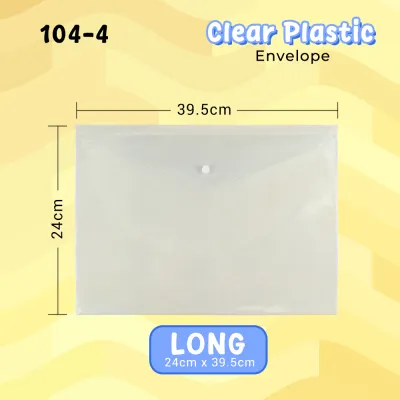
Prices are valid at publication and may change. Please refer to the product page for the latest price.
Closure Mechanisms and Access Speed
The way a folder opens and closes determines how secure your documents remain during transit and how quickly you can retrieve them.
- Snap Buttons: Usually located on a single flap, snap buttons are excellent for quick, daily access. They allow you to flip open the folder with one hand, slip a document inside, and snap it shut in a second. This makes them ideal for handouts, active homework sheets, and receipts. However, their physical capacity is limited; if you overstuff the folder, the tension will cause the button to pop open constantly, or worse, tear the surrounding plastic.
- Zippers: Zipper closures provide the highest level of security for transit. A fully zipped folder ensures that loose items—such as small notes, flashcards, paperclips, or even pens—cannot slide out of the sides. They offer superior protection against dust and sudden rain splashes. The trade-off is that zippers require two hands to operate and can occasionally snag on crumpled paper edges if you are not careful when closing them.
- Elastic and String Ties: Often found on expanding envelopes, these closures use a flexible cord wrapped around plastic buttons. They are highly adaptable because they stretch to accommodate thick document stacks. As your files grow, the elastic adjusts to the thickness, keeping the folder closed without putting concentrated stress on a single point. Over several years, however, elastic bands can lose their stretch, and fabric strings may begin to fray.
Capacity and Internal Structure
Understanding structural differences helps you match the folder to your specific paper volume. Single-pocket plastic envelopes are slim and lightweight, designed to hold between 20 and 50 loose sheets of paper without bending. They are perfect for keeping single projects, certificates, or specific forms separated.
For larger archives, multi-compartment accordion files are the standard. These folders feature internal plastic dividers that expand outward like an accordion, allowing you to categorize documents by subject, month, or department. A standard expanding folder can easily hold 150 to over 300 sheets of paper, making them highly efficient space-savers, though they require more physical storage space on a desk or shelf.
Material Thickness, Transparency, and Seams
The physical build of the plastic determines its longevity and protective qualities. Material thickness is often measured in microns or gauge; a thicker plastic cover resists creasing, stands upright on a shelf, and provides a sturdier writing surface when you are on the go.
Transparency is another critical choice. Completely clear plastic covers allow for instant visual identification, letting you see the front page of your document without opening the folder. This is highly useful for active projects or school subjects. Conversely, opaque or deeply tinted plastics (such as dark blue, charcoal, or green) are essential for privacy, shielding sensitive personal records, financial statements, or graded assignments from casual view.
Finally, pay close attention to the seams. Lower-quality folders rely on thin heat-sealed edges that can split open when packed tightly. Look for folders with wide, smooth heat seals or those reinforced with fabric-stitched borders. Stitched edges add a layer of tear resistance, ensuring the folder can handle the heavy weight of dense paper stacks without bursting at the seams.
Top Plastic Folder Styles for School Assignments and Projects
Students and parents face a relentless flow of paper throughout the academic year. From daily homework sheets and permission slips to multi-page science reports and art projects, keeping schoolwork organized requires a mix of lightweight portability and durable sorting.

Lightweight Snap-Button Folders for Daily Handouts
For daily school use, lightweight snap-button folders are highly practical. Instead of carrying heavy binders, students can assign a single, color-coded snap folder to each subject (for example, blue for English, green for Science, and red for Mathematics). This system prevents backpacks from becoming unnecessarily heavy and teaches children to sort their work daily.
- Why it works: The slim profile fits easily into any school bag, and the snap button keeps daily homework sheets flat and protected from lunchbox spills or crumpled textbook corners.
- Limitations: These folders are not designed for bulk storage. Forcing a thick textbook chapter or a semester’s worth of notes into a single snap folder will split the side seams or crack the plastic near the button.
- What to verify: Before purchasing, press the snap button open and shut a few times. It should click securely without requiring so much force that you feel the plastic cover flexing or stretching around the fastener.
Multi-Slot Accordion Folders for Subject Sorting
As students progress to high school or college, the volume of study guides, lecture notes, and syllabus sheets increases dramatically. A multi-slot accordion folder serves as a centralized school organizer.
- Why it works: With 5 to 13 individual pockets, a single expanding folder can house an entire semester's worth of work. Built-in tab dividers allow students to label each section clearly, making it easy to file away graded quizzes, reference sheets, and homework assignments.
- Limitations: If carried constantly in a tightly packed bag, the bottom corners of expanding folders can wear down or crack. Additionally, if papers are shoved in carelessly, the delicate internal plastic dividers can bend or tear.
- What to verify: Look for expanding folders that feature reinforced plastic gussets along the sides and a secure outer elastic band or latch closure to prevent the folder from sprawling open inside a backpack.
Heavy-Duty Zipper Pouches for Creative Projects
For classes that involve more than just standard paper—such as arts, design, or laboratory sciences—heavy-duty plastic zipper pouches are the ideal choice.
- Why it works: These pouches are often made of thick, mesh-reinforced plastic that resists punctures from sharp pencils, compasses, or scissors. They can hold loose worksheets alongside essential tools like rulers, calculators, and art supplies, keeping everything required for a specific class in one secure place.
- Limitations: The zipper mechanism means these folders do not lay completely flat, making them less suitable for storing pristine documents that must remain entirely uncreased, such as certificates or formal presentations.
- What to verify: Run your finger along the zipper track to ensure it slides smoothly without catching. Check that the zipper pull is sturdy and securely attached to the slider.
To find these styles, parents and students can browse local school supply aisles, neighborhood bookstores, or dedicated stationery sections in major department stores. Many online office supply marketplaces also offer bulk packs of color-coded folders, which is a cost-effective way to prepare for the school year.
Best Plastic Folder Options for Household Records and Vital Documents
Managing a home involves organizing a wide array of vital documents that must be preserved for decades. Birth certificates, marriage contracts, land titles, medical histories, tax receipts, and appliance warranties are difficult or expensive to replace. For these long-term archiving needs, the choice of plastic folder shifts toward maximum protection, chemical stability, and secure containment.
Thick Plastic Envelopes with String or Elastic Closures
When storing thick bundles of historical household records—such as several years of property tax payments or comprehensive medical histories—thick plastic envelope folders with string or elastic tie closures are highly recommended.
- Why it works: The flexible tie closure allows the folder to expand naturally as you add more documents over the years. Because there are no rigid metal parts or stiff snaps, there is less risk of the closure breaking under pressure. The thick plastic cover provides excellent structural support, allowing the envelopes to be filed vertically in boxes or filing cabinets.
- Privacy benefits: For sensitive documents like bank statements, tax returns, or personal identification records, choose opaque or deeply tinted folders. This ensures that sensitive financial and personal details are kept completely private when the folders are handled or stored in shared home spaces.
- Buying checkpoints: Ensure the plastic is explicitly labeled as "acid-free," "archival-safe," or "non-copy-transfer." These terms indicate that the plastic (typically high-quality polypropylene) does not contain harmful chemicals that will lift printed ink off your documents over time. Avoid cheap, highly flexible PVC folders for long-term storage, as they release plasticizers that can bond with and ruin printed text.
Heavy-Duty Zipper Pouches for Transporting Vital Records
There are times when you must transport vital documents outside the home, such as taking land titles to a government office, bringing medical records to a hospital, or carrying certificates to a job interview.
- Why it works: A heavy-duty, water-resistant plastic zipper pouch provides peace of mind during transit. It shields your irreplaceable documents from sudden rain showers, dust, and accidental drops on dirty surfaces.
- Limitations: Zipper teeth are not entirely waterproof; while they easily repel splashes and rain, they will not protect documents if the folder is completely submerged in water.
- Storage tip: Once you return home, transfer these vital documents back to a dedicated, secure storage area. While plastic folders protect against ambient humidity and dust, they should always be stored in a cool, dry, and dark location—such as a filing cabinet, desk drawer, or home safe—to prevent heat degradation and light damage.
Quick Comparison: Plastic Folder Types at a Glance
To help you quickly match your specific organizational needs with the right design, the table below compares the most common plastic folder styles available in the market.
| Folder Style | Best Use Case | Typical Capacity | Primary Protection Level |
|---|---|---|---|
| Snap Button Envelope | Daily school handouts, active homework, and receipts | Light (20–50 sheets) | Dust and light splash protection |
| Zipper Pouch | Transit, art supplies, and carrying loose worksheets | Medium (50–100 sheets) | High splash, spill, and dust resistance |
| Accordion Folder | Multi-subject notes, monthly bills, and tax records | Heavy (150–300+ sheets) | Dust protection and organized sorting |
| String/Elastic Tie Envelope | Long-term home archives and thick legal records | Medium to Heavy (100–200 sheets) | Dust and moderate splash protection |
For a complete home and school filing system, consider combining these styles. You can use lightweight snap envelopes for daily carry, and then transfer completed school quarters or monthly household receipts into heavy-duty accordion files or string-tie envelopes for long-term storage. This hybrid approach keeps your daily bag light while ensuring your home archives remain perfectly organized.
Practical Checks Before Buying Folders in the Philippines
Before purchasing folders, it is essential to consider the specific physical standards and environmental conditions of your local area. A folder that works perfectly in a dry, temperate climate may fail or damage your documents when exposed to tropical conditions.
Verifying Paper and Folder Dimensions
In the Philippines, document sizes can be highly confusing because multiple standards are used simultaneously. While A4 (210 x 297 mm) is the international standard widely used for modern school prints, office documents, and corporate letters, two other sizes are incredibly common:
- Letter Size: Often referred to locally as "short bond paper" (8.5 x 11 inches or 216 x 279 mm).
- Legal/Folio Size: Locally known as "long bond paper" (8.5 x 13 inches or 216 x 330 mm). Note that standard US Legal paper is slightly longer (8.5 x 14 inches), but local school forms, land titles, and legal contracts almost always use the 13-inch long bond paper format.
Always check the exact physical dimensions printed on the folder packaging before buying. If you purchase an A4-sized folder, it will be too short to accommodate local “long” documents. Forcing a long bond paper into an A4 folder will result in crumpled, folded, or torn top edges. When in doubt, purchase folders explicitly labeled as “Long” or “Legal Size” to ensure all local document formats fit comfortably without bending.
Navigating Tropical Humidity and Moisture
The tropical climate of the Philippines presents unique challenges for paper preservation. High relative humidity can cause paper to soften, warp, and become highly susceptible to mold. While a folder with plastic cover protection is excellent because the plastic itself does not absorb moisture, it can easily trap humidity inside.
If you place a document that is slightly damp—or one printed with fresh, wet ink—into a sealed plastic folder, you create an airtight microclimate. The trapped moisture has nowhere to escape, which can lead to rapid mold growth, paper deterioration, or cause the printed ink to smudge and stick to the plastic. Always ensure that your papers are completely dry, and that any fresh ink has fully cured, before sealing them inside a plastic envelope.
Inspecting Material and Seam Quality
When shopping in local stationery stores, take a moment to physically inspect the folder’s construction. Look closely at the seams along the edges. High-quality folders feature wide, smooth heat-sealed seams that feel thick to the touch. If the seams look thin, jagged, or have tiny air bubbles, they are highly likely to split open under the weight of heavy paper stacks.
Whenever possible, opt for polypropylene (PP) folders over polyvinyl chloride (PVC). PP is much more chemically stable, environmentally friendly, and highly resistant to the intense tropical heat that can cause cheaper plastics to degrade over time. By making these quick checks, you can ensure that your investment in document organization remains durable and effective for years to come.
Frequently Asked Questions (FAQ)
Are plastic folders better than cardboard for humid climates?
Yes, plastic folders are highly superior to cardboard in humid environments because plastic (such as polypropylene) is non-porous and does not absorb ambient moisture. Cardboard folders can soften, warp, grow mold, and attract pests like silverfish when exposed to high humidity. However, because plastic is non-breathable, you must ensure that documents are completely dry before sealing them inside. If you seal damp papers or documents printed with wet ink inside a plastic envelope, the trapped moisture will have nowhere to escape, potentially leading to mold growth, paper deterioration, or ink transfer.
How can I prevent plastic folders from becoming sticky over time?
The sticky residue that sometimes develops on older plastic folders is usually the result of plasticizer migration in low-quality polyvinyl chloride (PVC) materials. This degradation is accelerated by heat and direct sunlight. To prevent this, always look for folders made from polypropylene (PP) instead of PVC when shopping. PP is chemically stable, acid-free, and does not require plasticizers, meaning it will not become sticky, brittle, or yellow over time. Additionally, store your folders in a cool, shaded area away from direct sunlight, hot tin roofs, or enclosed vehicles to extend their lifespan.
Community discussion
Share your experience or ask a question. Comments are reviewed before publication.