
Finding the right tools to organize lecture notes, highlight critical terms, and prepare for major exams is a vital step for any student in the Philippines. With long study hours, heavy reading assignments, and a tropical climate that can affect how stationery performs, choosing a reliable set of highlighters is more than just an aesthetic decision. The ideal highlighter set markers must deliver consistent ink flow, dry quickly to prevent smudges, and work seamlessly across various paper types, from thin newsprint textbooks to thick notebook pages.
To make the most of your study sessions, your highlighters should align with your specific learning style and the materials you use daily. Whether you are color-coding complex anatomical diagrams, skimming through thick law volumes, or organizing a daily study planner, different ink formulas and tip shapes serve distinct purposes. Understanding these technical details helps you avoid common study frustrations like ink bleeding through pages, smudging your handwritten notes, or experiencing eye strain during late-night review sessions.
How to Choose the Right Highlighter Set for Your Study Needs
Tip Shape and Versatility
The shape of a highlighter tip determines how precisely you can mark your texts. The classic chisel tip is the most versatile option, featuring a wide, flat edge for covering entire lines of printed textbook text and a sharp point for fine underlining. Bullet tips, which are rounded and mimic standard markers, are excellent for students who prefer consistent, medium-width lines or want to draw neat boxes around key formulas. Dual-tip highlighters combine these styles, often pairing a broad chisel or flexible brush tip on one end with an ultra-fine plastic nib on the other, allowing you to transition quickly from broad highlighting to writing detailed margin notes without changing pens.
Products mentioned in this guide
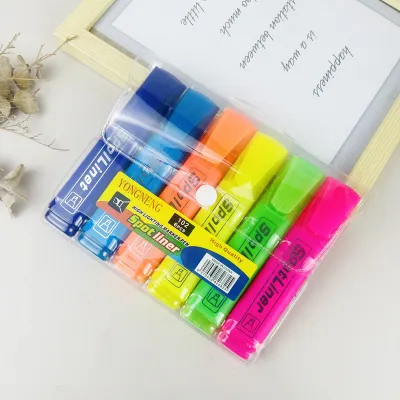
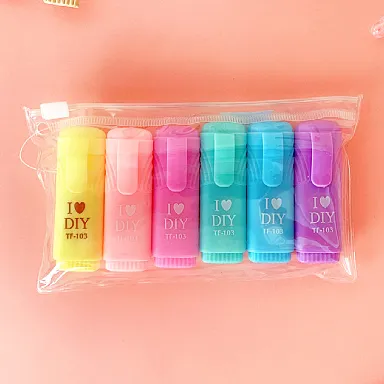
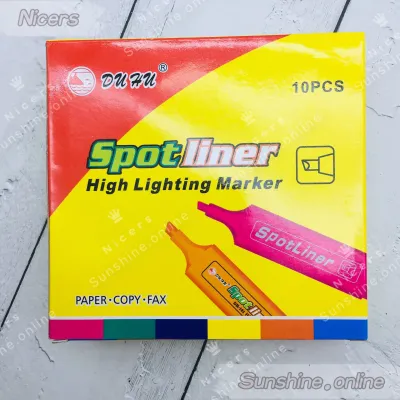
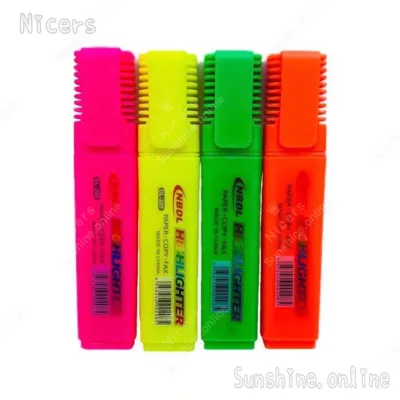
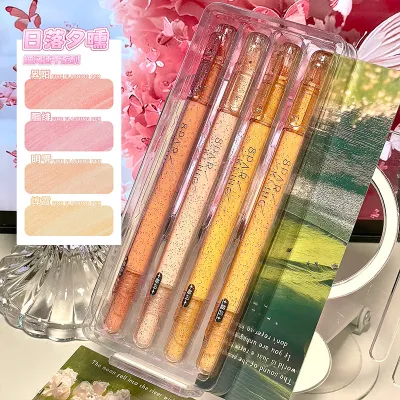
Prices are valid at publication and may change. Please refer to the product page for the latest price.
Ink Formulation and Drying Time
Highlighter inks are primarily water-based or pigment-based, and their performance depends heavily on drying speed. Water-based inks are widely available and offer bright, consistent colors, but they can dissolve the ink of standard gel pens or inkjet-printed documents if applied too quickly. Pigment-based or smear-resistant inks dry much faster, making them the preferred choice for left-handed students who need to write and highlight from left to right without dragging their hand through wet ink. In the humid climate of the Philippines, ink drying times can slow down slightly, making quick-drying formulas highly beneficial for fast-paced note-taking in non-airconditioned classrooms.
Paper Compatibility and Bleed-Through
Before committing to a full color-coding system, you must consider the weight and quality of your paper, measured in grams per square meter (GSM). Standard school notebooks, intermediate pads, and yellow legal pads in the Philippines often range from 50 to 70 GSM, which is highly susceptible to ink bleed-through and ghosting (where the ink is visible on the reverse side of the page). High-quality notebooks with paper weights of 80 to 100 GSM handle heavier ink applications much better. To prevent ruining your notes, always perform a quick patch test on an inconspicuous back page of your notebook, applying light pressure to see how the paper reacts to the ink.
Color Palette and Visual Fatigue
The colors you choose directly impact your cognitive retention and visual comfort during long study sessions. Traditional fluorescent neon colors, such as bright yellow and neon pink, offer maximum contrast and are exceptional for rapid skimming and locating key terms instantly before an exam. However, staring at highly vibrant neon shades for hours can cause significant eye strain and visual fatigue. Mild, pastel, or earthy tones have become increasingly popular because they are gentle on the eyes, allowing for longer reading sessions while still providing enough contrast to categorize information effectively.
Top Highlighter Sets for Color-Coding and Exam Preparation
Best for Aesthetic Notes: Dual-Tip Pastel Sets
Dual-tip pastel highlighter sets are designed for students who prioritize clean, organized, and visually appealing notes. These sets are highly favored for creating detailed mind maps, bullet journals, and structured lecture summaries where visual clutter needs to be kept to an absolute minimum.

- Ideal Use Case: These highlighters excel during active recall sessions, detailed diagram labeling, and long-form note summarizing where multiple categories of information need to be separated without overwhelming the page.
- Key Features: The dual-tip configuration typically pairs a soft, flexible chisel or brush tip with a fine-point liner. This allows you to highlight key phrases and immediately write corresponding notes or definitions in the margins using the exact same color. The pastel ink formula is translucent, ensuring that underlying black gel pen ink remains perfectly legible.
- Limitations: Because these colors are muted, they may lack the high contrast needed on low-quality, grayish textbook paper or under dim study lamp conditions. They require bright, clean paper to show their true shades.
- Buying Advice: When selecting a pastel set, look for options that offer 5 to 10 distinct, non-overlapping shades (such as mild lavender, soft mint, and pale peach) so you can build a comprehensive color-coding key for different subjects.
Best for Quick Review: Standard Neon Chisel Sets
Standard neon chisel sets are the traditional workhorses of academic preparation. They are engineered to draw your eyes directly to critical formulas, vocabulary words, and primary concepts during fast-paced reviews.
- Ideal Use Case: These sets are best for marking up dense, double-column textbooks, printed photocopies, and reviewer handouts where you need to locate key facts in a matter of seconds during last-minute exam cramming.
- Key Features: The fluorescent ink formulation provides maximum light reflectance, making highlighted text pop off the page. The sturdy chisel tip is designed to withstand heavy pressure, allowing you to draw consistent, wide lines across printed text or thin underlines using the sharp corner.
- Limitations: Neon inks carry a high risk of bleeding through thin paper weights (below 80 GSM). Additionally, over-highlighting entire paragraphs with fluorescent colors can make the page visually chaotic and difficult to read for extended periods.
- Buying Advice: Prioritize neon sets that explicitly feature quick-drying or smear-shield technology. This is especially important if you frequently highlight over freshly printed inkjet documents or hand-written notes created with liquid ink pens.
Best for Flexible Studying: Erasable Highlighter Sets
Erasable highlighter sets offer a unique solution for students who want the freedom to change their minds, correct highlighting mistakes, or reuse study materials without leaving permanent marks.
- Ideal Use Case: These highlighters are incredibly useful for drafting study schedules in planners, highlighting temporary assignments in workbooks, or marking up borrowed textbooks that must be returned in clean condition.
- Key Features: These markers utilize thermo-sensitive ink that becomes completely invisible when subjected to friction. By rubbing the plastic tail tip of the highlighter over the marked area, the heat generated erases the color cleanly without tearing the paper or leaving behind eraser shavings.
- Limitations: The colors in erasable sets are generally more muted and less vibrant than standard permanent highlighters. Crucially, because the ink reacts to heat, highlighted notes can fade if left in hot environments, such as a backpack inside a parked vehicle or under direct tropical sunlight. Conversely, the ink may reappear if the paper is exposed to extreme cold.
- Buying Advice: Never use erasable highlighters for signing official school documents, permanent legal notes, or final exam submissions. Always check the manufacturer's guidelines regarding temperature limits to protect your study materials.
Best for Heavy Workloads: Budget-Friendly Bulk Packs
For students managing massive reading lists, preparing for board exams, or collaborating on large group projects, budget-friendly bulk packs offer the most practical and economical solution.
- Ideal Use Case: These packs are ideal for high-volume highlighting in professional courses like law, medicine, or engineering, where students go through multiple markers a month, or for keeping backup supplies in school lockers, study desks, and pencil cases.
- Key Features: These sets offer an exceptionally high count-to-price ratio. They usually feature standard, durable chisel tips and a reliable supply of primary neon colors, ensuring you always have a working highlighter on hand without spending a fortune.
- Limitations: The ink capacity per pen in budget bulk packs can sometimes be lower than premium individual markers, and the tips may fray or soften more quickly under heavy, daily use. The caps may also lack airtight seals, increasing the risk of drying out if left uncapped for short periods.
- Buying Advice: Look for bulk packs sold in sturdy, resealable storage pouches or individually wrapped options. This prevents the unused markers in the batch from drying out while sitting in your storage drawer.
Quick Comparison of Student Highlighter Sets
To help you determine which highlighter category best fits your daily study routine, the table below summarizes the key functional differences, ideal uses, and paper compatibility of each type.
| Highlighter Type | Best Use Case | Tip Style | Ink Finish | Bleed-Through Risk |
|---|---|---|---|---|
| Dual-Tip Pastel | Aesthetic notes, mind mapping, and bullet journaling | Chisel/Brush + Fine Tip | Matte, soft pastel | Low to Medium (depends on paper) |
| Standard Neon | Dense textbooks, rapid skimming, and high-visibility cues | Classic Chisel | Fluorescent, high-contrast | Medium to High (requires >80 GSM) |
| Erasable | Planners, temporary study guides, and reusable workbooks | Chisel or Bullet | Soft, semi-translucent | Low (ink sits lightly on paper) |
| Budget Bulk | High-volume reading, group projects, and backup supplies | Standard Chisel | Standard vibrant/neon | Medium to High (varies by brand) |
Practical Tips for Maintaining Your Highlighters
Proper Storage Orientation
To extend the life of your highlighter set markers, store them horizontally when not in use. Keeping them flat ensures that the ink remains evenly distributed throughout the internal reservoir and does not pool at one end. If you store dual-tip highlighters vertically, one tip may become oversaturated and leak, while the other tip dries out completely. If a manufacturer provides specific storage instructions on the packaging, always prioritize those guidelines.
Capping Habits and Drying Prevention
Always listen for the audible “click” when capping your highlighters. This click indicates that the airtight seal is fully engaged, preventing the water-based solvents in the ink from evaporating. This habit is especially critical when studying in air-conditioned library rooms, study hubs, or classrooms, as the dry, circulating air can sap the moisture from an exposed felt tip in a matter of minutes.
Reviving Water-Based Markers
If a water-based highlighter begins to dry out and produce faint, scratchy lines, you can often revive it with a simple, reversible method. Dip the dried tip into a small container of clean water for two to three seconds, or place a single drop of water directly onto the nib. Cap the pen tightly and let it sit upside down for about an hour to allow the water to draw through the dry fibers. Avoid using rubbing alcohol, nail polish remover, or other harsh solvents, as these can permanently dissolve the plastic components or ruin the ink formula.
Climate Considerations for Erasable Ink
Because erasable highlighters rely on thermo-sensitive ink, the tropical heat of the Philippines requires careful handling. Avoid leaving your highlighted notebooks, textbooks, or planners near sunny windows, inside non-airconditioned rooms during peak afternoon heat, or inside a bag left in a parked car. If your notes do happen to disappear due to heat exposure, you can sometimes restore the faded ink by placing the affected pages inside a clean plastic bag and leaving them in a freezer for 15 to 20 minutes, though the restored lines may appear slightly faded.
Frequently Asked Questions (FAQ)
Do pastel highlighters show up well on standard textbook paper?
Yes, pastel highlighters show up clearly on standard white textbook paper, providing a soft, legible background that does not obscure the text. However, on thin, grayish, or recycled textbook pages, pastel shades may lack the necessary contrast to stand out effectively. It is always best to test a single pastel color on an inconspicuous corner of your textbook page to evaluate its visibility before highlighting entire chapters.
How can I stop my highlighters from bleeding through my notebook?
To prevent ink bleed-through, use notebooks with a paper weight of at least 80 to 100 GSM. When highlighting, apply light, even pressure and avoid pausing at the end of a sentence, as holding the tip in one place allows excess ink to pool and soak through the paper. You can also place a thick piece of scrap paper or a plastic sheet protector directly behind the page you are working on to protect the subsequent sheets from ghosting.
Are erasable highlighters safe to use for important exam review notes?
It is highly recommended to use standard, permanent highlighters rather than erasable ones for critical, irreplaceable exam review notes. Because erasable inks fade when exposed to heat, leaving your study guides in a warm room, near a hot laptop exhaust, or in direct sunlight can cause your hard work to disappear completely. Stick to permanent water-based or pigment-based highlighters to ensure your study materials remain intact throughout the semester.
Community discussion
Share your experience or ask a question. Comments are reviewed before publication.