
Selecting school supplies in the Philippines is an annual ritual that peaks during the humid months of July and August. Among the long list of pencils, crayons, and art supplies, finding the right k12 writing notebook can dramatically impact a student’s academic comfort and handwriting development. The ideal notebook setup changes as a student progresses through the educational system, evolving from the wide, color-coded guidelines of early childhood to the high-capacity, durable formats required for senior high school lectures.
While it is tempting to purchase bulk bundles based solely on affordable pricing or popular cartoon covers, matching the technical specifications of paper to the student’s specific grade level prevents unnecessary frustration. Poorly selected paper can lead to ink bleeding through the pages, torn sheets from heavy pencil erasing, and disorganized notes. This guide breaks down the essential criteria for choosing notebooks that align with local school requirements, physical developmental needs, and the tropical climate of the Philippines.
Quick Reference: Matching Notebook Types to Grade Levels
As children grow, their physical motor skills and academic workloads shift. Early writers require highly structured visual cues to guide their hand movements, whereas older students prioritize writing speed, page capacity, and structural durability. Navigating these changing needs requires a clear understanding of which notebook formats serve each educational stage.
Products mentioned in this guide
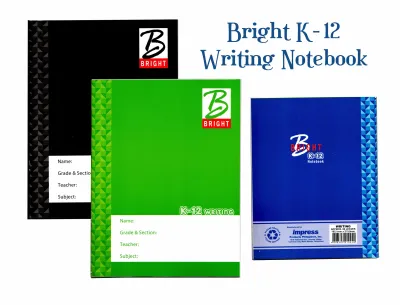
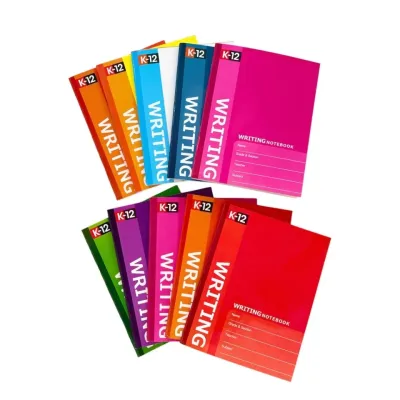
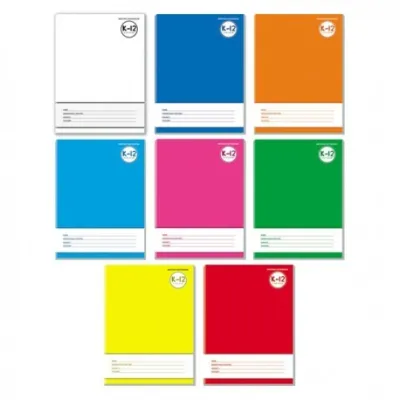
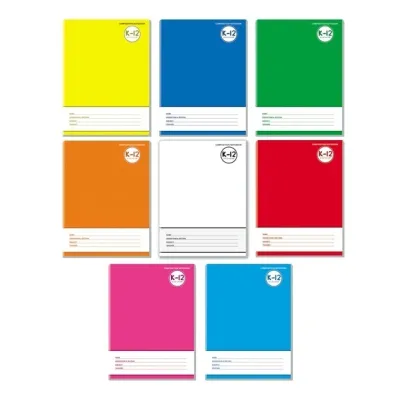
Prices are valid at publication and may change. Please refer to the product page for the latest price.
To help parents and students quickly identify their starting point before the school year begins, the table below maps out the standard recommendations for each K-12 level in the Philippines:
| Grade Level | Recommended Notebook Type | Standard Ruling | Common Page Count | Best Binding Type |
|---|---|---|---|---|
| Kindergarten to Grade 3 | Primary Writing Notebook / Intermediate Pad | Blue-Red-Blue Lines | 40 to 80 pages | Yarn-bound or Stapled |
| Grades 4 to 6 | Composition Notebook / Intermediate Pad | Single Ruled (Wide) | 80 pages | Yarn-bound or Sewn |
| Grades 7 to 10 (JHS) | Spiral Notebook / Graphing Notebook | College / Single Ruled | 80 to 120 pages | Single Spiral or Wire-O |
| Grades 11 to 12 (SHS) | Multi-Subject Binder / A4 Legal Pads | College Ruled / Grid | 120 to 200+ pages | Ring Binder / Twin Wire |
While this reference table serves as an excellent general baseline, individual school handbooks, division directives, or specific subject teachers may require unique variations. It is always wise to cross-check this list with the official supply list provided by your school before purchasing in bulk.
Core Specifications to Evaluate Before Buying
To make an informed purchase, you must look beyond the cover design and evaluate the technical dimensions of the notebook. Understanding paper weight, ruling styles, sizes, and binding methods allows you to read product labels accurately and select items that will withstand daily school use.

Paper Ruling and Line Spacing
Paper ruling refers to the printed lines that guide handwriting. For early writers in Kindergarten through Grade 3, the standard is the primary ruling, which features a blue-red-blue line pattern. The red line acts as the baseline, while the top and bottom blue lines guide the height of capital letters and the tails of lowercase letters like “g” and “y.”
As students transition to Grade 4 and above, they move to intermediate or single-ruled paper, which features uniform horizontal lines without the middle red guide. In high school, college-ruled paper becomes the standard. College ruling has narrower line spacing (typically 6mm to 7mm), allowing older students to fit more text on a single page. Additionally, specialized subjects like Mathematics and Science often require grid or graph paper (usually 5mm squares) to facilitate precise plotting, geometric drawing, and structured calculations.
Notebook Size and Form Factor
In the Philippine market, notebooks generally fall into two categories: standard local sizes and international standards. The traditional local “composition” notebook size is approximately 6 by 8.5 inches. This compact form factor is highly portable and fits easily into the smaller backpacks of elementary school students.
For older students, larger international sizes like B5 (176x250mm) and A4 (210x297mm) are increasingly popular. Larger sizes provide ample canvas space for detailed diagrams, complex equations, and extensive lecture notes. However, you must consider desk compatibility. Many Philippine classrooms utilize wooden or monobloc armchairs with small, integrated writing tablets. Oversized A4 notebooks can easily crowd these limited workspaces, making slightly smaller B5 notebooks a highly practical alternative for high schoolers.
Page Count and Binding Types
Binding determines how well a notebook lies flat and how long it survives inside a packed bag. Yarn-bound (or sewn) notebooks are a staple for elementary grades. Because the pages are stitched together with thread, they are incredibly durable and prevent students from easily tearing out pages. Stapled (saddle-stitched) notebooks are lightweight and highly affordable, making them excellent for short-term subjects or low-volume writing.
Spiral and wire-o bindings use metal or plastic coils to hold the pages together. This design allows the notebook to lay completely flat on a desk or fold back 360 degrees, which is a massive advantage on cramped classroom armchairs. The trade-off is weight and bulk; spiral coils can snag on bag linings and add extra weight to a student’s daily load. Perfect bound (glued) notebooks offer a clean, book-like spine but are susceptible to cracking and page loss when exposed to high tropical humidity over several months.
Recommended K12 Writing Notebook Setups for Elementary (Grades 1–6)
Elementary school is a critical period for developing fine motor skills and establishing proper handwriting habits. Notebooks for these grades must be chosen to support physical development while keeping the student’s physical burden to a minimum.
For Grades 1 to 3, primary writing notebooks with clear blue-red-blue guidelines are indispensable. These visual boundaries prevent children from writing too large or too small, helping them master letter proportions. Alongside these notebooks, schools frequently require intermediate writing pads—loose-leaf sheets with similar ruling—for quizzes, spelling tests, and daily seatwork. Keeping page counts low, ideally between 40 and 80 pages per notebook, is crucial during these early years. Young children do not generate massive volumes of text, and carrying multiple high-capacity notebooks only adds unnecessary weight to their backpacks, which can negatively affect their posture.
As students transition into upper elementary (Grades 4 to 6), their handwriting stabilizes, and they transition to standard single-ruled composition notebooks. These notebooks feature wider line spacing than high school versions, accommodating the transitional handwriting size of pre-teens. At this stage, the quality of the paper becomes highly important. Students are still using wooden pencils (typically HB or No. 2) and heavy rubber erasers. Thin, low-grade paper will pill, smudge, or tear under the friction of repetitive erasing. Look for paper with a smooth finish and a weight of at least 70 GSM (grams per square meter) to ensure it can handle correction after correction without wearing through.
Finally, pay close attention to margins. Many elementary school teachers require notebooks with pre-printed red margin lines on the left side of the page. These margins are not just decorative; they teach children where to start writing and leave clean, dedicated space for teacher corrections, grades, and stamps.
Recommended Notebook Setups for Junior High School (Grades 7–10)
Junior High School introduces a major shift in academic structure. Students transition from a single primary classroom teacher to multiple subject specialists, managing up to eight or ten distinct subjects every day, including Mathematics, Science, English, Filipino, Araling Panlipunan, and TLE (Technology and Livelihood Education).
To manage this academic load, standard college-ruled spiral notebooks or 8×10-inch composition books serve as the primary workhorses. Spiral-bound notebooks are particularly advantageous here. The fast-paced nature of high school lectures requires students to flip pages quickly and write at speed. Spiral bindings allow the notebook to fold completely in half, saving precious desk space on crowded armchairs. Additionally, if a teacher requests a physical assignment submission, spiral notebooks with micro-perforated pages allow students to tear out sheets cleanly without leaving messy, frayed edges behind.
For optimal organization, it is highly recommended to use single-subject notebooks containing 80 to 120 pages for each course. While multi-subject notebooks exist, carrying a single, massive binder can make a backpack incredibly heavy. Furthermore, if a student misplaces a multi-subject notebook, they lose their entire academic record for the semester. Utilizing individual single-subject notebooks keeps the daily load modular and manageable.
Junior high also marks the transition from pencils to ink. Students write almost exclusively with ballpoint pens, gel pens, and basic highlighters. To support this, look for notebooks with slightly thicker paper (70 to 80 GSM) that offers good ink absorption and fast drying speeds. This prevents the ink from smearing across the page as the student writes. Color-coding the notebook covers—such as blue for Math, green for Science, and red for English—is another simple yet highly effective way for busy students to organize their lockers and pack their bags efficiently each night.
Recommended Notebook Setups for Senior High School (Grades 11–12)
Senior High School prepares students for college and professional careers through specialized academic or vocational tracks (such as STEM, ABM, HUMSS, or TVL). The sheer volume of reading materials, research drafts, and performance tasks requires a highly flexible and durable note-taking system.
For these advanced grades, multi-subject spiral notebooks or ring binders with loose-leaf filler paper are highly recommended. A ring binder system provides unparalleled flexibility. Students can carry only the active chapters or worksheets they need for the week, leaving older notes archived safely in binders at home. This modular approach significantly lightens the daily commute. For specialized tracks like ABM (Accountancy, Business, and Management) or STEM (Science, Technology, Engineering, and Mathematics), standard yellow legal pads or A4 legal pads are essential local tools. These pads are widely used for drafting accounting ledgers, solving multi-step physics equations, and writing timed essay drafts.
Because senior high students rely heavily on liquid gel pens, fine-liner markers, and intense color-coded highlighting, paper thickness is a non-negotiable quality metric. Standard 55 GSM paper will suffer from severe ink bleed-through and “ghosting” (where writing is visible on the reverse side of the page), effectively ruining half the notebook. To prevent this, prioritize premium notebooks with paper weights between 80 GSM and 100 GSM. This heavier weight ensures that highlighters and wet inks sit cleanly on the page surface without bleeding through to the other side.
Daily commuting via public utility vehicles like jeepneys, tricycles, and trains exposes school supplies to physical wear and tropical humidity. Therefore, senior high notebooks require durable covers made of thick polypropylene (plastic) or heavy, water-resistant cardstock. These robust covers protect the internal pages from sweat, light rain, and accidental spills. Finally, utilizing internal dividers, pocket folders, and sticky index tabs will help students organize complex modules, syllabus sheets, and research outlines within a single unified binder.
Quality and Durability Checklist for School Supplies
Before purchasing school supplies in bulk for the upcoming academic year, use this practical checklist to verify the quality and durability of your notebooks:
- Verify Paper Weight: Hold a single page of the notebook up to the store's overhead lights. If you can clearly see the outline of your hand or the text from the next page through the sheet, the paper is likely under 60 GSM. For trouble-free writing with pens, aim for paper that appears opaque under direct light.
- Check the Binding Integrity: Open the notebook to the exact center. For sewn notebooks, ensure the thread is tight, flat, and free of loose loops. For spiral notebooks, inspect the ends of the wire coil; they should be bent securely inward to prevent the metal from scratching skin or snagging on the fabric lining of school bags.
- Inspect the Ruling Quality: Flip through several pages to check the printed lines. The lines should be crisp, uniform in color, and perfectly horizontal. Blurry, faded, or slanted lines can strain the eyes during long study sessions.
- Confirm School and Subject Compliance: Always refer back to your school's official supply list before buying. Verify if specific subjects require unique cover colors, specific left-hand margins, or specialized grid patterns for science and math.
- Conduct a Trial Pen Test: Instead of buying a ten-pack bundle immediately, purchase a single notebook first. Have the student write on a back page using their preferred everyday pens and highlighters. Observe how quickly the ink dries (crucial for left-handed writers to prevent smudging) and check the back of the page for any signs of feathering, ghosting, or bleed-through.
- Look for Micro-Perforations: If the student will need to submit physical assignments or lab reports, verify that the spiral notebook pages feature micro-perforations. This ensures sheets can be detached cleanly without tearing the binding or leaving messy paper scraps inside the classroom.
Frequently Asked Questions (FAQ)
Are there strict Department of Education rules on notebook sizes?
The Department of Education (DepEd) provides general guidelines regarding basic educational materials, but they do not enforce a single, rigid national rule for notebook sizes, cover colors, or binding types. These specific requirements are determined at the local level by individual school administrations, division offices, or classroom teachers. To avoid purchasing incorrect items, it is highly recommended to wait for your school’s official supply list or attend the first day of orientation before buying notebooks in bulk.
Should I buy single-subject or multi-subject notebooks for high school?
Single-subject notebooks are generally better for organization, weight distribution, and security. They allow you to carry only the specific subjects scheduled for the day and prevent total academic loss if a notebook is misplaced. However, multi-subject notebooks offer excellent convenience for students who prefer having all their lecture notes in one place. A great hybrid strategy is to use a multi-subject notebook or binder for general lecture notes, while keeping dedicated single-subject notebooks for courses that require heavy written exercises, such as Mathematics or Chemistry.
How can I prevent ink from bleeding through the notebook pages?
To prevent ink bleed-through, prioritize buying notebooks with a paper weight of 70 GSM to 100 GSM. Additionally, pair your paper with the right writing instrument; standard ballpoint pens and hybrid ballpoint inks are less likely to bleed than liquid gel pens, rollerballs, or fountain pens. If you must use wet inks or heavy highlighters on thinner paper, you can place a plastic pencil board (shitajiki) or a blank sheet of heavy paper directly underneath the page you are writing on. This absorbs excess ink and prevents indentations from transferring to the pages below.
Community discussion
Share your experience or ask a question. Comments are reviewed before publication.