
A high-quality kraft notebook a5 offers a practical combination of tactile minimalism, durable protection, and portable utility. When stationery enthusiasts refer to a “kraft notebook,” they typically mean one of two designs: a notebook with a rugged, unbleached brown kraft paper cover and standard white or cream inner pages, or a notebook using actual brown kraft paper for its internal pages. Understanding this distinction is crucial, as the writing experience on these two paper types differs dramatically.
The A5 dimension—148 mm by 210 mm—is the standard for versatile daily carry. Exactly half the size of an A4 sheet, this size strikes an ideal balance for professionals, students, and artists. It is compact enough to slide easily into a commuter backpack, a tote bag, or a small messenger bag, making it highly convenient for daily travel. At the same time, the A5 layout provides ample surface area for comfortable, unconstrained handwriting and detailed sketching, ensuring you do not feel restricted by the margins.
Beyond practical dimensions, the unbleached, earthy brown cover of a kraft notebook delivers a clean, minimalist aesthetic. The natural texture of the raw wood pulp fibers provides a pleasing tactile experience. Furthermore, these plain covers serve as an excellent blank canvas, allowing users to customize their notebooks with calligraphy, stamps, stickers, or hand-drawn illustrations to match their personal style.
Products mentioned in this guide
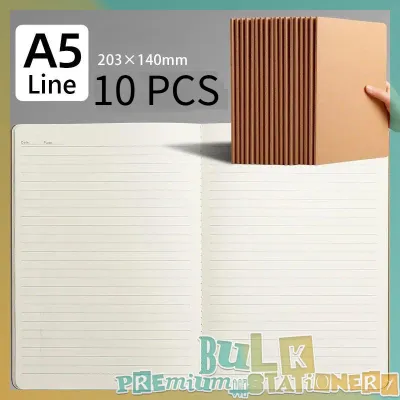
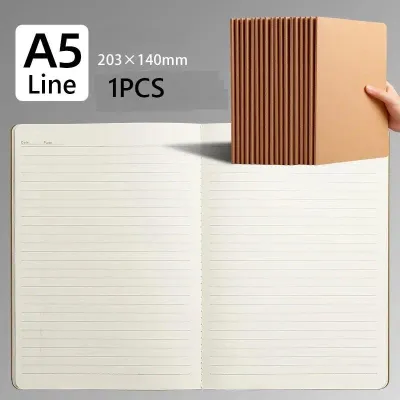
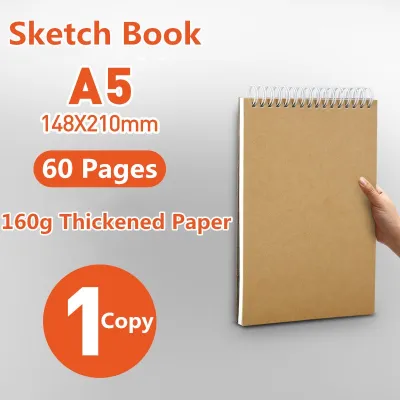
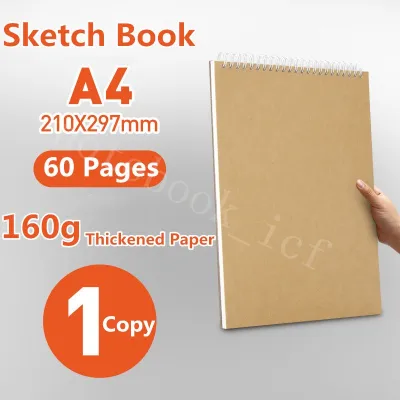
Prices are valid at publication and may change. Please refer to the product page for the latest price.
Key Features to Check Before Buying
Selecting the right notebook requires looking past the cover and evaluating the physical specifications of the paper and construction. The first and most critical specification to verify is the paper weight, measured in grams per square meter (GSM). Standard notebook paper typically ranges from 70gsm to 160gsm. You can usually find this number printed on the product label or the online product listing. Lower weights, such as 70gsm to 80gsm, are lightweight and thin, but they are highly susceptible to “ghosting” (where writing is visible on the reverse side of the page) and “bleed-through” (where ink actually penetrates the paper fibers to the other side). For heavy ink usage, higher GSM ratings are essential.
Binding construction is another pivotal feature that dictates how a notebook behaves on a flat surface and how long it will last. Thread-sewn (lay-flat) binding involves sewing folded groups of pages (signatures) together before attaching them to the spine. It allows the notebook to open completely flat, providing a seamless writing surface across the entire two-page spread without forcing you to hold the pages down.
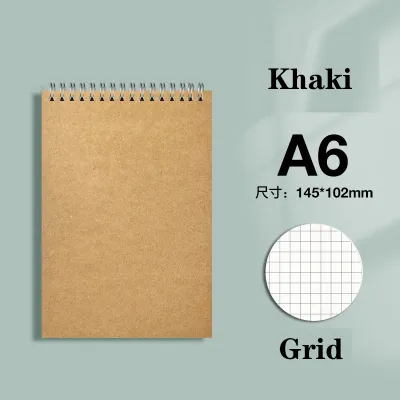
Perfect bound (glued) binding is a cost-effective alternative where the edges of the pages are glued directly to the spine cover. However, perfect-bound notebooks resist lying flat, requiring constant pressure to keep open, and the glue can crack over time, leading to loose pages. Spiral and Wire-O binding utilize metal or plastic coils, allowing the notebook to fold back a full 360 degrees. This is incredibly useful for taking notes on your lap or in tight spaces, though the physical coils can sometimes interfere with your hand placement while writing.
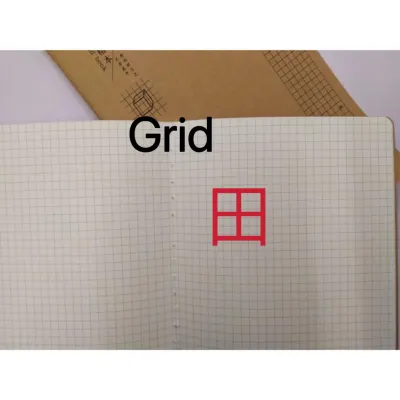
Page ruling is a personal preference that should align with your primary tasks. Blank pages offer complete freedom for freeform sketching and mind mapping. Ruled pages, typically with 6mm to 8mm spacing, provide structured lines that keep handwriting neat and aligned. Dotted and grid layouts offer a subtle, low-contrast guide that assists with both vertical and horizontal alignment, making them highly popular for layout design, bullet journaling, and technical diagrams.
Finally, cover durability is a critical factor, especially for users in humid, tropical climates like the Philippines. Standard unbleached kraft paper covers are made from wood fibers that naturally absorb moisture from the surrounding air. In high-humidity environments, thin kraft covers can soften, warp, lose their structural rigidity, or fray at the corners. To prevent this, check the product specifications for cover thickness (ideally 300gsm or higher) or consider purchasing a reusable clear plastic or canvas protective sleeve to shield the notebook from humidity and accidental spills.
Selecting the Right Kraft A5 Notebook for Journaling
Journaling is an intimate, reflective practice that often involves long writing sessions. To maintain comfort and focus, your notebook must support your physical writing style. The core need for a dedicated journal is a high-quality lay-flat thread-sewn binding. When a notebook lies completely flat, you can write effortlessly from the left margin to the right margin without fighting the curve of the spine, reducing hand fatigue. Dotted or grid rulings are highly recommended for journaling because they provide enough structure to keep your writing straight while remaining faint enough to disappear visually once the page is filled with text.

Paper compatibility is paramount for journalers who prefer liquid inks, such as gel pens, rollerballs, or fountain pens. These writing instruments lay down a wet line of ink that requires a robust paper surface. Look for notebooks featuring paper weights between 80gsm and 100gsm. This thickness provides the necessary density to prevent feathering—where the ink spreads outward along the paper fibers, creating fuzzy lines—and minimizes ghosting on the reverse side.
Because paper performance is highly dependent on the specific chemical composition of the ink and the paper sizing, you should always perform a simple, observable trial before fully committing to a new notebook. Turn to the very last page of the notebook and write a few test lines using your favorite pens. Observe how quickly the ink dries; a slow drying time can lead to accidental smearing, especially for left-handed writers. Check the reverse side of the page to verify if there is any noticeable bleed-through or distracting ghosting.
You must also consider cover flexibility based on where you write. If you prefer journaling on your lap while commuting, sitting on a park bench, or lounging on a couch, a flexible softcover kraft notebook is highly practical as it conforms to your body and reduces overall weight. Conversely, if you primarily write at a desk or coffee shop table, a rigid hardcover kraft notebook provides a solid, stable foundation that mimics a portable desk, ensuring clean pen strokes regardless of the surface underneath.
Selecting the Right Kraft A5 Notebook for Sketching
Artists, designers, and visual thinkers require a notebook that can withstand the physical friction of drawing instruments and the moisture of wet media. The core need for an A5 sketchbook is heavy, high-density paper, typically ranging from 100gsm to 160gsm or more. This heavy weight prevents the paper from buckling, warping, or tearing when you apply multiple layers of graphite, ink, or light watercolor washes. Blank pages are essential here, as they provide an uninterrupted canvas free from distracting lines or dots.
When selecting a sketchbook, you must physically or visually inspect the paper texture, often referred to as the “tooth.” Smooth paper (hot-pressed style) is ideal for fine-line work, technical drawings, and detailed illustrations using fineliners, gel pens, or mechanical pencils, as the pen glides effortlessly across the page without catching. Textured paper (cold-pressed style) has a visible and tactile “tooth” designed to grab dry media like graphite, charcoal, and colored pencils, pulling the pigment from the pencil to allow for rich shading, blending, and tonal depth.
Binding requirements for sketching are strict. Artists need to utilize every square inch of the page. A spiral-bound notebook is highly advantageous because it can be folded back 360 degrees, allowing you to hold the book securely with one hand while sketching with the other. If you prefer double-page landscape layouts, a premium thread-sewn lay-flat binding is superior, as it allows you to draw across the center seam without a physical gap interrupting your composition.
To keep your sketchbook looking pristine, adopt a protective usage habit. Even high-weight paper can occasionally suffer from minor ink bleed-through when using heavy-duty markers, brush pens, or wet media. Always place a thick sheet of scrap paper, cardstock, or a plastic blotter sheet directly underneath the page you are working on. This simple barrier catches any excess ink that penetrates the paper, protecting the clean sheets underneath from accidental stains.
Selecting the Right Kraft A5 Notebook for Everyday Notes
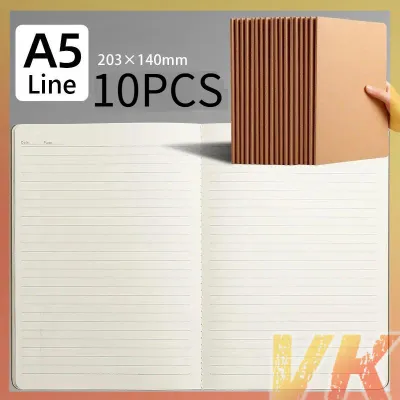
For students and professionals, an everyday notebook serves as a rapid-capture tool for meeting minutes, lecture notes, to-do lists, and sudden ideas. The primary requirements here are lightweight construction, rapid accessibility, and functional durability. Standard 70gsm to 80gsm paper is perfectly adequate for this use case, as it keeps the notebook thin, lightweight, and economical. Ruled or narrow-ruled pages are ideal, as they maximize the number of lines per page and help keep rapid handwriting organized and legible.
Because an everyday notebook is constantly pulled out of bags, tossed onto desks, and carried around, it must withstand significant physical wear. Look for notebooks that feature rounded corners rather than sharp 90-degree angles. Sharp corners quickly bend, fray, and peel apart when subjected to friction inside a backpack or tote bag, whereas rounded corners glide smoothly against bag interiors. A thicker kraft cover, ideally around 350gsm, provides a tough exterior that resists bending and protects the inner pages from getting crumpled.
Tear-out capability is another highly practical feature for everyday note-taking. If you frequently need to share written notes with colleagues, hand in assignments, or leave reminders, look for spiral-bound notebooks or notebooks with micro-perforated pages. Micro-perforations allow you to tear out a page cleanly and effortlessly, leaving a neat edge without destroying the notebook’s binding or leaving messy paper debris behind.
Can One Kraft A5 Notebook Handle All Three Scenarios?
For those who prefer a single “everyday carry” (EDC) notebook to manage all aspects of their daily life, finding a hybrid option is highly beneficial. The ideal middle ground is a thread-sewn, lay-flat notebook featuring 100gsm dotted or blank paper. This specific configuration is versatile: the 100gsm paper is thick enough to handle standard gel pens, light sketching, and basic fineliners without significant ghosting, while remaining thin enough to keep the notebook lightweight and highly portable. The dotted layout provides a subtle guide for both writing and drawing without being intrusive.
However, choosing a single hybrid notebook involves clear trade-offs. A notebook optimized specifically for sketching (with heavy 160gsm paper) will be thick, heavy, and contain fewer pages, making it bulky for quick daily notes. On the other hand, a lightweight 70gsm ruled notebook designed for quick notes will buckle, bleed, and warp immediately if you attempt to use art markers, heavy ink washes, or detailed pencil shading. You must weigh these limitations against your daily workflow to decide whether a single hybrid notebook or separate specialized books will serve you best.
Frequently Asked Questions (FAQ)
Is kraft paper inside the notebook good for writing?
Internal pages made of actual brown kraft paper are highly textured, absorbent, and dark in color. While they provide a beautiful, rustic background for metallic gel pens, white ink calligraphy, or charcoal sketching, they are not ideal for everyday writing. Standard black or blue ballpoint and gel pens offer very low contrast against the brown paper, making long passages of text difficult to read. For daily note-taking and journaling, it is highly recommended to choose a notebook with standard white, cream, or off-white inner pages protected by a brown kraft cover.
How do I protect a kraft cover from humidity?
In humid, tropical climates, the unbleached wood fibers in kraft covers naturally absorb moisture from the air, which can cause the cover to warp, lose its stiffness, or develop mold over time. To protect your notebook, store it inside a water-resistant sleeve, a dedicated book pouch, or a zip-top dry bag when commuting. Avoid leaving your notebook in damp, unventilated spaces. Periodically letting your notebook sit in an air-conditioned room will help draw out absorbed moisture and keep the paper fibers dry and rigid.
Community discussion
Share your experience or ask a question. Comments are reviewed before publication.