
Selecting the ideal Languo acrylic marker set depends entirely on your target surface, the scale of your artwork, and your specific detail requirements. For large-scale canvas paintings, a comprehensive 36-color or 48-color set with medium bullet nibs provides the necessary coverage and pigment variety. For intricate rock art, a 12-color to 24-color set featuring fine-point nibs and high-opacity metallic inks ensures crisp details on textured surfaces. For journaling, brush-tip sets in pastel or vintage palettes offer the flexible line control and subtle tones needed without heavily warping or bleeding through high-GSM paper.
Languo has established a strong reputation for offering budget-friendly, highly pigmented water-based acrylic markers that appeal to both beginners and hobbyists. Navigating their product catalog requires understanding how their nib designs, ink formulations, and set configurations interact with different artistic mediums. By matching these technical specifications to your creative goals, you can avoid common pitfalls like clogged tips, ruined paper, or fading colors.
Quick Guide: Matching Languo Acrylic Markers to Your Art Project
To help you find the right configuration quickly, consider how different art projects align with specific marker specifications. Because “best” is a subjective term tied to surface texture, absorbency, and the level of detail required, matching your project to the correct marker type is essential. A marker that flows beautifully on a primed canvas might tear thin journal paper or fray its tip on rough river rocks.
Products mentioned in this guide
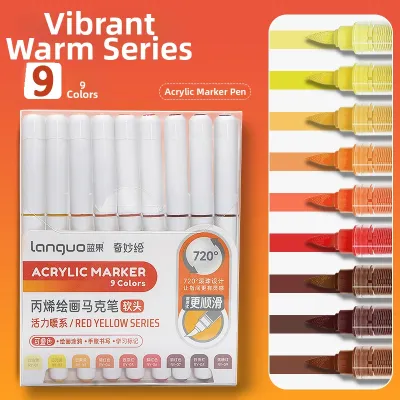
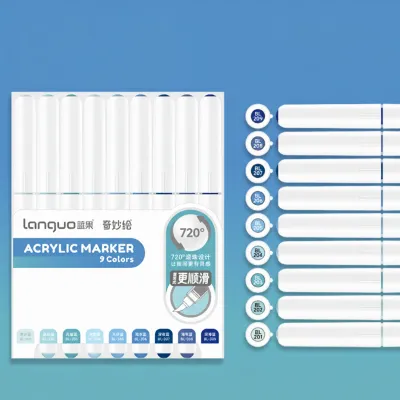
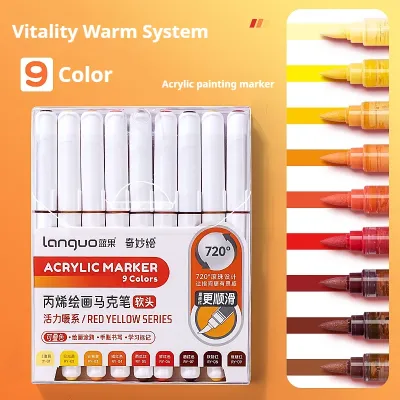
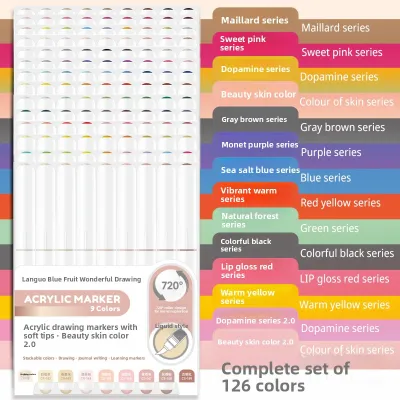
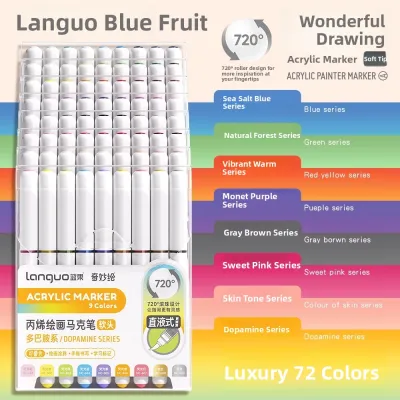
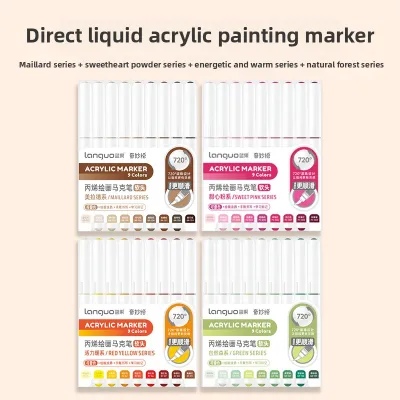
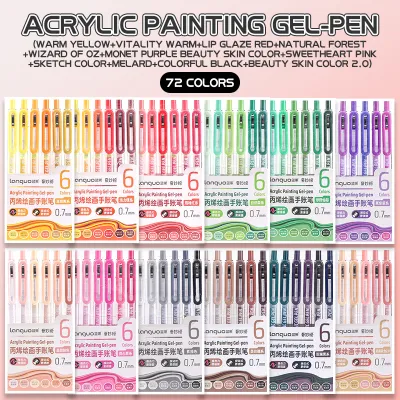
Prices are valid at publication and may change. Please refer to the product page for the latest price.
- Canvas Painting: Medium bullet or broad chisel nibs, 24 to 48 colors, high-opacity classic shades. Ideal for broad coverage, color blocking, and blending.
- Rock Art & 3D Crafts: Fine bullet nibs, 12 to 24 colors, metallic and neon options. Chosen for high-contrast detail on dark, uneven, and non-porous surfaces.
- Journaling & Lettering: Extra-fine or brush nibs, 12 to 24 colors, pastel or earth-tone palettes. Best for precise writing, scrapbooking, and delicate illustrations on paper.
In the Philippines, Languo acrylic marker sets generally fall into highly accessible price bands. Small 12-color sets typically range from ₱150 to ₱300, medium 24-color sets cost around ₱350 to ₱600, while larger professional configurations can range from ₱700 to over ₱1,200. These price points make them an affordable alternative to premium art brands.
To purchase authentic Languo sets, check official brand stores on major local e-commerce platforms or reputable stationery suppliers in retail hubs. Always inspect customer reviews, seller ratings, and product photos to verify that you are receiving genuine, fresh stock with sealed caps. Checking the seller’s return policy is also recommended to safeguard against dry or damaged markers during transit.
Key Specifications to Evaluate in Languo Acrylic Sets
Choosing the right marker set requires looking beyond the outer packaging. Evaluating the physical and chemical specifications of the markers ensures you do not end up with clogged tips or ruined paper. Understanding these technical elements allows you to select a set that matches your exact creative workflow.

Nib Shapes and Line Control
The nib is the critical interface between the ink reservoir and your medium. Languo markers generally feature three main nib styles: extra-fine (0.7mm to 1mm) for detail work, medium bullet (2mm to 3mm) for general coloring, and flexible brush tips for variable stroke widths. Choosing the right shape dictates how much control you have over your lines and how quickly you can cover a surface.
Pay close attention to the nib material listed in the product specifications. Acrylic fiber nibs are highly durable and resist abrasion, making them ideal for rough surfaces like raw wood or stone. Felt nibs, while softer and smoother for blending on paper, tend to fray quickly when dragged across textured backings, which permanently ruins their line control.
Before starting a major project, always perform an observable trial. Take a scrap piece of your target material and draw several test lines to evaluate ink flow, smoothness, and potential bleed-through. Keep in mind that paper fiber density, surface sizing, and primer layers heavily influence how smoothly the nib glides and whether the ink feathers. If the nib drags or the ink bleeds excessively, you may need to adjust your surface preparation or choose a different paper weight.
Set Sizes and Color Selection
Languo packages their acrylic markers in several configurations, typically ranging from basic 12-color packs to comprehensive 48-color collections. Small sets (12 to 18 colors) are highly portable and perfect for testing the medium or working on focused color schemes. They are also an economical choice for beginners who want to practice basic techniques without a large financial commitment.
Medium sets (24 colors) strike an excellent balance for general crafting, providing enough primary, secondary, and neutral shades to mix and layer without requiring a massive storage footprint. Large sets (36 to 48 colors) are designed for dedicated artists who require ready-made gradients, skin tones, and subtle transitions without manual blending. Having a wider palette reduces the need to layer wet ink to achieve intermediate shades.
Specialized color families are highly useful for specific themes. Metallic sets (golds, silvers, bronzes) offer exceptional opacity on dark backgrounds, while pastel and macaron palettes provide a soft, aesthetic look for modern planners. Always verify the exact color chart provided in the product listing, as regional variations can alter the specific shades included in a set. Some sets may focus heavily on bright primary colors, while others lean toward earth tones or portrait shades.
Ideal Languo Acrylic Configurations for Canvas, Rocks, and Journals
Canvas Painting and Large Surfaces
Canvas presents a highly textured, woven surface that demands consistent ink flow and excellent coverage. For this medium, opt for Languo sets featuring medium bullet or broad chisel nibs. These shapes allow you to fill large color blocks quickly without wearing down the tip prematurely. Broad nibs also help maintain a wet edge, which is crucial if you want to blend colors directly on the canvas before they dry.
Layering is a core technique in canvas painting, which requires highly opaque, pigmented ink. When selecting a set, prioritize those with high opacity ratings to ensure your top layers can completely cover the dry paint underneath. Look for sets that include multiple white markers or a colorless blender; white is essential for mixing custom pastel shades directly on the canvas and adding sharp highlights over dark backgrounds.
Keep in mind that raw canvas is highly absorbent and can drink up ink rapidly, causing your markers to run dry much faster. Applying a coat of acrylic gesso primer to your canvas before painting is highly recommended. This seals the fabric fibers, improves ink adhesion, and ensures a smoother, more economical application of your Languo markers. Allow the gesso to dry completely and sand it lightly for an ultra-smooth drawing surface.
Rock Art and 3D Crafts
Painting on stones, ceramics, and wood requires markers that can withstand rough, abrasive surfaces. For rock art, fine to medium bullet nibs made of dense acrylic fiber are the superior choice. Avoid brush tips for this craft, as the rough texture of natural stone will quickly shred the delicate fibers of a brush nib, ruining its line control. Bullet nibs maintain their shape even under firm pressure on uneven surfaces.
High-pigment opacity is crucial here, especially when working on dark river rocks or basalt. Languo’s metallic and neon sets perform exceptionally well under these conditions, creating a vibrant contrast that pops against dark backings. Before painting, ensure the stone is thoroughly cleaned with soap and water to remove dirt and oils, then dried completely to ensure proper ink adhesion.
While Languo’s water-based acrylic ink is highly water-resistant once fully cured, outdoor rock art requires extra protection. The high humidity and tropical rainfall in the Philippines can degrade unsealed acrylic paint over time. To preserve your work, apply a compatible clear acrylic sealant spray or varnish once the ink has dried for at least 24 hours. Always test the sealant on a small, hidden sample of the painted rock first to verify that the solvent does not reactivate, smear, or dissolve the acrylic ink.
Journaling and Detail Work
Journaling, scrapbooking, and illustration require precision, clean lines, and an aesthetic color palette. Languo sets with extra-fine point (0.7mm) or flexible brush nibs are ideal for these delicate tasks. The brush tips are particularly valued for modern calligraphy, hand-lettering, and creating organic botanical illustrations, as they respond dynamically to hand pressure.
For paper-based projects, specialized color palettes like pastels, earth tones, or vintage shades are highly popular. These muted tones allow you to write and decorate without overwhelming the page. However, because acrylic ink is thicker than dye-based fountain pen or gel ink, paper compatibility is a critical factor. The water content in the ink can easily saturate and warp low-quality paper.
Always check your journal’s paper weight, measured in grams per square meter (GSM). Standard notebook paper (80 GSM or lower) is highly susceptible to warping, ghosting, and bleed-through when exposed to wet acrylic ink. For the best results, use journals with thick, mixed-media paper (at least 120 GSM to 160 GSM). Always conduct a quick test on the very last page of your journal to observe how the paper handles the moisture before committing to a main layout.
Best Practices for Using and Maintaining Acrylic Markers
Proper handling and maintenance can significantly extend the lifespan of your Languo acrylic markers, preventing dry-out and ensuring a smooth flow of ink. Because acrylic paint dries into a permanent plastic film, negligence can quickly render an expensive marker unusable.
- Priming the Marker: Most Languo acrylic markers use a valve-action system that requires priming before the first use. Shake the capped marker vigorously for about 30 seconds to mix the pigments and binder. Remove the cap, place the nib vertically against a sheet of scrap paper, and gently press down to depress the valve. Hold it for a moment, then release. Repeat this pumping action rhythmically until you see the ink slowly saturate the nib. Avoid rapid, aggressive pumping, as this can flood the valve, causing large puddles, leaks, and messy spatters.
- Storage: Always store your acrylic markers horizontally. Storing them vertically can cause the heavy pigments to settle at the bottom of the barrel, leading to a watery, transparent flow if stored tip-up, or a clogged, overloaded nib if stored tip-down. Horizontal storage keeps the pigment suspension evenly distributed and ready for immediate use.
- Cleaning and Unclogging: If a marker tip becomes clogged with dried acrylic paint or paper fibers, do not throw it away. Gently pull the nib out of the marker and wipe it with a damp lint-free cloth, or rinse the tip briefly in warm water to dissolve the dried paint. Once clean, blot it dry with a paper towel and reinsert it. Note that this method only works if the ink inside the main barrel is still liquid; if the ink reservoir inside the marker has completely dried out due to an improperly sealed cap, the damage is irreversible.
- Safety and Ventilation: Languo water-based acrylic markers are generally low-odor and formulated to be non-toxic. However, always check the packaging for safety certifications, such as the AP non-toxic seal, especially if the markers will be used by children. Ensure you work in a well-ventilated space, particularly when applying clear protective sealants or aerosol varnishes, as these chemical sprays emit strong fumes that require active airflow.
Frequently Asked Questions (FAQ)
Are Languo acrylic markers waterproof when dry?
Once fully cured, Languo’s water-based acrylic ink forms a plastic-like film that is highly water-resistant. This means light moisture or accidental spills will not easily smudge or wash away the artwork. However, for items that undergo frequent washing, heavy handling, or outdoor exposure, the ink can eventually wear off. To ensure long-term durability on outdoor crafts, applying a dedicated protective clear sealant is highly recommended.
Can I use acrylic markers on fabric or glass?
Yes, Languo acrylic markers can write on both glass and fabric, but the longevity of the design depends on surface preparation and post-treatment. On glass, the ink dries to a smooth finish but can be easily scraped off with a fingernail or washed away in a dishwasher. On fabric, the ink will eventually fade or bleed during washing unless it is heat-set with an iron or treated with a fabric medium. Always check the manufacturer’s care instructions for the target material before starting.
How long do acrylic markers last before drying out?
The shelf life of Languo acrylic markers typically ranges from one to two years, depending heavily on storage conditions and cap maintenance. To maximize their lifespan, always snap the caps on tightly immediately after use to prevent air from entering the barrel. Keep your marker sets stored horizontally in a cool, dry place away from direct sunlight, as excessive heat can accelerate drying and cause the ink formula to separate.
Community discussion
Share your experience or ask a question. Comments are reviewed before publication.