
Selecting the ideal writing instrument for a professional office environment requires balancing ink chemistry, ergonomic design, and long-term operating costs. In busy Philippine offices—where tasks range from signing official contracts in air-conditioned boardrooms to filling out multi-copy carbon forms in humid warehouses—the right pen can significantly reduce hand fatigue and prevent costly document smudges. The best Pentel ballpen for daily office use depends on your primary writing tasks: the Pentel EnerGel series is outstanding for rapid note-taking and left-handed writers who require ultra-fast drying times; the Pentel Vicuna series is ideal for high-volume writing and water-resistant record-keeping; and the classic Pentel R.S.V.P. or BK7 series offers unmatched economy and long-term reliability for shared workspaces.
What to Look for in a Daily Office Ballpen
Choosing a professional writing instrument involves evaluating several technical specifications that directly impact document legibility and user comfort. The tip size of the pen is one of the most critical factors to consider before making a purchase. A fine tip, such as a 0.5mm needle or metal tip, produces crisp, precise lines that are perfect for filling out tight grids on accounting ledgers, tax forms, or standard administrative logs. Conversely, a medium tip, like a 0.7mm or 1.0mm conical tip, delivers a bolder, more authoritative line that is highly legible on executive correspondence and signed contracts. For carbon copy forms, which remain widely used in local logistics, invoicing, and receipting, a slightly broader conical tip is essential because it allows you to apply the necessary physical downward pressure to transfer the ink cleanly through multiple layers without tearing the top sheet of paper.
Ink formulation is another key decision dimension that dictates how the pen behaves on the page. Traditional oil-based ink is highly viscous, slow-consuming, and exceptionally water-resistant, making it highly reliable for permanent records but requiring more physical writing pressure. Low-viscosity oil-based ink, often referred to as hybrid ink, reduces this drag significantly by blending lubricants into the formula, providing an effortless glide while maintaining excellent water resistance. Gel ink utilizes a water-based suspension that flows generously from the reservoir, resulting in highly vibrant colors and smooth lines, though it typically consumes ink much faster than oil-based alternatives.
Products mentioned in this guide
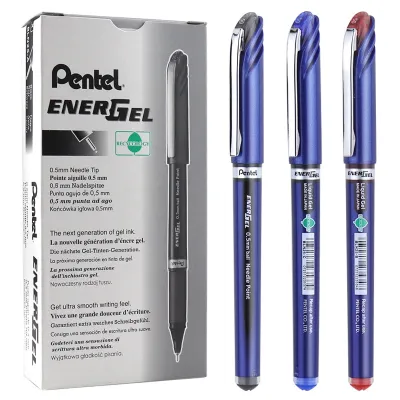
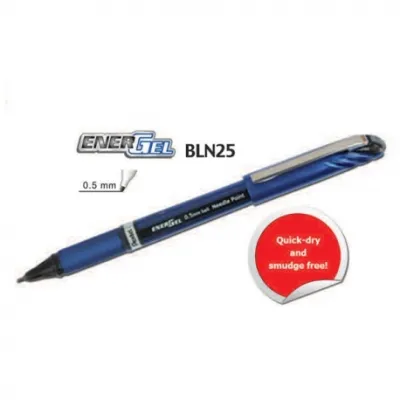
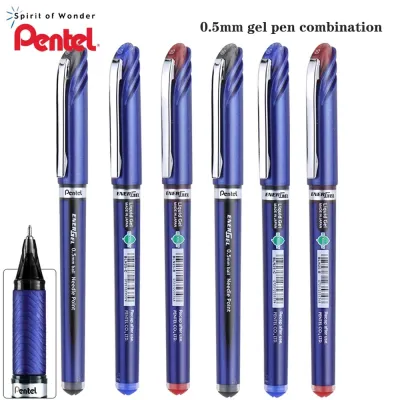
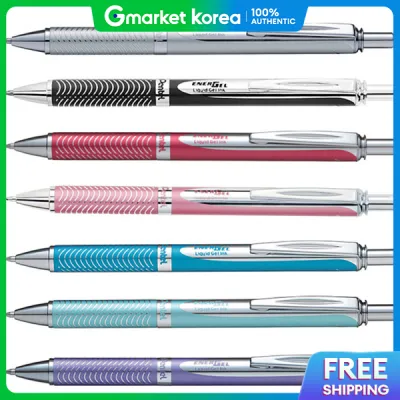
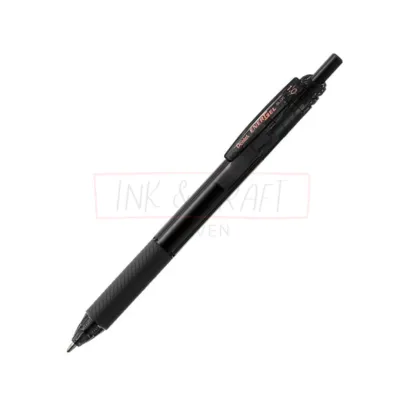
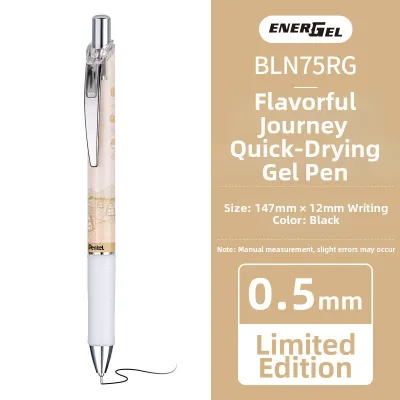
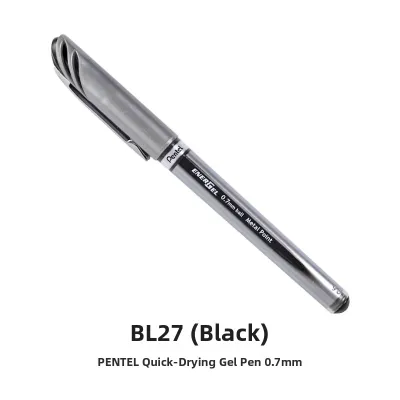
Prices are valid at publication and may change. Please refer to the product page for the latest price.
Paper compatibility is a vital factor that is often overlooked in busy office environments. Standard copy paper, typically ranging from 70gsm to 80gsm, has loose, highly absorbent fibers that can act like a sponge when interacting with water-based gel inks, leading to feathering, line spreading, and bleed-through to the opposite side of the sheet. Premium bond paper, which usually ranges from 100gsm to 120gsm, features a tighter weave and smoother surface treatment that allows gel inks to sit on top of the page and dry cleanly without spreading. Understanding how your office’s standard paper stock interacts with different ink types will prevent illegible records and messy document presentations.
Evaluating Ink Quality: Smoothness, Drying, and Smudge Resistance
The overall smoothness and drying speed of a pen are not inherent properties of the writing instrument alone; rather, they are the direct result of how a specific ink formulation interacts with a given paper surface. A pen that glides effortlessly across a coated premium notebook may feel scratchy or skip frequently on rough, recycled copy paper. To ensure your selected Pentel ballpen performs reliably under your specific workplace conditions, you can perform a simple, low-risk test on a sample sheet of your standard office paper.

The Loop and Smudge Test
- Step 1: Place a sheet of your standard office copy paper on a flat, hard writing surface.
- Step 2: Using moderate, natural writing pressure, draw a series of rapid, continuous figure-eight loops across the page for approximately five seconds.
- Step 3: Immediately drag your thumb across the fresh ink pattern to check for smearing.
- Step 4: Repeat the loop test on a fresh section of the paper, but wait exactly one second before dragging your thumb across the ink.
- Step 5: Repeat the test with a two-second and three-second delay.
This simple trial establishes a clear, observable baseline for how long a specific ink takes to set on your office’s actual paper stock, allowing you to make an informed decision based on your writing speed. Left-handed writers, in particular, must prioritize fast-drying inks because their writing hand naturally follows the pen tip, dragging across freshly written text. If an ink takes longer than one second to dry during the smudge test, a left-handed writer will likely experience ink pooling on their hand and unsightly smears across their documents. Left-handed users should look for fast-drying gel or low-viscosity hybrid inks that set almost instantly on contact with the paper.
The tropical climate of the Philippines introduces additional environmental variables that affect ink performance. High relative humidity, which often exceeds 80% in non-air-conditioned office spaces, slows down the evaporation rate of the water carriers used in gel inks, naturally extending their drying times. Furthermore, leaving pens uncapped or retracted in humid conditions can cause the ink at the tip to absorb moisture from the surrounding air, leading to feathering, skipping, or premature leaking. To maintain consistent ink quality and prevent skipping, always retract or cap your pens when they are not actively in use.
Grip Comfort and Ergonomics for Long Writing Sessions
The physical design of a pen determines how long you can write before experiencing hand fatigue, muscle strain, or finger cramping. The grip area is the primary interface between your hand and the writing instrument, and the materials used here have distinct trade-offs. Rubberized cushion grips provide immediate softness and reduce the finger pressure required to hold the pen securely, which is highly beneficial during long transcription sessions. However, in warm, humid tropical environments, soft rubber grips can chemically degrade over time, absorbing skin oils and sweat until they become sticky, tacky, or loose. Textured plastic grips or brushed metal barrels do not offer the same level of immediate cushioning, but they are exceptionally durable, easy to clean, and will not degrade over years of daily use.
Pen weight and the center of gravity also play a significant role in writing comfort. Extremely lightweight plastic pens require very little effort to move across the page, but their lack of mass often forces the writer to grip the barrel tighter to maintain control, leading to hand fatigue over time. Slightly heavier pens, particularly those with a low center of gravity weighted toward the tip, naturally press into the paper under their own weight. This weight distribution reduces the physical downward pressure your hand must apply to maintain a consistent line. For extended writing tasks, a balanced pen with a slightly wider barrel diameter of 10mm to 11mm is generally more ergonomic than a thin, pencil-like barrel because it prevents the tight pinch reflex that causes cramping in the hand muscles.
Your natural writing posture and grip style should guide your selection of grip materials. If you hold your pen with a high, vertical angle, a tapered grip with a textured or ribbed surface will prevent your fingers from sliding downward toward the tip. If you use a lower, more relaxed writing angle, a wider, uniform rubber or plastic grip provides consistent support along the barrel. Matching the pen’s physical geometry to your natural hand movements is the most effective way to ensure long-term comfort during demanding administrative shifts.
Durability, Build Quality, and Refill Compatibility
A reliable office pen must be physically resilient enough to withstand the daily rigors of a busy workplace. The tip of a high-quality ballpen houses a tiny, perfectly spherical ball made of tungsten carbide, a material valued for its extreme hardness and resistance to wear. This ball must rotate smoothly within its metal collar without wearing down or becoming loose over miles of writing. If the metal collar deforms or the ball wears unevenly, the pen will begin to leak, skip, or scratch the paper surface. Pentel’s precision manufacturing ensures that their tungsten carbide tips maintain their structural integrity, delivering a consistent line width from the first drop of ink to the last.
To maintain a cost-effective and environmentally responsible office setup, purchasing replacement ink refills is far superior to discarding the entire pen body once the ink runs out. To identify the correct refill for your specific Pentel model, unscrew the pen barrel and locate the model code printed directly on the plastic ink cartridge, such as LRN5 for a 0.5mm EnerGel needle tip or XLR7 for a 0.7mm conical tip. Using genuine refills ensures that the cartridge seats perfectly against the pen’s internal spring mechanism, preventing tip wobble, ink leaks, or premature drying. Mismatched or generic third-party refills can cause internal leaks that ruin the pen’s retraction mechanism and stain your clothing or office desk.
Evaluating the lifecycle cost of your office stationery helps optimize your administrative budget. While cheap, disposable economy pens have a very low initial purchase price, they are frequently discarded before their ink is fully depleted due to lost caps, cracked plastic pocket clips, or damaged tips. Investing in a premium, refillable pen body with a sturdy metal clip and a robust barrel can lower your long-term office supply expenses. A single premium pen body can last for years in an office environment, requiring only inexpensive refill cartridges that cost a fraction of the price of a complete new pen, while generating significantly less plastic waste.
Matching Pentel Series to Your Specific Office Tasks
To select the best Pentel ballpen for your daily workflow, it is helpful to understand how the brand’s primary product families align with different administrative tasks and writing preferences.
Gel Ink Series (e.g., EnerGel Family)
The Pentel EnerGel family is a premier choice for professional office environments, utilizing a high-performance liquid gel ink that dries incredibly fast. This rapid drying speed makes it the absolute best choice for left-handed writers and anyone who needs to take rapid, continuous meeting notes without worrying about smudging. The ink is highly vibrant, producing deep, solid lines that look exceptionally professional on official correspondence, executive summaries, and presentation materials.
- Best For: Signing important documents, fast-paced note-taking, color-coding administrative logs, and left-handed writers.
- Tip Options: Available in 0.5mm needle tips for fine detailing and 0.7mm conical tips for bold signatures.
- Trade-off: Because gel ink flows more generously than oil-based alternatives, these pens have a higher consumption rate, meaning refills must be replaced more frequently.
Low-Viscosity Oil-Based Series (e.g., Vicuna Family)
For high-volume administrative tasks, continuous data entry, and long writing sessions, the Pentel Vicuna series offers an exceptional low-viscosity oil-based hybrid ink. This specialized formulation combines the smooth, effortless glide of a gel pen with the long-lasting, water-resistant properties of a traditional ballpoint. It requires almost zero writing pressure to initiate a clean line, significantly reducing hand fatigue during long shifts.
- Best For: Long transcription sessions, filling out multi-copy forms, and permanent record-keeping.
- Tip Options: Commonly available in 0.5mm and 0.7mm tip sizes to suit different line width preferences.
- Trade-off: While incredibly smooth, the low-viscosity ink can occasionally accumulate a tiny amount of excess ink at the tip during prolonged writing, requiring a quick wipe with a scrap piece of paper.
Classic Economy Series (e.g., R.S.V.P. or BK7)
When managing office supplies for an entire department, public-facing service counters, or multi-branch operations where pens are frequently misplaced or borrowed, the classic Pentel R.S.V.P. or BK7 series is highly practical. These traditional oil-based ballpoint pens are built for extreme durability and long-term reliability, featuring transparent barrels that allow you to monitor ink levels at a glance. They offer an exceptionally long write-out length, lasting several times longer than a standard gel pen before running dry.
- Best For: Shared office spaces, public reception desks, high-loss environments, and budget-conscious bulk purchasing.
- Tip Options: Available in fine (0.7mm) and medium (1.0mm) tip sizes to handle various daily tasks.
- Trade-off: Traditional oil-based ink is thicker and requires slightly more physical writing pressure to maintain a solid line, making it less suited for rapid, long-form creative writing.
Frequently Asked Questions (FAQ)
How do I prevent my ballpen ink from skipping or blobbing?
To maintain consistent ink flow, store your Pentel pens horizontally or tip-down in a pen holder, which keeps the ink in constant contact with the tungsten carbide ball. Avoid exposing your pens to extreme temperature changes, such as leaving them in a hot vehicle or directly under an air conditioning vent, as thermal expansion can force air bubbles into the cartridge and cause skipping. If a pen begins to skip or has dried ink at the tip, gently wipe the tip with a soft cloth dampened with warm water, or draw a series of continuous figure-eight patterns on a piece of scrap paper while applying moderate pressure to clear the blockage and restore smooth rotation.
Are Pentel gel pens accepted for signing official documents in the Philippines?
While Pentel EnerGel and other high-quality gel pens offer excellent visibility and professional aesthetics, certain government agencies, financial institutions, and legal offices in the Philippines strictly require traditional oil-based blue or black ink for signing official documents, land titles, and binding contracts. This requirement exists because traditional oil-based inks penetrate deep into paper fibers and are highly resistant to water, chemical alteration, and long-term fading. To ensure your signatures comply with local administrative standards and legal preservation requirements, always verify the specific institutional guidelines of the receiving agency or bank before using a gel pen on official paperwork.
Community discussion
Share your experience or ask a question. Comments are reviewed before publication.