
Finding the right pointed marker pen in the Philippines requires balancing ink performance, tip durability, and paper compatibility under local environmental conditions. High relative humidity and warm temperatures can significantly influence how ink dries, flows, and interacts with different paper fibers. Whether you are organizing your daily tasks in a bullet journal, taking rapid notes during a university lecture, or rendering intricate details in an illustration, understanding the technical specifications of your writing instruments ensures clean lines without messy smudges or ruined pages. By focusing on observable product characteristics and manufacturer labels, you can confidently select the ideal tool for your specific creative or professional tasks.
How to Evaluate Pointed Marker Pens for Your Specific Needs
Ink chemistry is the foundation of any marker’s performance. Water-based inks are highly common, offering low odor and minimal bleed-through on standard paper, though they can be sensitive to moisture and high humidity. Alcohol-based inks dry almost instantly and blend beautifully, making them excellent for art, but they easily bleed through thin sheets and require well-ventilated spaces. Pigment-based inks, often labeled as archival, use finely ground particles that sit on top of the paper rather than soaking in, providing exceptional water resistance and fade resistance once dry.
Tip size and construction dictate the precision and character of your lines. Pointed marker pens typically feature fiber, plastic, or felt tips encased in metal or plastic collars. Extra-fine tips (ranging from 0.05mm to 0.3mm) provide maximum precision for tight spaces, while fine tips (0.4mm to 0.8mm) offer a balance of legibility and visibility. Brush-style pointed tips allow for dynamic line variation based on the angle and pressure applied, which is highly useful for hand lettering but requires more control.
Products mentioned in this guide
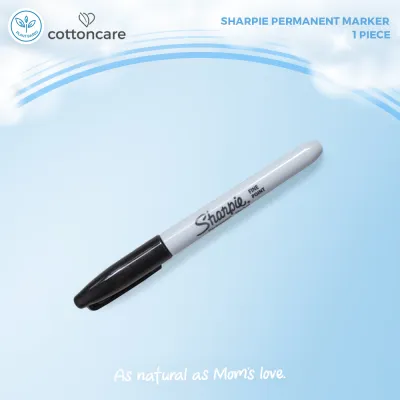
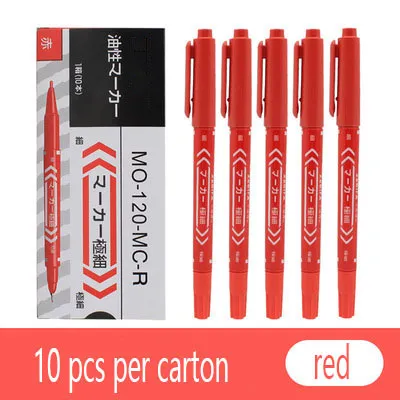
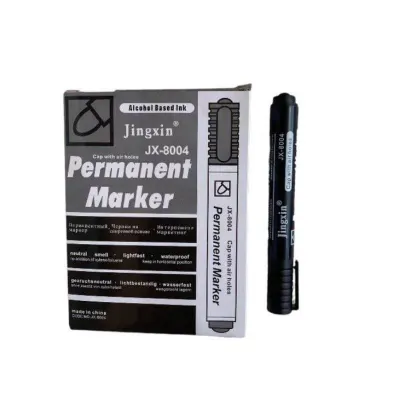
Prices are valid at publication and may change. Please refer to the product page for the latest price.
Paper compatibility is the final piece of the evaluation puzzle. Manufacturers often print warnings or recommendations regarding paper weight, measured in Grams per Square Meter (GSM). Standard copy paper is usually around 70 to 80 GSM, which handles fine water-based markers well but will struggle with alcohol-based inks. For heavy ink applications, look for labels specifying compatibility with mixed media or marker paper to prevent feathering—where ink spreads sideways along paper fibers—and bleed-through.
What to Look for in Pointed Marker Pens for Note-Taking
For daily note-taking in school or office settings, legibility and speed are paramount. Standard notebooks in the Philippines often feature paper weights between 50 and 80 GSM, which can be highly susceptible to ink saturation. To maintain clean, readable pages, prioritize fine or extra-fine pointed marker pens with tip sizes under 0.5mm. These smaller tips deposit less ink onto the page, significantly reducing the risk of the ink spreading or bleeding through to the reverse side of the sheet.

Quick-drying ink is an essential feature to look for on product packaging, especially when writing rapidly during lectures or meetings. In humid tropical climates, standard water-based inks can remain wet on the paper surface slightly longer than in dry environments, leading to accidental smudges from your hand or when turning the page. Look for terms like “quick-dry,” “smudge-resistant,” or “non-smearing” on the marker casing or retail carding to ensure the formula is optimized for rapid absorption and evaporation.
Before committing to a specific marker for your primary notebook, perform a simple paper compatibility check. Write a few test characters on an inconspicuous back page of your notebook and observe the reverse side. If you see “ghosting”—where the writing is visible as a shadow but the ink has not broken through the fiber—the pen is generally safe for two-sided note-taking. If actual spots of ink penetrate the page, you will need to either upgrade to a higher GSM notebook or switch to a drier, finer pointed marker.
Ideal Pointed Marker Pen Specs for Bullet Journaling
Bullet journaling combines structured planning, creative layouts, and habit tracking, requiring a highly versatile pointed marker pen. Because journal pages are frequently handled, turned, and referenced over months or years, the physical durability of the pen tip is critical. Look for markers featuring hard plastic nibs or metal-clad fiber tips. These designs prevent the point from mushrooming or flattening under the consistent pressure of drawing grids, borders, and daily checkmarks.
Long-term preservation of your journal entries requires careful attention to ink stability. If you use your bullet journal for memory keeping, scrapbooking, or long-term goal tracking, look for “pigment-based,” “archival,” or “acid-free” labels on the marker packaging. These inks resist fading when exposed to ambient light and are highly resistant to moisture, ensuring your layouts remain crisp and legible even when stored in humid environments over several seasons.
Dotted and grid journals typically utilize heavier paper, often ranging from 100 to 160 GSM, which provides excellent resistance to bleed-through. However, high-saturation markers can still cause ink pooling at the intersections of lines or dots if the ink flows too generously. To avoid this, select markers that specify a controlled, consistent ink flow system. This ensures that when you pause your hand at the end of a stroke or a grid line, the marker does not deposit an unsightly puddle of ink on your page.
Choosing Pointed Marker Pens for Detailed Illustration
Detailed illustration demands a high level of control over color layering, shading, and fine detail. For artists, alcohol-based pointed markers are highly valued because their fast-drying solvent allows for smooth, streak-free color laydown and seamless blending. When shopping for illustration markers, check the packaging for explicit mentions of “blendable” or “layering” capabilities, which indicate that the ink formula is designed to reactivate slightly when a second layer is applied, allowing for smooth gradients.
Precision in artwork requires a diverse range of tip sizes, and professional illustration markers often feature dual tips to maximize utility. A fine, hard-pointed tip on one end allows for precise outlines, hatching, and cross-hatching, while a flexible brush or chisel tip on the other handles broader color fills. Always consult the manufacturer’s size chart on the packaging or official product guides to ensure the fine tip matches your specific detail requirements, with ultra-fine options down to 0.03mm being ideal for microscopic line work.
Heavy ink saturation from layering and blending will quickly ruin standard drawing paper, causing it to warp, pill, or bleed onto your work surface. To prevent this, professional art guidelines recommend pairing your pointed illustration markers with heavy-weight, smooth-surface marker paper or mixed-media board of at least 200 GSM. This specialized paper features a coated barrier or dense fiber structure that holds the ink on the surface longer, allowing you to blend colors smoothly without damaging the paper structure or wasting excessive ink.
Where to Buy and How to Verify Authenticity
Sourcing genuine stationery in the Philippines requires careful selection of retail channels, as counterfeit or poorly stored markers can lead to dried-out tips and inconsistent ink flow. Whenever possible, purchase your pointed marker pens from official brand stores or authorized physical stationery retailers located in major shopping malls. These brick-and-mortar stores maintain controlled environments that protect the markers from extreme heat and humidity, preserving the shelf life of the ink. Prices for quality pointed markers can range from ₱50 for single fine-liners to over ₱500 for professional multi-pen sets.
If you prefer the convenience of online shopping, utilize established e-commerce platforms but exercise caution by verifying the seller’s credentials. Look for official mall badges, verified seller tags, and high positive rating percentages on the merchant’s profile. Upon receiving your package, inspect the outer wrapping for authentic holographic seals, clear batch codes, and crisp, high-quality printing on the product labels, as blurry text or misaligned logos are common indicators of counterfeit goods.
Before finalizing your purchase or checking out your online cart, carefully review the retailer’s return policies and warranty conditions. High-quality stationery brands and authorized local distributors typically offer a clear exchange window for defective items, such as markers that arrive completely dried out or with damaged tips. Keeping your physical or digital receipt and filming a quick unboxing and testing video can serve as reliable proof if you need to request a replacement or refund for a faulty product.
Frequently Asked Questions (FAQ)
How can I revive a dried-out pointed marker pen?
To revive a dried-out pointed marker, first identify its ink base by checking the product label. For water-based markers, you can often restore ink flow by adding a few drops of clean water directly to the tip or dipping the very tip into water for a few seconds, then capping it tightly and letting it sit upright for an hour. If the marker is alcohol-based, a tiny drop of isopropyl alcohol applied directly to the nib can help re-solubilize the dried ink particles blocking the capillary channels.
Proper storage is also essential for maintaining consistent ink flow and preventing premature drying. Manufacturers generally recommend storing dual-tipped markers horizontally to ensure even ink distribution to both ends, while single-tipped markers should be stored tip-down to keep the nib saturated. If the marker tip has become severely frayed, hardened, or if the internal ink reservoir is completely depleted, the pen cannot be revived and should be replaced to avoid scratching your paper.
Do pointed marker pens require special paper to prevent bleeding?
Whether you need special paper depends entirely on the ink chemistry and tip size of your pointed marker pen. Fine-tipped, water-based markers generally perform well on standard notebook paper of 80 GSM or higher without significant bleed-through. However, highly saturated alcohol-based markers or thick-tipped permanent markers will almost always bleed through standard paper, requiring specialized marker paper, heavy cardstock, or mixed-media paper of 200 GSM or more to contain the ink.
To ensure your project turns out clean, always perform a quick test on a scrap piece of your intended paper before starting your final work. If you must use thin paper with a high-saturation marker, place a loose protective blotter sheet—such as a piece of heavy cardstock or silicone baking paper—directly underneath your active page. This simple barrier will absorb any excess ink that penetrates the sheet, protecting the subsequent pages of your notebook or your desk surface from permanent stains.
Community discussion
Share your experience or ask a question. Comments are reviewed before publication.