
Paper quilling—the art of rolling, shaping, and gluing paper strips into intricate decorative designs—is an increasingly popular activity in Philippine school art classes, particularly within the MAPEH (Music, Arts, Physical Education, and Health) curriculum. It offers an affordable way to develop fine motor skills, spatial intelligence, and patience among students. However, selecting the best quilling tools set for a classroom requires balancing safety, durability, cost, and completeness. The ideal set must withstand the enthusiastic handling of young learners while providing all the essential components to complete a project from start to finish without requiring expensive supplementary purchases.
Quick Guide: What Makes a Quilling Set Ideal for Schools
When procurement officers, art teachers, or parent-teacher associations source supplies, they must look beyond professional-grade kits designed for solo artists. In a classroom environment, the primary criteria are safety, durability, ease of use for beginners, and cost-effectiveness. A school-appropriate quilling tools set must feature robust construction to survive repeated use across multiple class sections and school terms, ensuring that the school’s investment yields long-term value.
Standardization is equally critical for successful group instruction. When every student in a classroom uses the exact same set configuration, the teacher can demonstrate a technique once, and all students can follow along uniformly. This minimizes confusion, reduces individual troubleshooting during limited class hours, and ensures grading criteria remain fair. The best set is not the one with the most complex, specialized tools, but rather a well-curated package that balances reliable basic tools with high-quality, uniform materials.
Products mentioned in this guide
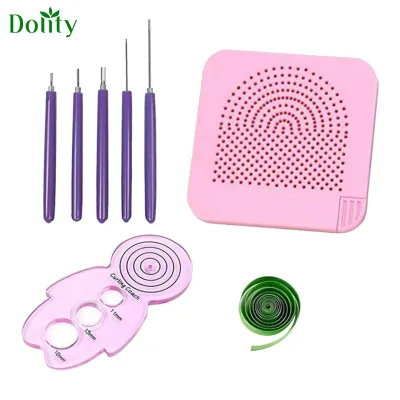
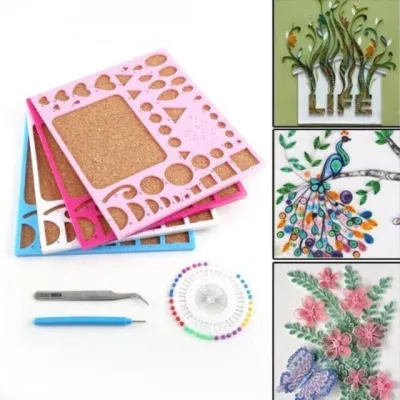
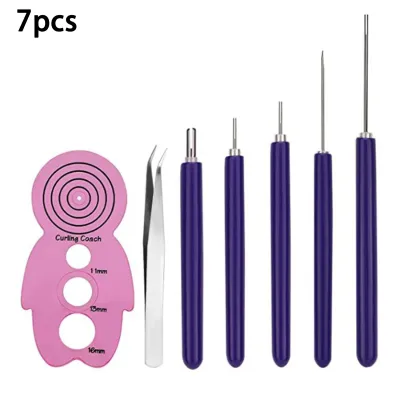
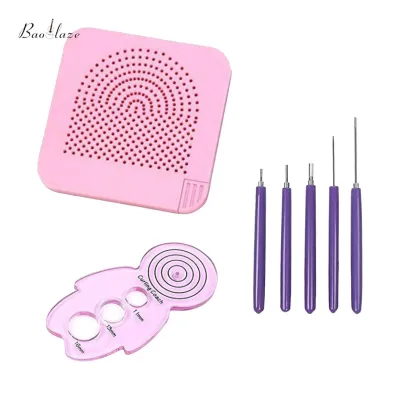
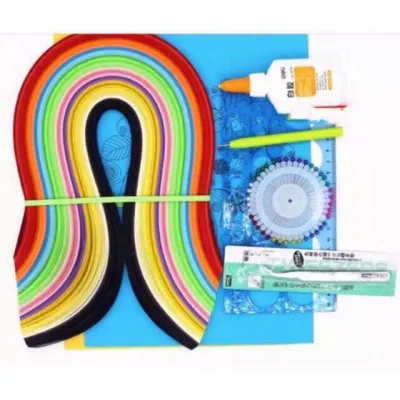
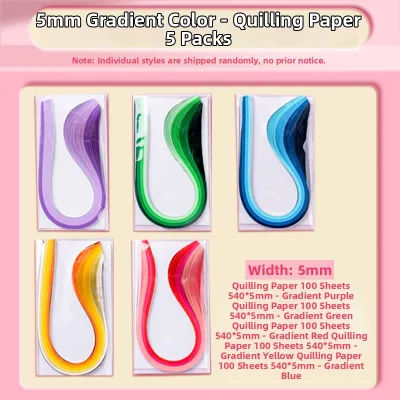
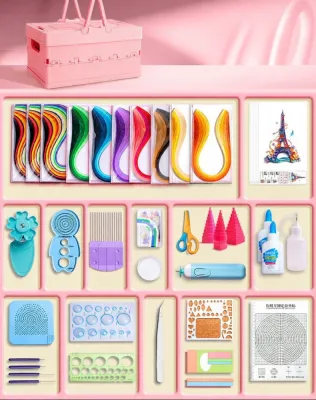
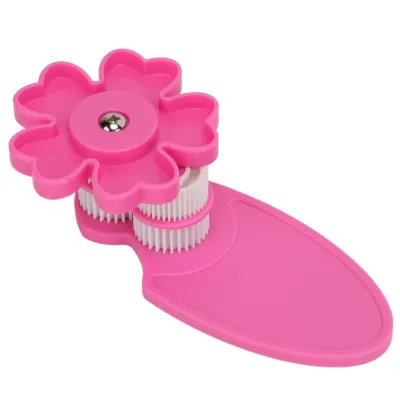
Prices are valid at publication and may change. Please refer to the product page for the latest price.
Essential Components Every Classroom Quilling Set Needs
To ensure students can complete their foundational art projects without interruption, a classroom quilling tools set must contain several mandatory components. Missing even one of these core items can halt a lesson plan or require additional, unplanned expenditures. Teachers should verify that any prospective set includes the following five core elements.

Slotted Quilling Tools This is the primary instrument used to roll the paper strips into tight coils. For school environments, look for tools with sturdy metal slots anchored deeply into ergonomic plastic or wooden handles. While all-plastic slotted tools exist and are highly safe, their slots can wear down or widen quickly under heavy use, making it difficult for students to grip the paper. Ergonomic handles designed for smaller hands are essential to prevent hand fatigue during hour-long art sessions. The slot itself should ideally be around 1mm to 1.5mm deep; a slot that is too deep leaves a large, visible hole in the center of the coil, while one that is too shallow causes the paper to slip out constantly.
Tweezers Tweezers are indispensable for positioning delicate, glued coils onto the backing medium. For school settings, safety is the paramount concern. Standard fine-tip tweezers can be sharp and pose a risk of accidental injury in a crowded classroom. Opt for sets that include blunt-tip or rounded-tip tweezers, which provide excellent grip for paper coils while significantly minimizing safety hazards.
Circle Sizing Board Also known as a quilling board or template, this tool features multiple circular recesses of varying diameters. Students release their rolled coils inside these circles to ensure uniform expansion. Without a sizing board, students will produce coils of inconsistent sizes, making structured patterns like flowers or geometric designs difficult to execute. For classroom use, durable plastic boards are preferred over cork boards, as they are easier to clean and do not degrade when exposed to excess glue.
Paper Strips The quality and dimensions of the paper strips directly influence the success of a student’s project. Standard beginner widths are 3mm and 5mm. Pre-cut, uniform lengths are highly recommended for schools because they save valuable class time that would otherwise be spent cutting paper manually. Ensure the set includes a vibrant assortment of colors to encourage student creativity.
Adhesives Precision is key in paper quilling. A school set should either include or be paired with non-toxic, clear-drying PVA (polyvinyl acetate) glue housed in a squeeze bottle with a fine metal or plastic applicator tip. Standard school glue bottles with wide nozzles release too much adhesive, leading to soggy, warped paper and messy, over-glued projects that take too long to dry in humid tropical classrooms.
Recommended Set Configurations Based on Class Size
The ideal procurement strategy depends heavily on the class size, budget constraints, and the specific structure of the art program. Because brand availability in the local market can fluctuate, focusing on the configuration of the set is the most reliable way to make a purchasing decision.
Individual Starter Kits for Small Groups
For specialized art electives, after-school clubs, or small-group workshops of five to ten students, individual starter kits are highly effective. These comprehensive, single-user kits typically come packaged in dedicated storage cases, keeping all components organized and preventing small parts from getting lost.
These kits generally feature a wider variety of paper colors, multiple specialized tools (such as curling coaches, quilling combs, and border buddies), and high-quality sizing boards. While the cost per student is higher—typically ranging from ₱250 to ₱500 per kit—the inclusion of specialized tools allows advanced students to explore complex, three-dimensional designs and individual creative expression. The storage cases also make it easy for students to transport their personal kits between home and school safely.
Bulk Classroom Packs for Large Groups
For standard MAPEH classes of 20 to 30 students, purchasing individual premium kits is often budget-prohibitive. In these scenarios, the most cost-effective strategy is to look for bulk classroom packs or to assemble a custom bulk set.
Many educational suppliers offer simplified tool packs containing only the bare essentials: a slotted tool, a pair of safety tweezers, and a basic circle template. These basic tool sets can be purchased in bulk at a significantly lower cost per unit, often averaging ₱50 to ₱100 per student. To complement these tools, teachers should purchase large, separate bulk packs of assorted paper strips (often sold in packs of 100 to 500 strips per color family). This division of resources keeps the per-student cost manageable, ensures every student has access to the necessary tools, and provides more than enough raw material for multiple classroom lessons throughout the school year.
How to Evaluate Tool Safety and Material Quality
When ordering quilling supplies, especially from online marketplaces where physical inspection is impossible before purchase, teachers and school administrators must know how to evaluate product quality and safety based on specifications and user feedback.
Tool Safety Checks Inspect product images and descriptions closely for potential hazards. For metal slotted tools, verify that the metal tip is securely anchored into the handle and does not wiggle, which can cause the tool to snap during use. Check for any sharp, unfinished metal edges or plastic burrs on the handles that could scratch sensitive skin. For primary school levels, prioritizing sets with certified child-safe plastic slotted tools or those with protective caps is a prudent safety measure.
Adhesive Safety Always verify that any glue included in the set is certified non-toxic, bearing standards such as ASTM D-4236 or EN71. In the warm, humid climate of the Philippines, classrooms can become stuffy, making it essential to avoid strong-smelling, solvent-based adhesives. The glue must be water-soluble and washable, ensuring that students can easily clean their hands, desks, and uniforms with simple soap and water.
Paper Quality Indicators The performance of quilling paper is heavily dependent on its weight and chemical composition. Look for paper strips with a weight of 80 to 120 gsm (grams per square meter). Paper that is too thin (below 80 gsm) will tear easily when pulled through the slot and will buckle under the moisture of the glue. Conversely, paper that is too thick (above 120 gsm) is difficult for beginners to roll tightly and will spring open too aggressively. Additionally, verify that the paper is acid-free; acid-free paper resists yellowing and degradation over time, which is particularly important for preserving student artwork in the high humidity of the Philippines.
Observable Trial and Verification Test Before purchasing a large batch of supplies, teachers should conduct a simple compatibility test with a single sample set. Roll a 5mm paper strip using the slotted tool, release it onto the sizing board, and observe how smoothly it expands. If the paper creases or catches, the slot may have internal burrs. Next, apply a small dot of the included glue to the end of the coil and press it down. Observe the drying speed and check if the paper bleeds color onto the board or backing sheet. If the color bleeds or the paper warps excessively, the paper dye is not water-resistant, or the glue’s water content is too high.
Where to Source Reliable Quilling Supplies in the Philippines
Procuring art supplies in the Philippines can be done through several channels, each offering distinct advantages depending on the urgency, budget, and scale of the purchase.
Local Art Supply Stores For immediate needs or small-scale purchases, visiting physical stationery stores and national book chains is highly recommended. This allows teachers to physically inspect the quality of the paper strips, test the sturdiness of the slotted tools, and verify the safety of the tweezers. Physical stores also provide immediate availability, making them the go-to option when an art module is scheduled to begin in a few days.
Major E-commerce Platforms When purchasing for larger groups, online marketplaces offer a vast selection of quilling tools sets at competitive prices. To ensure a successful purchase, filter for high-rated sellers with established track records. Carefully read customer reviews, paying close attention to complaints about missing components, dried-up glue, or bent metal tips. Always factor in shipping times, particularly if the supplies are being delivered to provinces outside Metro Manila, and ensure the seller packs the paper strips in waterproof plastic bags to prevent moisture damage during transit in the rainy season.
Direct Educational Distributors For school-wide procurement or department-level purchases, contacting direct educational and office supply distributors is the most efficient route. These distributors can provide official, BIR-compliant receipts, which are necessary for school liquidations and accounting. They also offer substantial bulk discounts that are not typically available through retail channels, and they can guarantee a consistent supply of refills when paper strips run low mid-term.
Frequently Asked Questions (FAQ)
What is the best paper width for beginners in school art classes?
For beginners, especially younger students who are still developing their fine motor skills, a paper width of 5mm is highly recommended. This width provides a substantial physical surface that is easy for small fingers to grip, guide, and roll without the paper slipping out of the slot. A 5mm strip also offers excellent structural stability, allowing the finished coils to stand upright on the backing paper without buckling under their own weight. Once students gain confidence and precision, they can transition to 3mm strips, which are ideal for more delicate, intricate designs but require a higher level of manual dexterity.
How do you clean dried glue from slotted quilling tools?
Dried glue inside the slot of a quilling tool is a common issue in classroom settings. To clean metal-tipped tools safely and without damage, soak the metal tip in warm water for five to ten minutes to soften the PVA glue. Once softened, use a fine sewing pin, a thin needle, or a spare strip of cardstock to gently scrape the residue out of the slot. Avoid using harsh chemical solvents, acetone, or abrasive scrubbers, as these can degrade the plastic or wooden handles, strip away protective coatings, or permanently warp the delicate metal slot. Always dry the metal tip thoroughly after cleaning to prevent rust.
Can regular craft glue be used instead of specific quilling glue?
While standard white school glue or PVA craft glue can be used for quilling, it is not ideal for classroom efficiency. Regular craft glue tends to have a higher water content, which slows down its drying time and causes the quilling paper to warp or lose its shape. Specialized quilling glue is formulated to dry much faster and clearer, ensuring that coils lock into place quickly without leaving unsightly white residue. If budget constraints require using standard school glue, teachers should transfer the glue into small squeeze bottles equipped with fine, metal precision applicator tips. This simple modification allows students to apply micro-dots of glue, preventing over-saturation and keeping their artwork neat.
Community discussion
Share your experience or ask a question. Comments are reviewed before publication.