
Selecting the right receipt book for your small business in the Philippines requires balancing daily operational speed, record-keeping accuracy, and local compliance standards. A physical receipt serves as a tangible record of a transaction, protecting both your business and your customers by providing clear proof of payment. While digital point-of-sale systems continue to grow in popularity, physical receipt books remain an indispensable, low-cost, and fail-safe tool for mobile vendors, weekend market stalls, and brick-and-mortar retail counters alike.
To find the ideal receipt book, you must evaluate how your business handles transactions, where your sales occur, and how you archive your financial records. Choosing an unsuitable format can lead to slow checkout lines, messy record-keeping, or even compliance issues with local authorities. By understanding the key physical specifications and operational differences between various receipt formats, you can streamline your daily workflows and maintain a highly organized ledger.
Key Features to Evaluate When Choosing a Receipt Book
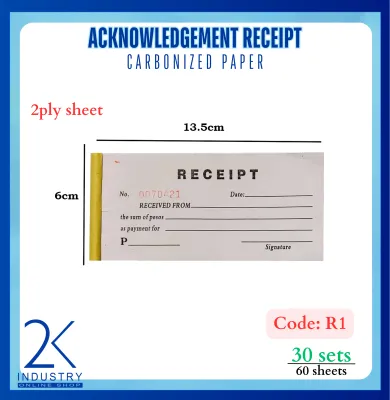
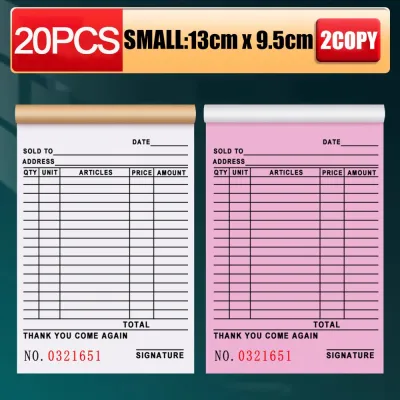
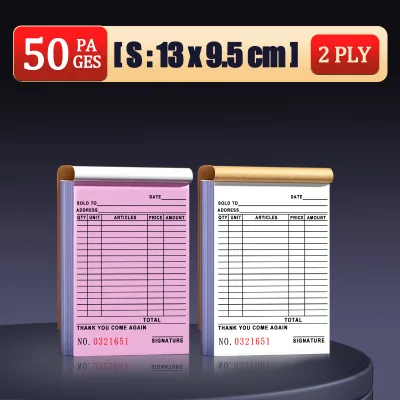
When shopping for receipt books, the physical dimensions and layout options are your first major considerations. Standard counter-sized books, typically measuring around 5 by 8 inches or 4 by 6 inches, offer ample space for detailed, itemized transactions, making them ideal for retail shops or service centers where customers purchase multiple items at once. Conversely, compact pocket-sized formats, such as 3 by 5 inches, are designed specifically for mobile vendors, delivery riders, and outdoor market stalls where space is limited and portability is a priority.
Products mentioned in this guide
Prices are valid at publication and may change. Please refer to the product page for the latest price.
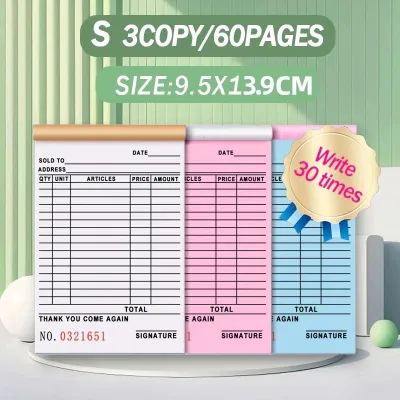
The ply count and duplication method directly determine how many copies of a transaction you can generate simultaneously. Single-ply books only provide a single sheet that is torn out and handed to the customer, leaving only a small, basic stub in the book for your records. Duplicate books (two-part) and triplicate books (three-part) use either carbonless paper or traditional carbon sheets to create identical copies instantly, ensuring that both you and your customer have a complete, matching record of the sale.
Binding types play a critical role in the durability and usability of your receipt books, especially in high-humidity tropical environments. Glued bindings allow for quick and clean page removal, but the adhesive can weaken over time when exposed to heat and moisture, potentially causing duplicate pages to fall out prematurely. Stitched or stapled bindings offer superior structural integrity, keeping your duplicate records firmly bound within the book, while spiral-bound books allow the pages to lay completely flat on any surface, which is highly convenient for writing on the go.
Paper quality and ink compatibility are essential for maintaining legible, long-lasting records. Because paper fibers absorb moisture in humid climates, low-quality paper can cause gel pens, rollerballs, or fountain pens to feather, smudge, or bleed through to the underlying copies. To ensure clean and legible records, look for paper with a smooth finish and sufficient weight, and always test your preferred writing instruments to verify that the ink dries quickly and transfers clearly to the duplicate sheets.
Matching Receipt Book Types to Your Business Operations
Your daily operational workflow should dictate the specific type of receipt book you purchase. If your business involves multiple departments—such as a separate sales counter, an inventory warehouse, and an accounting office—you will require a multi-part receipt system that allows you to distribute physical copies to different team members simultaneously. For simpler operations, such as a small home-based craft business or a neighborhood retail stall, a basic duplicate system is usually more than enough to keep your records straight.

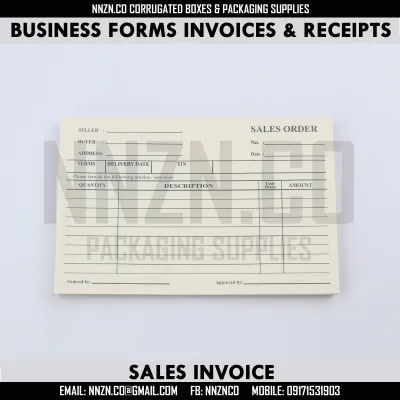
You must also weigh the convenience of generic pre-printed templates against the professional look of customized formats. Generic books are highly affordable and readily available at any local office supply store, making them excellent for startups and low-volume operations. However, as your business grows, you may find that customized fields, such as dedicated columns for specific service terms, delivery addresses, or unique product categories, are necessary to capture all relevant transaction details efficiently.
Single-Ply and Duplicate Books for Simple Transactions
Single-ply and duplicate receipt books are the most practical choices for straightforward, low-volume retail operations and informal internal tracking. In a typical duplicate setup, the original white sheet is torn out and handed to the customer, while the colored duplicate sheet remains bound in the book as your permanent sales log. This system is highly efficient for quick-service food stalls, independent service providers, and small retail shops where transactions are completed on the spot.
Despite their simplicity, these books have clear limitations when it comes to complex business structures. Because they only generate one duplicate copy, they cannot support workflows that require separate routing to both an inventory manager and an external bookkeeper. If your business relies on automated inventory deduction or multi-department reconciliation, relying solely on a duplicate book will require manual copying, which increases the risk of transcription errors.
Triplicate and Multi-Part Books for Inventory and Accounting
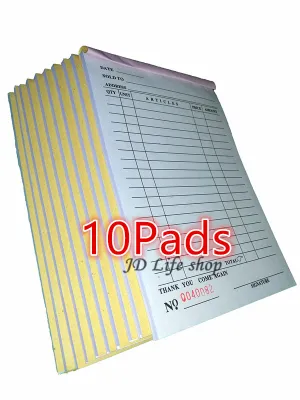
Triplicate and multi-part receipt books are designed for businesses that require robust internal controls and detailed audit trails. In a standard triplicate configuration, each transaction generates three copies: the original white copy goes to the customer, the second copy (often yellow) is routed to your accounting or bookkeeping department, and the third copy (often pink) is sent to the warehouse or inventory team to authorize product release. This parallel routing ensures that all departments remain perfectly synchronized without the need for photocopying.
To prevent misfiling and streamline your end-of-day reconciliation, multi-part books utilize a standardized color-coding system. This visual distinction allows your staff to sort and distribute copies instantly, even during busy peak hours. When auditing your books at the end of the month, having a dedicated, color-coded duplicate file makes it simple to cross-reference physical sales slips with your digital ledger or bank deposits.
Pre-Printed Generic vs. Custom-Printed Formats
Choosing between generic and custom-printed receipt books involves a trade-off between immediate cost and long-term operational efficiency. Generic receipt books are incredibly cost-effective, with prices often starting at less than ₱50 per book, and they require zero lead time to purchase. They feature standard layouts with basic fields for the date, customer name, items purchased, and total amount, which is perfectly adequate for businesses in their early stages.
Custom-printed receipt books, on the other hand, require a higher initial investment and longer production lead times, but they offer significant branding and operational advantages. Custom formats allow you to pre-print your business logo, registered address, contact numbers, and specific terms of service or return policies directly onto every page. This professional presentation builds trust with your clients and ensures that your staff always captures the exact information required for your specific business model.
Navigating Tax Compliance and Official Receipt Requirements
It is critical for small business owners to understand the distinction between internal record-keeping books and officially registered tax receipts. Generic receipt books purchased from local stationery stores are generally classified as “acknowledgment receipts” or “collection receipts.” While these documents are excellent for tracking daily cash flow, monitoring inventory, and providing customers with a temporary proof of payment, they are not legally valid official receipts for formal tax deduction purposes.
For official tax compliance, the local tax authority requires registered businesses to issue official receipts or sales invoices printed by an accredited printing service. These official documents must contain specific, legally mandated information pre-printed on the page, including your registered business name, registered address, Taxpayer Identification Number (TIN), and a unique, sequential serial number approved by the authority. Using non-compliant generic books as official tax documents can result in significant penalties during a tax audit.
Before purchasing any bulk receipt books or ordering custom prints, you should consult with a certified public accountant or visit your local district tax office. They can guide you through the process of obtaining an Authority to Print (ATP) and help you design a compliant layout that meets all current regulatory standards. Additionally, remember that physical receipt books must be retained for a legally mandated period—often up to five years or more—meaning the paper and binding quality you choose must be durable enough to withstand long-term storage.
Purchasing Channels and Pre-Purchase Verification
When sourcing receipt books, you can choose between local office supply stores, neighborhood bookstores, and major online marketplaces. Local physical stores are ideal when you need books immediately and want to inspect the paper quality firsthand before buying. Online marketplaces, however, often offer a wider variety of sizes, ply configurations, and highly competitive bulk pricing in ₱, making them a convenient option if you can afford to wait a few days for delivery.
Before committing to a bulk purchase, it is wise to obtain a sample book or inspect a single unit to verify its manufacturing quality. Check the perforation lines by folding and tearing a few sample pages; the sheets should detach cleanly and easily without ripping the duplicate copy or damaging the binding. Additionally, flip through the entire book to ensure that the sequential numbering is accurate and that there are no skipped, duplicated, or misaligned numbers, which can disrupt your accounting records.
Finally, perform a quick writing test to evaluate how the paper interacts with your preferred pens. Write a test line using a standard ballpoint pen, wait five seconds, and rub your finger over the ink to check for smudging. Inspect the reverse side of the page to ensure there is no excessive ink bleed-through, and check the duplicate or triplicate sheets below to confirm that the physical writing pressure transfers a sharp, highly legible copy. Taking the time to verify these physical details ensures that your daily transaction recording remains smooth, clean, and completely hassle-free.
Frequently Asked Questions (FAQ)
Can I use a standard generic receipt book as an official tax receipt?
No, standard generic receipt books purchased off the shelf cannot be used as official tax receipts. These generic books are intended solely for internal record-keeping, inventory tracking, or temporary payment acknowledgments. To issue legally valid tax receipts, your documents must be printed by a tax authority-accredited printer, feature your registered business details and Taxpayer Identification Number (TIN), and display an approved sequential serial number.
What is the difference between NCR and carbon receipt books?
NCR (No Carbon Required) receipt books utilize a special chemical coating on the front and back of the pages that reacts under the pressure of a pen to transfer your writing to the sheets below, making them clean, fast, and smudge-free. Traditional carbon receipt books require you to manually insert a loose sheet of blue or black carbon paper between the pages before writing. While carbon paper can sometimes produce a darker transfer, it is generally messier, slower to use, and prone to staining your fingers and clothing.
How should I store and archive my completed receipt books?
To preserve your completed receipt books for the legally required retention period, store them in a cool, dry place away from direct sunlight, which can cause carbonless chemical transfers to fade over time. Because high humidity can degrade paper fibers and weaken glue bindings, placing your archived books inside airtight plastic storage bins with silica gel packets is highly recommended. Keep the books organized chronologically and label each container clearly to ensure quick and easy access during future audits or financial reviews.
Community discussion
Share your experience or ask a question. Comments are reviewed before publication.