
Finding the right subject sticker for notebook organization is the simplest way to streamline a chaotic school day. When you are rushing between classes, a clear, color-coded label ensures you grab the correct notebook instantly, saving time and reducing academic stress. The ideal sticker choice depends on your notebook cover material, your preferred writing instruments, and how much wear and tear your school bag undergoes daily.
For a quick and uniform setup, pre-printed labels offer immediate utility. If you take specialized electives or prefer a personalized touch, blank writable stickers provide the flexibility you need. Meanwhile, students using highly styled or patterned notebooks often prefer clear, transparent waterproof labels that protect the cover’s design while keeping the subject name legible. By matching your sticker selection to your specific study habits and notebook materials, you can establish an organized system that lasts the entire academic year.
Quick Start: Why Subject Stickers Matter for School Organization
Carrying a heavy backpack filled with identical-looking notebooks is a recipe for classroom confusion. During fast-paced class transitions, pulling out a Mathematics notebook instead of your Science journal can disrupt your focus and delay your note-taking. A dedicated subject sticker for notebook organization solves this common pain point by providing an immediate visual cue on the front cover or spine.
Products mentioned in this guide




Prices are valid at publication and may change. Please refer to the product page for the latest price.
In busy school environments, visual organization is key to maintaining mental clarity. When every subject has a designated color or clearly printed label, your brain processes the information instantly. This simple habit reduces the cognitive load of searching through your bag and helps you arrive at your desk prepared and focused.
Subject stickers are available in several distinct categories to suit different student needs. Pre-printed labels offer a clean, standardized look for core classes, while writable stickers allow for complete customization of course names and teacher details. Transparent stickers provide a sleek, modern aesthetic, and decorative washi-style labels cater to students who enjoy personalizing their school supplies. Choosing the right type depends on your notebook covers, writing tools, and daily transport conditions.
How to Choose the Right Subject Stickers for Your Notebooks
Selecting the perfect subject stickers requires looking beyond simple aesthetics. To ensure your labels remain intact and legible from June until the end of the school year, you must evaluate several practical dimensions, including material durability, adhesive quality, size, and color-coding potential.

Material and Durability
School notebooks experience constant handling, sliding in and out of backpacks, and exposure to various environments. In tropical climates with high humidity, standard paper stickers can easily absorb moisture from the air or sweaty hands. This moisture causes the paper fibers to break down, leading to frayed edges, fading ink, and premature peeling.
For maximum longevity, synthetic materials like vinyl, polyester (PET), or polypropylene (PP) are highly recommended. Vinyl stickers are water-resistant, tear-proof, and highly durable, making them capable of surviving accidental water bottle spills or rainy commutes. If you choose paper stickers, look for those with a laminated or matte plastic coating, which provides a protective barrier against daily wear while retaining a premium feel.
Adhesive Quality
The adhesive backing of a sticker determines how well it bonds to your notebook cover and whether it can be removed without leaving a sticky mess. Notebook covers come in various textures, including smooth glossy plastic, matte cardstock, kraft paper, and even textured fabrics. A sticker with weak adhesive will quickly curl at the corners when applied to textured surfaces, while an overly aggressive permanent adhesive can tear paper covers if you ever try to remove it.
If you plan to reuse plastic binders or high-quality notebook covers for future semesters, look for stickers labeled as “removable” or “repositionable.” These use a low-tack adhesive that forms a secure bond but releases cleanly without tearing the underlying material. For standard paper or cardboard covers where the sticker will remain permanently, a medium-to-high tack acrylic adhesive is ideal, as it cures over time to form a long-lasting bond.
Size and Readability
Before purchasing any sticker set, verify the dimensions of both your notebooks and the labels themselves. Standard student notebooks typically come in A5 (148mm x 210mm), B5 (176mm x 250mm), or standard composition sizes. A subject sticker that is too large will look awkward and may wrap over the edges, making it prone to catching on other items in your bag. Conversely, a sticker that is too small will be difficult to read from a distance.
For front covers, a label measuring approximately 5cm by 8cm offers an ideal balance, providing enough space for clear typography without overpowering the cover design. If you store your notebooks vertically on a shelf or in a desk organizer, consider using narrow, long stickers designed specifically for notebook spines. Ensure the font size or your handwriting is at least 14-point equivalent so you can identify the subject at a glance under dim classroom lighting.
Design and Color-Coding
Color-coding is one of the most effective cognitive tools for academic organization. By assigning a specific color to each school subject, you train your brain to identify your materials instantly without even reading the text. For example, you might associate blue with Mathematics, green with Science, red with English, and yellow with local language or social studies classes.
When choosing a design, decide whether you prefer a minimalist aesthetic or a highly decorative layout. Minimalist designs feature clean borders, high-contrast text, and solid color blocks, which minimize visual clutter and look highly professional. Decorative designs may incorporate cute illustrations, pastel floral patterns, or school-themed icons. Whichever style you choose, ensure that the decorative elements do not interfere with the readability of the subject name.
Best Types of Subject Stickers for Different School Needs
Different academic routines and personal preferences call for different labeling solutions. To help you find the perfect match, we have categorized the most popular types of subject stickers, detailing their ideal users, advantages, limitations, and what to check before buying.
Pre-Printed Subject Labels
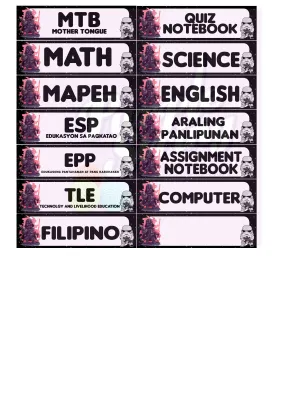
Pre-printed subject labels are ready-to-use stickers that feature common course names printed in clean, professional typography. These are designed for students who want a quick, uniform, and highly legible organizational system without the need for manual writing.
- Ideal User: Students taking standard core curriculums who value a neat, consistent look and want to complete their school organization in minutes.
- Pros: Extremely convenient; no risk of ink smudging; uniform font styles and sizes create a highly organized, professional appearance across all notebooks.
- Cons: Lacks flexibility; standard sheets may not include specialized electives, advanced placement courses, or local curriculum subjects such as Araling Panlipunan, MAPEH (Music, Arts, Physical Education, and Health), or Edukasyon sa Pagpapakatao (ESP).
- What to Verify: Carefully read the product description or packaging to review the complete list of included subjects. Ensure the text contrast is high (such as bold black text on a white or pastel background) to guarantee easy reading under various lighting conditions.
Blank and Writable Label Stickers
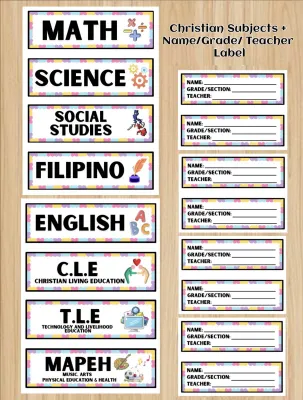
Blank and writable label stickers offer complete customization, allowing you to write exact course titles, teacher names, classroom numbers, and semester dates. These stickers typically feature a designated blank space surrounded by a colored or patterned border.
- Ideal User: Students with unique schedules, specialized college courses, or those who enjoy adding a personal touch through their own handwriting or calligraphy.
- Pros: Maximum versatility; you can label any notebook, binder, or folder regardless of how niche the subject is; allows you to update information as your schedule changes.
- Cons: Requires manual writing, which takes time; risk of ink smudging, bleeding, or fading if the wrong pen-and-sticker combination is used.
- What to Verify: Check the sticker's surface material and texture. Matte paper labels accept almost any writing instrument, including standard gel pens, ballpoint pens, and highlighters. However, glossy or synthetic writable labels require permanent markers or pigment-based archival pens to prevent smudging. Always perform a quick smudge test on a corner of the sticker sheet before writing your final labels.
Clear and Transparent Waterproof Stickers
Clear and transparent stickers feature printed text or writable areas on a see-through vinyl or PET backing. These labels are designed to blend seamlessly into your notebook cover, allowing the original cover design, color, or pattern to remain visible.
- Ideal User: Students who purchase aesthetic, patterned, or pastel-colored notebooks and want to label them without covering up the beautiful cover designs.
- Pros: Sleek, modern, and minimalist appearance; highly water-resistant and durable; won't fray or peel when exposed to moisture or heavy handling.
- Cons: Reduced readability if placed over busy, dark, or multi-colored patterns; highly limited writing compatibility for blank versions.
- What to Verify: Ensure the text color on the transparent sticker contrasts sharply with your notebook cover (for example, choose white text for dark covers and black text for light pastel covers). If you are writing on blank transparent stickers, verify that you have a high-quality permanent marker or acrylic paint pen, as standard water-based gel pens will bead up and wipe off immediately.
Washi Tape and Decorative Die-Cut Stickers
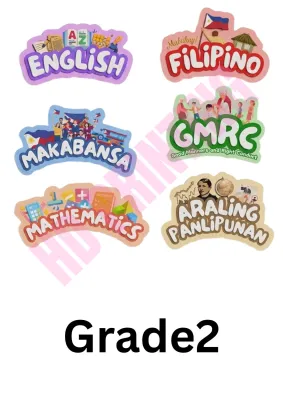
Washi tape-style labels and decorative die-cut paper stickers offer a highly creative, scrapbooking-inspired approach to school organization. These stickers often feature soft pastel colors, hand-drawn illustrations, and textured paper finishes.
- Ideal User: Creative students, bullet journal enthusiasts, and those who view their school supplies as an extension of their personal artistic style.
- Pros: High aesthetic value; easily repositionable without damaging paper covers; wide variety of cute designs, borders, and color palettes.
- Cons: Lower durability; paper-based washi tape and die-cuts lack water resistance and can easily tear or peel at the corners when rubbed against other books inside a backpack.
- What to Verify: Check the adhesive strength of the washi tape or die-cut sticker. Because washi tape is designed to be easily removable, you may need to apply a layer of clear protective tape over the label if your notebook will experience heavy daily handling. Verify that the paper texture is smooth enough to write on without causing your pen tip to skip or feather.
Safe Application and Removal Tips for Notebook Covers
To ensure your subject stickers look professional and stay securely attached throughout the school year—and peel off cleanly when the semester ends—proper application and removal techniques are essential. Following these steps will protect your notebook covers from damage.
Step-by-Step Application
Proper surface preparation is the secret to a long-lasting sticker bond. Dust, moisture, and natural oils from your hands can create a barrier that prevents the adhesive from sticking properly, leading to peeling corners within a few weeks.
- Clean the Cover: Wipe the notebook cover with a dry, lint-free microfiber cloth to remove dust and debris. If the cover is made of plastic or glossy laminated paper, you can use a slightly damp cloth to remove fingerprints, but ensure the surface dries completely before proceeding.
- Position the Sticker: Before peeling off the backing, place the sticker on the cover to plan its alignment. Use the notebook's grid lines, margins, or spiral binding as a guide to ensure the label is perfectly straight.
- Apply from the Center: Peel away a small portion of the backing paper and align the edge of the sticker. Slowly press the sticker down, working from the center outward to the edges. This technique pushes out trapped air, preventing unsightly bubbles and creases.
- Seal the Edges: Run your thumb or the edge of a plastic card firmly over the entire sticker, paying extra attention to the corners to ensure the adhesive forms a complete, secure bond.
Safe and Reversible Removal
At the end of the school year, you may want to remove your subject stickers to archive your notebooks, reuse plastic binders, or recycle paper covers. Removing stickers incorrectly can tear paper covers or leave behind a sticky, dirty residue.
- Peel at a Flat Angle: Start at one corner and peel the sticker back slowly. Keep your hand close to the cover and pull at a low, flat angle (nearly parallel to the surface) rather than pulling straight up. This minimizes tension on the notebook cover and reduces the risk of tearing.
- Apply Gentle Heat: If the adhesive is stubborn or has bonded deeply over several months, you can use a hairdryer on a low, warm setting for 5 to 10 seconds to soften the glue.
Warning: Always check the notebook manufacturer’s care instructions first. Never use high heat on thin plastic, PVC, or laminated covers, as this can melt, warp, or permanently discolor the material.
Cleaning Up Sticky Residue
If the sticker leaves behind a tacky layer of adhesive residue, do not scratch it with your fingernails or sharp objects, as this can permanently scratch or gouge the notebook cover.
- The Eraser Method: For minor residue on almost any cover material, rub a clean, soft pencil eraser gently over the sticky area. The friction will roll the adhesive into small, easily sweepable crumbs.
- The Solvent Method: For persistent residue on glossy plastic or laminated covers, apply a tiny drop of 70% isopropyl rubbing alcohol to a cotton swab and wipe the area gently.
Warning: Solvents can strip colors or dissolve certain finishes. Always test the rubbing alcohol on a small, hidden area of the inner cover first to ensure it does not damage, discolor, or strip the cover’s finish before applying it to the front.
Frequently Asked Questions (FAQ)
Can I use subject stickers on fabric or leather notebook covers?
Standard paper and light-adhesive stickers generally do not adhere well to textured fabric, faux leather, or genuine leather notebook covers. The uneven, porous surface of these materials limits the sticker’s contact area, causing the edges to curl and peel off quickly.
If you have a fabric or leather notebook, look for heavy-duty vinyl labels featuring strong, high-tack acrylic adhesives, or use specialized fabric labels. Before applying, check the sticker manufacturer’s specifications for surface compatibility. To prevent permanent damage or staining to expensive leather covers, always test a small, duplicate sticker on an inconspicuous inner area first to ensure it can be removed safely without stripping the material’s finish.
How do I prevent my handwritten subject stickers from smudging?
Preventing smudges requires matching your writing instrument to the specific surface material of your sticker. For matte paper stickers, standard gel pens, ballpoint pens, and highlighters work excellently because the paper fibers absorb the ink quickly. However, you should still allow the ink to dry for at least one to two minutes before touching the label.
For glossy, vinyl, or plastic-coated stickers, standard water-based gel pens will bead up and smudge easily. Instead, use a fine-tip permanent marker or an archival pigment ink pen. These inks dry via evaporation and chemical bonding rather than absorption. After writing, let the sticker sit undisturbed for several minutes. Always perform a quick smudge test on a spare sticker before closing your notebook, stacking books, or sliding them into your school bag.
Are there eco-friendly or recyclable subject stickers available?
Yes, eco-friendly subject stickers are widely available for environmentally conscious students. These stickers are typically made from FSC-certified recycled paper and utilize water-based, non-toxic, biodegradable adhesives. Because both the paper and the adhesive are organic, these stickers can often be recycled directly along with your paper notebooks at the end of the school year.
When choosing eco-friendly options, keep in mind that they generally lack the waterproof and tear-resistant properties of synthetic vinyl or PET plastic labels. To maximize the lifespan of eco-friendly paper labels, keep your notebooks inside a protective dry sleeve when carrying them in your bag, and use them primarily for indoor study sessions where they are safe from spills and high humidity.
Community discussion
Share your experience or ask a question. Comments are reviewed before publication.