
Keeping school papers, review materials, and office documents organized and protected is a constant challenge, especially in a tropical climate. In the Philippines, where high humidity, sudden monsoon downpours, and active daily commutes can easily crumple or wet loose sheets, a reliable transparent bag is an essential organizational tool. These bags allow you to identify contents at a glance without opening them, saving time during fast-paced school days or busy office hours.
Selecting the ideal transparent bag involves matching the plastic material, closure type, and dimensions to your specific filing needs. Whether you are a student compiling review sheets for exams, a teacher managing quiz papers, or an office professional archiving official receipts, understanding the structural differences between these organizers ensures your documents remain pristine and accessible.
Quick Guide to Choosing Transparent Document Bags
The most effective transparent bag for your needs depends entirely on how you intend to use it. A student moving between campus classrooms requires a different level of durability and security than an office worker archiving monthly billing statements in a filing cabinet. By identifying your primary use case first, you can avoid common issues like torn seams, stuck zippers, or bent document corners.
Products mentioned in this guide
![[🇵🇭 Stock&COD] Large Capacity Office Supplies Transparent File Bag Transparent PVC Test Handbag](https://img.lazcdn.com/g/p/7e03af9ab1475023231f245f7ef7f767.jpg_400x400q80.jpg_.webp)
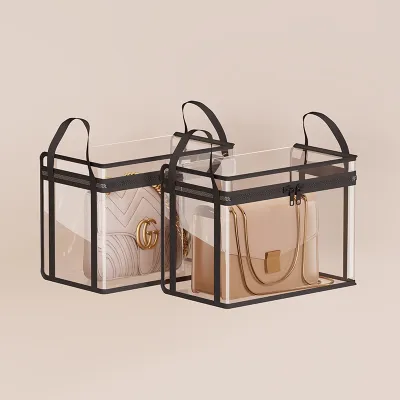
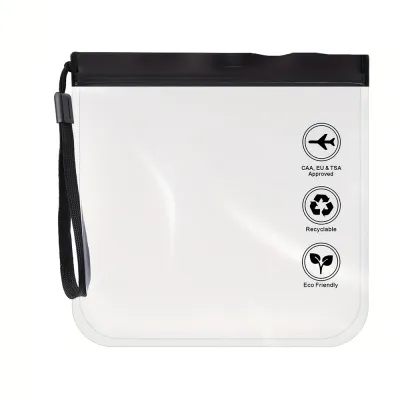
Prices are valid at publication and may change. Please refer to the product page for the latest price.
To find the right fit, evaluate your options across three primary decision axes:
- Material Durability: Choose between heavy-duty polyvinyl chloride (PVC) for high visibility, lightweight polypropylene (PP) for acid-free archival safety, or flexible ethylene-vinyl acetate (EVA) for a soft, crack-resistant finish.
- Closure Mechanism: Select zippers for maximum security against spills, snap buttons for rapid one-handed access, or open-top designs for quick desk filing.
- Paper Size Compatibility: Verify that the internal dimensions comfortably fit local Philippine paper standards, such as A4, Letter (short bond paper), and Legal (long bond paper), without folding the edges.
By focusing on these core features, you can narrow down the vast selection of stationery organizers available in local stores and online marketplaces to find the exact style that fits your workflow.
Key Features to Evaluate Before Buying
Material Differences
Transparent document bags are primarily manufactured from three types of plastics, each offering distinct physical properties. Polyvinyl chloride (PVC) is highly transparent, rigid, and waterproof, making it excellent for displaying contents clearly. However, low-grade PVC can have a strong initial chemical odor and tends to become sticky in hot, humid conditions. In the Philippines, this heat can cause printed toner from laser-printed documents to transfer and stick to the inside of a PVC bag, potentially ruining important papers over time.

Polypropylene (PP) and polyethylene (PE) are lightweight, flexible, and chemically stable alternatives. These materials are naturally acid-free, meaning they will not react with printed ink or cause paper to yellow over long periods. While slightly less crystal-clear than PVC—often presenting a semi-translucent or frosted appearance—PP bags are highly resistant to tearing and moisture, making them the preferred choice for archival storage.
Ethylene-vinyl acetate (EVA) offers a rubber-like flexibility and a soft, matte texture. EVA is highly resistant to temperature fluctuations, meaning it will not crack or become brittle when exposed to air-conditioned offices or hot outdoor commutes. It is also an eco-friendly, chlorine-free alternative to PVC, though it generally sits at a slightly higher price point.
Closure Mechanisms
Zippers provide the most secure seal, preventing small items like pens, flash drives, and loose index cards from falling out of your bag. When evaluating zippered options, inspect the zipper track and the slider quality. Nylon coil zippers are highly flexible and less prone to jamming than metal alternatives, which can corrode when exposed to salty coastal air or high humidity.
Snap buttons offer instant, one-handed access, making them ideal for documents you need to retrieve frequently, such as permission slips, receipts, or active project briefs. However, snap-button envelopes can pop open easily if they are overstuffed. Over time, the physical tension of pulling the snap open can tear the surrounding plastic flap if the material is too thin or poorly welded.
Open-top or simple flap designs are best suited for desk drawers, vertical filing boxes, or binders where you need to slide papers in and out constantly. Because they lack a mechanical closure, they offer minimal protection against spills or accidental drops, but they provide the fastest retrieval speed for active reference sheets.
Transparency and Grid Patterns
Fully clear plastic bags offer maximum visibility, allowing you to read the entire front page of a document without opening the bag. This is highly convenient for identifying specific forms or student portfolios quickly. The primary downside is that fully clear surfaces show scratches, scuffs, and fingerprints easily, which can make the bag look worn over time.
Grid or mesh patterns feature a woven polyester or nylon thread embedded directly within the plastic walls. This composite structure adds immense structural reinforcement, preventing punctures and tear propagation if the bag is scraped by sharp stationery items like metal rulers, compasses, or keys. While the grid pattern slightly obscures fine text, it provides a professional, textured look and significantly extends the lifespan of the bag under heavy daily use.
Top Types of Transparent Bags for Different Needs
Zippered Pouches for Daily School Supplies and Loose Papers
For students and daily commuters, a zippered transparent bag acts as a vital secondary shield inside a crowded backpack. These pouches are designed to keep loose worksheets, homework assignments, and essential writing tools grouped together, preventing them from getting lost or damaged at the bottom of a bag.
- Best For: Daily school carry, organizing loose worksheets, and transporting mixed stationery items.
- Key Features to Check: Look for reinforced fabric borders around the zipper track. The ends of the zipper are common failure points; high-quality options feature double-stitched fabric tabs at the terminals to prevent the slider from derailing.
- Capacity Limit: Most standard zippered pouches can comfortably hold 30 to 50 loose sheets of paper along with a few pens, without bulging or straining the zipper track.
Grid Mesh Bags for Heavy-Duty and Travel Filing
If you frequently transport thick document stacks, heavy reference manuals, or textbooks, standard thin plastic envelopes will stretch and split at the seams. Grid mesh bags utilize their reinforced composite structure to handle heavier loads and resist the physical wear of travel.
- Best For: Teachers carrying test papers, professionals traveling between office branches, and organizing heavy study modules.
- Key Features to Check: Ensure the side seams are heat-sealed or stitched with fabric binding tape for maximum tear resistance. A sturdy, fabric-reinforced zipper loop is also useful for pulling the bag out of a deep backpack or briefcase.
- Capacity Limit: Thanks to the reinforced grid design, these bags can often hold 80 to 100 sheets of standard paper or thin booklets without tearing.
Snap-Button Envelopes for Quick Access and Receipts
Snap-button envelopes are typically made of lightweight, semi-rigid polypropylene. They are thin, flat, and designed to stack neatly inside a filing cabinet, desk drawer, or document box, making them excellent for administrative tasks.
- Best For: Filing official receipts, utility bills, tax documents, and light school portfolios.
- Key Features to Check: Inspect the weld strength around the snap button. A reinforced plastic backing behind the button prevents the snap from ripping out of the flap after repeated use.
- Capacity Limit: These are designed for flat storage, ideally holding 15 to 30 sheets. Avoid overstuffing, as excess bulk puts tension on the button weld and can warp the flat shape of the envelope.
Expandable Accordions for Multi-Subject Document Sorting
An expandable transparent accordion file features multiple internal pockets, usually accompanied by color-coded index tabs. This design allows you to separate and categorize documents within a single, portable unit.
- Best For: Organizing materials for multiple school subjects, tracking monthly household bills, or separating project phases.
- Key Features to Check: Look for a secure outer closure, such as an elastic band or a plastic latch, to keep the expanded file compressed when closed. Verify that the bottom of the file is reinforced to support the weight of multiple sections.
- Capacity Limit: These files can expand significantly, often accommodating 150 to 300 sheets across 5 to 13 separate pockets, depending on the model's expansion width.
Sizing Guide: Matching Bag Dimensions to Standard Paper
Buying a transparent bag that is too tight can lead to crumpled paper corners and split seams, while an excessively large bag takes up unnecessary space in your backpack. In the Philippines, school and office documents rely on a specific mix of paper standards that you must match to the bag’s dimensions.
Standard Paper Sizes in the Philippines
To ensure a perfect fit, familiarize yourself with the common paper sizes used in local academic and professional settings:
- Letter (Short Bond Paper): Measures 8.5 x 11 inches (215.9 x 279.4 mm). This is the standard format for school worksheets, quizzes, and casual office printing.
- A4: Measures 8.27 x 11.69 inches (210 x 297 mm). This is the international standard, widely used for formal business letters, government forms, and academic theses.
- Legal (Long Bond Paper): In the Philippines, "long bond paper" typically measures 8.5 x 13 inches (215.9 x 330.2 mm). This is slightly shorter than US Legal paper, which measures 8.5 x 14 inches (215.9 x 355.6 mm). Many imported transparent bags labeled "Legal" are cut to US Legal standards, which easily accommodates Philippine long bond paper. However, compact "long" folders designed locally must be checked to ensure they provide the full 13 inches of clearance.
- B5: Measures 6.9 x 9.8 inches (176 x 250 mm). This size is highly popular for student notebooks, study guides, and personal journals.
Understanding Product Dimensions
When shopping on online marketplaces or in local stationery stores, always distinguish between external product dimensions and internal usable space. A bag labeled “A4” might have external dimensions of 32 x 24 cm, but the seam welds, zipper track, or snap placement can reduce the usable internal space to 30 x 22 cm.
As a practical rule of thumb, leave a 1 to 2 cm margin on both the width and height of the bag relative to your paper size. This extra clearance allows you to slide documents in and out smoothly without catching on the zipper or seams. If you plan to store papers inside plastic sheet protectors before placing them in the bag, you will need a larger size (often labeled “A4+” or “F4/FC size”) to accommodate the extra width of the sheet protector’s punched margin.
Maintenance and Care for Long-Lasting Clarity
With proper care, high-quality transparent bags can last for several school years or office cycles. Because plastic is sensitive to environmental factors, maintaining clarity and structural integrity requires simple, regular upkeep.
Cleaning Methods
To remove surface dust, fingerprints, and oil buildup, wipe the bag with a soft, damp microfiber cloth. For stubborn dirt, use a small drop of mild dishwashing soap mixed with lukewarm water. Wipe away any soap residue with a clean, damp cloth, and dry the bag immediately with a dry towel to prevent water spots from clouding the plastic.
Environmental Hazards to Avoid
To prevent material degradation, keep your transparent bags away from these common damaging factors:
- Harsh Chemicals: Never use acetone, paint thinner, or heavy-duty bleach to clean the plastic. These solvents can chemically react with PVC, PP, or EVA, leaving a permanent cloudy haze or melting the surface.
- Direct Heat and Sunlight: Avoid leaving your document bags on a car dashboard, near window sills, or in direct sunlight under the Philippine sun. Intense UV rays and heat accelerate plasticizer degradation, causing the material to warp, turn yellow, become brittle, and crack.
- Trapped Moisture: In humid environments, ensure both your documents and the inside of the bag are completely dry before sealing them. Trapping moisture inside a waterproof plastic bag can lead to mold growth on the paper and cause pages to stick together.
Frequently Asked Questions (FAQ)
Are transparent PVC bags safe for long-term archival storage?
Standard PVC (polyvinyl chloride) is generally not recommended for long-term archival storage of irreplaceable documents. PVC contains plasticizers—chemical additives that make the plastic flexible—which can migrate over time. This migration causes the plastic to stick to ink, laser toner, and paper fibers, potentially lifting the print off your certificates, diplomas, or land titles. Additionally, as PVC degrades, it can release trace amounts of hydrochloric acid, which accelerates paper yellowing and decay. For archival purposes, look for bags explicitly labeled as acid-free, archival-safe, or made from polypropylene (PP) or polyethylene (PE).
How do I remove ink stains from a transparent document bag?
To remove fresh ink stains or ballpoint marks, apply a small amount of isopropyl alcohol (70% or higher, commonly found in Philippine households) to a cotton swab or microfiber cloth. Gently rub the stained area in a small, circular motion until the ink lifts, then wipe the area clean with a damp cloth and dry it thoroughly. Always test the alcohol on a small, hidden corner of the bag first. Some plastics or surface coatings can react poorly to alcohol, resulting in a cloudy spot or surface discoloration. If the test area remains clear, you can safely proceed with cleaning the stain.
Community discussion
Share your experience or ask a question. Comments are reviewed before publication.