
A notebook is generally considered “big” when its dimensions equal or exceed the standard A4 paper size (210 x 297 mm) or the US Letter size (8.5 x 11 inches). While standard personal notebooks like A5 are popular for their portability, larger formats offer expansive space that can transform how you organize thoughts, sketch designs, or manage complex projects. Deciding if you actually need a big notebook depends on your daily environment and workflow. If your work involves highly visual planning, sprawling mind maps, or permanent desk-bound tasks, a large format is highly beneficial. However, if you commute daily or work in tight spaces, a smaller, more compact notebook is often the more practical choice.
What Qualifies as a "Big" Notebook? Standard Sizes Defined
To choose the right tool, you must first understand how paper sizes are standardized. In the stationery world, “big” is not a single measurement but a spectrum of formats designed for specific tasks.
- A4 and US Letter (The Everyday Giants): Measuring 210 x 297 mm (8.3 x 11.7 inches), the international A4 size is the global benchmark for a large notebook. In some regions, including the Philippines, the US Letter size (8.5 x 11 inches) is equally common. These dimensions match standard printer paper, providing a familiar canvas. They offer ample room for multi-column notes, detailed diagrams, and extensive writing without requiring you to turn pages constantly. Many A4 notebooks also feature pre-punched holes or perforated pages, making them highly compatible with standard office binders and filing systems.
- B5 (The Balanced Middle-Ground): Measuring 176 x 250 mm (6.9 x 9.8 inches), B5 sits comfortably between the compact A5 and the spacious A4. It is often classified as a "semi-large" or "medium-large" format. B5 is highly popular among students and professionals who find A4 too bulky to carry but feel restricted by the narrow margins of smaller notebooks. It provides extra width for comfortable handwriting while fitting easily into standard backpacks. This size is particularly common among Asian stationery brands, offering a sleek, modern aesthetic.
- A3 and US Tabloid (The Extra-Large Formats): For specialized creative or technical work, extra-large formats like A3 (297 x 420 mm or 11.7 x 16.5 inches) and US Tabloid (11 x 17 inches) serve as expansive sketchbooks or planning boards. These sizes are rarely used for traditional note-taking. Instead, they function as stationary desk pads or design portfolios, offering a massive surface area for visual brainstorming, architectural drafting, or complex storyboarding.
Signs Your Workflow Demands a Large-Format Notebook
Not everyone benefits from a larger writing surface, but certain professional and academic habits make a big notebook almost essential. If you find yourself constantly running out of margin space or flipping pages mid-thought, your workflow might be demanding a larger canvas.
Products mentioned in this guide
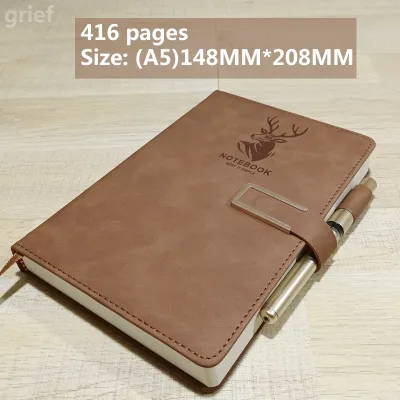
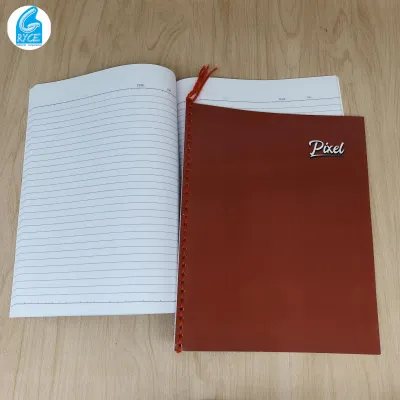
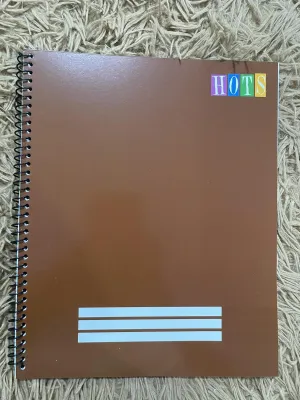
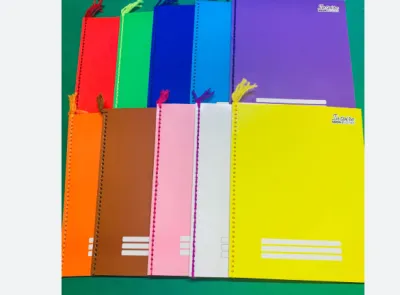
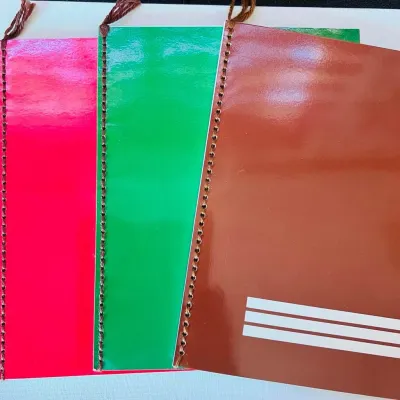
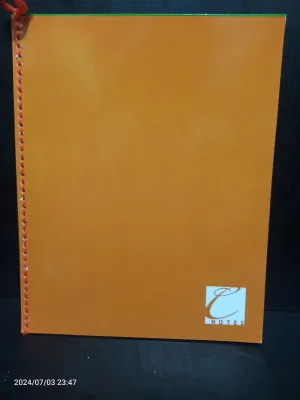
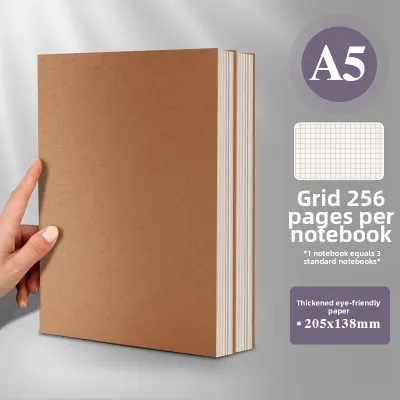

Prices are valid at publication and may change. Please refer to the product page for the latest price.

- Sprawling Visual and Spatial Tasks: If your thinking process is non-linear, a small page can feel like a mental bottleneck. Mind mapping, flowcharts, architectural sketching, and storyboarding require a bird's-eye view of your ideas. Similarly, solving complex mathematical equations, coding algorithms, or drafting financial spreadsheets requires horizontal space so you can view entire sequences at a single glance without breaking your concentration. Project managers and UI/UX designers often rely on these larger formats to map out user journeys and system architectures physically before digitizing them.
- Ergonomic and Writing Style Needs: Physical comfort plays a significant role in paper selection. Left-handed writers, for example, often struggle with small notebooks because their hands constantly rest on the binding or smudge freshly written ink. A larger page allows left-handed users to position their hands comfortably, maintain wider line spacing, and write without dragging their palms through wet ink. This is particularly crucial in humid tropical climates, where high humidity can slow down ink drying times on coated paper, making ample margins and spacious layouts highly practical.
- Desk-Bound Workflows: If your notebook rarely leaves your workspace, portability is no longer a constraint. A large-format notebook can sit permanently open next to your keyboard, serving as a central dashboard for your daily schedule, meeting notes, and project tracking. This setup allows you to glance down and see your entire week or a massive project outline without needing to flip through digital tabs or small paper pages, keeping your focus entirely on the task at hand.
When a Standard or Compact Notebook Is the Better Choice
While the expansive pages of a big notebook are appealing, they come with distinct physical trade-offs. For many users, a standard A5 (148 x 210 mm) or pocket-sized notebook is a far more efficient and less stressful option.
- Portability and Commuting Constraints: Carrying a heavy, rigid A4 notebook can be a burden if you are constantly on the move. For students navigating crowded campuses or professionals commuting via public transit, bag space is at a premium. A large notebook adds significant weight and can easily get bent or creased in a packed bag. Compact sizes like A5 or pocket notebooks slip easily into small sleeves, purses, or even large pockets, making them ideal for writing on the go.
- Physical Workspace Limitations: If you work at a small coffee shop table, a shared co-working desk, or a crowded lecture hall armrest, a big notebook can be highly impractical. An open A4 notebook requires a footprint of at least 420 mm (over 16 inches) in width. This leaves very little room for a laptop, mouse, or a cup of coffee. In contrast, smaller notebooks allow you to maximize limited desk space. Furthermore, if you frequently digitize your handwritten notes, standard flatbed scanners and mobile scanning apps are optimized for A5 or A4 pages; scanning anything larger, like an A3 sheet, requires specialized equipment or multi-part stitching.
- Simple, Linear Use Cases: If your daily writing consists of quick meeting minutes, simple to-do lists, or reflective daily journaling, a large page can feel intimidating and wasteful. The "empty page syndrome" is real; staring at a massive blank A4 sheet can sometimes block creative flow. Smaller formats encourage quick, low-pressure writing, allowing you to fill pages faster and feel a sense of progress. They are also much easier to archive on standard bookshelves once filled.
How to Select the Right Big Notebook If You Need One
If you have determined that a large-format notebook is the right fit for your workflow, your next step is selecting a model that matches your specific writing instruments and habits. Because large pages experience more physical wear and tear, paying attention to construction details is essential.
- Evaluate the Binding Style: The way a large notebook opens affects how usable the entire page surface is. Spiral or wire-bound notebooks are excellent because they can fold completely back on themselves, saving desk space. However, the central wire can get in the way of your hand when writing near the margins. Thread-bound, lay-flat notebooks offer a seamless transition across the center crease, which is perfect for two-page spreads, though they require a flat surface to stay open. Top-bound pads are ideal for quick sketching or drafting, as the binding stays completely out of your hand's way.
- Check Paper Weight and Texture: Large pages mean you will likely spend more time on a single sheet, using various pens, highlighters, or markers. To prevent ink from bleeding through to the other side, look for paper with a higher weight, typically measured in grams per square meter (GSM). For standard ballpoint pens, 80 GSM is sufficient. However, if you prefer fountain pens, gel pens, or wet ink markers, opt for 100 GSM to 120 GSM paper. Because smoothness, bleed resistance, and drying speed depend on the exact combination of your pen's ink and the paper's coating, it is always wise to perform a small patch test on the back page. Write a few lines with your most frequently used pens and observe how long the ink takes to dry in local humidity, as well as whether any ghosting or bleeding occurs.
- Match the Layout to Your Task: The ruling of your notebook dictates how you organize your thoughts. Ruled or lined layouts are best for structured, text-heavy writing. Grid and dotted layouts provide subtle guidelines that are perfect for technical drawings, bullet journaling, and keeping diagrams aligned without cluttering the page. Blank pages offer absolute freedom, making them the preferred choice for artists, designers, and freeform mind mappers who do not want their ideas confined by pre-printed lines.
Frequently Asked Questions (FAQ)
Is B5 considered a big notebook?
Yes, B5 is generally considered a big notebook, especially when compared to the highly popular and compact A5 size. Measuring 176 x 250 mm, B5 offers approximately 40 percent more writing area than A5, making it feel spacious and accommodating for detailed note-taking. However, it remains smaller and significantly lighter than a full A4 notebook. This unique positioning makes B5 an ideal compromise for users who want the expansive feel of a large notebook without sacrificing the portability needed to carry it daily in a standard backpack or tote bag.
Can I use an A3 notebook for daily journaling?
While you can use an A3 notebook for daily journaling, it is generally not recommended for standard, text-heavy writing. The sheer physical size of an A3 page (297 x 420 mm) can cause physical fatigue, as your hand must travel a long distance across the page, and filling a single sheet with prose can feel overwhelming. A3 notebooks are far better suited for visual journaling, weekly planning spreads, mood boards, or mixed-media art. If your daily journaling consists primarily of written paragraphs, an A5 or B5 notebook will offer a much more comfortable and manageable writing experience.
Community discussion
Share your experience or ask a question. Comments are reviewed before publication.