
Finding your documents slipping out of an oversized binder clip or struggling to force a thick stack of reports into a clip that is far too small is a frustrating office hurdle that can damage your important papers. To choose the correct binder clip size, you must match the physical thickness of your paper stack to the clip’s specified capacity, ensuring the clip’s width and jaw opening can securely hold the sheets without warping the metal arms or creasing the pages.
How Do Standard Binder Clip Sizes and Sheet Capacities Work?
Standard binder clip sizes are categorized by the width of their triangular metal base, which directly corresponds to a maximum sheet capacity calculated using standard paper weights. These measurements typically range from micro and mini sizes of around 15 millimeters wide up to extra-large options exceeding 50 millimeters.
Manufacturers usually base their sheet capacity ratings on standard 70 gsm or 80 gsm (grams per square meter) multipurpose office paper. For example, a small clip might be rated for up to 40 sheets, while a medium clip might claim to hold up to 100 sheets.
Products mentioned in this guide
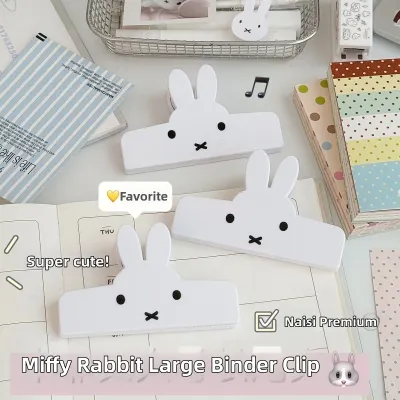
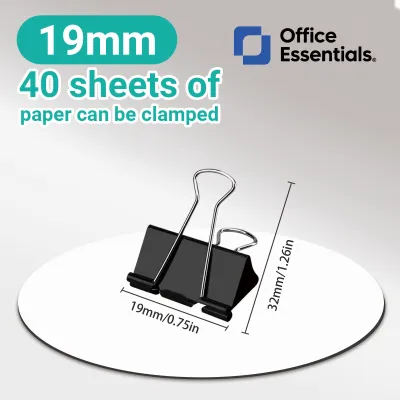
259 Lazada user ratings
Price:very affordable Design:simple but usable Durability:I think Thank you so much seller and store for sending good condition and complete…Read full reviewShow less
Price:very affordable Design:simple but usable Durability:I think Thank you so much seller and store for sending good condition and complete orders, appreciated. Thanks for on time delivery and service. Thanks courier and Lazada 👍👍👍👍👍
sturdy. works well. cheap and gets the job done. repeat customer here and will probably purchase more soon. Ideal for office use,
the product is great! delivery is quite fast and the packaging is safe! item is as per advertised.
Durability:legit mayroon na magamit sa trabaho pang clip sya po..tnx👍🌞😎
nice packaging. thank u seller.. no damage.. delivery also good
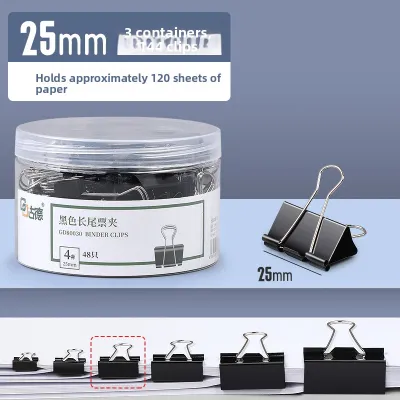
21 Lazada user ratings
Great product, really good quality, and the clips are large and very practical! I'll definitely buy again next time!
The product is good, and the customer service is nice. Totally worth buying!
Great value for the money, the clips are big and practical! Will buy again!
Got it, and I really like it!
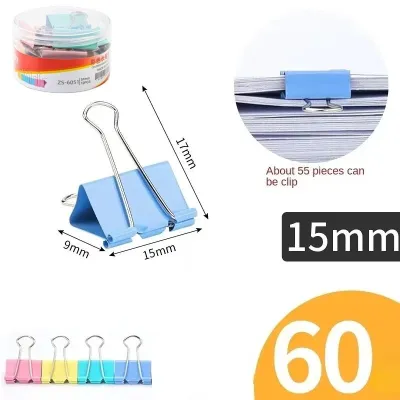
375 Lazada user ratings
Strong grip without damaging paper, Multi-functional usage options, and the kids were you going backwards compatible okay with you I think t…Read full reviewShow less
Strong grip without damaging paper, Multi-functional usage options, and the kids were you going backwards compatible okay with you I think tomorrow would be better for you
size 51mm pero hindi 60 pieces 12 lang ang isang plastic container. Strong grip without damaging paper, Multi-functional usage options,
Strong grip without damaging paper, Available in multiple sizes, Multi-functional usage options,
Available in multiple sizes, Multi-functional usage options, Strong grip without damaging paper,
Design: 10 Price: 10 Durability: 10 Excellent durability,
Prices are valid at publication and may change. Please refer to the product page for the latest price.
However, these stated capacities represent the absolute physical limit of the clip’s jaw opening rather than the optimal volume for daily use. Forcing a clip to its absolute maximum capacity can strain the spring steel, making it difficult to open and close safely.
For secure document management and ease of handling, a practical approach is to choose a clip where your stack thickness occupies roughly 60% to 80% of the clip’s maximum capacity. This leaves enough tension in the metal jaws to grip the paper firmly without overextending the wire handles.
How Can You Measure Your Paper Stack Thickness Accurately?
You can measure your paper stack thickness accurately by using a standard ruler to find the physical height of the compressed sheets or by estimating the thickness based on the sheet count of a standard paper ream. Taking a physical measurement ensures you account for the actual bulk of your documents, which often varies due to paper weight and texture.

To use the ruler method, place your document stack flat on a hard surface and compress it gently with your fingers to remove any trapped air. Align a standard ruler vertically against the edge of the stack and read the measurement in millimeters to determine the true height.
If a ruler is not available, you can estimate the thickness by counting the sheets and comparing them to a known standard, such as a standard 500-sheet ream of 80 gsm paper, which typically measures about 50 millimeters in height. This means every 100 sheets of standard office paper will equal approximately 10 millimeters of thickness.
Keep in mind that paper weight, texture, and finishes significantly alter this estimation. Heavier cardstock, textured resume paper, or documents with staples, paperclips, or folded pages will create a much thicker stack than standard printer paper, requiring you to size up your binder clip accordingly.
What Happens If You Use the Wrong Binder Clip Size?
Using the wrong binder clip size can permanently crease your documents, cause pages to slip out, or ruin the tension of the clip itself. When the clip does not match the stack thickness, the physical forces applied to the paper are unevenly distributed, leading to disorganized files and damaged materials.
If you use a binder clip that is too large for a thin stack of paper, the jaws will not exert enough pressure to hold the sheets together, allowing pages to shift, fall out, or become misaligned during transport. The excess metal width also adds unnecessary bulk to your filing cabinets or folders, making storage inefficient.
Conversely, forcing a clip that is too small onto a thick stack overextends the spring steel jaws, which can permanently bend the metal and destroy its gripping tension for future use. The tight, narrow grip of an undersized clip also concentrates too much pressure on a small area, leaving deep, irreversible creases and tears on the edges of your important documents.
Over time, these mismatched clips compromise both the professional appearance of your presentations and the long-term preservation of archival records, making proper sizing essential for any organized workspace.
How Do You Match Common Paper Stack Sizes to the Right Clip?
To match common paper stack sizes to the right clip, you should align the physical thickness of your documents with the corresponding clip width and jaw capacity specified on the manufacturer’s packaging. Keeping a diverse assortment of clip sizes on hand allows you to quickly select a secure fit for varying daily tasks.
For light document stacks measuring under 5 millimeters thick (roughly 20 to 40 sheets of standard paper), micro or mini binder clips with a width of 15 to 19 millimeters are highly effective. These small clips keep lightweight files neat without adding bulk or weight to individual folders.
Medium document stacks ranging from 5 to 15 millimeters thick (approximately 50 to 120 sheets) are well served by small or medium binder clips, which typically measure between 25 and 32 millimeters in width. These sizes offer a suitable balance of spring tension and jaw depth for standard reports, school assignments, and office invoices.
Heavy document stacks that exceed 15 millimeters in thickness (up to 250 sheets or more) require large or extra-large binder clips measuring 41 to 51 millimeters or more. These heavy-duty clips feature robust spring steel and longer wire handles to provide the leverage needed to open the wide jaws and secure thick manuscripts or manuals.
Before purchasing, always check the manufacturer’s packaging or product description on your preferred online marketplace to verify the exact sheet capacity and width specifications. Because paper types and clip designs can vary slightly, maintaining a mixed container of various sizes ensures you always have the correct tool ready for any document management need.

Community discussion
Share your experience or ask a question. Comments are reviewed before publication.