
Choosing the right book paper weight is the foundation of any successful book project, whether you are crafting a custom journal, assembling a sketchbook, or binding a novel. The weight of the paper dictates how the pages feel, how they turn, and how they react to different writing and drawing instruments. Selecting an incompatible weight can lead to ink bleeding through the page, paper buckling under paint, or a spine that is too stiff to open comfortably.
To achieve optimal results, match the paper’s density to your specific creative medium and binding method. While a heavy watercolor paper is excellent for wet washes, it makes a standard 200-page journal impossibly thick and difficult to fold. Conversely, thin, lightweight paper keeps a daily planner compact but will quickly fail if subjected to markers or heavy inks.
Understanding Paper Weight (GSM) and Its Impact on Book Projects
Paper weight is measured in GSM (Grams per Square Meter), representing the weight of a single square-meter sheet. While GSM measures density and mass, serving as a reliable baseline for comparison, thickness and stiffness can still vary based on fiber type and manufacturing.
Products mentioned in this guide
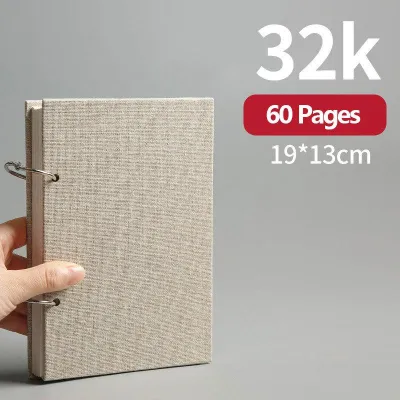
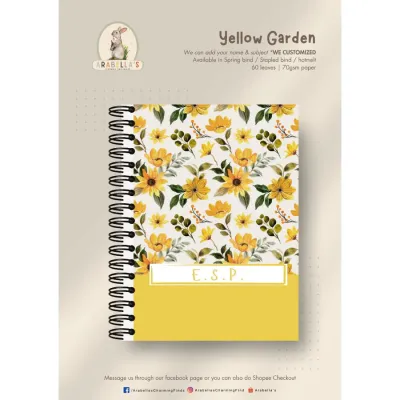
7 Lazada user ratings
pretty mini notebooks
Prices are valid at publication and may change. Please refer to the product page for the latest price.
As GSM increases, paper becomes thicker, more opaque, and stiffer. Higher opacity reduces ghosting—where text or drawings show through to the reverse side. Increased stiffness also affects how easily a page drapes or folds when the finished book is opened.
However, higher GSM does not mean superior quality; the ideal weight depends on your medium and binding. A high-page-count book requires thinner paper to prevent an excessively bulky spine. Conversely, a book for sketching or painting demands a dense, thick sheet to absorb moisture and resist tearing.
Recommended GSM Ranges for Specific Book Applications
Selecting the right paper begins with categorizing your project into one of three primary weight ranges. Each category—lightweight, medium-weight, and heavyweight—serves a distinct purpose in bookmaking and creative writing.

Lightweight Paper for Everyday Journaling and Notebooks
Lightweight paper typically falls within the 70 to 90 GSM range, the standard thickness found in commercial novels, daily planners, and high-page-count notebooks. Because the sheets are thin, you can bind hundreds of pages together without creating an overly thick book, making this range ideal for portable journals.
Standard ballpoint pens, pencils, and light gel pens perform well on lightweight paper, gliding smoothly. However, because these sheets are thin, they are highly susceptible to ghosting, where the shadow of your writing is visible on the reverse side of the page.
Wet media and heavy inks present significant challenges. Fountain pens, wet markers, and calligraphy inks are prone to bleed-through, where ink physically penetrates the fibers. If you plan to use fountain pens, check the manufacturer’s specifications for specialized sizing or coatings, as standard lightweight sheets will struggle with wet inks.
Medium-Weight Paper for Sketching and Mixed Media
Medium-weight paper spans from 100 to 150 GSM, offering a practical balance between opacity and flexibility. It is the preferred choice for sketchbooks, illustrated journals, and light mixed-media projects. The increased thickness provides excellent opacity, significantly reducing ghosting and allowing you to use both sides of the page comfortably.
This weight class handles dry media exceptionally well. Graphite, colored pencils, charcoal, and pastels apply smoothly, and the paper withstands repeated erasing. Standard creative markers and fine-liner pens also perform reliably, showing minimal ghosting and virtually no bleed-through under normal use.
If you intend to use light watercolor washes or wet inks, observe the paper’s texture (tooth) and check for sizing. Sizing is a chemical treatment that regulates how paper absorbs moisture. While some medium-weight papers handle light washes, heavy wet media will cause warping. For intensive wet techniques, refer to the product label to verify mixed-media ratings.
Heavyweight Paper for Bookbinding and Watercolor
Heavyweight paper ranges from 160 GSM to 300 GSM and beyond. This category is essential for projects demanding high structural integrity or heavy wet media, such as watercolor journals, art books, and hand-bound portfolios. The dense fibers absorb water without warping, pilling, or tearing.
In bookbinding, heavyweight paper requires careful handling. When folding thick sheets into signatures—the groups of folded pages sewn together to form a book—heavy paper can crack along the spine if folded dry. To prevent this, identify the grain direction, score the fold line with a bone folder, and limit the sheets per signature to avoid excessive spine bulk.
Furthermore, heavyweight watercolor papers require robust sizing to control water absorption so pigments sit beautifully on the surface. Without proper sizing, water sinks too quickly, causing warping and dull colors. When binding, ensure your sewing thread and binding style, such as a Coptic or kettle stitch, are strong enough to support the tension of thick signatures.
How to Test and Verify Book Paper Before Committing
When manufacturer specifications are incomplete, testing sample sheets is the safest way to ensure project success. Before committing to a bulk purchase or starting a complex binding project, obtain a sample pack to evaluate how the paper handles your specific tools.
To test ink compatibility, perform a simple bleed-through and feathering test. Write and draw on a sample sheet using your intended pens, markers, or paints. Observe whether the ink spreads outward (feathering) or penetrates the page (bleed-through), and let it dry completely to check for warping.
To check opacity, place printed text directly behind your sample page under normal lighting. If you can clearly read the text, the paper has low opacity and will cause significant ghosting. If the text is barely visible, the paper is highly opaque and suitable for double-sided work.
For bookbinding, always verify grain direction and fold strength. Cut a strip of paper and bend it gently in both directions; the direction with the least resistance is parallel to the grain. Always fold pages parallel to the grain so the book opens smoothly. Additionally, fold a sample sheet sharply to inspect the crease for cracking or fiber separation.
Frequently Asked Questions (FAQ)
Does a higher GSM always mean better quality book paper?
No, a higher GSM does not guarantee better quality. GSM only measures weight and density, not fiber quality, surface texture, or chemical treatments. A low-GSM paper made with high-quality cotton or specialized sizing can perform exceptionally well with fountain pens, while a cheap, high-GSM paper might bleed and pill easily.
Additionally, heavy paper is often unsuitable for high-page-count books. Using heavyweight paper for a thick journal results in an extremely bulky, heavy volume that is difficult to carry and puts immense strain on the binding. The best paper is the one that matches the specific requirements of your medium and the structural design of your book.
Can I use standard printer paper for bookbinding?
Yes, standard printer paper (typically 70 to 80 GSM) can be used for bookbinding, especially for practice projects, text-heavy books, or simple notebooks. It is highly cost-effective and readily available, making it excellent for learning basic binding stitches and folding techniques without risking expensive specialty sheets.
However, standard printer paper has notable limitations. It is highly prone to ghosting and bleed-through when used with wet inks, markers, or watercolors, and it lacks the archival quality needed for long-lasting art projects. While fine for dry-media sketching, writing with ballpoint pens, or practicing your craft, you should transition to specialty bookbinding or mixed-media papers for professional or archival books.

Community discussion
Share your experience or ask a question. Comments are reviewed before publication.