
Quick Answer: Which Expense Tracker Fits Your Routine?
Choosing between a bound notebook and a loose-leaf binder for your daily expenses tracker depends on whether you prioritize portability or layout flexibility. If you want a lightweight, grab-and-go tool that slips easily into a bag for quick logging on the commute, a bound notebook is highly practical. Conversely, if you prefer to customize your budgeting templates, rearrange monthly sections, or insert physical receipts directly alongside your logs, a loose-leaf binder offers the modular system you need.
The core trade-off lies in structural rigidity versus modular expandability. A bound notebook provides a fixed, durable structure that keeps your financial records in strict chronological order, but it limits your ability to correct layout mistakes. A loose-leaf binder allows you to swap pages, add dividers, and archive old months, but it introduces extra physical bulk. Ultimately, the best daily expenses tracker is the one that matches your physical carrying capacity and organizational workflow.
Portability and Daily Carry: Taking Your Tracker Anywhere
When tracking daily expenses, your tracker needs to be accessible wherever you spend money. The physical profile of your stationery plays a massive role in how consistently you use it. Bound notebooks typically offer a much slimmer, lighter, and more rigid profile. Because they lack internal ring mechanisms, they slide effortlessly into small bags or purse pockets, making them highly convenient for quick entries on the go.
Products mentioned in this guide
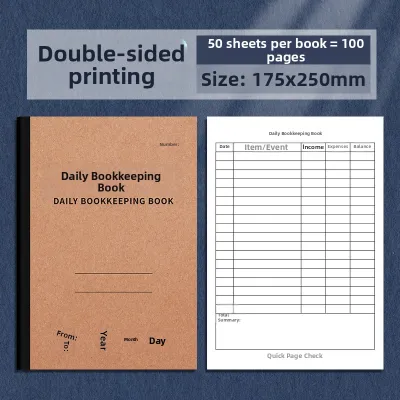
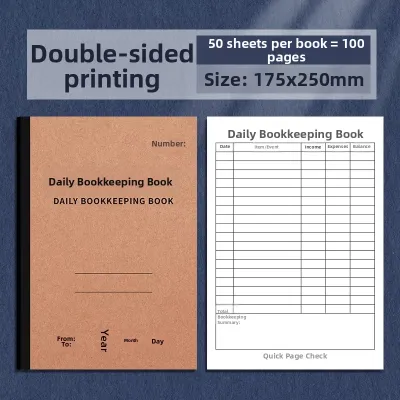
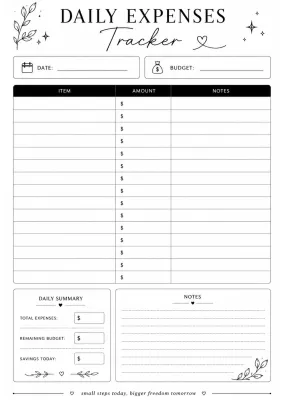

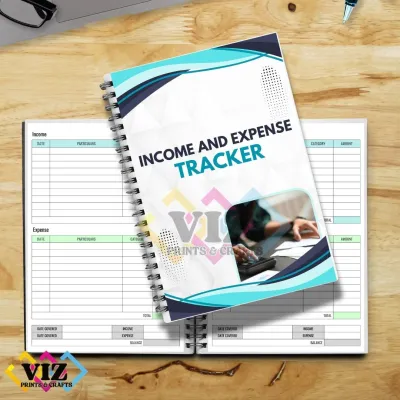
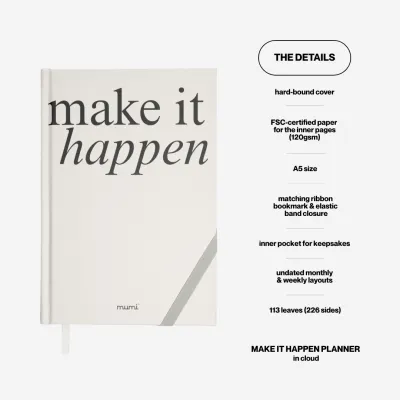
Prices are valid at publication and may change. Please refer to the product page for the latest price.

In contrast, loose-leaf binders inherently add bulk. The metal or plastic rings require a wider spine, and the covers must be oversized to protect the protruding edges of the rings and index tabs. If you travel frequently or commute via crowded public transportation, a bulky binder can feel cumbersome to pull out and write on without a flat desk surface.
Cover materials and closure mechanisms are also vital for protecting your financial logs. In humid tropical climates, paper can easily absorb moisture from the air, making it soft and prone to crumpling. A sturdy cover material, such as water-resistant plastic, thick polyurethane (PU) leather, or heavy laminated cardstock, helps shield the inner pages. Look for secure closure mechanisms like tight elastic bands, snap buttons, or magnetic clasps. These features prevent the tracker from flying open inside your bag, protecting your pages from getting bent or torn.
Before making a purchase, always verify the exact dimensions, weight, and paper size of the tracker. Common sizes like A5 offer a balanced middle ground between writing space and portability. If you prefer ultra-portable options, B6 or pocket-sized A6 formats are easier to carry but offer limited space for detailed expense columns.
Flexibility and Layout Customization: Adapting to Changing Budgets
Your financial habits and budgeting categories will inevitably evolve over time. A loose-leaf binder excels in adapting to these changes because it allows you to add, remove, or completely rearrange pages at will. If you decide to start tracking a new category—such as transportation, utilities, or dining out—you can simply insert a new page or a dedicated divider exactly where you need it. This modularity also makes it easy to insert printed receipts, monthly bank statements, or envelope budget inserts directly next to your handwritten logs.
Bound notebooks, on the other hand, demand a higher level of commitment to your initial layout. Because the pages are permanently sewn or glued to the spine, you cannot rearrange them. If you make a mistake while writing down your daily expenses, you must cross it out, use correction tape, or apply correction fluid, which can make your ledger look cluttered. Furthermore, bound notebooks strictly limit the number of entries to the fixed page count. Once you fill the notebook, you must transition to an entirely new volume.
To optimize either system, pay close attention to the paper ruling and margin spaces. Grid and dotted rulings are highly popular for expense tracking because they provide vertical and horizontal guides, making it easy to draw neat columns for dates, descriptions, and amounts. Lined paper is excellent for straightforward chronological lists. Ensure the spacing between lines or dots (typically 5mm or 6mm) matches your handwriting size so your numbers remain legible during quick logging sessions.
Long-Term Organization and Archiving: Keeping Records Safe
Maintaining a daily expenses tracker is not just about logging daily transactions; it is also about reviewing your spending patterns over months and years. With a bound notebook, archiving is straightforward and chronological. Once a notebook is filled, you write the start and end dates on the spine or cover and place it on a shelf. This creates a permanent, tamper-proof archive where pages cannot be lost or misplaced, though retrieving specific data from past years may require flipping through multiple volumes.
A loose-leaf binder offers a more dynamic approach to archiving. At the end of each month or year, you can extract completed expense sheets and file them away in separate, cheaper storage binders or archival folders. This allows you to keep your primary daily carry binder light and focused only on current transactions. However, this system requires discipline to ensure loose pages are not misplaced or damaged during the transfer process.
Physical durability over time is another critical factor to consider. In high-humidity environments, the glue used in perfect-bound notebooks can degrade, potentially causing pages to detach from the spine. Thread-bound or case-bound notebooks generally offer superior spine durability. For loose-leaf binders, the primary risks are ring mechanism failure—where rings fail to align properly, causing pages to snag—and paper tearing at the punched holes. Frequent page-turning can wear down the paper around the holes, especially on thinner paper.
To prevent these issues, verify the paper weight, measured in grams per square meter (GSM). For daily expense tracking, look for paper that is at least 80 GSM, though 100 GSM or higher is ideal for preventing page tears and ink bleed-through. If you use a loose-leaf system, consider using hole reinforcement stickers on high-traffic pages to ensure they remain securely anchored to the rings.
Cost and Refill Availability: Budgeting for Your Tracker
When planning your stationery budget, compare the initial investment against the long-term maintenance costs of each system. A bound notebook is typically a straightforward, one-time purchase. You can find high-quality bound notebooks ranging from budget-friendly options around ₱150 to premium, thread-bound journals costing ₱600 or more. Once the notebook is full, however, you must purchase a completely new book at the same price point.
A loose-leaf binder system requires a higher initial investment because you must purchase the binder shell, which can range from ₱300 to over ₱1,000 depending on the cover material and ring quality. However, the ongoing costs are significantly lower because you only need to buy paper refills and dividers. Over several years, a high-quality binder shell paired with affordable paper refills can become the more cost-effective option.
Before committing to a binder, verify the standard punch-hole compatibility of the refills available in your local stationery stores or online marketplaces. Common standards include 6-hole punches for A5 and A6 binders, 20-hole punches for A5 binders, and 26-hole punches for B5 binders. Buying a binder with an uncommon ring configuration can make finding compatible refill paper difficult and expensive.
Additionally, factor in the cost of supplementary items needed to make your system functional. To keep your daily expenses tracker organized, you may need index tabs to separate months, sticky notes for temporary reminders, pocket inserts for holding receipts, and reliable pens. Gel pens and fine liners are excellent for precise numerical entry, but they require paper with good drying speed to prevent smudging.
Decision Matrix: Choose Bound or Loose-Leaf?
To finalize your choice, evaluate your daily routine and organizational preferences against these specific criteria.
Choose a Bound Notebook if…
- Grab-and-go convenience is your top priority, and you want a slim, lightweight tracker that fits easily into any bag.
- Simple, chronological archiving appeals to you, and you prefer having a permanent, bound volume that cannot lose individual pages.
- Minimal setup time is preferred, allowing you to start tracking immediately without assembling rings, dividers, or refills.
Choose a Loose-Leaf Binder if…
- Customizable layouts are essential for your budgeting method, allowing you to mix grid, lined, and blank pages.
- Frequent category changes occur in your financial planning, requiring you to insert, remove, or rearrange sections easily.
- Modular storage is useful, enabling you to insert physical receipts, bills, and envelope budget inserts alongside your written logs.
Verify First if…
- Paper compatibility matches your writing tools; check the GSM rating to ensure your gel pens or fountain pens will not bleed through.
- Ring capacity limits of your chosen binder can accommodate the volume of pages you plan to carry daily without becoming too bulky.
- Writing pressure is heavy; if you press down hard when writing, a bound notebook or reinforced loose-leaf pages will prevent accidental tearing.
Frequently Asked Questions (FAQ)
Can I use a standard spiral notebook instead of a bound or loose-leaf system?
A standard spiral notebook is a highly accessible alternative that offers a distinct lay-flat advantage, making it comfortable to write on even when space is limited. You can easily fold the cover back 360 degrees to log expenses on your lap or a small counter. However, spiral notebooks have notable drawbacks for long-term expense tracking. The metal or plastic coils can add bulk and snag on the fabric of your bag. Additionally, you cannot easily remove or rearrange pages; tearing a page out leaves messy paper scraps along the coil and can compromise the binding of the remaining pages.
How do I prevent ink from bleeding through the paper when logging expenses?
To prevent ink from bleeding through and ruining the opposite side of your daily expenses tracker, always verify the paper weight (GSM) before purchasing. Paper rated at 80 GSM to 100 GSM generally handles standard ballpoint and gel pens well. If you prefer using fountain pens or heavy gel ink, look for paper rated at 100 GSM or higher. Before writing your first entry, perform an observable trial: test your preferred pen on a small, inconspicuous corner or a back page. Check for drying speed, feathering (ink spreading), and ghosting (ink showing through the back) to ensure your logs remain clean and legible.
Community discussion
Share your experience or ask a question. Comments are reviewed before publication.