
The choice between a bound notebook and a loose-leaf system for a loan record book depends on whether your primary need is tamper-evident security or organizational flexibility. If you run a small cooperative, a micro-lending business, or manage personal loans where records must be legally robust and unalterable, a bound notebook is the superior choice. Its fixed pages ensure that no entries can be removed or substituted without leaving obvious physical evidence. Conversely, if you manage a fluctuating list of borrowers and need to constantly reorganize accounts, archive completed transactions, or add custom sections, a loose-leaf binder system offers the adaptability required to keep your ledger clean and efficient.
In tropical environments where humidity can affect paper preservation and ink stability, selecting the right physical format is just as important as how you structure your financial entries. Moisture in the air can soften paper fibers and cause low-quality bindings to fail over time. Therefore, understanding the structural differences between these two formats will help you maintain legible, reliable, and long-lasting records for your lending operations.
Durability and Record Security for Loan Tracking
When managing financial transactions, the physical integrity of your ledger directly impacts its reliability. Bound notebooks offer a high level of tamper-evident security because the pages are permanently sewn or glued into the spine. In professional auditing or legal disputes, a bound book with consecutively numbered pages is often preferred because it is virtually impossible to remove a page or insert a fabricated one without leaving visible damage. If a page is torn out of a thread-sewn notebook, the corresponding page on the opposite side of the signature will also loosen, making unauthorized alterations immediately obvious.
Products mentioned in this guide
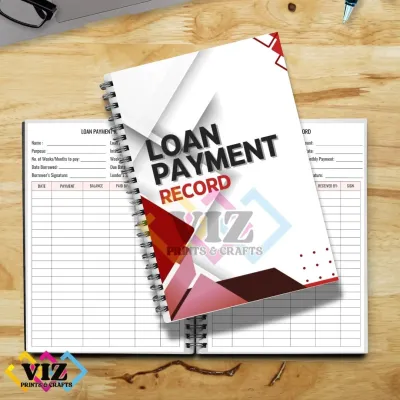
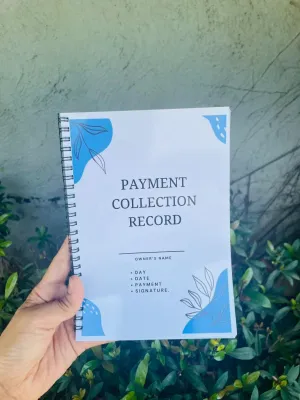
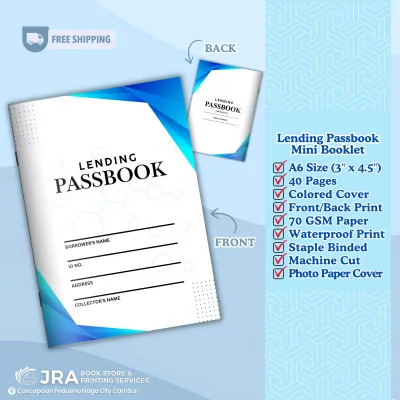
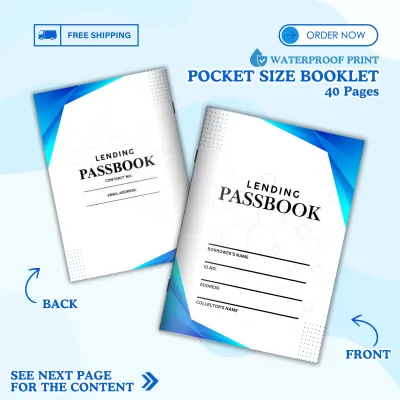
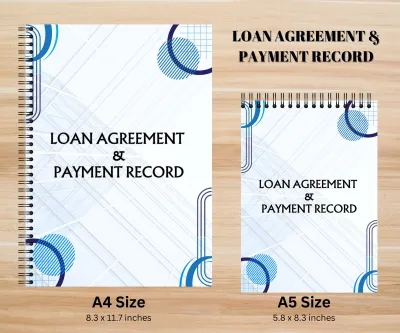
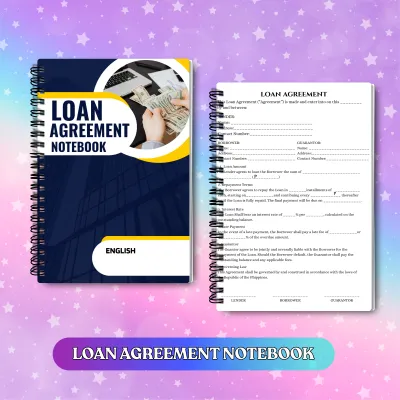
Prices are valid at publication and may change. Please refer to the product page for the latest price.
Loose-leaf systems, while highly convenient, present inherent security risks for official record-keeping. Because the rings can be opened easily, pages can be removed, misplaced, or intentionally altered without leaving a physical trace. If multiple people have access to the loan record book, this lack of tamper-evidence can lead to disputes over missing payment histories or altered loan terms. To mitigate this risk, loose-leaf systems require strict administrative controls, such as keeping the binder in a locked cabinet or using pre-numbered sheets that must be accounted for during internal audits.
To ensure your records survive years of handling, you must perform specific physical checks on your chosen format. For bound notebooks, inspect the spine to ensure it uses thread stitching (section-sewn) rather than just perfect binding (glue only). Glue-only bindings are highly susceptible to cracking and page loss when exposed to high humidity and frequent opening. For loose-leaf binders, test the tension and alignment of the ring mechanism. The rings must meet perfectly without gaps; any misalignment will snag the paper, leading to torn holes and loose pages that can easily fall out of the binder.
Flexibility and Organization of Loan Accounts
Lending operations are dynamic, with new borrowers signing up and existing loans being settled regularly. A loose-leaf system excels in this environment by allowing you to organize your records dynamically. You can arrange borrower profiles alphabetically, group them by payment due dates, or separate active accounts from fully settled ones. When a borrower pays off their loan, you can physically remove their history from the active binder and transfer it to a dedicated archive box, keeping your daily working binder light, organized, and uncluttered.

Bound notebooks offer very little flexibility once you begin writing. Because the pages are fixed, you must allocate a specific number of pages to each borrower at the start. If a borrower requires more space than anticipated, you are forced to jump to a different section of the book and write a “continued on page X” note, which disrupts the chronological flow of your records and increases the risk of transcription errors. Conversely, if a borrower pays off their loan early, the remaining pages allocated to them become wasted space, resulting in an inefficiently used ledger.
Before committing to a format, verify the availability of organizational accessories that support your workflow. For loose-leaf binders, check for heavy-duty plastic or cardstock index dividers that can withstand daily flipping. Ensure the binder has a clear pocket on the cover or spine for easy labeling. For bound notebooks, look for built-in ribbon markers or check if you can easily attach adhesive index tabs to the page edges without tearing the paper when closed.
Page Layouts, Paper Quality, and Writing Experience
Clear, legible entries are critical for preventing disputes over loan balances and payment dates. The layout of your loan record book should match your tracking complexity. Many bound ledgers come with pre-printed columns designed specifically for accounting, featuring dedicated spaces for dates, descriptions, debits (amounts loaned), credits (payments received), and running balances. If you prefer a customized layout, dotted or grid-patterned pages in either bound or loose-leaf formats allow you to draw custom tables that accommodate specific details like interest calculations, penalty fees, or borrower signatures.
Paper quality is a vital consideration, especially in warm, humid climates where paper tends to absorb moisture from the air. When paper fibers hold moisture, they become more absorbent, which can cause ink from gel pens or fountain pens to feather, spread, or bleed through to the opposite side of the page. To prevent this, verify that the paper weight is at least 80 GSM, though 100 GSM or higher is ideal for double-sided writing. Look for acid-free, archival-quality paper to ensure that your entries do not fade or turn yellow over years of storage.
Writing comfort also differs significantly between the two formats. High-quality bound notebooks are designed to lay completely flat when opened, providing a smooth, continuous surface across the entire spread. This makes writing near the inner margin comfortable and neat. Loose-leaf binders, particularly those with large round rings, present a physical barrier that can obstruct your hand when writing on the inner side of the page. To maintain neat handwriting in a loose-leaf system, you may need to open the rings and remove the page entirely to write your entries, which adds an extra step to your daily record-keeping routine.
Cost, Refills, and Long-Term Maintenance
The financial investment in your record-keeping system involves both the initial purchase price and the long-term cost of maintaining the ledger. A bound notebook represents a straightforward, low upfront cost. You buy the book, use it until it is full, and then store it away. However, once a bound book is completely filled, you must purchase an entirely new notebook and manually copy over all active loan balances and borrower details. This migration process is time-consuming and introduces a high risk of copying errors that could affect your financial accuracy.
Loose-leaf systems require a higher initial investment because you must purchase a durable binder, index dividers, and potentially a specialized paper punch. However, the long-term maintenance costs are significantly lower. When you run out of space, you do not need to buy a new binder or migrate your active data; you simply insert inexpensive refill paper into the existing binder. This allows you to maintain a continuous, uninterrupted record of active loans for years without the administrative hassle of starting a new book.
Before choosing a loose-leaf system, confirm the local availability of standard refill paper sizes in your area. Standard sizes like A5 and B5 are widely available in physical stationery stores and online marketplaces, making them easy to restock. Be cautious of binders that use proprietary ring spacing or non-standard paper dimensions, as finding refills for these systems can be difficult and expensive, potentially leaving you with an unusable binder if the manufacturer discontines the paper line.
Decision Framework: Which Format Should You Choose?
To make the final decision for your lending operations, evaluate your specific business structure, security needs, and administrative workflow against the characteristics of each format.
Choose a bound notebook if:
- You require strict, tamper-evident security to comply with internal audits, cooperative bylaws, or local financial regulations.
- You need a highly portable, self-contained ledger that you can easily carry to field visits or client meetings without the risk of pages falling out or getting damaged.
- Your lending operation is small, with a stable, predictable number of long-term borrowers where page allocation is easy to manage.
Choose a loose-leaf system if:
- You manage a large, constantly fluctuating list of borrowers where you frequently need to add new accounts and archive closed ones.
- You want to keep your active records streamlined by physically separating completed transactions from ongoing loans.
- You prefer a highly customized organization system where you can mix ledger sheets, contact information pages, and plastic pockets for physical receipts or loan agreements.
Before purchasing any system, always verify if your local regulatory bodies, cooperative associations, or internal auditing guidelines mandate a specific type of record-keeping format. Some formal financial frameworks strictly prohibit loose-leaf systems to prevent fraud, making a bound, pre-numbered ledger an absolute legal requirement for your operations.
Frequently Asked Questions (FAQ)
Can I use a standard spiral notebook for loan records?
While standard spiral notebooks are inexpensive and lay flat easily, they are generally unsuitable for professional loan records. The perforated pages can be torn out very easily, which compromises the security and permanence required for financial tracking. Additionally, the wire spirals can bend or snag over time, and the paper quality in basic spiral notebooks is often thin, leading to severe ink bleed-through and poor durability in humid conditions.
How do I prevent ink from smudging in a loan ledger?
To prevent smudging, use quick-drying gel pens or high-quality ballpoint pens rather than slow-drying liquid ink pens. Ensure your ledger paper has a weight of at least 80 GSM to absorb ink efficiently. In highly humid environments, allow a few extra seconds for the ink to dry completely before turning the page, or place a clean sheet of blotting paper between the pages when closing the notebook to absorb any excess moisture and ink.

Community discussion
Share your experience or ask a question. Comments are reviewed before publication.