
To choose between a bound notebook and a loose-leaf journal, you must determine whether you prioritize seamless writing comfort and structural durability or absolute flexibility and dynamic organization. Finding the right notebook journal depends entirely on your primary workflow, your preferred writing tools, and how you intend to categorize your thoughts over time.
A bound notebook is the ideal choice for those who keep permanent records, write daily diaries, or need a highly portable, slim book that easily slips into a bag for on-the-go use. Its fixed pages ensure that your entries remain in strict chronological order, offering a secure, unalterable archive of your thoughts or sketches.
Conversely, a loose-leaf journal excels in modular planning, academic note-taking, and complex projects where information must be categorized, updated, or rearranged. If you want to mix different paper styles—such as dotted sheets for trackers and lined sheets for long-form writing—within a single cover, a loose-leaf binder provides the modular freedom to build a highly customized organizational system.
Products mentioned in this guide
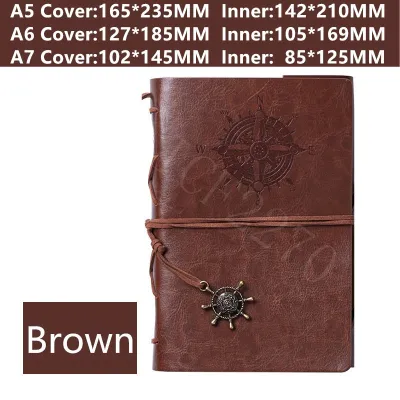
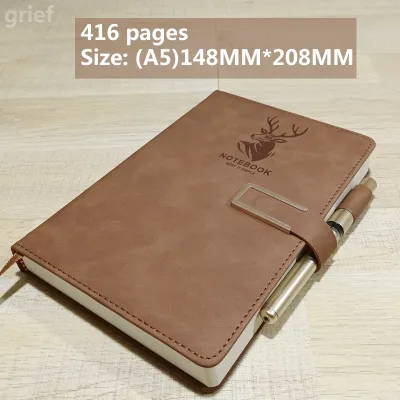
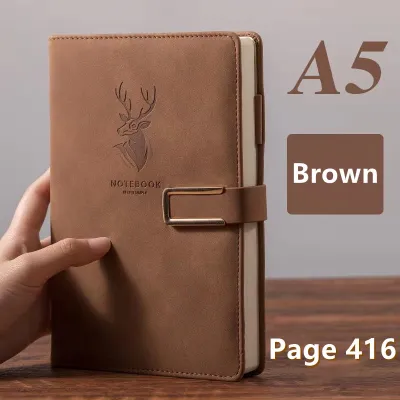
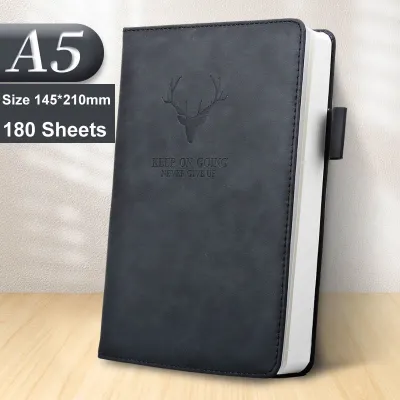

Prices are valid at publication and may change. Please refer to the product page for the latest price.
Core Differences at a Glance
The physical construction of your stationery dictates how you interact with your notes on a daily basis. Before diving into the mechanical details of rings and threads, a high-level comparison can help you identify which structural features align with your immediate writing environment.
| Feature | Bound Notebook | Loose-Leaf Journal |
|---|---|---|
| Page Customization | Fixed; pages cannot be added, removed, or rearranged without damage. | High; pages can be added, removed, reordered, and mixed at will. |
| Portability | High; slim profile, lightweight, and easy to slide into compact bags. | Moderate; bulkier due to the ring mechanism and protective binder shell. |
| Durability | Excellent; stitched or glued spines keep pages permanently secure. | Moderate; page holes can tear over time under heavy handling. |
| Writing Ergonomics | Superior; lays flat easily, providing an unobstructed surface. | Variable; metal or plastic rings can obstruct your hand when writing. |
| Ideal Use Cases | Personal diaries, chronological logs, sketchbooks, and travel journals. | Academic notes, project planning, recipe books, and modular planners. |
Ultimately, the binding method you choose shapes your daily workflow. Rather than searching for a single, flawless stationery item that handles every possible task, it is far more effective to match the format to your most frequent writing environment and organizational habits.
Flexibility and Organization: The Loose-Leaf Advantage
A loose-leaf journal functions less like a traditional book and more like a personal database. It accommodates the unpredictable nature of planning and studying, allowing you to adapt the physical structure of your notebook to your changing intellectual needs.

Rearranging and Removing Pages
The defining strength of a loose-leaf system is the ability to manipulate individual sheets without compromising the structural integrity of the entire journal. In a standard notebook, tearing out a page often weakens the adhesive or thread along the spine, causing adjacent pages to loosen and eventually fall out. A loose-leaf binder eliminates this risk entirely, allowing you to snap open the rings, extract a single sheet, and insert it elsewhere or discard it.
This modularity is particularly beneficial for academic studies and professional project management. For example, a student attending lectures can record notes chronologically during class, then later sort those pages by topic, module, or exam unit. If a project plan changes, you can easily insert a fresh sheet of paper right in the middle of an existing section to add updated timelines or brainstorming diagrams, ensuring your records remain clean and logical without requiring messy cross-outs.
Furthermore, loose-leaf systems allow you to archive completed tasks while keeping current priorities close at hand. Once a project is finished or a semester ends, you can transfer those specific pages to a storage binder at home, leaving your daily carry light and focused only on active tasks. This prevents your active journal from becoming cluttered with outdated information.
Customization and Refills
A loose-leaf binder serves as an open canvas where you can mix and match different paper formats to suit diverse tasks. Instead of carrying separate books for sketching, calculating, and writing, you can compile dotted, grid, ruled, and blank pages within a single binder shell. Adding colored tab dividers allows you to segment your binder into distinct zones, such as one section for daily schedules, another for financial tracking in Philippine Pesos (₱), and a third for creative writing.
When choosing a loose-leaf system, verifying the physical compatibility of refills is critical to avoid purchasing unusable paper. Refill systems are not universally standardized, meaning you must check both the paper size—such as A5, B5, or A4—and the precise ring configuration before buying. Common ring mechanisms include standard 6-ring binders, multi-ring Japanese-style systems with 20 or 26 holes, and disc-bound systems that use specialized mushroom-shaped punches.
Always measure the distance between the rings on your binder and cross-reference them with the product specifications of the paper refills. Buying proprietary refills from the same brand that manufactured your binder cover is the safest way to ensure a perfect fit, though many third-party stationery brands offer compatible options if you match the hole count and spacing precisely.
Durability and Portability: Why Bound Notebooks Excel
While loose-leaf binders offer unmatched adaptability, bound notebooks prioritize structural resilience and streamlined design. They are engineered to endure the physical demands of daily travel while keeping your writings secure in a permanent, unalterable format.
Structural Integrity and Archival Quality
The binding of a notebook is its primary line of defense against wear and tear. High-quality bound notebooks utilize thread-sewn (Smyth sewn) bindings, where folded groups of pages are stitched together before being glued into the spine. This construction ensures that even under constant use, pages remain firmly anchored and will not tear, snag, or detach.
This permanent structure makes bound notebooks the premier choice for archival records, personal diaries, and professional logs. A chronological, unalterable record provides a reliable historical timeline of your thoughts, ideas, or business decisions. In humid tropical climates like the Philippines, where moisture can soften paper fibers, the secure grip of thread sewing prevents loose sheets from warping or slipping out of their mountings over time.
Because the pages cannot be removed without leaving obvious signs of damage, bound notebooks also offer a sense of security for intellectual property and confidential notes. They encourage a continuous, honest writing practice where mistakes are crossed out rather than erased or discarded, preserving the complete evolution of your creative or analytical process.
Weight and Profile
Without the physical bulk of metal or plastic ring mechanisms, bound notebooks maintain an exceptionally slim profile. This streamlined design makes them highly portable and easy to slide into a crowded backpack, a slim laptop sleeve, or even a jacket pocket. The absence of protruding rings prevents the notebook from catching on loose threads, laptop chargers, or other items inside your bag.
When selecting a bound notebook for daily travel, the choice between a hardcover and a softcover significantly impacts your writing comfort. A hardcover notebook provides a rigid, built-in writing surface, allowing you to take notes comfortably while standing in a transit line, sitting in a cafe, or working in the field without a desk. Hardcovers also offer superior protection against bent corners and crushed page edges.
Conversely, a softcover notebook maximizes flexibility and minimizes weight. Softcovers can bend to conform to the shape of your bag, making them incredibly comfortable to carry around all day. If your daily commute involves navigating busy public transportation, a lightweight softcover notebook reduces the physical strain on your shoulders while still keeping your thoughts close at hand.
Writing Experience and Paper Compatibility
The physical sensation of pen meeting paper is a crucial consideration for any stationery enthusiast. The way a notebook opens and the quality of its paper directly influence your writing posture, speed, and overall comfort.
Ergonomics and Lay-Flat Ability
One of the most significant advantages of a well-crafted bound notebook is its ability to lay completely flat on a desk. Thread-sewn notebooks open wide to expose the entire page, providing a continuous, level surface from the left margin to the right. This seamless layout allows your hand to move naturally across the spine without encountering physical obstructions, which is particularly beneficial for sketching or writing long-form prose.
In contrast, loose-leaf journals present a distinct ergonomic challenge due to their central ring mechanisms. The metal or plastic rings create a raised barrier in the center of the journal, which can severely obstruct your hand when you attempt to write near the inner margins. This issue is especially frustrating for left-handed writers, whose hands must constantly rest on or climb over the rings when writing on the right-hand page, and similarly for right-handed writers on the left-hand page.
To mitigate this ring interference, many loose-leaf users find themselves frequently removing pages from the binder to write on a flat desk surface, only to reinsert them once finished. While this workaround is highly effective, it introduces an extra step into the writing process, making spontaneous note-taking slightly more cumbersome than simply opening a bound book and writing immediately.
Paper Weight and Ink Bleed
A common misconception is that one notebook format inherently features better paper quality than the other. In reality, paper performance—including its resistance to ink bleed-through, feathering, and ghosting—is determined entirely by the paper’s weight, fiber composition, and surface coating, independent of how the pages are bound. Paper weight is measured in grams per square meter (GSM), and understanding this metric is vital for matching your paper to your writing tools.
For everyday writing with standard ballpoint pens or fine gel pens, a paper weight of 70 GSM to 80 GSM is typically sufficient, though you may experience some ghosting, where the writing on the reverse side is faintly visible. If you prefer using wet ink sources, such as fountain pens, heavy gel pens, or art markers, you should look for paper weights of 100 GSM to 120 GSM or higher. These thicker papers, often treated with specialized sizing coatings, prevent ink from soaking through the fibers and bleeding onto the next page.
To ensure your chosen notebook or loose-leaf refill handles your favorite writing instruments smoothly, it is highly recommended to perform a simple ink test. Before committing to writing on a new pack of paper or a fresh notebook, find an inconspicuous page at the very back and write a few test lines using different pens. Observe the paper for:
- Bleed-through: Ink soaking completely through to the opposite side of the sheet.
- Feathering: Ink spreading outward along the paper fibers, making lines look fuzzy.
- Ghosting: The shadow of the writing showing through, which can make writing on both sides of the page difficult to read.
- Drying Speed: How long the ink remains wet on the surface, which is crucial for preventing smudges in humid environments.
Cost and Long-Term Value
Evaluating the financial aspect of your stationery choice requires looking beyond the initial purchase price to consider the long-term cost of ownership. The two formats distribute their expenses differently over time, depending on how quickly you fill pages.
Bound notebooks generally feature a lower upfront cost. You can purchase a high-quality, beautifully bound book for a relatively modest price. However, because a bound notebook is a single-use item, once you write on the final page, the entire book must be replaced. If you write extensively every day, the cumulative cost of purchasing multiple bound notebooks throughout the year can become substantial.
A loose-leaf journal, on the other hand, requires a larger initial investment. Premium leather, faux-leather, or heavy-duty plastic binder shells can be relatively expensive. However, this shell is a one-time purchase designed to last for years. Once you have the binder, purchasing paper refills is significantly cheaper per page than buying a brand-new bound notebook.
To understand the true cost of ownership, you must also factor in the price of accessories. If you choose a loose-leaf system, you may eventually need to purchase specialized plastic pocket sleeves, colored tab dividers, page markers, or a proprietary hole punch if you want to insert custom documents. While these accessories enhance organization, they add to the total cost. For those who prefer a simple, self-contained writing solution with no hidden expenses, the bound notebook remains the more straightforward financial choice.
How to Choose the Right Notebook Journal for You
Selecting the perfect format comes down to analyzing your daily writing environment, your organizational preferences, and how you plan to store your completed notes. Use the following structured guidelines to make an informed decision.
Choose a Bound Notebook if:
- You prioritize a seamless writing surface: You want a book that lays completely flat on any surface, providing an unobstructed space for your hand to glide comfortably across the page.
- You keep a chronological record: Your work relies on sequential entries, such as a daily personal diary, a travel log, a creative sketchbook, or a professional lab journal where pages must remain unalterable.
- You value portability and minimal bulk: You need a lightweight, slim companion that easily slides into small bags and can be whipped out quickly during a commute.
- You prefer a classic, tactile experience: You enjoy the traditional aesthetic and satisfying feel of a completed, bound volume sitting on your bookshelf.
Choose a Loose-Leaf Journal if:
- You require dynamic organization: You need to constantly categorize, rearrange, or remove pages as projects evolve, classes progress, or priorities shift.
- You want to mix paper styles: You prefer to house different page layouts—such as blank sheets for mind mapping, dotted sheets for bullet journaling trackers, and ruled sheets for meeting notes—under a single cover.
- You manage multiple independent projects: You want to use a single binder for school, work, and personal life, separating them cleanly with tab dividers rather than carrying three separate notebooks.
- You want a reusable system: You prefer to invest in a high-quality, durable cover once and simply swap out inexpensive paper refills as needed.
Verify First if:
- You are buying refills: Always check the exact dimensions (A5, B5, A4), the number of holes (6-hole, 20-hole, 26-hole, or disc-bound), and the spacing between the rings to guarantee physical compatibility with your binder shell.
- You write with wet inks: Check the paper specifications for a weight of at least 100 GSM and perform a quick ink test on a back page to verify that your fountain pens or gel pens will not bleed or feather.
Frequently Asked Questions (FAQ)
Can I convert a bound notebook into a loose-leaf journal?
Converting a bound notebook into a loose-leaf journal by cutting the spine and manually punching holes is highly discouraged. Slicing through thread-sewn or glued bindings often compromises the structural integrity of the paper sheets, causing the inner margins to fray and tear easily. Furthermore, standard hole punches may not align correctly with the narrow margins of a book designed to be bound, leaving very little space for writing and making the pages highly susceptible to ripping out of binder rings. To avoid ruining your stationery and risking the loss of important notes, it is highly recommended to purchase a purpose-built loose-leaf system or disc-bound binder designed specifically for modular page insertion.
Which format is better for bullet journaling?
The ideal format for bullet journaling depends entirely on how strictly you follow the original methodology. Traditional bullet journaling relies heavily on a sequential, unbroken index and chronological daily logs, which are perfectly supported by the permanent, fixed pages of a bound notebook. The structured nature of a bound book prevents you from overthinking page placement and encourages a continuous, raw stream of consciousness. However, if you prefer creating elaborate, reusable trackers, modular monthly collections, or want to separate your personal life from your professional tasks within the same book, a loose-leaf system offers the flexibility to move and organize these collections without disrupting your daily logging flow.

Community discussion
Share your experience or ask a question. Comments are reviewed before publication.