
Quick Answer: Which Record-Keeping System Should You Choose?
Selecting the right system depends on whether your workflow demands permanent, tamper-evident security or modular, adaptable organization. A bound record book is the ideal choice for official logs, sequential journaling, or strict compliance tracking where page deletion must be prevented. Conversely, a loose-leaf binder system excels at managing evolving project files, collaborative sorting, and documents requiring frequent updates or section reorganizations.
While a bound book offers a lower initial cost—with basic options starting under ₱150—it requires purchasing an entirely new volume once filled. A binder system involves a higher upfront investment for the cover and ring mechanisms but reduces long-term expenses through affordable paper refills. Balancing these initial setup costs against your long-term operational needs is the first step in establishing an efficient archiving process.
Durability and Physical Protection of Your Records
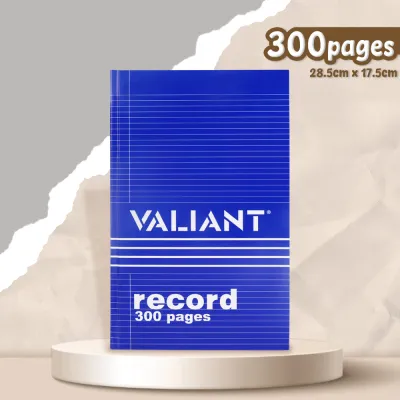
In tropical climates like the Philippines, high humidity and ambient moisture can severely impact paper-based records over time. Evaluating how each system protects your data requires looking closely at cover materials and spine construction. Bound record books often feature hardboard, vinyl, or heavy cardstock covers with stitched or glued spines. Stitched bindings offer excellent page retention because the sheets are sewn directly into the spine, preventing individual pages from slipping out. However, cheap glued bindings can dry out and crack in warm weather, causing pages to detach under heavy daily handling.
Products mentioned in this guide
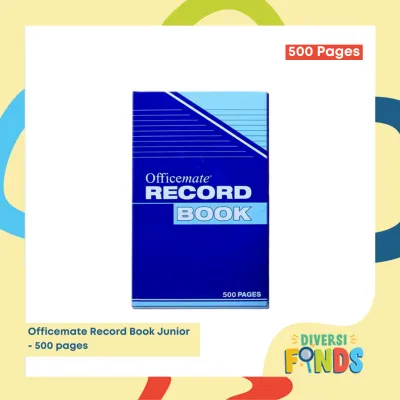
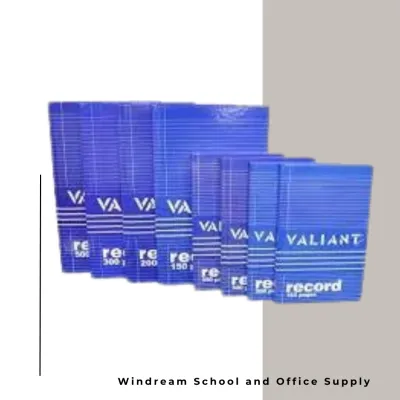
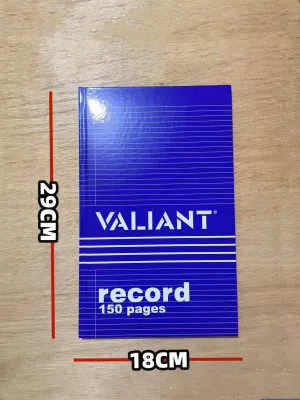
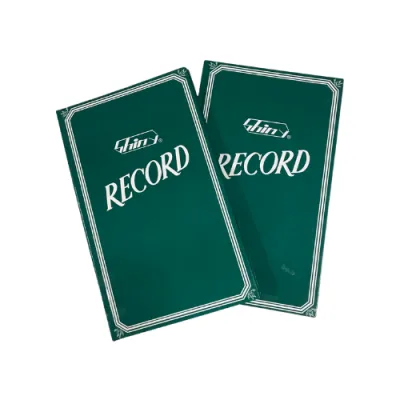
![Columnar Book JOURNAL Book LEDGER Book SUBSIDIARY SALES Book SUBSIDIARY PURCHASE Book RECORD CASH DISBURSEMENT Book Analysis Notebook Accounting Notebook: Sold per piece [Future Industries]](https://img.lazcdn.com/g/p/57ce87b7dbf087e6c7aeaede493fb402.jpg_400x400q80.jpg_.webp)
Prices are valid at publication and may change. Please refer to the product page for the latest price.

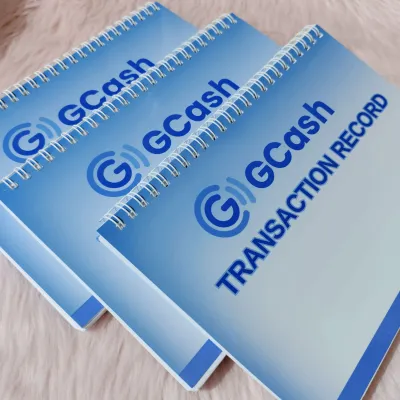
Loose-leaf binders rely on metal or plastic ring mechanisms housed within rigid plastic, vinyl, or heavy-duty cardboard covers. While these covers provide robust external protection against spills and drops, the pages inside face unique physical risks. Frequent flipping can cause paper to tear at the punched holes, especially if the paper is thin or the binder is overfilled.
To ensure your records survive years of handling, check the manufacturer specifications and product labels on packaging before purchasing. Look for heavy-duty, water-resistant covers and archival-grade materials. If you choose a binder, verify that the ring mechanism aligns perfectly without gaps, as misaligned rings will snag and tear your pages during use. For bound books, look for Smyth-sewn or section-sewn labels, which indicate the highest level of page-retention durability.
Flexibility and Page Management for Evolving Files
The primary dividing line between these two systems is how they handle changes, updates, and errors. A loose-leaf binder offers unparalleled flexibility for dynamic files. You can effortlessly open the rings to insert new sections, reorder existing pages, or remove obsolete documents without affecting the rest of the file. This modularity makes binders highly efficient for standard operating procedures, training manuals, or project portfolios that undergo constant revisions.
Bound record books, by contrast, prioritize permanence and sequential integrity. Because the pages are fixed in a permanent sequence, any attempt to remove a page leaves an obvious, visible gap. This tamper-resistant design is crucial for legal logs, laboratory notebooks, and financial ledgers where the chronological order of entries must be legally verifiable.
Handling mistakes or damaged pages requires different strategies in each format. In a loose-leaf binder, a ruined page can simply be reprinted or rewritten and swapped in. In a bound record book, you cannot tear out a mistake without compromising the book’s integrity. Instead, standard practice requires drawing a single clean line through the error, writing the correction nearby, and initialing the change, thereby preserving the complete history of the document.
Long-Term Archival and Retrieval Considerations
Finding specific information quickly is essential for any record-keeping system, especially as files accumulate over months or years. Loose-leaf binders excel at active retrieval because they easily accommodate tabs, color-coded dividers, and index sheets. You can categorize your records into distinct sections, allowing users to flip directly to the required document without searching through unrelated pages.
However, binders present challenges when it comes to long-term storage and shelf space. The wide, wedge-shaped spines of ring binders take up significantly more shelf space than the uniform, flat profiles of bound record books. Binders also tend to slide or lean when stacked horizontally, whereas bound books stack neatly and compactly, maximizing vertical and horizontal storage space in office cabinets.
Regardless of the format, the longevity of your physical records depends heavily on paper quality. In humid environments, standard paper can absorb moisture, leading to ink feathering, bleeding, or yellowing. When shopping, verify paper quality labels directly on the product packaging. Look for acid-free or archival-safe certifications, which guarantee the paper will resist deterioration and keep your written or printed records legible for decades. If you plan to use fountain pens or heavy gel inks, test a single sheet first to observe the drying speed and bleed resistance, as high-humidity conditions can prolong drying times.
Side-by-Side Comparison of Record-Keeping Systems
To help accelerate your decision-making process, the table below outlines the core differences between these two traditional formats across key operational criteria.
| Evaluation Criteria | Bound Record Book | Loose-Leaf Binder |
|---|---|---|
| Initial Setup Cost | Low to moderate (typically ₱100–₱300) | Moderate to high (typically ₱300–₱800) |
| Long-Term Refill Cost | High (must buy a new book) | Low (only buy paper refills) |
| Tamper Resistance | High (pages cannot be removed undetected) | Low (pages easily removed or replaced) |
| Reorganization Ease | Extremely low (fixed sequence) | High (modular page movement) |
| Portability | High (compact, lightweight profiles) | Moderate (bulky spines and covers) |
| Page Protection | High at spine; vulnerable to spills | High cover protection; vulnerable at punch holes |
While both physical formats are highly effective, there are conditions where neither standard paper system suffices. If your workflow requires real-time remote collaboration, automatic data backups, or instant keyword searching across thousands of pages, you should consider a hybrid logging system. This involves using physical records for immediate on-site data entry, followed by scanning and uploading the documents to a secure digital database for long-term retrieval.
How to Choose the Right System for Your Workflow
To select the system that best supports your daily operations, evaluate your specific workflow requirements against the following decision framework.
Choose a bound record book if:
- Your workflow involves legal, financial, or medical logging where page removal is strictly prohibited or could invalidate the record.
- You need a highly portable, compact book to carry around field sites, construction zones, or active workspaces.
- You prefer a straightforward, chronological diary or journal format that requires no complex setup or categorization.
Choose a loose-leaf binder if:
- You manage project files, client portfolios, or standard operating procedures that require frequent updates, page insertions, or section reorganizations.
- Multiple team members need to contribute to, sort, or reorganize different sections of the same file simultaneously.
- You want to integrate different media types, such as printed sheets, clear plastic pockets, and tabbed dividers, into a single cohesive folder.
Verify first if:
- Specific institutional compliance guidelines, government audit regulations, or industry formatting rules mandate a particular binding style for your records.
- Your chosen ink type (such as gel, ballpoint, or permanent marker) is compatible with the paper weight and coating of your selected book or refill sheets to prevent bleeding and smudging.
Frequently Asked Questions (FAQ)
Can I transfer pages from a bound record book to a loose-leaf binder?
Attempting to remove pages from a bound record book carries a high risk of tearing the paper and damaging the stitched or glued spine, which can ruin adjacent pages. If you must integrate bound records into a loose-leaf binder, avoid cutting the pages out. Instead, place the entire bound book’s pages into clear, heavy-duty sheet protectors designed for binders, or scan the original pages and print them onto loose-leaf paper. This preserves the physical integrity of the original bound record while allowing you to organize the information within your modular binder system.
How do I prevent loose-leaf pages from tearing at the punch holes?
To extend the lifespan of loose-leaf records under frequent handling, check for paper refills that feature reinforced hole edges, which are coated with a thin plastic strip. For existing pages, you can apply self-adhesive reinforcement rings directly over the punched holes on both sides of the sheet. Additionally, ensure your binder’s ring mechanism is perfectly aligned and never overfilled. Keeping the total sheet count well below the binder’s stated maximum capacity reduces friction and tension on the paper holes when flipping pages.

Community discussion
Share your experience or ask a question. Comments are reviewed before publication.