
Quick Answer: Which Acknowledgement Receipt Format Should You Choose?
If your business prioritizes strict audit trails, sequential tracking, and tamper-evident physical records, bound acknowledgement receipt books are your best choice. If your workflow relies heavily on digital scanning, multi-department routing, and flexible filing systems, loose-leaf formats offer the adaptability you need.
Bound books keep every transaction physically anchored in chronological order, making them ideal for high-volume retail counters or single-location operations where physical archiving is the primary defense against missing records.
Conversely, loose-leaf formats allow individual sheets to be processed, scanned, and filed independently, which suits decentralized teams, field sales representatives, and modern digital-first accounting systems.
Products mentioned in this guide
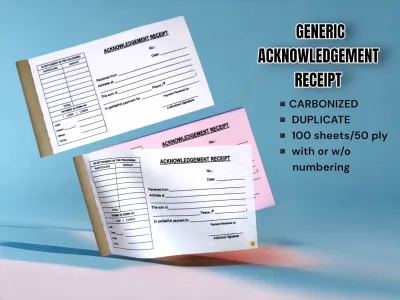
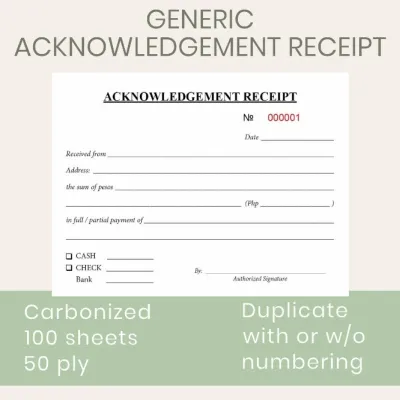
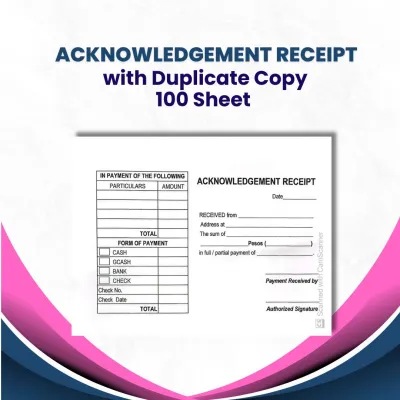
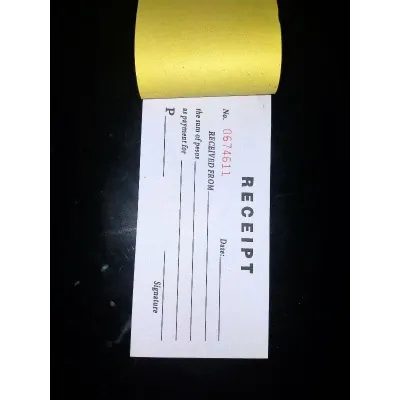
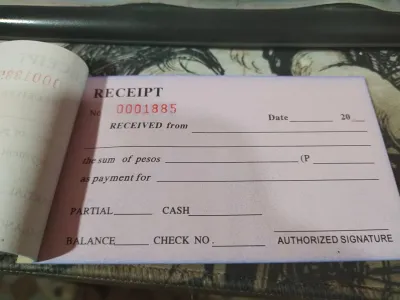
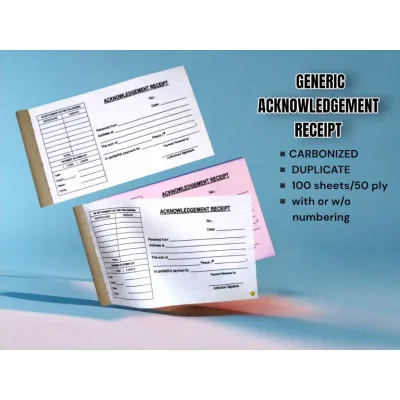
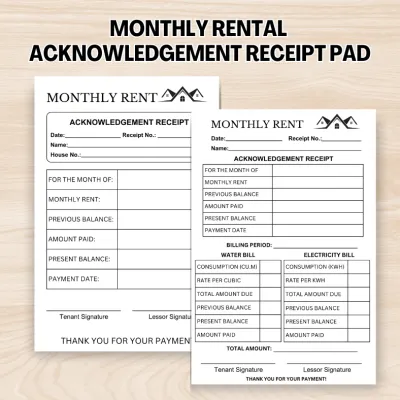
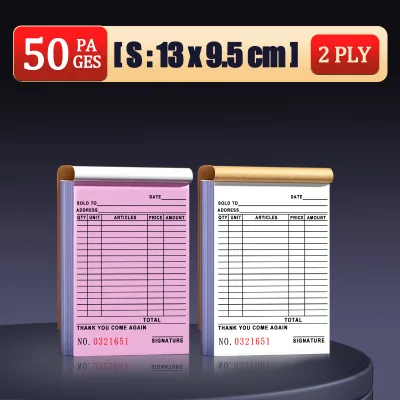
Prices are valid at publication and may change. Please refer to the product page for the latest price.
Before making a final purchase, always verify your specific corporate compliance policies and local tax authority regulations to ensure your chosen format meets all legal documentation standards.
Evaluating Bound Receipt Books for Secure, Sequential Tracking
Bound acknowledgement receipt books serve as a physical anchor for financial transactions. The primary advantage of this format lies in its sequential numbering system, which provides an unbroken audit trail. Because each page is bound directly into the spine, removing a receipt without authorization leaves a highly visible gap. This tamper-evident design is crucial for businesses that need to prevent internal fraud, track daily cash flows, and maintain strict audit readiness for external reviews.

However, managing bound books requires careful consideration of physical storage. As your business completes book after book, these bulky volumes accumulate, requiring dedicated shelf space. In tropical environments like the Philippines, high humidity can cause paper to warp, stick together, or degrade over time. When archiving bound books, you must ensure they are kept in dry, well-ventilated areas to preserve the legibility of the ink and the integrity of the binding.
When selecting a bound book, pay close attention to the paper quality and perforation strength indicated on the product packaging. Poorly perforated pages can tear unevenly, leaving jagged edges that look unprofessional or, worse, tearing the customer’s copy in half. Look for books that specify clean-tear perforations and verify the paper weight (typically measured in gsm) to ensure that writing on the top sheet transfers clearly to the carbonless duplicate or triplicate copies underneath without tearing the original page.
Assessing Loose-Leaf Receipts for Flexible Filing and Digital Workflows
Loose-leaf acknowledgement receipts offer unmatched flexibility for modern, fast-paced business environments. Unlike bound books, loose-leaf sheets can be printed, filled out, and immediately separated for different administrative paths. This modularity is highly beneficial for businesses where multiple departments—such as sales, inventory, and accounting—need to process the same transaction simultaneously. Individual sheets can be scanned quickly through automatic document feeders, a task that is notoriously difficult and time-consuming with bound books.
The primary risk associated with loose-leaf receipts is the potential for lost or misplaced documents. Because the sheets are not physically bound together, a single breeze from an office fan or a disorganized desk can lead to a missing transaction record. To mitigate this risk, businesses must implement strict operational protocols, such as scanning every completed receipt immediately upon receipt and uploading it to a secure cloud storage system before filing the physical copy.
When opting for loose-leaf formats, compatibility with your existing office infrastructure is key. You must verify that the pre-punched holes on the receipt sheets align perfectly with your binders or arch files. Additionally, consider the long-term operational costs; while loose-leaf systems allow you to replace individual damaged pages or print only what you need, the cost of binders, dividers, and high-quality storage folders can add up over time compared to the all-in-one convenience of a bound book.
Comparing Bound and Loose-Leaf Formats Across Daily Workflows
To help you evaluate these two formats side-by-side, it is helpful to look at how they perform across key operational dimensions. The choice between them often comes down to balancing physical security against administrative speed.
| Feature | Bound Receipt Books | Loose-Leaf Receipts |
|---|---|---|
| Physical Durability | High; protective covers and bound spines prevent page loss. | Moderate; requires binders or folders to prevent tearing and loss. |
| Filing Flexibility | Low; receipts must remain in chronological order within the book. | High; pages can be sorted by client, date, department, or project. |
| Sequential Tracking | Excellent; built-in sequential numbering prevents missing records. | Moderate; requires manual tracking or pre-printing sequential numbers. |
| Storage Footprint | Bulky; completed books require significant physical shelf space. | Compact; sheets can be compressed in binders or digitized to reduce paper. |
| Digital Integration | Difficult; requires manual flatbed scanning or photographing. | Easy; compatible with automatic document feeders for rapid scanning. |
This comparison highlights the operational trade-offs businesses face daily. For instance, while a bound book makes it incredibly easy to hand a carbonless duplicate to a customer while keeping the original secure, a loose-leaf system excels when you need to route different copies of a single transaction to your logistics team, your accounting department, and your client all at once.
Remember that the actual performance of either format depends heavily on material specifications. Always check the manufacturer’s details for paper weight, ink compatibility (to prevent bleeding when using gel pens or stamps), and the reliability of the carbonless transfer chemical coating.
Decision Framework: Matching the Receipt Format to Your Operations
To finalize your purchasing decision, analyze your daily business operations against these specific scenarios.
Choose Bound if…
- Your business operates from a fixed physical location, such as a retail counter, a boutique, or a warehouse receiving dock.
- You require a foolproof, sequential audit trail where every single transaction must be accounted for in chronological order.
- Your administrative team prefers a simple, all-in-one physical archiving system that does not require immediate digitization.
- You want to minimize the risk of individual transaction records being misplaced or lost during daily operations.
Choose Loose-Leaf if…
- Your team is decentralized, with field sales representatives, delivery drivers, or project managers who need to issue receipts on the go.
- Your accounting workflow is heavily digitized, requiring rapid scanning and electronic filing of all physical documents.
- You need to distribute copies of a single acknowledgement receipt across multiple internal departments or external partners.
- You use customized, pre-printed templates that you run through standard office printers as transactions occur.
Verify First if…
- Your corporate compliance guidelines mandate a specific format for physical document retention and auditing.
- Your local tax authority or external accounting firm has strict preferences or requirements regarding the format of acknowledgement receipts used for business expense verification.
Best Practices for Managing and Archiving Your Business Receipts
Regardless of the format you choose, maintaining the integrity of your physical records is essential for long-term compliance and financial clarity. In tropical climates, environmental factors pose a significant threat to paper documents. High humidity can cause carbonless paper to degrade, making the transferred ink fade or bleed over time. To prevent this, store your completed receipt books and binders in a cool, dry, and dark environment, preferably in sealed plastic storage bins or filing cabinets away from direct sunlight.
Establishing a consistent indexing routine is equally critical. For bound books, label the spine with the date range and receipt number range contained within. For loose-leaf systems, implement a weekly or monthly filing schedule where physical sheets are organized into labeled binders and cross-referenced with their digital scans. This dual-system approach ensures that even if a physical document is damaged, your business retains a clear, accessible record.
Finally, set a strict protocol for handling voided or erroneous receipts. Never throw away a spoiled receipt sheet or tear a voided page out of a bound book. Instead, clearly write “VOID” across the face of all copies of the receipt, keep them attached to the book or filed in the binder, and document the reason for the cancellation. This practice maintains the integrity of your sequential tracking and demonstrates professional, transparent record-keeping during any internal or external audit.
Frequently Asked Questions (FAQ)
Are loose-leaf acknowledgement receipts valid for official tax documentation?
The validity of an acknowledgement receipt typically depends on the specific information it contains—such as the names of the parties, the date, a detailed description of the transaction, and official signatures—rather than whether the paper is bound or loose-leaf. However, local tax authorities, such as the Bureau of Internal Revenue in the Philippines, often have strict regulations regarding registered receipts and invoices. You should always consult your accounting team or local tax guidelines to ensure your chosen format complies with official invoicing and bookkeeping laws.
How can I prevent bound receipt books from tearing unevenly at the perforation?
To ensure a clean tear every time, fold the page along the perforation line back and forth once or twice before attempting to rip it. This action weakens the paper fibers along the pre-cut line, allowing for a smooth separation. If the paper is particularly thick or the perforation is shallow, you can place a firm straight edge, like a metal ruler, directly along the fold line and pull the page upward against the edge to guarantee a straight, professional tear.
Community discussion
Share your experience or ask a question. Comments are reviewed before publication.