
The choice between a traditional bound journal notebook and a refillable loose-leaf system depends entirely on your organizational needs, writing environment, and archiving preferences. If you prioritize a seamless, lay-flat writing surface, permanent chronological records, and a highly portable design that easily slips into a bag for a daily commute, a bound journal notebook is the ideal fit. Conversely, if your routine involves frequent reorganization, multi-subject tracking, and the flexibility to add, remove, or rearrange pages over time, a loose-leaf system offers the necessary modularity.
In tropical climates like the Philippines, where high humidity can affect paper texture and ink drying times, choosing the right physical format also impacts how well your records survive over time. Aligning your daily writing habits with the structural strengths of each system ensures your thoughts remain preserved, legible, and comfortable to write down.
Structural Differences: Bound vs. Loose-Leaf Systems
Understanding the physical construction of these two systems is essential for choosing a format that fits your daily routine. Bound journal notebooks utilize stitched or glued spines to hold pages permanently in place. Stitched bindings, often referred to as “Smyth-sewn,” allow the notebook to lay completely flat when opened, providing an uninterrupted writing surface from margin to margin. Glued spines are more compact but may resist laying flat, requiring you to hold the pages down while writing. In warm, humid environments, high-quality stitched bindings are generally more durable, as some bookbinding glues can soften or degrade over years of storage, causing pages to detach.
Products mentioned in this guide
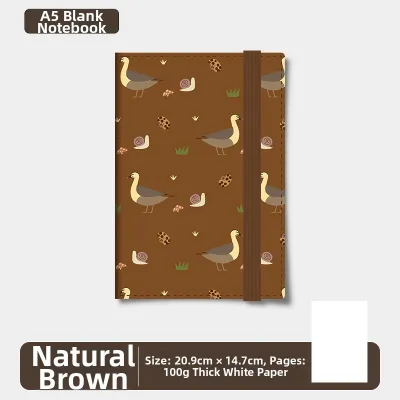
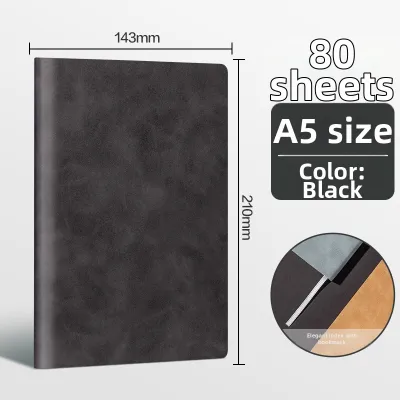
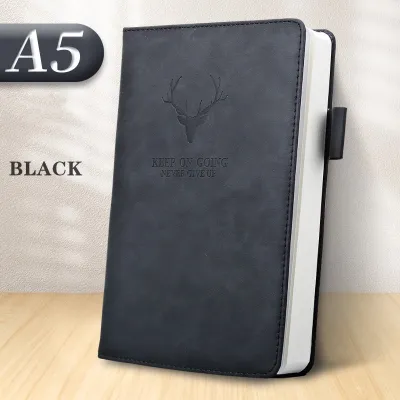
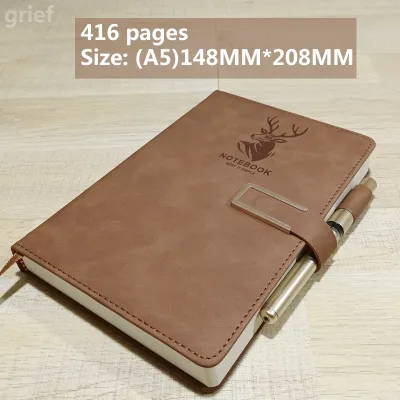
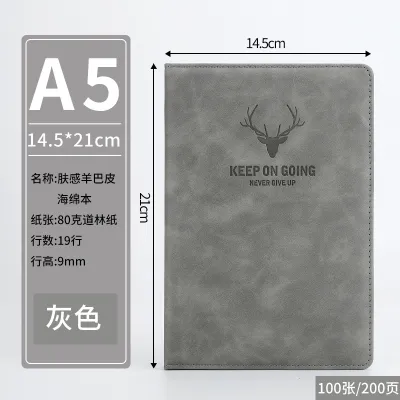
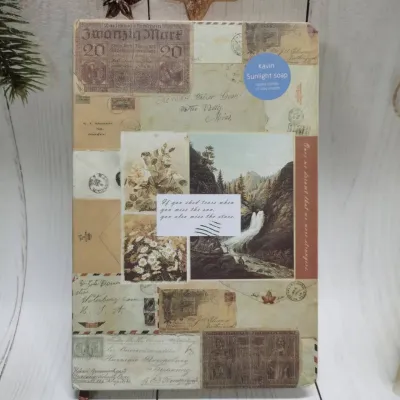
![[A5 Size] Stationery 25K Moleskin Rubber Diary Strap Notebook w/ String Lock](https://img.lazcdn.com/g/p/08767f5921c9c9d01e69076fe785e988.jpg_400x400q80.jpg_.webp)
Prices are valid at publication and may change. Please refer to the product page for the latest price.
Loose-leaf systems rely on opening metal rings, plastic rings, or press-fit discs to secure individual sheets of paper. While this design allows you to insert, remove, or reorder pages at will, the physical rings can obstruct your hand when writing near the inner margins. To write comfortably, you may need to remove the page from the binder, complete your entry, and then clip it back in. The choice of ring material also affects the notebook’s weight; metal rings are highly durable but add significant weight, while plastic rings or discs are lighter but require gentler handling to prevent cracking.
Portability and physical footprint also differ significantly between the two designs. Bound notebooks have a fixed, streamlined profile, making them highly portable and easy to use on your lap or on small coffee shop tables. Loose-leaf binders, especially those with large metal rings, are bulkier and heavier, requiring more desk space. Disc-bound options offer a middle ground, allowing you to fold the cover back completely, though they still require careful handling to prevent pages from detaching inside a crowded bag during a busy commute.
Matching the Notebook to Your Journaling Habits
Your daily writing workflow should dictate the structure of your notebook. If your journaling style is chronological—such as daily diary entries, morning pages, or standard bullet journaling—a bound journal notebook naturally supports this linear flow. The permanent sequence prevents you from losing pages or disrupting the timeline of your personal history, creating a secure, unalterable record of a specific period in your life. Many writers also find a psychological comfort in the permanence of a bound book, viewing it as a dedicated volume of their life story.

However, the permanence of a bound notebook can sometimes induce “blank page anxiety,” where the fear of making a mistake or ruining a page prevents you from writing. A loose-leaf system eliminates this pressure entirely. If you make a mistake, dislike your handwriting on a particular page, or spill ink, you can simply remove the page and start over on a fresh sheet. This flexibility makes loose-leaf systems highly appealing for perfectionists or those who use their journals for creative brainstorming and sketching.
If you manage multiple projects, separate personal reflections from work tasks, or prefer to categorize notes by topic rather than date, a loose-leaf system is highly efficient. You can create dedicated sections using tabbed dividers and expand or contract those sections as your projects evolve. This modularity is particularly useful for students or professionals who need to carry notes for multiple subjects in a single binder rather than carrying several individual notebooks.
Archival preferences are another key consideration for long-term journaling. A bound notebook eventually becomes a physical artifact—a self-contained volume that sits neatly on a bookshelf. Loose-leaf systems often require you to migrate older pages to storage boxes or larger archival binders once the active binder reaches its capacity limit. If you prefer a simple, maintenance-free archive, the bound format is much easier to manage over time.
Paper Options, Refills, and Long-Term Value
Evaluating the ongoing expenses and material choices of each system helps determine its long-term value. A premium bound journal notebook requires a single upfront purchase, but you must buy a completely new notebook once the pages are full. A high-quality loose-leaf binder or disc-bound cover represents a higher initial investment, but the ongoing cost is limited to purchasing paper refills, which are generally more affordable than buying new bound volumes. For example, while a durable binder cover may require an initial investment of ₱500 to ₱1,500, the long-term cost of paper refills (often priced around ₱100 to ₱300 per pack) is highly economical.
When selecting refills or bound notebooks, check the manufacturer’s specifications for paper weight, typically measured in grams per square meter (gsm). In humid environments, lighter paper (under 80 gsm) is more prone to absorbing moisture from the air, which can cause warping, feathering, or ink bleed-through. Opting for 100 gsm to 120 gsm paper provides a sturdier writing surface that handles various ink types better. Additionally, paper coatings and finishes affect how smoothly your pen glides across the page; coated papers resist ink absorption, which prevents bleeding but can significantly increase drying times in humid weather.
Reusing a single binder cover for years reduces material waste, making loose-leaf systems an appealing option for eco-conscious writers. However, you must verify the compatibility of refill hole patterns before purchasing. Standard dimensions like A5 (6-ring) or B5 (26-ring) are widely available, but proprietary disc-bound or multi-ring systems may limit you to specific brands, making it harder to find compatible paper in local office supply stores. Always check the ring spacing and hole count on product labels to ensure a proper fit.
Final Decision Framework: Which System to Buy
To make a confident purchasing decision, apply these conditional rules to your specific writing needs:
Choose a bound journal notebook if you:
- Value a smooth, uninterrupted writing surface without rings obstructing your hand.
- Want a permanent, chronological archive of your thoughts that cannot be easily altered or lost.
- Prioritize a lightweight, highly portable book that fits easily into a daily carry bag.
- Prefer a simple, maintenance-free setup where you do not have to manage loose sheets or index tabs.
Choose a loose-leaf system if you:
- Need to reorganize your pages, mix different paper templates (such as dotted, grid, and blank sheets), or categorize notes by topic.
- Want the freedom to discard mistakes or rearrange sections without ruining the notebook's structure.
- Prefer to carry only active pages to reduce the weight of your daily bag.
- Want a reusable cover system where you only replace the paper inserts over time.
Before committing to either system, verify your writing tools against the paper specifications. If you use fountain pens, gel pens, or wet inks, check product labels for ink-friendly coatings or higher paper weights. Conducting a small ink test on an inconspicuous corner of the page is the best way to observe drying speed, feathering, and bleed resistance under local humidity conditions.
Frequently Asked Questions (FAQ)
Can I convert a bound journal into a loose-leaf system?
Attempting to convert a bound journal into a loose-leaf system carries a high risk of damaging the notebook’s spine and compromising its structural integrity. Cutting the binding of a stitched or glued notebook often results in uneven page margins, loose threads, and misaligned sheets, and it voids any manufacturer warranties. If you need modularity but have already started writing in a bound notebook, consider using adhesive index flags, color-coded tabs, or scanning key pages digitally to organize your content without destroying the physical book.
How do I prevent loose-leaf pages from tearing at the holes?
To maintain the integrity of loose-leaf pages, always check the alignment of your binder rings before adding more paper, as misaligned rings can snag and tear the sheets. Avoid overstuffing the binder beyond its recommended capacity limit, as excessive thickness puts physical strain on the punched holes when you close the cover. When turning pages, handle them gently from the center rather than pulling from the outer edges, and consider using adhesive reinforcement rings on high-use pages to prevent tearing.
Community discussion
Share your experience or ask a question. Comments are reviewed before publication.