
Quick Answer: Bound or Loose-Leaf?
Choosing between a bound journal and a loose-leaf journal for your daily writing comes down to a fundamental trade-off: the psychological comfort of chronological permanence versus the practical freedom of complete physical flexibility. If your daily writing routine is a linear, reflective journey where every mistake is part of the historical record, a bound journal is your ideal companion. These books offer a classic, uninterrupted writing surface and form a handsome, tamper-proof archive on your bookshelf over time.
Conversely, if you view your journal as an evolving workspace where you organize thoughts, track habits, mix media, and discard errors, a loose-leaf or refillable journal provides the structural adaptability you need. These systems allow you to rearrange pages, insert custom dividers, and swap out ruined sheets without compromising the integrity of the entire book. Your choice should align with how you handle mistakes and whether you prefer a fixed chronological record or a customizable, modular system.
Core Differences Between Bound and Loose-Leaf Journals
To understand which format suits your daily writing, it is essential to look at how they are physically constructed. A traditional bound journal features pages that are permanently secured to a central spine. High-quality bound journals utilize Smyth-sewn (or thread-sewn) bindings, where folded groups of pages called signatures are stitched together before being glued to the spine cover. Less expensive options may use perfect binding, which relies solely on adhesive to hold individual sheets. Because the pages are fixed, a bound journal establishes a rigid, chronological sequence that cannot be altered without physically tearing out sheets, which damages the spine.
Products mentioned in this guide
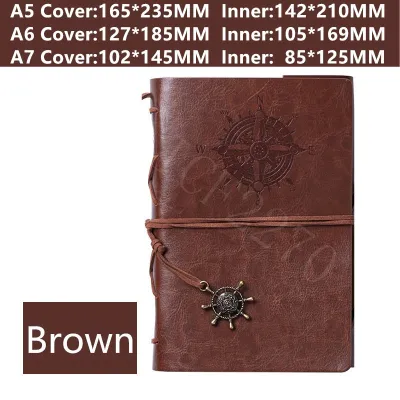
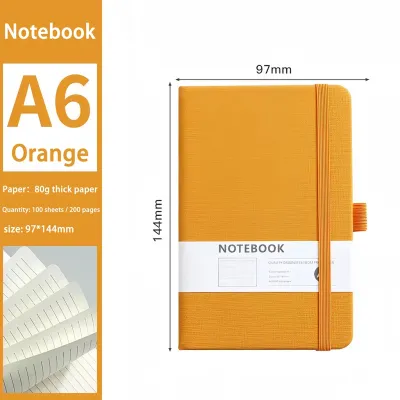
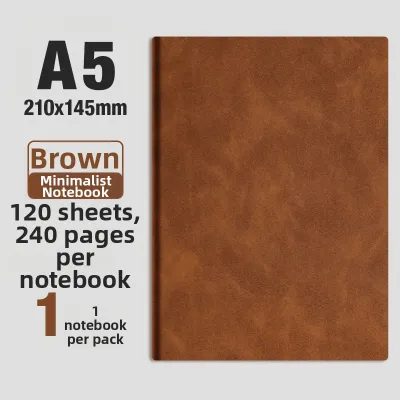
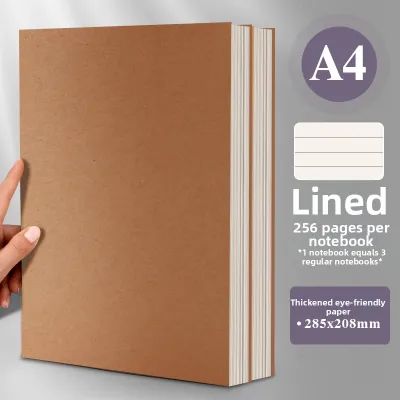
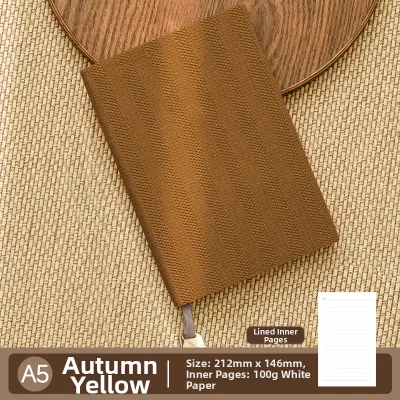
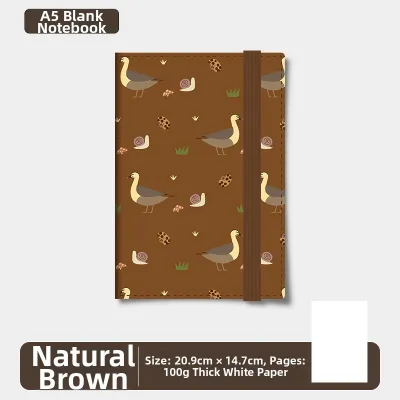
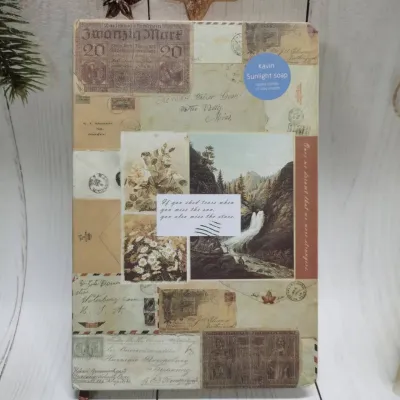
Prices are valid at publication and may change. Please refer to the product page for the latest price.

A loose-leaf or refillable journal, on the other hand, separate the cover from the writing medium. The pages are individual sheets of paper punched with holes and held together by an internal mechanism. This mechanism typically consists of metal or plastic rings, openable discs, or flexible cords. The most common formats include standard six-ring binders for personal or A5 sizes, multi-ring binders (such as Japanese 20-ring or 26-ring systems), and disc-bound systems. This structural separation means the cover is a long-term investment, while the paper inside is a temporary, replaceable consumable.
These physical differences directly dictate how you interact with your journal. A bound book demands that you accept the page as it is, adapting your writing to the physical limits of the volume. A loose-leaf system adapts to you, allowing you to change the paper type, adjust the thickness of the book, and reorganize your thoughts long after they have been written down. However, this structural difference also affects how the materials age, especially when exposed to environmental factors.
Key Comparison Dimensions for Daily Writing
Evaluating these two journaling formats requires looking closely at how they perform during actual daily use. Factors like page management, physical durability under environmental stress, writing ergonomics, and portability all play a role in whether a journal becomes a cherished daily habit or an annoying chore.
Flexibility and Page Management
Loose-leaf journals excel in flexibility, offering unmatched control over your page layout and organization. If you make a mistake, spill ink, or simply dislike an entry, you can open the rings and remove the page cleanly, leaving no trace of the error. This system also allows you to mix and match different paper formats within the same binder. You can place ruled paper for daily stream-of-consciousness writing next to dotted paper for habit trackers, blank paper for sketching, and grid paper for financial planning. Furthermore, you can insert index tabs, plastic pockets, and colored dividers to categorize your entries by month, project, or personal theme.
Bound journals enforce a strict, chronological progression. Every page follows the previous one, and mistakes must be crossed out, covered with correction tape, or pasted over with scrap paper. While some writers find this restriction anxiety-inducing, others find it liberating. The inability to easily remove pages forces you to accept your mistakes and documents your genuine, unedited personal growth. However, if you want to organize your thoughts by topic rather than date, a bound journal requires you to maintain a manual index or use color-coded edge marks, which can be tedious to maintain over several months.
Durability and Archival Quality
When it comes to preserving your daily thoughts for years to come, bound journals generally offer superior archival protection. Smyth-sewn bindings distribute physical stress evenly across the thread and spine, ensuring that pages remain firmly attached even after decades on a shelf. The hard or soft covers of bound journals shield the page edges from dust and physical wear. In tropical climates like the Philippines, where high relative humidity can soften adhesives, thread-sewn bound journals maintain their structural integrity far better than cheap, glued perfect-bound notebooks, which can crack and lose pages over time.
Loose-leaf systems present different durability challenges. Because the pages are held by rings or discs, the physical stress of turning pages is concentrated entirely on the punched holes. Over time, frequent flipping can cause the paper around these holes to stretch, fray, or tear completely out of the binder. To prevent this, you must invest in heavier paper weights—typically 100 GSM (grams per square meter) or higher—or use plastic reinforcement rings. Additionally, metal ring mechanisms can occasionally misalign or rust if exposed to persistent coastal humidity, while plastic discs can crack if the journal is dropped or packed too tightly.
Writing Experience and Lay-Flat Ability
An enjoyable daily writing habit relies heavily on physical comfort and ergonomics. High-quality bound journals are designed to lay completely flat on a desk when opened. This lay-flat ability provides a smooth, continuous writing surface across the entire spread, allowing your hand to glide effortlessly from the left page to the right page without encountering physical obstructions. The absence of a bulky central mechanism means your wrist can rest naturally on the desk, which is essential for long, comfortable writing sessions.
Loose-leaf binders can introduce ergonomic challenges due to their binding mechanisms. Standard metal rings or plastic discs protrude significantly from the center of the journal. If you are right-handed, these rings will obstruct your hand and wrist when you attempt to write on the left-hand page; if you are left-handed, they will interfere when writing on the right-hand page. To write comfortably near the inner margins, many users find they must open the rings, remove the page entirely, write on a flat surface, and then snap the page back into the binder. While this workaround is simple, it adds an extra step that can disrupt the spontaneous flow of daily writing.
Portability and Everyday Carry
If you prefer to carry your journal with you to local coffee shops, offices, or during daily commutes on public transit, physical footprint and weight are critical factors. Bound journals are highly compact, rigid, and self-contained. They lack protruding parts, making them easy to slip into a protective sleeve and slide into a backpack or tote bag. Their solid covers also provide a sturdy built-in writing surface, allowing you to write comfortably on your lap or while traveling when a desk is not available.
Loose-leaf binders tend to be bulkier and heavier than their bound counterparts. The ring or disc mechanism requires a wider spine and cover to protect the pages, resulting in a thicker overall profile that occupies more space in your bag. The rings can also snag on loose items, keys, or clothing inside a crowded bag. Furthermore, if you carry a loose-leaf binder during the rainy season, you must ensure your bag is fully waterproof; if water enters the open gaps of a ring binder, it can quickly saturate and ruin multiple loose sheets at once, whereas a tightly closed bound journal offers slightly better immediate resistance to minor splashes.
Cost and Long-Term Value Analysis
The financial commitment of these two journaling systems is structured very differently, and understanding the long-term math can help you make a smarter purchasing decision.
Bound journals have a relatively low upfront cost. You can purchase a high-quality, thread-sewn bound notebook with premium paper for anywhere between ₱300 and ₱1,500. However, this is a recurring cost. Once you fill the pages—which can happen quickly if you write daily—you must purchase a completely new journal, cover and all. Over several years of consistent daily writing, the cumulative cost of buying multiple premium bound journals can become substantial.
Loose-leaf systems require a much higher initial investment. A durable, premium binder cover made of genuine leather, sturdy faux leather, or high-grade polycarbonate can cost between ₱500 and ₱3,000 or more. However, this cover is a one-time purchase designed to last for years. Once you own the binder, the ongoing cost is limited to paper refills, which typically retail for ₱100 to ₱400 per pack.
Before committing to a loose-leaf system, it is highly recommended to check local stationery specialty shops and online marketplaces in the Philippines to ensure that refills in your preferred size (such as A5 or B6) and specific ring configuration (like 6-ring vs. Japanese 20-ring) are readily available and affordable. If you choose a highly proprietary ring or disc system, you may find yourself struggling to source affordable paper refills locally, forcing you to pay high shipping fees for imported paper.
How to Choose: The Daily Writer’s Decision Framework
To make your final decision, evaluate your writing habits, aesthetic preferences, and practical needs against the specific criteria outlined below.
Choose a Bound Journal if:
- You want a chronological, unalterable record of your thoughts that serves as a permanent keepsake.
- You prioritize a seamless, lay-flat writing experience where no metal rings or discs obstruct your hand.
- You need a compact, lightweight notebook that easily slips into a bag for daily commuting.
- You enjoy the visual satisfaction of a shelf filled with uniform, completed volumes over the years.
- You want a simple, ready-to-use writing tool that requires no assembly or page management.
Choose a Loose-Leaf Journal if:
- You want the freedom to reorganize, categorize, or discard pages at any time without damaging the book.
- You prefer to mix different paper styles, such as ruled sheets for writing and dotted sheets for bullet journaling, within a single cover.
- You want to invest in a single, high-quality cover that will age beautifully and develop a personal patina over years of use.
- You write in high volumes and want to lower your long-term stationery costs by purchasing paper refills rather than complete books.
- You enjoy customizing your journal layout with tab dividers, storage pockets, and personalized templates.
Verify First if:
- The paper weight (GSM) and surface coating are compatible with your preferred writing instruments, especially in humid conditions.
- The ring or disc mechanism operates smoothly, closes securely, and does not catch or tear the paper during page turning.
- Refills in your chosen size and hole pattern are consistently stocked by local stationery suppliers or reliable online stores.
- Note: Stop and consult the manufacturer's guidelines if a specific binding claims to be convertible or hybrid but lacks clear assembly instructions.
Frequently Asked Questions (FAQ)
Can I use fountain pens in loose-leaf journals?
Yes, you can use fountain pens in loose-leaf journals, but your success depends entirely on the specific paper quality of the refills rather than the binder itself. Because fountain pen ink is water-based, it requires paper with tight fiber structures and proper sizing to prevent feathering, bleeding, and ghosting. When shopping for loose-leaf refills, look for paper with a weight of at least 80 GSM to 120 GSM that explicitly states it is fountain pen friendly. Always test a single refill sheet or a small sample pack with your favorite pen and ink combination before purchasing a bulk supply, as high tropical humidity can sometimes cause even decent paper to absorb moisture and bleed more easily.
Are disc-bound journals the same as traditional ring binders?
No, disc-bound journals and traditional ring binders utilize different physical mechanisms to hold pages. Traditional ring binders use metal or plastic rings that open and close via a lever or by pulling the rings apart, holding paper punched with standard round holes. Disc-bound systems use individual, static plastic or metal discs with raised rims, paired with paper punched with specialized, mushroom-shaped slots. This design allows you to pull pages out and press them back into the discs at any point without opening a mechanism. Disc-bound systems generally lay flatter than traditional ring binders, but they require proprietary punches if you want to insert your own custom paper.

Community discussion
Share your experience or ask a question. Comments are reviewed before publication.