
Selecting the right system to track incoming business transactions is a foundational step in maintaining financial health. For businesses managing regular customer accounts, the choice between a permanently bound payment collection record book and a refillable loose-leaf system directly impacts daily efficiency, administrative workload, and audit readiness. Both formats offer distinct advantages depending on whether your operations are centralized in an office or distributed among field agents. By evaluating how each format handles physical wear, error correction, and long-term costs, you can establish a reliable record-keeping workflow that supports your business growth.
Core Differences in Structure and Daily Use
The physical construction of your record book dictates how comfortably and quickly you can log transactions during a busy workday. Thread-bound or case-bound books are designed to lay relatively flat when opened, providing a smooth, continuous writing surface across the entire page. In contrast, loose-leaf binders feature central metal or plastic rings that can act as a physical barrier for your hand, making it uncomfortable to write near the inner margins unless you frequently remove the pages.
Portability is another critical factor, especially for businesses that conduct field collections in bustling commercial areas or outdoor markets. A bound book is typically lightweight, self-contained, and features a rigid cover that serves as a sturdy writing surface when you are standing or on the move. A loose-leaf binder tends to be bulkier and heavier, and its shifting rings can make it awkward to hold securely in one hand while writing with the other during client visits.
Products mentioned in this guide
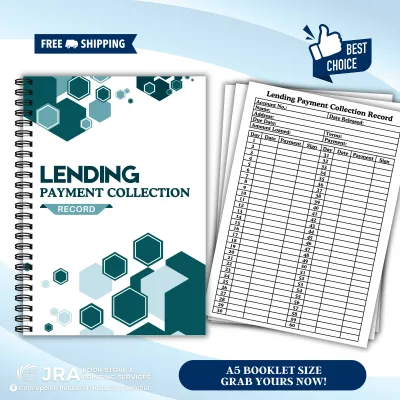
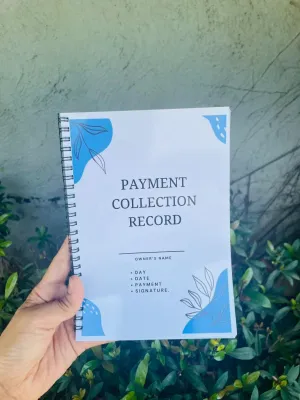
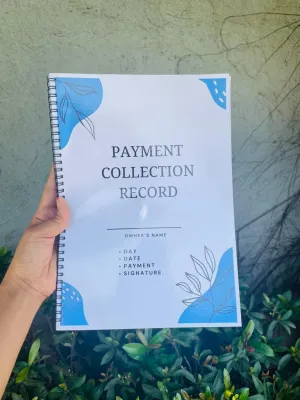
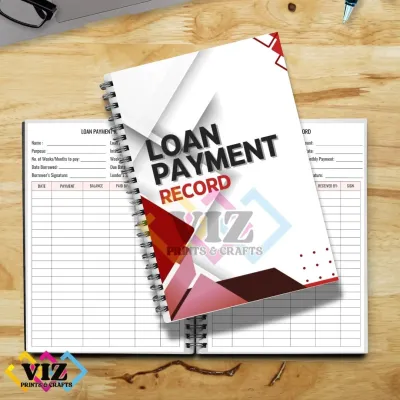
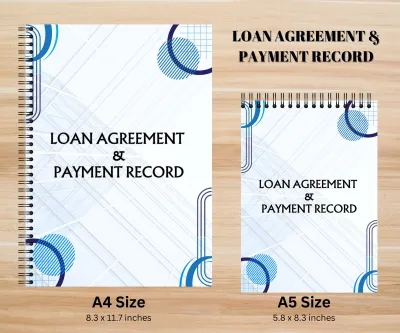
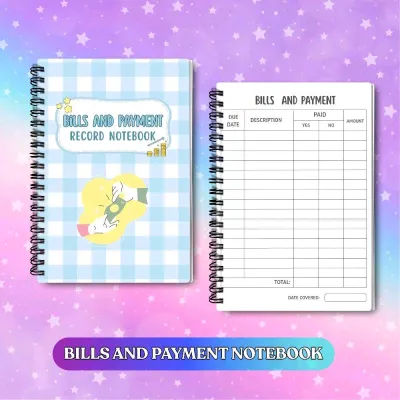
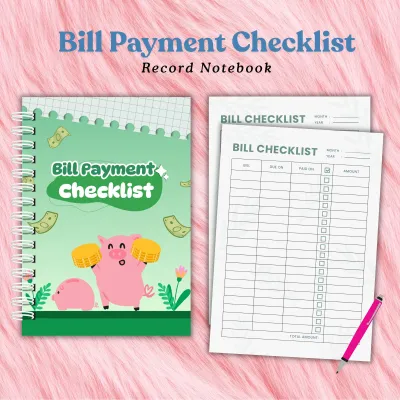
Prices are valid at publication and may change. Please refer to the product page for the latest price.
Page-turning speed and ease of reference also differ significantly between the two designs. Bound books allow you to flip rapidly through pages to locate historical entries or verify past payments during client interactions. Loose-leaf pages can sometimes catch on the ring mechanisms, which slows down the retrieval process and increases the risk of tearing the paper at the punch holes when you are in a hurry.
Durability and Long-Term Archiving
Financial records must withstand years of handling and storage to remain useful for tax compliance and internal audits. Over extended periods of daily use, the spine of a bound book can crack, and the binding threads may unravel, which can lead to loose pages. If a page in a bound book becomes severely stained or damaged, it cannot be easily replaced without compromising the structural integrity of the entire volume.

Loose-leaf systems face different durability challenges, primarily centered around the moving parts of the binder. The ring mechanism can become misaligned or lose its tension over time, preventing the binder from closing securely. Additionally, the paper around the punched holes is highly susceptible to tearing under heavy use, and the plastic or cardboard covers can warp when exposed to high tropical humidity.
When archiving completed records, bound books stack neatly on shelves or in filing cabinets, occupying a predictable, uniform space. Loose-leaf binders, with their wider spines and protruding rings, take up more physical space and can create uneven stacks. To ensure long-term preservation, businesses should check manufacturer specifications for acid-free paper and rust-resistant ring hardware to prevent degradation in humid storage environments.
Flexibility, Error Correction, and Collaboration
The way your business handles mistakes and organizes data should guide your choice of binding format. A bound payment collection record book maintains a strict chronological audit trail, meaning that errors must be crossed out with a single line and initialed rather than erased or removed. This format preserves a transparent history of all entries, which is highly valued during formal financial audits.
A loose-leaf system offers unparalleled flexibility when it comes to error correction and data organization. If a page is ruined by a major spill or writing error, you can simply remove it and insert a clean replacement page without affecting the rest of the log. This modularity also allows you to sort and index pages by client name, geographic region, or payment date before final archiving, creating a highly customized filing system.
Collaboration is another area where loose-leaf systems excel, particularly for businesses with multiple collection agents. You can distribute individual sheets or sections to different collectors for daily field use and then consolidate them into a single master binder at the end of the day. A bound book restricts usage to one person at a time, forcing agents to wait for their turn or maintain separate, disconnected books that must be manually reconciled later.
Cost Analysis: Upfront Price vs. Refill Expenses
Evaluating the total cost of ownership involves comparing the initial purchase price with the ongoing expenses of maintaining each system. Purchasing a complete loose-leaf binder set—including a heavy-duty cover, ring mechanism, and index dividers—typically requires a higher upfront investment in ₱ compared to buying a single, standard bound book. For small businesses or startups operating on a tight budget, the lower initial price of a bound book makes it an attractive entry-level option.
Over time, however, the financial dynamics of these two systems can shift. Once you own a high-quality loose-leaf binder, you only need to purchase paper refills, which are generally less expensive than buying entirely new bound books. It is important to evaluate the availability and minimum order quantities of these refills, as proprietary ring configurations may lock you into a single supplier, whereas standard punched paper is widely available in local office supply stores.
Hidden costs can also impact your long-term budget. If a loose-leaf binder’s ring mechanism breaks, the entire binder must be replaced, which can be costly. Conversely, bound books can lead to financial waste if a business cycle ends or a tracking system changes while the book is only partially filled, forcing you to archive a half-empty volume and buy a new one.
Decision Matrix: How to Choose the Right Record Book
A bound payment collection record book is the ideal choice if your business operates under strict regulatory compliance that demands a tamper-evident, chronological audit trail. It is also highly suited for single-user operations, field collections where portability and physical stability are paramount, and workflows with low error rates where simple cross-outs are acceptable.
A loose-leaf format is better suited for office-based administrative processing where high volumes of transactions require frequent reorganization. It is the practical option if you need to correct mistakes by replacing entire pages, or if your workflow involves multiple agents who need to carry individual sheets simultaneously before consolidating them into a central binder.
Before making a final decision, verify your company’s internal accounting policies and local tax regulations to ensure loose-leaf records are permitted for official financial tracking. Additionally, check the manufacturer’s specified ring capacity limits for loose-leaf binders to ensure they can accommodate your expected monthly transaction volume without overstuffing and damaging the pages.
Frequently Asked Questions (FAQ)
Can I use a standard ruled notebook instead of a dedicated payment collection book?
While a standard ruled notebook is inexpensive and widely available, it lacks the pre-printed columns specifically designed for financial tracking, such as dates, receipt numbers, payment methods, and running balances. Drawing these columns manually is time-consuming and prone to alignment errors. Using a non-standard format increases the risk of calculation mistakes, missing information, and complications during internal or external audits.
How do I prevent loose-leaf pages from getting lost during field collections?
To protect loose-leaf pages in the field, avoid carrying the entire bulky binder outdoors. Instead, use a heavy-duty clipboard with a built-in storage compartment to hold only the specific sheets needed for the day’s route. At the end of each shift, immediately transfer the completed sheets back into the main binder in the office to secure them and maintain a centralized, organized record.
Community discussion
Share your experience or ask a question. Comments are reviewed before publication.