
When managing rental properties, maintaining an accurate, physical paper trail of tenant payments is a fundamental practice that protects both landlords and tenants. While digital tools exist, many property owners prefer the tactile reliability, immediate accessibility, and legal weight of a physical rent ledger record book. However, before purchasing your next record-keeping book, you must resolve a key structural debate: should you use a permanently bound ledger or a flexible loose-leaf system?
There is no single “best” format for every property owner; the ideal choice depends on the size of your rental portfolio, your administrative workflow, and your specific need for record permanence. For landlords managing a single unit, a small family-owned apartment, or a boarding house with long-term tenants, a bound ledger is highly recommended. It provides a tamper-proof, strictly chronological financial history that is easy to maintain and highly respected in legal settings.
Conversely, for landlords managing multiple properties, student housing with high tenant turnover, or commercial spaces with complex payment schedules, a loose-leaf system offers the modular flexibility required to add, remove, and reorganize tenant records without disrupting the rest of your book. While both formats serve the core function of a rent ledger record book, their physical structures dictate how efficiently you can log daily payments and archive historical records over multiple years.
Products mentioned in this guide
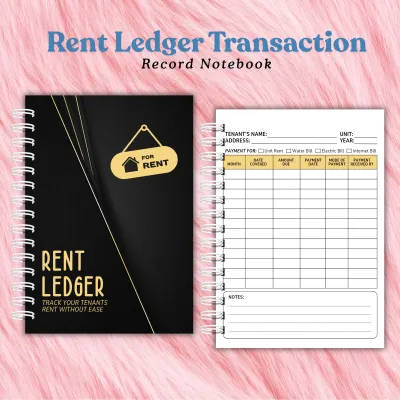
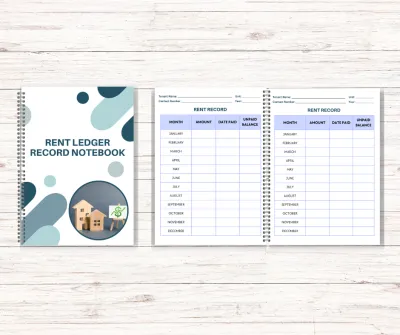
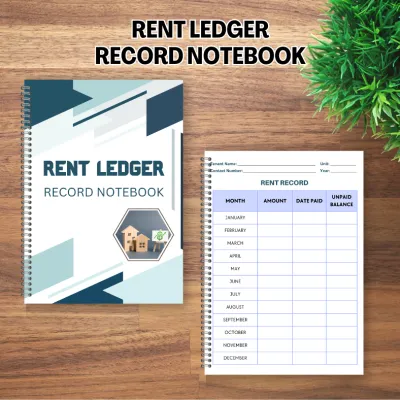
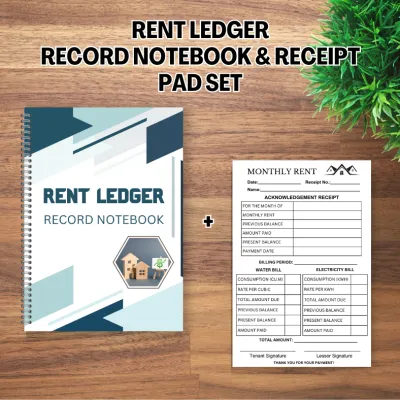
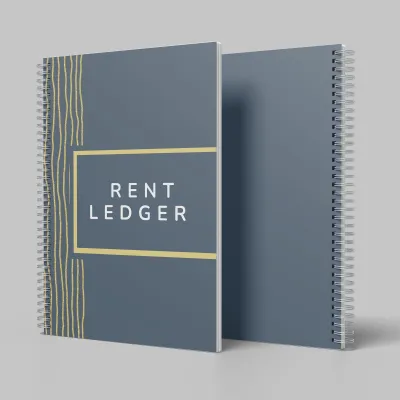
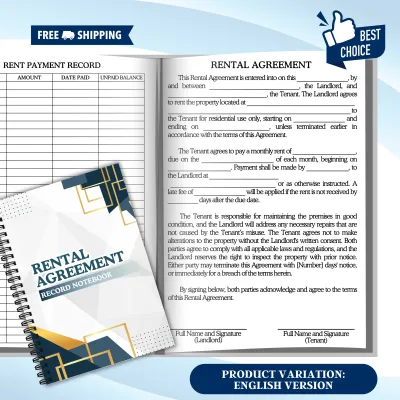
Prices are valid at publication and may change. Please refer to the product page for the latest price.
The Physical Differences: Stitched Pages vs. Refillable Binders
To make an informed decision, it is essential to understand the physical construction of these two stationery formats. A bound rent ledger is constructed with pages that are permanently secured into a single cover using methods such as Smyth sewing, case binding, or heavy-duty spiral binding. Once assembled, the pages cannot be removed, reordered, or added to without causing visible structural damage to the book. This creates an unbroken, continuous log that acts as a permanent historical document of all financial transactions within your properties.
In contrast, a loose-leaf ledger system consists of a refillable multi-ring binder—typically featuring standard 3-ring, 4-ring, or multi-hole B5 and A4 configurations—that houses individual, pre-printed ledger sheets. This modular design allows you to open the rings to insert new pages, extract completed records, or rearrange the order of your sheets at any time. You can purchase pre-printed ledger refills or print your own templates onto high-quality paper stock that fits your binder’s specific ring layout.
The physical binding method directly influences your daily writing experience when logging transaction dates, receipt numbers, payment methods, debit/credit amounts, and running balances. Bound books, especially those with sewn spines, lay flat on your desk, offering a smooth, continuous writing surface across the entire spread. Loose-leaf binders, while offering excellent modularity, feature prominent metal or plastic rings that can physically obstruct your hand when writing near the inner margins of the page, particularly for left-handed users.
Furthermore, environmental factors play a significant role in how these materials perform over time. In tropical climates like the Philippines, where high relative humidity is a constant factor, paper fibers naturally absorb moisture from the air, making them softer and more prone to tearing. In a loose-leaf system, this softening increases the risk of pages tearing away from the binder rings during frequent page-turning. Bound books distribute the mechanical stress of page-turning across the entire glued or stitched spine, making them structurally more resilient in humid environments, provided the binding adhesive is designed to resist moisture degradation.
Evaluating Permanence, Flexibility, and Daily Handling
Record Security and Chronological Integrity
The primary advantage of a bound rent ledger record book is its inherent security and the unalterable nature of its pages. Because the pages are bound in a fixed, sequential order by the manufacturer, any attempt to tear out a page or insert a new sheet backdated to a previous month will leave obvious, unmistakable physical evidence. This permanent, tamper-evident chronological history is highly advantageous during legal disputes, tenant evictions, or tax audits conducted by local authorities such as the Bureau of Internal Revenue (BIR). In a legal proceeding, presenting a clean, bound ledger with sequential entries demonstrates a consistent, unmanipulated record-keeping habit, which carries significant evidentiary weight.

On the other hand, loose-leaf ledger systems present a higher risk of record alteration or accidental loss. Because pages can be opened and removed in seconds, an important ledger sheet can easily be misplaced, filed incorrectly, or even intentionally removed by an employee. If multiple property managers or family members have access to the physical binder, maintaining chronological integrity requires strict administrative discipline. To mitigate these risks, landlords utilizing loose-leaf systems should implement verification checks, such as manually numbering every sheet in permanent ink upon insertion, maintaining a digital scan of each completed page, or using tamper-evident binder seals that lock the rings to prevent unauthorized access.
The choice of writing instrument also interacts with the security of your ledger. Regardless of the format, using permanent, water-resistant pigment ink—such as archival gel pens or document-proof ballpoints—is essential to prevent accidental smudging or deliberate alterations. Because high humidity can prolong the drying speed of certain water-based inks, it is wise to perform a quick trial on a hidden corner of your ledger paper. Check how quickly the ink dries and whether it feathers or bleeds through to the reverse side. This simple verification ensures that your chronological records remain crisp, legible, and unblemished for the entire duration of your statutory retention period.
Managing Multiple Units and Tenant Turnovers
For landlords managing a diverse portfolio, such as an apartment building in Manila, a townhouse complex, or a student boarding house in Cebu, organizing records by individual tenant is crucial. This is where the loose-leaf system provides an unmatched operational advantage. By utilizing colored tab dividers, you can organize your binder geographically or by unit number (e.g., Unit 101, Unit 102, Unit 103). Under each tab, you can place the specific ledger sheets dedicated to the current tenant of that unit. When a tenant moves out, you simply open the rings, remove their completed ledger sheets, place them in a dedicated archive file, and insert a fresh, blank sheet for the incoming tenant. This keeps your active daily binder compact, organized, and focused solely on current tenancies.
Bound books, however, force a rigid chronological structure that can complicate multi-unit management. If you attempt to log transactions for multiple units in a single bound ledger, you generally have to choose between two imperfect methods. The first method is to record every payment sequentially as it occurs, mixing all units together on the same page. This makes it incredibly difficult to calculate a single tenant’s payment history or outstanding balance at a glance, as you must scan through pages of unrelated entries. The second method is to pre-allocate a set number of pages for each unit (for example, pages 1 to 10 for Unit 101, and pages 11 to 20 for Unit 102). The risk here is that one unit may experience high turnover or complex payment disputes that exhaust its allocated pages quickly, forcing you to jump to a random blank section at the back of the book. This breaks the logical flow of your records and increases the likelihood of posting errors.
To address these limitations in a bound format, some landlords choose to purchase separate, smaller bound ledger books for each individual rental unit. While this solves the organization problem and preserves chronological integrity, it also increases your upfront stationery costs and requires you to carry multiple physical books when visiting your properties to collect rent.
Long-Term Archiving and Physical Wear
The physical lifespan of your record-keeping system is a critical consideration for long-term property management, as local laws often require financial logs to be preserved for several years. Bound ledger books are exceptionally easy to archive. Once a book is fully written or the fiscal year ends, you can write the start and end dates clearly on the spine or cover and place it on an office shelf. Because they are self-contained and structurally stable, they do not require extra storage hardware and are highly resistant to physical degradation. High-quality case-bound books protect the internal pages from dust, light, and minor spills, ensuring that your records remain intact for the statutory retention periods required by local tax authorities.
In contrast, loose-leaf binders offer a different archiving advantage but require more active physical maintenance. Over years of daily use, the paper around the binder rings can wear down, leading to torn holes and loose pages. This is especially true if you use lightweight paper that easily softens in humid environments. To prevent this, you must invest in heavy-duty ledger sheets or use adhesive reinforcement rings around the punched holes. However, loose-leaf systems allow you to maintain a lightweight “active” binder. By regularly purging completed years or inactive tenant files and transferring them to cheap, flat cardboard file folders, your daily-use binder remains thin, organized, and easy to carry during property visits. This modularity prevents you from carrying around years of dead data just to log today’s rent payments.
Side-by-Side Comparison of Ledger Features
| Feature | Bound Ledger | Loose-Leaf System |
|---|---|---|
| Page Permanence | High; pages cannot be removed without leaving visible damage, ensuring an unalterable chronological log. | Low; pages can be easily added, removed, or rearranged, which requires strict administrative discipline. |
| Multi-Unit Organization | Challenging; entries are typically mixed chronologically unless separate books are purchased for each unit. | Excellent; allows the use of tab dividers to organize records by individual unit or tenant. |
| Error Correction | Requires neat strikethroughs or correction tape; tearing out a page ruins the book's integrity. | Simple; ruined pages can be easily replaced with fresh sheets, though this must be managed carefully. |
| Archiving Method | Simple; the entire completed book is labeled and stored on a shelf as a permanent historical record. | Modular; completed sheets are transferred to archive folders, keeping the active binder thin and lightweight. |
| Ongoing Costs | Moderate; requires purchasing a completely new ledger book once the current one is filled. | Low; requires a one-time binder purchase, with ongoing costs limited to inexpensive paper refills. |
When shopping for either format, always inspect the paper weight, which is typically measured in grams per square meter (GSM). For physical rent tracking, look for paper with a weight of at least 80 GSM, and ideally 100 GSM. Heavyweight paper provides superior bleed resistance, preventing ink from standard gel pens, rollerballs, or fountain pens from seeping through to the other side of the page. This is particularly important in humid tropical environments, where paper fibers naturally absorb moisture, which can cause low-quality, lightweight paper to feather and bleed excessively. Additionally, check the binding quality: sewn bindings are far more durable than glued-only bindings, while metal binder rings are highly preferable to plastic rings, which can warp or crack over time.
Decision Framework: Choose Bound or Loose-Leaf?
To help you make the right choice for your rental business, consider this structured decision framework based on your specific operational needs:
Choose a Bound Ledger if:
- You manage a single rental unit, a small family property, or a boarding house with stable, long-term tenants.
- You prioritize maximum record security and want a tamper-evident, unalterable paper trail that will hold up under legal scrutiny or official tax audits.
- You prefer a simple, straightforward "buy and use" approach that does not require purchasing refill paper, binder rings, or tab dividers.
- You want a compact, self-contained book that is easy to store on a shelf at the end of the fiscal year.
Choose a Loose-Leaf System if:
- You manage multiple rental units, commercial spaces, or properties with high tenant turnover where records must be updated and reorganized frequently.
- You prefer organizing your financial records geographically or by individual tenant, rather than in a strict chronological mix.
- You want the flexibility to replace damaged pages, insert extra sheets for active accounts, and archive completed tenancies without keeping a bulky, partially empty book.
- You want to minimize ongoing costs by making a one-time investment in a high-quality binder and purchasing inexpensive paper refills as needed.
Verify first if:
- You have specific local tax, legal, or property management regulations that mandate a specific format for physical financial records. For instance, in the Philippines, the Bureau of Internal Revenue (BIR) has strict guidelines regarding manual books of accounts. While bound journals and ledgers are traditionally required for official tax registration, loose-leaf systems may be permitted under specific administrative rulings, provided they are bound and registered at the end of the taxable year. Always consult with a certified public accountant or legal professional in your municipality to ensure your physical logging practices comply with local tenancy and tax laws.
Ultimately, the consistency of your record-keeping is far more important than the specific stationery format you choose. Whichever system you select, establish a disciplined daily or weekly routine for logging payments, issuing receipts, and reconciling balances. A well-maintained ledger is your best defense against financial disputes and the most reliable tool for tracking the profitability of your rental investments.
Frequently Asked Questions (FAQ)
Can I use a standard ruled notebook instead of a pre-printed ledger?
While you can technically use a standard ruled notebook or composition book to track rental payments, it is generally not recommended for professional property management. Standard notebooks lack the pre-printed columns specifically designed for financial tracking, such as columns for the transaction date, receipt number, description, debit (charges), credit (payments), and the running balance. Manually drawing these columns on every page is not only time-consuming but also increases the risk of alignment errors, omitted data fields, and mathematical mistakes. A dedicated rent ledger record book provides a structured, professional template that guides your data entry, ensuring that you capture all necessary financial details consistently and accurately.
What details must be logged to make a physical ledger legally valid?
To ensure your physical rent ledger serves as a legally valid and functional record of financial transactions, it must consistently capture several essential data points. For every transaction, you should record the exact date the payment was received, the full name of the tenant making the payment, the specific rental unit number, the exact amount paid (clearly denoted in your local currency, such as Philippine Pesos ₱), the payment method (such as cash, bank transfer, or check), and the unique receipt number issued to the tenant. Additionally, always calculate and update the running balance immediately after each entry to show whether the tenant has an outstanding balance or a credit. While these are the universal essentials for basic bookkeeping, you should always consult with a local accountant or legal professional to ensure your physical logs meet the specific statutory requirements of your regional tenancy laws and tax regulations.
Community discussion
Share your experience or ask a question. Comments are reviewed before publication.