
Quick Answer: Which Utang Record Book Format Fits Your Needs?
The choice between a bound notebook and a loose-leaf system for an utang record book depends on your business scale, customer volume, and how you prefer to handle record security.
For neighborhood sari-sari stores, market vendors, or home-based micro-businesses with a stable, small customer base, a bound notebook is the most practical option. It is highly portable, simple to use, and inherently tamper-proof, making it easy to settle disputes with clear, unalterable chronological records.
Conversely, for growing retail shops, wholesale distributors, or businesses managing a large, shifting list of credit customers, a loose-leaf system is superior. It allows you to alphabetize accounts, insert new pages directly where they belong, and remove fully settled pages to keep your daily binder light and organized.
Products mentioned in this guide
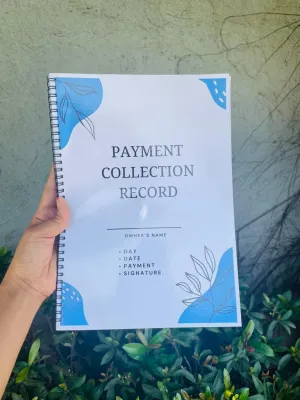
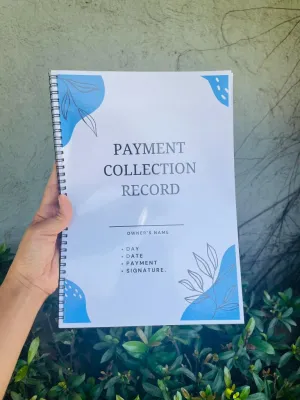
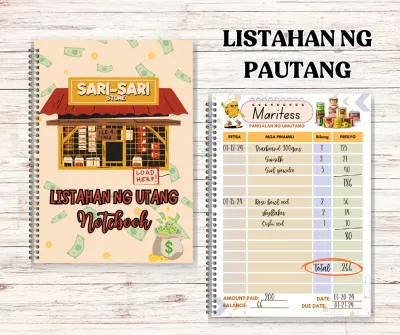
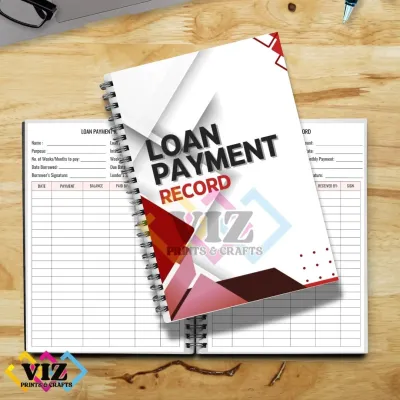
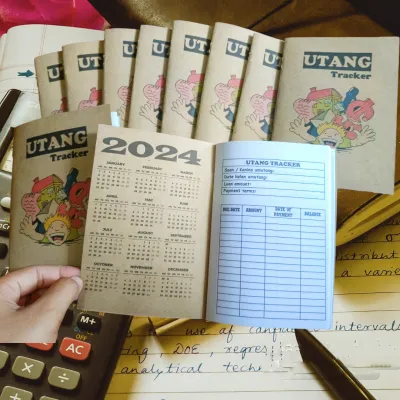
Prices are valid at publication and may change. Please refer to the product page for the latest price.
Regardless of the format you choose, maintaining accurate, legible records requires high-quality paper that resists humidity and reliable, quick-drying ink to prevent smudging in busy, tropical retail environments.
Core Differences: How Binding Affects Your Debt Tracking
To understand which format suits your business, it is essential to look at how their physical construction shapes your daily bookkeeping workflow. An utang record book is not just a place to scribble numbers; it is a ledger that tracks your business’s cash flow and outstanding receivables.

A bound utang book features pages that are permanently attached to the spine. This is typically achieved through thread sewing, glue binding, or metal spiral coils. Because the pages are locked in place, you cannot add a page in the middle of the book or remove one without leaving visible signs of damage, such as torn paper fibers. This physical constraint enforces a strictly chronological entry system.
A loose-leaf system, by contrast, relies on a mechanical binding mechanism—most commonly a two-ring, three-ring, or multi-ring binder, or a disc-bound system. The pages are pre-punched with holes and can be opened, closed, rearranged, or replaced at any time. This structural design turns your ledger into a modular system where pages can be inserted, extracted, or swapped without affecting the rest of the book.
These mechanical differences directly influence how you organize your customer accounts. In a bound book, you must allocate a set number of pages to each customer in advance. If a customer exceeds their allocated space, you are forced to jump to the next empty page at the back of the book, creating a fragmented record that requires constant cross-referencing. In a loose-leaf binder, you simply open the rings and insert a new ledger sheet directly behind the customer’s active page, keeping their entire transaction history perfectly continuous. Furthermore, the psychological impact of these formats is distinct: a bound book feels permanent and official, which can deter disputes, while a loose-leaf system feels flexible and adaptable, which appeals to business owners who value neatness and systematic order.
Bound Utang Books: Durability and Tamper-Proof Records
Bound notebooks have been the traditional backbone of informal credit tracking in the Philippines for generations. Their enduring popularity is rooted in their simplicity, durability, and the security they offer to micro-business owners who operate in fast-paced, high-traffic environments.
The Advantages of Bound Ledgers
The primary benefit of a bound utang record book is its tamper-evident nature. Because the pages are sewn or glued into a single unit, it is virtually impossible for someone to remove a page or alter the sequence of records without it being immediately obvious. This is a critical feature when managing credit accounts with customers. If a dispute arises regarding a past payment or a balance carried forward, the physical continuity of the bound pages serves as reliable proof that the records have not been manipulated.
Durability is another significant strength. Bound notebooks, especially those with hardcovers or thick, laminated paperboard covers, are designed to withstand heavy daily wear and tear. They do not have mechanical rings that can bend, rust, or break when dropped. You can easily slide a bound notebook into an apron pocket, a drawer, or a plastic bin without worrying about pages snagging or tearing loose from their binding.
Finally, bound books require no assembly or extra purchases. There are no binders to buy, no hole punchers to configure, and no loose refill sheets to keep track of. You simply open the book and begin writing, making it an incredibly low-friction tool for busy vendors who need to record transactions quickly between serving customers.
The Limitations of Bound Ledgers
However, the lack of flexibility in a bound format introduces several operational challenges as your business grows. The most prominent issue is the “dead space” dilemma. When you start a new bound book, you might allocate two pages to each of your regular credit customers. If some of those customers pay off their debts quickly and stop buying on credit, those allocated pages remain blank and unused. Meanwhile, other highly active customers might fill up their assigned pages within a few weeks, forcing you to continue their records on a completely different page at the back of the notebook.
This fragmentation makes calculating total outstanding balances tedious, as you must flip back and forth through multiple sections of the book. Archiving is also highly inefficient. Once a bound notebook is completely full, you must store the entire physical book in a safe place, even if only one or two accounts are still active and have balances that need to be carried over to your new book. Over several years, this can result in a stack of old notebooks that must be preserved just to verify a handful of unresolved accounts.
Loose-Leaf Systems: Flexibility and Scalable Organization
As a retail or wholesale business expands, the rigid structure of a bound notebook can become a bottleneck. This is where loose-leaf systems, utilizing ring binders and refillable ledger sheets, offer a highly scalable and organized alternative.
The Advantages of Loose-Leaf Ledgers
The standout advantage of a loose-leaf system is its unmatched organizational flexibility. Because every page is independent, you can arrange your customer accounts in whatever order makes the most sense for your business. Most merchants choose to sort their accounts alphabetically by the customer’s last name. This allows you to locate “Aling Teresa” or “Mang Juan” in seconds, rather than flipping through a chronological index. You can also group pages by geographic location, which is particularly useful for delivery riders or wholesale distributors who collect payments along specific routes.
Scalability is another major benefit. When a customer’s ledger sheet is full, you do not need to jump to a different part of the book. You simply open the binder rings, insert a fresh, pre-punched refill sheet directly behind the completed page, and continue writing. This keeps each customer’s entire credit history in one continuous, chronological sequence, making audits and dispute resolutions straightforward.
Additionally, loose-leaf systems allow for highly efficient archiving. Once a customer fully settles their debt and closes their account, you can remove their page from the active binder and file it away in a cheaper, secondary storage box or folder. This ensures that your daily operational binder remains thin, lightweight, and focused exclusively on outstanding accounts, reducing the physical clutter on your counter.
The Limitations of Loose-Leaf Ledgers
Despite these benefits, loose-leaf systems have distinct physical and security vulnerabilities. The mechanical rings of a binder are prone to wear and tear. Over time, inexpensive rings can become misaligned, leaving a gap where pages can snag, tear, or fall out. If a binder is dropped onto a hard concrete floor, the impact can force the rings open, scattering loose sheets of paper—a nightmare scenario when those sheets contain irreplaceable financial records.
The punched holes in loose-leaf paper are also a weak point. Constant flipping of pages can wear down the paper around the holes, causing them to tear. To prevent this, you may need to use plastic hole reinforcers or invest in higher-quality, heavier-weight paper, which increases your operational costs.
From a security standpoint, the ease with which pages can be inserted and removed is a double-edged sword. It introduces the risk of unauthorized page removal, whether accidental or intentional. If an employee or a customer gains unsupervised access to the binder, a page could be removed without leaving any physical trace, making it extremely difficult to prove that a debt was owed.
Side-by-Side Comparison of Bound and Loose-Leaf Formats
To help you decide which format aligns with your business operations, the table below compares the key practical dimensions of bound notebooks and loose-leaf systems.
| Dimension | Bound Utang Record Book | Loose-Leaf Binder System |
|---|---|---|
| Portability & Weight | High; compact, lightweight, and easy to carry in a pocket or bag. | Low to Medium; bulky binders require a flat surface and dedicated storage. |
| Tamper Resistance | High; missing or altered pages leave clear physical evidence. | Low; pages can be removed, replaced, or lost without a trace. |
| Organization & Sorting | Chronological; fixed page order that cannot be rearranged. | Fully customizable; sort alphabetically, by route, or by payment date. |
| Archiving & Storage | Inflexible; must store the entire book once full, regardless of active pages. | Highly flexible; individual settled pages can be removed and archived separately. |
| Durability of Binding | High; sewn or glued spines resist daily wear without breaking. | Medium; rings can misalign, and paper holes can tear over time. |
When selecting either format, paying close attention to the paper quality and ink compatibility is critical for long-term legibility. In the tropical climate of the Philippines, high relative humidity can cause thin paper—such as standard 50 to 60 GSM (grams per square meter) newsprint—to absorb moisture from the air. This moisture absorption makes the paper highly porous, leading to severe ink bleeding, feathering, and ghosting (where ink shows through to the opposite side of the page).
To ensure your records remain readable for years, look for record books or refill sheets with a paper weight of at least 70 GSM, though 80 GSM is highly recommended for double-sided writing. Before committing to a specific pen, perform a quick test on a hidden area or the very back page of your book to observe how the ink behaves. If the ink spreads or bleeds through, switch to a quick-drying gel pen with pigment-based ink or a reliable ballpoint pen, both of which perform exceptionally well on ledger paper under humid conditions.
The Decision Framework: Choose Bound or Loose-Leaf?
Choosing the right format is a matter of matching the tool to your daily business reality. Use the following guidelines to make your final choice.
Choose a Bound Utang Book if:
- You operate a small, local business such as a neighborhood sari-sari store, a wet market stall, or a mobile food cart.
- You have a stable, limited list of credit customers (under 30 active accounts) whom you know personally.
- You need a highly portable ledger that can be quickly tucked into a drawer, a cash box, or an apron pocket.
- You prioritize tamper-evident records to prevent disputes and ensure strict accountability for every entry.
Choose a Loose-Leaf System if:
- You manage a growing retail business, wholesale distribution service, or a cooperative with a large volume of credit customers.
- You require a systematic way to sort customer pages alphabetically or geographically for rapid information retrieval.
- You want to keep your active ledger slim and efficient by regularly removing and archiving fully paid accounts.
- You want to avoid the tedious process of copying unresolved balances to a completely new notebook every time a bound book runs out of space.
Verify First if:
- You are purchasing pre-printed ledger sheets or refill paper; verify that the column layout (typically Date, Particulars/Items, Debit/Utang, Credit/Bayad, and Balance) matches your exact bookkeeping workflow.
- The ring configuration of your binder matches the hole spacing of your refill paper, as standard spacing can vary between 2-hole, 3-hole, and multi-hole formats like A5 (20 holes) or B5 (26 holes).
To maintain the physical integrity of your chosen record book, always store it in a cool, dry place away from direct sunlight and moisture sources, such as beverage coolers or open windows. Using a protective plastic sleeve or a zip-up binder organizer can also shield your valuable financial data from accidental spills and tropical humidity.
Frequently Asked Questions (FAQ)
Can I use a regular ruled notebook instead of a pre-printed utang book?
Yes, you can use a standard ruled notebook, but it requires you to manually draw columns for Date, Particulars, Debit, Credit, and Balance on every single page. While standard notebooks are cheap and widely available, this manual preparation is time-consuming and prone to formatting errors, especially when you are busy serving customers. Pre-printed utang record books or specialized ledger sheets are highly recommended because they provide structured, clean columns out of the box. This built-in structure saves time, encourages neatness, and reduces the risk of mathematical mistakes when calculating running balances.
How do I keep my utang records safe from humidity and spills?
In the Philippines, the combination of high humidity, heavy monsoon rains, and the typical environment of a retail store (often near cold drinks or food preparation) poses a constant threat to paper records. To protect your ledger, store it in a heavy-duty, zippered plastic envelope or a waterproof organizer when not in use. Always write with water-resistant pigment-based gel pens or high-quality ballpoint pens, as standard water-soluble inks will run and become completely illegible if the paper gets wet. Finally, establish a habit of taking quick photos of your active ledger pages with your smartphone at the end of each business day; this provides a free, secure digital backup in case the physical book is lost, stolen, or damaged by water.
Community discussion
Share your experience or ask a question. Comments are reviewed before publication.