
The choice between brush tip and chisel tip calligraphy markers depends entirely on your desired lettering style and project goals. Brush tips offer fluid, pressure-sensitive line variations ideal for modern calligraphy and expressive brush lettering, while chisel tips provide consistent, structured strokes suited for traditional gothic, italic, and bold block lettering. When selecting a calligraphy markers set, prioritize the tip shape that aligns with your specific typographic outcomes, and verify the ink formulation against your chosen paper to ensure optimal performance.
In tropical climates like the Philippines, high humidity can affect how ink dries and how paper behaves during practice. Choosing the right marker tip and understanding how it interacts with your medium will save you time, prevent ruined projects, and help you develop consistent muscle memory. Whether you are creating elegant wedding invitations or practicing traditional blackletter scripts, matching the tool to the technique is the first step toward success.
Core Differences in Tip Design and Line Variation
To understand how these markers behave, you must first look at the physical mechanics of their tips. A brush tip features a flexible, tapered structure that mimics a traditional paint brush. The line thickness is dictated entirely by the amount of downward pressure you apply. When you glide the marker upward with minimal pressure, it produces a whisper-thin hairline; when you press down on a diagonal stroke, the flexible nib bends to create a wide, dramatic line. This dynamic transition requires precise control over your hand movements.
Products mentioned in this guide
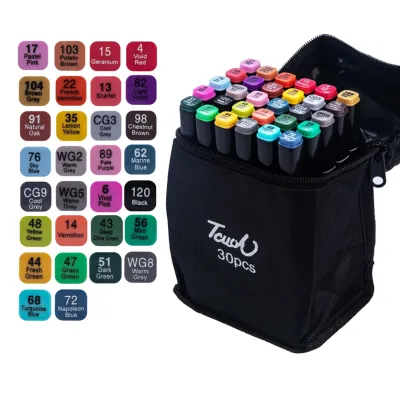
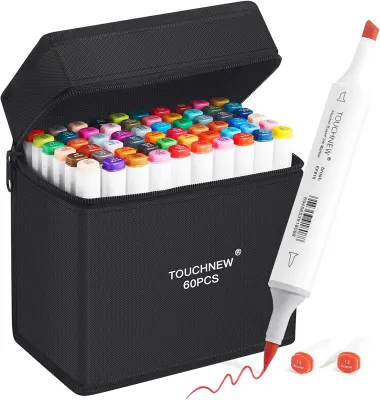
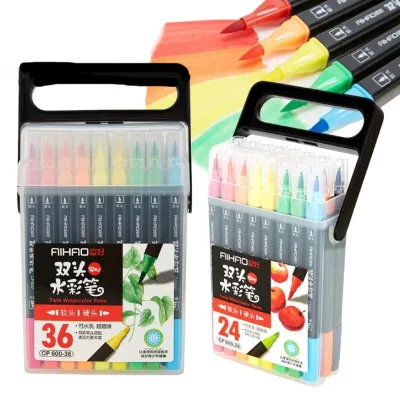
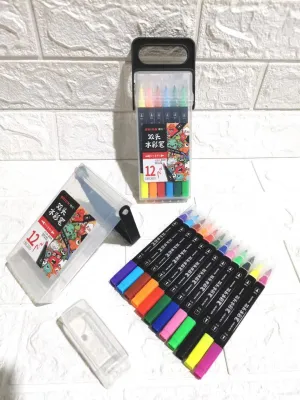
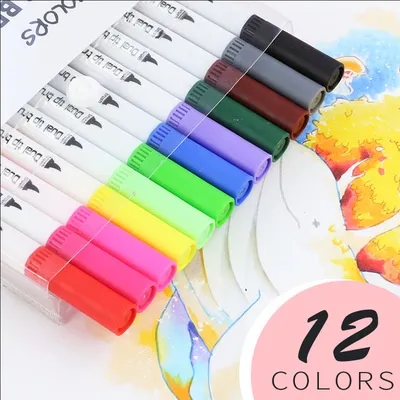
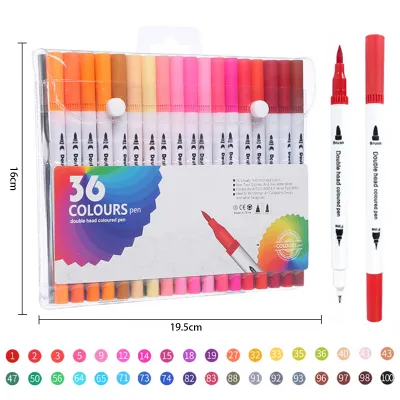
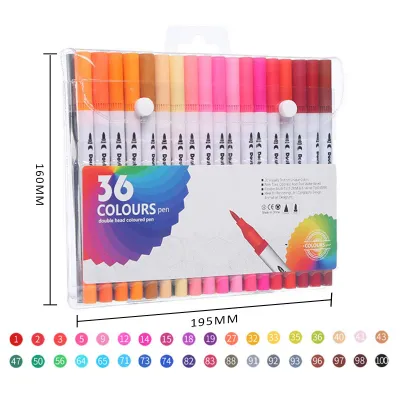
Prices are valid at publication and may change. Please refer to the product page for the latest price.
In contrast, a chisel tip is rigid and cut at a fixed, sharp angle. Instead of relying on pressure, a chisel tip relies on the angle at which you hold the pen relative to the baseline of your paper. If you pull the marker downward while keeping the flat edge parallel to your guidelines, you get a broad, uniform stroke. If you slide the pen sideways using only the sharp corner or the narrow edge, you get a crisp, thin line. The physical rigidity of the chisel tip ensures that the width of your strokes remains highly predictable.
These structural differences create distinct learning curves for beginners. Brush tips require dynamic pressure control, meaning you must learn to transition smoothly from heavy pressure to light pressure in a single, continuous motion. This requires significant hand-eye coordination and muscle memory. Chisel tips require consistent angle maintenance, meaning your wrist and hand must remain locked at a specific angle (often 45 degrees) as you move across the page. While both require practice, maintaining a static angle is often easier for beginners to grasp initially than modulating pressure.
Lettering Effects and Ideal Use Cases
Your choice of tip design directly translates into distinct typographic styles and stroke behaviors. The organic, flowing curves of a brush tip create a completely different visual atmosphere than the sharp, geometric precision of a chisel tip. Before purchasing a calligraphy markers set, it is helpful to identify the specific lettering genres and project types you plan to pursue.

Each marker type excels in different creative arenas. While one brings a sense of modern, casual elegance to personal projects, the other delivers the formal, authoritative structure required for traditional documents and bold signage. Understanding these ideal use cases ensures you select the tool that matches your creative vision.
Brush Tip Markers for Fluid and Dynamic Styles
Brush tip markers are the standard tool for modern calligraphy, faux calligraphy, and organic brush lettering. Because the flexible nib allows for dramatic thick-to-thin transitions in a single continuous stroke, it is highly suited for scripts that feature a bouncy, playful, or highly stylized rhythm. The fluid nature of the brush tip lets you create elegant loops, sweeping ascenders, and delicate descenders that give modern hand lettering its characteristic warmth.
These markers are highly popular for personalized, expressive projects. You will often see them used for designing custom wedding invitations, envelope addressing, bullet journaling, and expressive wall art. The ability to blend water-based brush inks directly on the paper or on a plastic palette also makes them excellent for creating gradient color effects and watercolor-style backgrounds. If your goal is to create soft, organic, and highly personalized designs, a brush tip set is the appropriate choice.
Chisel Tip Markers for Structured and Bold Lettering
Chisel tip markers are designed for structured, geometric, and traditional lettering styles. They are the essential tool for historical scripts such as blackletter, gothic, Old English, italic, and Roman foundational hands. The rigid, angled nib allows you to create the razor-sharp edges, uniform broad strokes, and precise corners that define these classic typographic forms.
Common project types for chisel tip markers include formal certificates, diplomas, event signage, and bold poster designs. Because the strokes are highly consistent, chisel tips are also excellent for creating clean block lettering and architectural-style notation. If you are practicing traditional calligraphy that relies on mathematical spacing, strict angles, and sharp, clean lines, a chisel tip set will provide the structural reliability you need.
How to Evaluate a Calligraphy Markers Set Before Buying
When shopping for a calligraphy markers set, looking at the tips is only the first step. To ensure the set performs well under your specific working conditions, you must evaluate several key material specifications.
- Ink Formulation: Calligraphy markers generally use either water-based or alcohol-based inks. Water-based inks are typically odorless, do not bleed heavily through standard paper, and can be blended with water. However, in high-humidity environments, water-based inks on highly absorbent paper may take longer to dry and can cause thin paper to warp. Alcohol-based inks dry almost instantly and are highly permanent, but they are prone to bleeding through thin sheets and require heavy, bleed-proof paper.
- Nib Durability: The longevity of your markers depends on the quality of the nibs. Brush tips are prone to fraying, especially if used on rough paper like standard copy paper or textured sketchbooks. Look for sets that feature self-recovering felt, durable rubber-like elastomers, or nylon fibers that retain their shape after bending. Chisel tips are physically sturdier, but cheap felt chisel nibs can soften and lose their sharp edges over time. Check if the manufacturer offers replacement nibs or if the set includes dual-tip markers to extend the life of your tools.
- Color Range and Opacity: Consider the surface you plan to write on. If you are working on dark cardstock or kraft paper for local holiday cards or certificates, standard dye-based inks will appear translucent and virtually invisible. For these projects, verify that the set includes highly opaque pigment inks or metallic options (such as gold, silver, or bronze). For standard white or cream paper, a vibrant range of dye-based colors will offer excellent clarity and blending potential.
- Included Sizes and Accessories: Calligraphy sets come in various configurations. Some offer a single tip size in multiple colors, while others provide a single color (like black) in a variety of tip widths (e.g., 1.0mm, 2.0mm, and 3.0mm chisel tips). Ensure the stroke widths provided in the set match the scale of your writing. If you are working in a small journal, fine brush tips or narrow chisel tips are necessary; for large posters or signage, you will need broad, heavy nibs.
Decision Framework: Which Tip Should You Choose?
To finalize your decision, evaluate your current skill level, your preferred aesthetic, and your project requirements. Use the following guidelines to select the right marker set for your desk.
Choose a brush tip set if your primary focus is on modern calligraphy, hand lettering, and expressive, fluid designs. If you enjoy the process of learning to control hand pressure, want to create soft gradients, or plan to use your markers for bullet journaling and casual card-making, the brush tip offers the versatility and organic feel you need.
Choose a chisel tip set if your focus is on traditional scripts, historical calligraphy, and highly structured, geometric lettering. If you want to master gothic or italic alphabets, require perfectly uniform line widths, or need to produce formal documents like certificates and professional signage, the rigid chisel tip is the correct tool.
If you want the best of both worlds, consider acquiring a dual-tip marker set. Many modern sets feature a flexible brush tip on one end of the marker and a rigid chisel tip on the other, sharing a single ink reservoir. This configuration allows you to experiment with both styles, mix structured and fluid elements in a single piece, and maximize the value of your purchase.
Before committing to a large project, always verify your tools on a test sheet. If you are a beginner, check the manufacturer’s packaging for recommended skill levels or starter guides. Spend time practicing basic strokes—such as straight vertical lines, consistent curves, and pressure transitions—on scrap paper. This initial trial will help you understand how the ink flows and how the nib responds to your hand before you begin your final work.
Frequently Asked Questions (FAQ)
Can beginners use brush tip markers effectively?
Beginners can certainly use brush tip markers, but they should expect a brief adjustment period to master pressure control. If you are just starting out, look for a calligraphy markers set that features smaller, firmer brush tips rather than large, highly flexible ones. Firmer tips (often labeled as hard-tip brush pens) offer more resistance, making it much easier to control the transition between thin upstrokes and thick downstrokes. Practicing basic drills for ten minutes a day will quickly build the necessary muscle memory.
Do I need special paper for calligraphy markers?
Yes, paper selection is critical for protecting your markers and achieving clean lines. Standard copy paper is highly fibrous and rough; it acts like sandpaper on delicate brush tips, causing them to fray rapidly, and it causes ink to feather or bleed. For the best results, use smooth, high-weight papers such as marker paper, smooth cardstock, or tracing paper. Always check your marker packaging for recommended paper weights and finishes, and perform a quick test stroke to ensure the ink does not bleed through to the next page.
Community discussion
Share your experience or ask a question. Comments are reviewed before publication.