
Selecting the right shipping packaging is a critical decision for any business or individual sending items through the mail. The choice between bubble mailers and poly mailers directly impacts product safety, shipping costs, and customer satisfaction. Neither option is universally superior; instead, the ideal choice depends entirely on the physical characteristics of the items you are shipping. Bubble mailers excel at cushioning delicate or semi-fragile items, while poly mailers offer an incredibly lightweight, cost-effective solution for soft, non-fragile goods.
Understanding the structural differences between these two popular packaging options allows you to minimize transit damage while keeping shipping expenses under control. By evaluating your inventory against the specific protective qualities of each mailer, you can establish a reliable fulfillment process that protects your bottom line.
Core Differences in Material and Cushioning
To make an informed decision, you must first examine how each mailer is constructed and how it handles physical impact. Bubble mailers feature a dual-layer structure designed specifically for shock absorption. The outer layer is typically made of heavy-duty kraft paper or a durable polyethylene film, while the interior is lined entirely with plastic bubble wrap. These integrated air pockets act as a protective barrier, absorbing and dissipating the kinetic energy generated when a package is dropped, bumped, or stacked under heavier items during transit. This built-in cushioning prevents scratches, dents, and minor impact damage without requiring you to manually wrap each item in loose bubble wrap.
Products mentioned in this guide
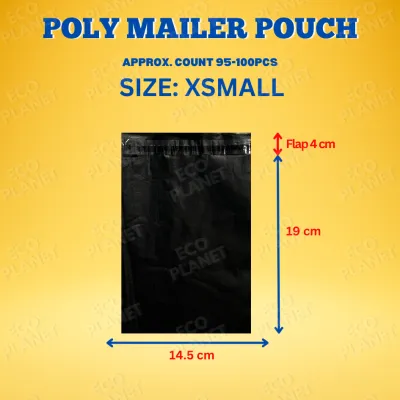
6,858 Lazada user ratings
Good quality polymailer pouch., Fast shipping, received it quickly., The gray black color looks sleek., The XL size is spacious., thank you …Read full reviewShow less
Good quality polymailer pouch., Fast shipping, received it quickly., The gray black color looks sleek., The XL size is spacious., thank you sa lazada at sa seller bibili ako ulit ng pouch na ito
Nice ang quality. manipis sya pero di mabilis mapunit. Durability:Great for heavy items Eco-friendliness:Recyled Size Options:Flexible size …Read full reviewShow less
Nice ang quality. manipis sya pero di mabilis mapunit. Durability:Great for heavy items Eco-friendliness:Recyled Size Options:Flexible size options, Great size variety.
Perfect size for my needs., Convenient and easy to use., The self-adhesive works well., Great packaging, arrived intact., The gray black col…Read full reviewShow less
Perfect size for my needs., Convenient and easy to use., The self-adhesive works well., Great packaging, arrived intact., The gray black color looks sleek.,
Convenient and easy to use., Great packaging, arrived intact., Fast shipping, received it quickly., Good quality polymailer pouch.,
Thank you fast delivery parcel black i will order again next time my items are now secured and safe for delivery
Prices are valid at publication and may change. Please refer to the product page for the latest price.
In contrast, poly mailers are constructed from a single layer of moisture-resistant polyethylene plastic, usually low-density polyethylene (LDPE). Because they lack any interior lining or air pockets, standard poly mailers provide virtually zero shock absorption. Their primary function is to contain the item, shield it from external elements, and keep it clean during handling. If a poly mailer is dropped or compressed, the force of the impact is transferred directly to the contents inside.
Before choosing a mailer, perform a simple verification step to assess your item’s vulnerability. Measure the dimensions of your product and evaluate its structural rigidity. If you plan to use a poly mailer for an item that requires some protection, you must ensure the mailer is large enough to accommodate additional void fill, such as loose bubble wrap sheets or foam sleeves. Forcing an item and extra cushioning into a tight poly mailer can stretch the plastic, reducing its tear resistance and increasing the risk of transit failure.
Durability, Weight, and Transit Risks
Durability during transit involves more than just cushioning; your packaging must also withstand tears, punctures, and unpredictable weather conditions. Poly mailers are highly regarded for their exceptional tensile strength and puncture resistance. Standard poly mailers are typically measured in mils (one-thousandth of an inch), with common thicknesses ranging from 2 to 3 mils. This flexible plastic stretches slightly under pressure rather than tearing, making it highly effective at containing bulky, oddly shaped items like clothing or plush toys without bursting at the seams.

Bubble mailers also offer excellent durability, but their puncture resistance depends heavily on the outer material. Kraft paper bubble mailers can tear or puncture if they scrape against sharp edges on sorting conveyor belts or mail sorting bins. Once the outer paper layer is compromised, the inner bubble lining is more vulnerable to popping. Poly-coated bubble mailers combine the tear resistance of a poly exterior with the cushioning of a bubble interior, offering a more robust shield against physical damage.
Water and weather resistance represent another critical point of comparison. Poly mailers are inherently waterproof, protecting your shipments from rain, humidity, and spills during local transit. Kraft bubble mailers, however, absorb moisture easily unless they feature a specialized water-resistant coating. If a kraft mailer is left in the rain or exposed to high humidity, the outer paper can weaken, potentially exposing the contents to water damage.
Weight and bulk are major factors in calculating logistics costs. Poly mailers are virtually weightless and lay completely flat, meaning they add no measurable weight to your shipment and occupy minimal storage space in your warehouse or home. Bubble mailers are inherently bulkier and heavier due to the integrated bubble lining. This added volume can increase the dimensional weight of your package, potentially pushing your shipment into a higher pricing tier with local couriers, especially for long-distance deliveries.
Cost-Effectiveness and Shipping Value
Evaluating the financial impact of your packaging choices requires looking beyond the initial purchase price of the mailers. On a unit-by-unit basis, poly mailers are significantly more affordable than bubble mailers. When purchased in bulk, standard poly mailers often cost less than ₱5 per piece, making them an incredibly economical choice for high-volume shipping. Bubble mailers, due to their multi-layer construction and material volume, generally command a higher price, often ranging from ₱10 to ₱30 or more per unit depending on the size and outer material.
However, focusing solely on the upfront unit cost can lead to hidden expenses down the road. If you choose a cheaper poly mailer to ship a semi-fragile item, you may have to purchase separate rolls of bubble wrap or foam inserts to protect the product. This not only adds to your material costs but also increases packing time and labor expenses. Furthermore, using inadequate packaging can lead to higher rates of transit damage, resulting in costly product replacements, return shipping fees, and damaged customer relationships.
To determine the true value of each option, use a simple value assessment framework. Calculate the total cost per shipment by adding the unit cost of the mailer, the cost of any additional void fill used, and the estimated labor time required to pack the item. Compare this total against your historical breakage rate and the retail value of the item. If shipping a low-margin, non-fragile item, the cost savings of a poly mailer are highly advantageous. For higher-value or delicate items, investing in the higher upfront cost of a bubble mailer is almost always more cost-effective than managing the fallout of a damaged delivery.
Decision Framework: Which Mailer Fits Your Items?
To streamline your packaging selection, you can apply a structured decision framework based on the specific characteristics of your products.
Choose bubble mailers if you are shipping:
- Small, semi-fragile, or easily scratched items such as cosmetics, compact mirrors, or jewelry.
- Small electronic components, phone cases, or charging cables that require light impact protection.
- Hardcover books, CD cases, or small wooden crafts where corner protection is necessary to prevent denting.
- Items with delicate surfaces that could be scuffed by friction during transit.
Choose poly mailers if you are shipping:
- Soft, flexible, and completely non-fragile goods such as apparel, t-shirts, socks, and textiles.
- Plush toys, pillows, or fabric-based accessories that cannot be damaged by drops or compression.
- Items that are already housed in sturdy, protective retail packaging, where the mailer serves only as an outer dust and moisture shield.
Verify first before shipping:
- Items with sharp corners, protruding metal parts, or rigid edges. These can easily puncture a standard poly mailer or pop the bubbles in a bubble mailer. Consider wrapping sharp edges in thick paper or cardboard before placing them in the mailer.
- High-value items or products with strict temperature sensitivities. Consult the manufacturer's guidelines or shipping carrier specifications to determine if specialized insulated packaging or rigid boxes are required.
Neither option may fit if you are shipping:
- Heavy, oversized, or highly fragile items such as glassware, ceramics, or complex electronics. These goods require the structural rigidity of a corrugated cardboard box, combined with dedicated void fill like packing peanuts, molded pulp, or heavy-duty paper crumpled to absorb severe transit shocks. Attempting to ship these items in any flexible mailer, regardless of bubble lining, carries an extremely high risk of damage.
Frequently Asked Questions (FAQ)
Can I use poly mailers for shipping books or important documents?
While poly mailers offer excellent protection against rain and moisture, they provide absolutely no resistance to bending, folding, or crushing. Shipping a book or important document in a standard poly mailer leaves it vulnerable to bent corners, creased pages, and spine damage during sorting. If you must use a poly mailer for these items, place a rigid piece of chipboard or thick corrugated cardboard on both sides of the document or book before inserting it. Alternatively, opt for rigid cardboard mailers or document envelopes designed specifically to prevent bending.
Are bubble mailers recyclable in the Philippines?
Recycling bubble mailers in the Philippines can be challenging due to their mixed-material construction. Kraft paper bubble mailers consist of paper glued to a plastic bubble lining, making them difficult for standard municipal recycling facilities to process because the materials cannot be easily separated. Fully plastic bubble mailers (poly bubble mailers) are technically recyclable with other soft plastics, but you must drop them off at specialized plastic recycling hubs or collection points rather than placing them in standard household recycling bins. If sustainability is a priority, consider using fully paper-based padded mailers that use shredded paper fibers for cushioning, as these can be recycled directly with regular paper waste.
How do I seal a poly mailer securely without it peeling open?
To ensure a poly mailer stays securely sealed throughout its journey, start by keeping the adhesive strip area completely free of dust, moisture, and packing debris. When folding the flap over, press down firmly along the entire length of the self-adhesive strip, applying steady pressure for a few seconds to activate the pressure-sensitive glue. For heavy, bulky, or overstuffed mailers, consider reinforcing the seal by running a strip of high-quality packaging tape over the flap and onto the body of the mailer. This extra layer of tape prevents the edges of the flap from catching on sorting machinery and peeling open during transit.
Community discussion
Share your experience or ask a question. Comments are reviewed before publication.