
Selecting the perfect writing instruments is one of the most critical steps in assembling a school supplies set. While a single pen might seem sufficient for every class, different academic tasks demand distinct tool characteristics. A pen that excels at rapid, continuous essay writing can easily smudge during a geometry lesson, while an ultra-fine diagramming pen might feel scratchy and fatiguing during a two-hour history exam. Matching your writing tools to your specific subjects ensures cleaner notes, less physical fatigue, and a more organized study routine.
In the Philippines, students face unique environmental and material challenges when choosing writing instruments. High relative humidity can prolong ink drying times, while standard school notebooks often feature thin, lightweight paper (typically 50 to 60 gsm) that is highly susceptible to ink feathering and bleed-through. By understanding the physical properties of different pen types, you can build a highly efficient pencil case that handles every classroom scenario with ease.
Decoding Pen Types: Ballpoint, Gel, Fineliner, and Highlighters
To curate an effective school supplies set, it is essential to understand the mechanics and ink chemistry of the four primary pen categories. Each type utilizes a distinct delivery system and ink formulation, which dictates how the pen interacts with paper and how it feels in the hand.
Products mentioned in this guide
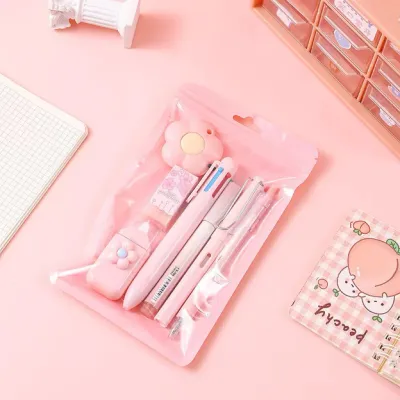
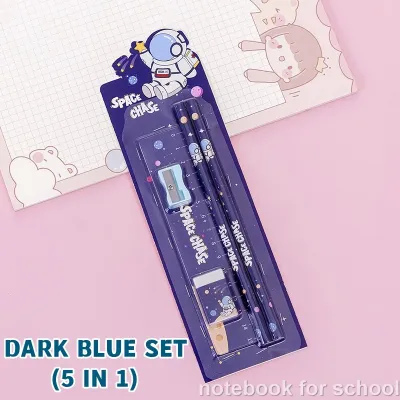
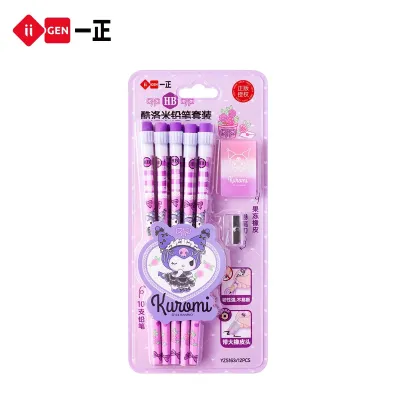
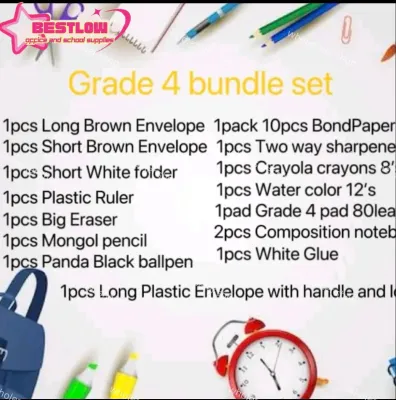
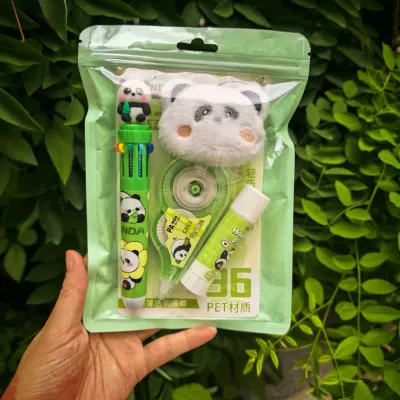
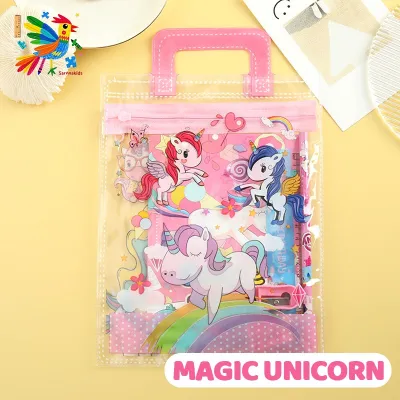
Prices are valid at publication and may change. Please refer to the product page for the latest price.
Ballpoint Pens Ballpoint pens use a thick, oil-based ink that is transferred to the page via a tiny rotating brass, steel, or tungsten carbide ball. Because the ink viscosity is exceptionally high, it dries almost instantly upon contact with the paper. This quick-drying nature makes ballpoint pens highly reliable for rapid writing and virtually immune to smudging. They perform exceptionally well on thin, low-cost notebook paper because the oil-based ink does not penetrate deeply into the paper fibers, preventing bleed-through. However, the high viscosity requires more downward writing pressure from the user, which can lead to hand fatigue during long sessions.
Gel Pens Gel pens utilize a water-based gel ink that suspends pigments cleanly. This design combines the smoothness of water-based ink with the vibrant color options of pigment-based systems. When the ball rotates, the gel thins under shear force, allowing it to flow onto the page with minimal friction. This results in an incredibly smooth, fluid writing experience that requires almost no downward pressure. The trade-off is a longer drying time, as the water-based solvent must evaporate or sink into the paper. On cheap or highly absorbent paper, gel ink can feather (spread sideways) or bleed through to the back of the page.
Fineliners Fineliners feature a porous plastic or felt fiber tip encased in a protective metal sleeve. They use highly fluid, water-based or pigment-based ink to deliver precise, consistent lines. Because the tip does not rotate, fineliners offer a tactile, high-friction feel that gives the writer immense control over small, detailed strokes. They are the premier choice for precise drawing and structured handwriting. However, the delicate fiber tips can bend or fray if subjected to heavy writing pressure, and the liquid ink is highly prone to bleeding through thin paper if the pen is held in one spot for too long.
Highlighters Highlighters are specialized markers that deposit a translucent, dye-based or pigment-based ink over existing text. The primary function is to draw attention to key concepts without obscuring the words underneath. Highlighters typically feature either a broad chisel tip for covering entire lines of text or a fine bullet tip for precise underlining. Because they lay down a relatively wet layer of ink, compatibility with your primary writing pen is crucial to avoid unsightly smearing.
Before purchasing pens in bulk for the school year, you should perform a simple, observable trial on a scrap page from your actual school notebooks. First, check the dry time by drawing a line and running a finger across it at one-second intervals; this reveals whether the ink will smudge under your hand. Second, draw a series of tight loops to evaluate line consistency and check for “railroading” (where the ink splits into two parallel lines). Finally, hold the pen in your standard writing grip for at least thirty seconds to evaluate the comfort of the barrel shape and the soft or hard grip section.
Math and Science: Precision, Formulas, and Diagrams
STEM subjects present unique writing challenges that demand high-precision tools. In mathematics, physics, and chemistry, a single misplaced stroke or an illegible subscript can completely change the meaning of an equation. Students must write tiny exponents, complex Greek letters, and intricate chemical structures within tight grid lines or small blank spaces, requiring pens that deliver exceptionally fine, consistent lines without pooling or blotting.

For detailed diagrams, coordinate planes, and complex molecular structures, fineliners with tip sizes ranging from 0.3mm to 0.5mm are highly recommended. The rigid, metal-clad tip of a fineliner allows you to trace along plastic stencils, protractors, and rulers without the ink pooling at the contact edge. Because the ink flows consistently without requiring downward pressure, you can draw clean, unbroken lines for geometric shapes and graphs. The high contrast of pigment-based fineliner ink ensures that intricate details remain perfectly legible, even when drawn at a miniature scale.
For everyday calculations, algebraic derivations, and rapid problem-solving, a fine-tip ballpoint pen (typically 0.5mm or 0.7mm) is an indispensable tool. Calculations often involve page after page of scratch work, where speed is prioritized over presentation. The quick-drying, oil-based ink of a ballpoint pen ensures that your hand can move rapidly across the page without smudging previous lines of work. Furthermore, because ballpoint ink does not bleed through, you can utilize both sides of thin graph paper or engineering pads, maximizing the life of your school supplies set.
When selecting pens for math and science, always verify how the ink behaves when paired with drawing tools. To prevent ink from bleeding underneath a ruler and smearing across your graph, use a ruler with a beveled or raised edge. Place the ruler with the raised edge facing down on the paper; this creates a small gap between the ruler’s edge and the page, preventing the ink from capillary-traveling along the plastic and ruining your diagram.
Essay Writing and Humanities: Comfort and Flow for Long Sessions
Classes in the humanities, such as literature, history, and social studies, require a completely different approach to pen selection. These subjects involve extensive, continuous writing during lectures, essay exams, and essay drafts. The primary focus shifts from ultra-fine precision to long-term ergonomic comfort, smooth ink delivery, and the prevention of physical hand strain.
Gel pens with medium tips (0.5mm to 0.7mm) are the gold standard for long-form writing. The low friction of gel ink allows the pen to glide effortlessly across the paper, requiring virtually no downward pressure to maintain a dark, consistent line. This fluid movement significantly reduces the workload on the small muscles of your fingers and hand, delaying the onset of writing fatigue. The slightly broader 0.7mm tip lays down a bold, highly legible line that is easy for teachers to read during grading, making your essays look clean and authoritative.
For students who prefer the reliability of ballpoint pens but suffer from hand cramps, ergonomic ballpoints are an excellent alternative. Look for pens that feature wide, contoured barrels or soft, rubberized grip sections. A wider barrel reduces the pinch force required to hold the pen, which prevents the fingers from locking up during a timed writing exam. The added weight of a slightly heavier pen can also help stabilize your hand, allowing for smoother cursive or print strokes with less conscious effort.
However, using gel pens for rapid essay writing introduces a significant trade-off: drying speed. In the humid climate of the Philippines, water-based gel inks dry slower than they would in drier environments. If you write quickly or are left-handed, your hand may drag across the freshly written text, causing smudging and ink transfers onto your skin. Left-handed students should look specifically for fast-drying gel ink formulations or stick to high-quality, low-viscosity ballpoint pens that offer a compromise between smoothness and immediate drying.
Note-Taking and Review: Highlighting and Color-Coding Strategies
Active studying and effective exam preparation rely heavily on visual organization. Integrating highlighters and multi-color pens into your note-taking routine allows you to categorize information, emphasize key terms, and create intuitive study guides that are easy to review later.
Highlighters play a vital role in active reading by allowing you to isolate critical definitions, dates, and formulas from dense textbook paragraphs. When selecting highlighters for your school supplies set, prioritize translucent, pastel, or mild inks over traditional, ultra-bright fluorescent colors. Mild pastel shades draw the eye to important information without causing visual fatigue during long study sessions. A chisel tip is highly versatile for this task, as you can use the wide flat edge to highlight full lines of text and the sharp tip to underline specific words or write brief marginal notes.
A common frustration when reviewing notes is highlighter ink smearing the text underneath. This occurs when the water-based solvent in the highlighter reactivates the ink of the pen you wrote with. To prevent this, always allow your handwritten notes to dry completely before applying highlighter. As a general rule, oil-based ballpoint inks are highly resistant to water-based highlighters and will rarely smear. If you prefer gel pens or fineliners, look for pigment-based inks labeled as water-resistant or document-proof, and perform a quick test on a scrap page to determine the necessary wait time before highlighting.
For color-coding notes during fast-paced lectures, carrying multiple individual pens can be cumbersome and distracting. Multi-color pens—which house black, blue, red, and sometimes green or purple refills in a single barrel—are an exceptionally space-saving and efficient solution. You can write the main body of your notes in black or blue, switch to red for key vocabulary, and use green for exam hints with a simple click of a slider. This keeps your desk tidy and allows you to maintain focus on the teacher rather than rummaging through a pencil case.
Cross-Subject Compatibility: A Minimalist School Supplies Set
While it is tempting to pack dozens of specialized pens for every possible classroom scenario, a cluttered pencil case can actually slow you down. Building a streamlined, minimalist pen pouch reduces weight, saves desk space, and ensures you can always find the exact tool you need in a matter of seconds.
To achieve this, look for versatile, dual-purpose pens that perform well across multiple subjects. A high-quality 0.5mm gel pen with fast-drying ink is an excellent candidate; it is fine enough to write formulas in a math notebook, yet smooth enough to handle a timed essay in English class. Alternatively, a low-viscosity 0.7mm ballpoint pen can serve as a highly reliable all-rounder, offering smudge-free writing on cheap paper while requiring less writing pressure than a traditional ballpoint.
When deciding whether to carry specialized tools, evaluate your specific academic schedule. If you do not have technical drawing, chemistry, or art classes, you can safely leave delicate fineliners at home. Conversely, if your math class requires extensive graphing, a single dedicated 0.3mm fineliner is worth the space. For most students, a highly functional, everyday carry (EDC) pen configuration consists of just four essential items:
- One primary black or blue 0.5mm fast-drying gel pen (for daily note-taking and essays).
- One black 0.7mm ballpoint pen (for calculations, quick drafts, and writing on thin or glossy paper).
- One multi-color pen or a single red pen (for corrections, self-grading, and quick margin notes).
- One dual-tip pastel highlighter (for highlighting key terms and underlining headings).
This minimalist selection fits easily into a compact pouch, keeping your school supplies set organized, lightweight, and highly functional.
Practical Tips for Testing and Maintaining Your Pens
To ensure your pens perform flawlessly throughout the academic year, proper testing and maintenance are essential. Taking a few minutes to verify your tools and store them correctly will prevent unexpected ink failures during exams and extend the lifespan of your writing instruments.
Before the school term begins, establish a simple at-home testing routine for every pen in your school supplies set. Grab a sheet of the exact notebook paper you will be using in class. Draw a series of continuous figure-eights and tight spirals to verify that the ink flows smoothly without skipping or scratching. Next, write a few sentences and immediately run a dry finger across the text to measure the dry speed; this will help you adjust your writing pace to avoid smudging. Finally, flip the page over to inspect the back, checking if the ink has feathered or bled through the paper fibers.
Proper storage is critical to maintaining ink quality and preventing dry tips. Gel pens and fineliners should ideally be stored horizontally. This keeps the ink evenly distributed throughout the cartridge and prevents air bubbles from forming near the tip or the back of the refill. Ballpoint pens are more resilient but are best stored tip-down to ensure the high-viscosity ink is always ready to flow. Always make it a habit to cap fineliners and gel pens immediately after use; even a few minutes of exposure to air can dry out a fiber tip or clog a gel pen’s ball mechanism.
In the Philippines, environmental factors like high humidity and intense tropical heat require extra precaution. Never leave your pencil case or notebooks in direct sunlight, near windows, or inside a parked vehicle. Extreme heat causes the air inside pen barrels to expand, which can force ink out of the cartridge, resulting in messy leaks, ruined pencil cases, and air gaps that cause skipping. By keeping your pens in a cool, shaded environment and handling them with care, you can ensure they remain reliable tools for your entire academic journey.
Community discussion
Share your experience or ask a question. Comments are reviewed before publication.