
Procuring writing instruments for an entire institution requires balancing cost-efficiency with daily performance. When purchasing whiteboard markers in bulk, the ideal choice depends on matching the physical layout of your writing spaces with the specific technical attributes of the markers. Selecting the right wholesale order involves evaluating tip shapes for legibility, verifying ink formulations for safety and erasability, and choosing color assortments that maintain high visibility across a room. By aligning these specifications with your organization’s daily usage patterns, you can minimize waste, prevent premature drying, and ensure a smooth writing experience for teachers, presenters, and students alike.
Identifying Your Institutional or Commercial Needs
Before browsing wholesale catalogs, assess the physical environments where the markers will be used. Large lecture halls and spacious corporate boardrooms demand high-visibility writing that can be read from a distance of ten meters or more. Conversely, small meeting rooms, individual cubicles, or student desk clusters require markers suited for close-up work on compact surfaces.
The primary users also dictate your requirements. In educational settings, especially primary schools, markers must withstand heavy-handed use from students while remaining completely safe and non-toxic. In professional offices, presenters often prioritize smooth ink flow and comfortable barrel designs that reduce hand fatigue during long brainstorming sessions.
Products mentioned in this guide
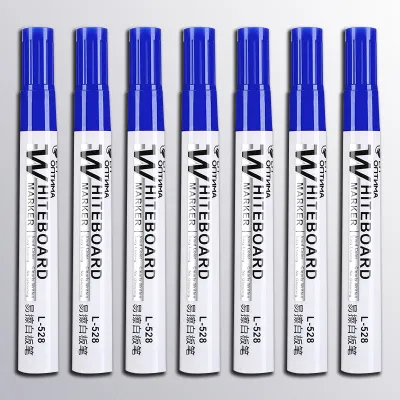
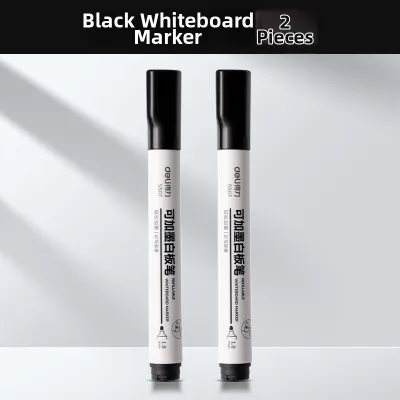
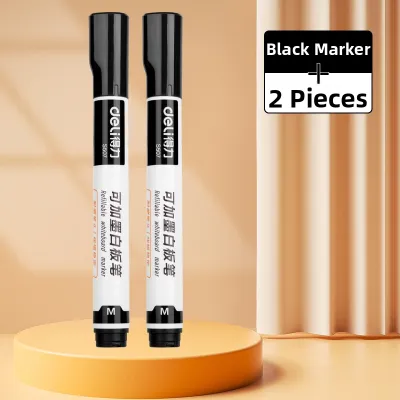
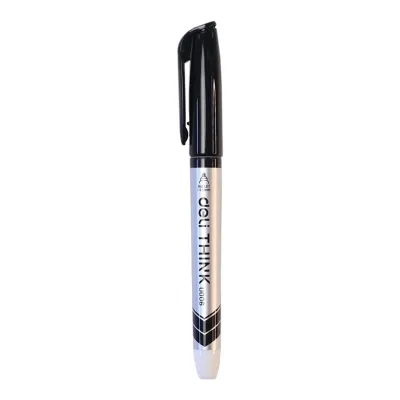
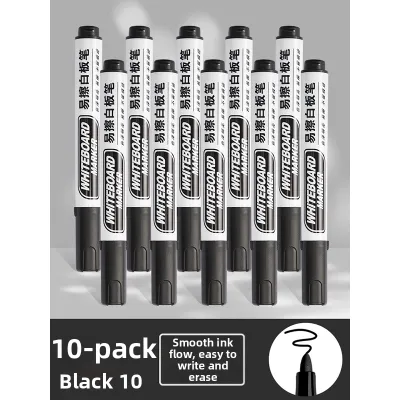
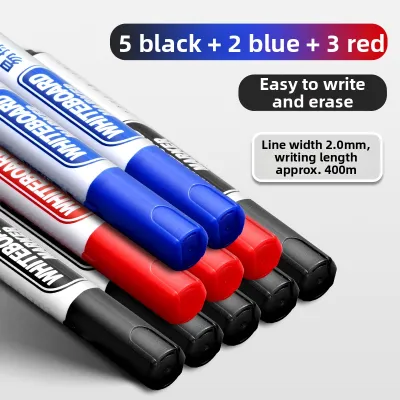

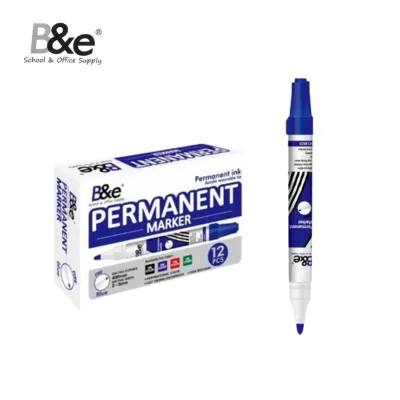
Prices are valid at publication and may change. Please refer to the product page for the latest price.
Environmental factors are equally critical, particularly in tropical climates like the Philippines. High humidity can slow down the drying time of certain solvent-based inks, leading to accidental smudging when writers brush against the board. Conversely, air-conditioned offices can accelerate tip drying if markers are left uncapped during a presentation. Understanding these variables helps you establish a baseline for your bulk purchase.
Matching Marker Specifications to Your Use Case
To make an informed bulk purchase, you must translate these environmental and user needs into concrete product specifications. The performance of a whiteboard marker relies on three primary variables: the physical design of the tip, the chemical formulation of the ink, and the visual contrast of the color selection.

Tip Sizes and Shapes for Different Board Distances
The choice between bullet and chisel tips directly impacts writing legibility and versatility. Bullet tips provide a consistent line width, typically ranging from 1.5mm to 3mm, which is ideal for standard handwriting, structured lists, and detailed diagrams where uniformity is essential. Chisel tips offer greater flexibility, allowing the writer to produce broad strokes up to 5mm for headings or thin lines for detailed annotations simply by altering the angle of the marker.
Fine and medium tips are best suited for small personal lapboards, desktop planners, or compact tracking boards in individual workspaces. Using a broad marker on these surfaces results in cramped, illegible writing that quickly fills up the limited space.
Broad or jumbo tips are necessary for large wall-mounted boards in lecture halls or spacious training centers. These tips lay down thick, highly visible lines that can be easily read from the back of a room. When planning a white board marker wholesale purchase, calculate the ratio of large presentation rooms to small individual workspaces to determine the correct mix of tip sizes.
Ink Types: Low-Odor, Dry Erase, and Visibility
Traditional whiteboard markers often utilized alcohol-based or ketone-based solvents that emitted strong, pungent fumes. In enclosed classrooms or small, poorly ventilated meeting rooms, these fumes can cause discomfort. Look for markers explicitly labeled as low-odor or certified non-toxic, which is particularly critical in schools where children frequently handle the writing instruments.
The ink must dry quickly into a cohesive, erasable film that can be wiped away cleanly without leaving a shadow or “ghost” image. Melamine boards, which are common and budget-friendly, are highly porous and prone to ghosting if low-quality ink is used. Porcelain and tempered glass boards are non-porous and offer better erasability, but they still require high-quality dry-erase formulations to prevent smearing. Because erasability, drying speed, and writing smoothness depend heavily on the specific combination of board material and ink formulation, always perform an observable trial on your surfaces before finalizing a large order.
Ink opacity and brightness are vital for visibility from the back of large rooms. The ink must contain high-quality pigments that lay down a solid, opaque line. Translucent or watery ink is difficult to read under bright fluorescent office lights or natural sunlight streaming through windows.
Color Ranges and Contrast Requirements
High-contrast standard colors—black, blue, red, and green—are the workhorses of any educational or corporate setting. Black and dark blue provide the highest contrast against a white background, making them the default choice for primary text and lengthy explanations. Red and green are excellent for highlighting key terms, corrections, or secondary points.
Assorted or neon packs are visually appealing but often lack the contrast necessary for long-distance reading. These colors should be reserved for specialized tasks like color-coded scheduling, brainstorming sessions, or creative illustrations on glass boards, where neon colors often perform exceptionally well.
Avoid relying solely on light colors for main text. A bulk order consisting entirely of assorted pastel or light colors will likely result in user frustration and eye strain. Ensure your wholesale order is heavily weighted toward high-contrast primary colors, typically maintaining a ratio of at least 70% black and blue to 30% accent colors.
Evaluating Bulk Purchase Options and Packaging
Wholesale purchases typically come in boxes of 12, 36, 72, or even gross packs of 144 markers. While buying in larger quantities reduces the unit cost, which is often measured in ₱ per marker, you must balance this against your actual consumption rate. Whiteboard markers have a finite shelf life, even when unopened. Buying a multi-year supply of markers to save a few pesos per unit may backfire if the solvent evaporates through the plastic barrels before the markers are ever uncapped.
When evaluating wholesale listings, look for products packaged in flat trays or boxes that allow the markers to be stored horizontally. Vertical storage in a warehouse can cause the ink to pull away from the tip if stored tip-up, or oversaturate the tip if stored tip-down, leading to inconsistent performance upon arrival.
Before finalizing a large-scale purchase order, verify the supplier’s policy regarding defective units. It is not uncommon for a small percentage of markers in a massive bulk shipment to arrive dried out due to cap displacement during transit. Ensure the supplier offers a straightforward return or replacement policy for defective items. If possible, request a small sample pack to test the ink flow, erasability, and drying speed on your specific board surfaces before committing to a major financial investment.
Storage, Maintenance, and Extending Marker Life
To maximize the lifespan of your bulk inventory, establish clear storage guidelines. Markers must be stored horizontally at all times. This keeps the ink evenly distributed throughout the reservoir and prevents the tip from drying out or becoming oversaturated. Ensure that users are trained to firmly snap the caps back on immediately after use; an audible click usually indicates a proper seal.
If a marker tip appears dry or writes faintly, check if it can be revived before discarding it. For alcohol-based dry-erase markers, storing the marker tip-down for 24 hours can sometimes draw the remaining ink back to the nib. Some manufacturers design refillable markers or sell replacement tips, which can significantly reduce long-term waste and lower your overall cost per unit. Always consult the manufacturer’s instructions before attempting to add any external solvents, as incorrect chemicals can ruin the dry-erase properties of the ink and permanently stain your whiteboards.
When a marker’s tip becomes frayed, split, or hardened, it should be discarded immediately. A damaged tip cannot lay down a clean line and, more importantly, a hardened nib can scratch the delicate protective coating of melamine or painted steel whiteboards, leading to permanent ghosting and staining in those scratched areas.
Frequently Asked Questions (FAQ)
Can I mix different tip sizes in a single bulk order?
Many wholesale suppliers offer pre-packaged assortments, but these are often limited to color variations rather than tip sizes. To obtain a mix of bullet, chisel, and fine tips, you will typically need to purchase separate single-specification boxes, which are usually sold in dozens. For larger institutions, a practical strategy is to aggregate the needs of different departments—such as ordering fine tips for the administrative offices and broad chisel tips for the lecture halls—and then distribute the boxes accordingly from a centralized supply room to meet the minimum order requirements for wholesale pricing.
How do I prevent whiteboard markers from drying out in storage?
To prevent premature drying, store your bulk inventory in a cool, dry place away from direct sunlight and localized heat sources, such as air conditioning exhaust vents or windows. In tropical environments, maintaining a stable storage temperature is key to preventing the liquid solvents inside the markers from expanding and escaping through the plastic casing. Always keep the bulk boxes sealed until they are ready for distribution, and perform a quick inspection of the manufacturing or batch dates on the carton to ensure you are rotating your stock on a first-in, first-out basis.
Community discussion
Share your experience or ask a question. Comments are reviewed before publication.