
Choosing the right planner layout is the single most important decision you will make when setting up your organization system for the year. The ideal format acts as a natural extension of your mind, while the wrong one can feel like a chore, leading to blank pages and abandoned goals by February. When selecting a cada dia planner, the decision comes down to how your brain processes time, the complexity of your daily schedule, and your physical portability needs.
To find the perfect fit, you must balance your need for daily detail with your desire for a broad, high-level overview. A daily layout offers unmatched space for minute-by-minute scheduling but requires a commitment to daily writing and comes with added physical weight. A weekly layout provides a balanced, bird’s-eye view of your week, making it the most versatile option for the majority of users. Meanwhile, a monthly layout strips away daily clutter to focus entirely on big-picture milestones, project deadlines, and long-term habits. By analyzing your daily task volume and lifestyle, you can select the layout that keeps you organized without causing planner fatigue.
Identifying Your Planning Style and Detail Needs
Before investing in a new planner, it is essential to step back and analyze your current workflow, daily habits, and physical environment. Many people choose a planner based on aesthetic appeal or what works for others, only to find that the layout clashes with their natural thinking process. To avoid this, start by evaluating your daily task volume. Do you typically manage a high volume of time-sensitive appointments, client calls, and granular tasks, or does your day consist of a few major projects with flexible deadlines? If your day is highly structured, you will require a layout that accommodates hourly time-blocking. If your schedule is more fluid, a macro-level overview will prevent you from feeling restricted by empty hourly slots.
Products mentioned in this guide
![Everyday Slims [6 Months] Undated Planner in Carbon](https://img.lazcdn.com/g/p/fb0818d89f33ace814f4c8f1ff94bcd0.jpg_400x400q80.jpg_.webp)
Prices are valid at publication and may change. Please refer to the product page for the latest price.
Next, determine your perspective preference. Some minds function best when looking at the micro-level—focusing strictly on the next twelve hours to avoid overwhelm. Others need a macro-perspective, requiring a view of the entire week or month to understand how individual tasks connect to larger project deadlines. If you find yourself constantly flipping forward to see what is happening tomorrow or next week, a daily layout might feel too isolating, whereas a weekly layout will provide the context you crave. Conversely, if looking at a whole week of tasks makes you anxious, focusing on one single day at a time can bring much-needed clarity and focus.
Physical portability and workspace constraints are equally critical, especially when navigating daily life in the Philippines. Consider where you will actually use your planner. If you commute daily through transit systems in Metro Manila or travel frequently for work, physical bulk and weight are major factors. High-humidity environments can also affect paper; pages can absorb ambient moisture, making a thick, heavy book feel even more substantial and prone to wear.
Check the specific dimensions of the Cada Dia edition you are considering, such as standard A5 (148mm x 210mm) or the more compact B6 (125mm x 176mm). You must also examine the binding type. Stitched lay-flat binding is excellent for desk work as it allows you to write comfortably across the entire page, while spiral or disc-bound systems make it easy to fold the planner in half when working in cramped spaces like coffee shops or commuter vans. Ensure the physical footprint of the planner aligns with your daily carrying capacity and desk space.
The Daily Layout: For Granular Time-Blocking and Heavy Task Loads
The daily layout is the ultimate tool for individuals who require maximum writing space and absolute control over their schedule. Typically structured with one full page—or even a two-page spread—for every single day of the week, this format ensures you never run out of room to document your life. It allows you to merge your professional schedule, personal chores, habit trackers, and daily reflections into a single, comprehensive command center.

This layout excels at accommodating detailed, hour-by-hour time-blocking. If your daily routine involves back-to-back meetings, client consultations, study sessions, or precise project phases, the daily format provides the structure needed to map out these blocks visually. Beyond scheduling, the generous writing space allows you to keep detailed to-do lists, jot down quick meeting notes, log water intake, track meals, and even write a short evening gratitude journal. It eliminates the need to carry a separate notebook alongside your planner, centralizing all your daily data in one place.
This format is exceptionally well-suited for specific profiles:
- Students with dense schedules: University students managing lectures, study groups, organization meetings, and part-time jobs benefit from mapping out every hour of their day.
- Freelancers and virtual assistants: Professionals managing multiple clients can allocate specific hours to different projects, ensuring accurate time tracking and boundary management.
- Heavy task managers: Anyone who naturally writes down every micro-task, from sending an email to buying groceries, will appreciate the unrestricted writing space.
However, the daily layout has distinct limitations that you must consider. If your day consists of only two or three main tasks, a full blank page can feel intimidating or like a waste of paper. Leaving pages empty can create a sense of guilt or underutilization, which often leads to abandoning the planner altogether. Furthermore, because a daily planner must accommodate over 300 pages for the year, it is inherently thicker and heavier than other formats. Carrying a thick A5 daily planner in your bag every day requires a commitment to carrying the extra physical weight, which may not be practical for those who prefer to travel light.
When choosing a daily planner, always perform a thorough buying check on the product specifications. Because you will be turning pages daily and interacting with the book constantly, verify the paper weight (measured in GSM) and the durability of the binding. Look for a minimum paper weight of 80 GSM to 100 GSM to ensure that your daily writing does not ghost or bleed through to the other side. Sturdy, reinforced stitched binding is highly recommended for daily layouts, as it allows the book to open completely flat without the risk of pages loosening or falling out over twelve months of rigorous, daily handling.
The Weekly Layout: The Balanced Approach for Most Users
For the vast majority of planner users, the weekly layout represents the perfect middle ground. By presenting an entire week across a single two-page spread, this format offers an immediate, comprehensive view of your upcoming seven days. It allows you to balance daily task execution with mid-term planning, helping you understand how your time is distributed across the week without getting bogged down in minute-by-minute details.
The primary advantage of the weekly layout is its ability to foster a sense of rhythm and anticipation. When you open your planner on a Monday morning, you can instantly see your major deadlines, scheduled appointments, and primary goals for the entire week. This macro-view makes it much easier to pace your work, prevent scheduling conflicts, and allocate your energy efficiently. If you know you have a major presentation on Thursday, you can visually allocate lighter task loads to Tuesday and Wednesday to give yourself adequate preparation time.
The weekly format is highly versatile and fits a wide range of lifestyles:
- General office workers and corporate professionals: Excellent for tracking project milestones, weekly team syncs, and daily deliverables without needing to block out every single hour.
- University students: Ideal for tracking weekly assignment deadlines, exam dates, and reading schedules alongside personal commitments.
- Busy households: Perfect for coordinating family schedules, meal planning, and weekly chores in a highly visible, shared format.
The main limitation of the weekly layout is the restricted physical space allocated to each individual day. Because seven days must fit across two pages, the writing area for any single day is naturally limited. If you have a day packed with fifteen different tasks, or if you like to take extensive meeting notes directly in your planner, you will quickly run out of room. This format forces you to be concise, which can be frustrating if you prefer to use your planner as a hybrid diary or detailed journal.
Before purchasing a weekly planner, it is crucial to check the specific orientation of the layout, as weekly planners generally come in two distinct formats: vertical and horizontal columns.
- Vertical layouts: These divide the spread into vertical columns for each day, often featuring hourly timestamps. This is ideal if you think chronologically and want to visualize how your time is blocked throughout the week.
- Horizontal layouts: These present the days in horizontal rows across the pages, mimicking a traditional notebook. This format is much better suited for list-makers who prefer writing long lines of text and do not require strict hourly scheduling.
Assess your natural writing style and choose the orientation that feels most intuitive to your eyes and hand movements.
The Monthly Layout: For Big-Picture Goals and Milestone Tracking
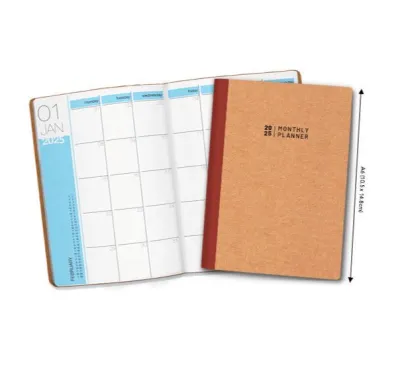
The monthly layout is designed for those who want to step back and look at the grand scheme of their personal and professional lives. Built around a traditional calendar grid spread across two pages, this format strips away daily noise to focus entirely on high-level organization, long-term goals, and major milestones. It is the ultimate tool for strategic planning, allowing you to see the entire month’s landscape at a single glance.
This layout is highly effective for tracking recurring events, significant deadlines, and personal milestones. It serves as an excellent visual record for bill payment dates (such as utility bills, rent, or credit card payments), travel itineraries, school exam periods, and family birthdays. Many monthly planners supplement the grid with dedicated pages for setting monthly intentions, tracking habits, and reviewing progress at the end of the month. This makes it a powerful tool for personal development, helping you maintain a consistent focus on your broader life goals without getting lost in daily administrative trivia.
The monthly layout is highly beneficial for specific use cases:
- Project managers and content creators: Ideal for mapping out high-level content calendars, launch schedules, and project phases over a four-week period.
- Budget-conscious individuals: Excellent for tracking payment cycles, subscription renewals, and savings goals.
- Minimalist planners: Perfect for those who manage most of their daily tasks digitally but still want a physical, tactile space to track major life events and long-term habits.
- Companion planning: Often used alongside a digital calendar (like Google Calendar) or a separate, unstructured daily notebook for a hybrid organization system.
The primary limitation of the monthly layout is its complete lack of space for detailed, day-to-day task management. The small square boxes of a monthly grid can only hold a few words per day. Attempting to write a detailed daily to-do list inside a monthly calendar grid will quickly result in an illegible, cluttered mess that causes more stress than clarity. It cannot serve as a standalone tool for daily execution if you have a dynamic, task-heavy schedule.
When evaluating a monthly planner, perform a buying check on the physical size of the grid boxes and the inclusion of supplementary pages. Ensure that the grid boxes are large enough to accommodate your natural handwriting style; if you write large, a compact B6 monthly planner might feel too restrictive, making an A5 or larger format a better choice. Additionally, check if the planner includes a generous number of blank, lined, or dotted notes pages at the back of the book. These extra pages are vital for brainstorming, mind-mapping, sketching out project plans, or writing down detailed lists that do not fit within the monthly calendar squares.
Quick Comparison: Matching the Layout to Your Routine
To help you finalize your decision, it is helpful to compare the core characteristics and trade-offs of each layout side-by-side. The table below outlines how each format performs across key practical dimensions.
| Layout Type | Detail Level | Best Suited For | Space per Day | Physical Bulk |
|---|---|---|---|---|
| Daily | Extremely High | Hourly time-blocking, detailed task lists, daily journaling, heavy workloads | Full page (or two) per day; unlimited writing space | High; thicker and heavier to carry daily |
| Weekly | Moderate | Managing weekly deadlines, balancing projects, standard office and school work | Small section or column per day; requires concise writing | Moderate; highly portable and fits most bags |
| Monthly | Low (Macro) | Milestone tracking, bill due dates, content calendars, high-level goal setting | Tiny grid box per day; limited to key phrases | Low; very thin, lightweight, and highly portable |
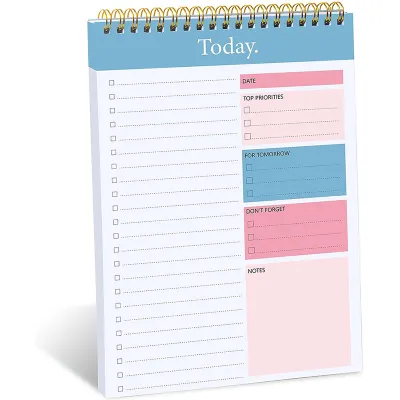
Choosing a planner does not have to be an all-or-nothing decision, and your needs may change as your year progresses. If you find yourself transitioning between different busy seasons, you can adapt your planning system accordingly. For example, during low-stress periods, a monthly planner paired with a simple digital app might be sufficient. If you enter a highly demanding semester or a major project launch at work, you can easily supplement your monthly view by purchasing a separate, undated daily notepad or a simple dotted notebook to handle temporary, granular task lists. This hybrid approach allows you to keep your main planner clean while still having the space to manage temporary surges in your daily workload.
Frequently Asked Questions (FAQ)
Can I use a monthly planner for daily task management?
While you can technically write small tasks inside a monthly calendar grid, doing so is highly inefficient and quickly leads to a cluttered, illegible planner. The small square boxes are designed for high-level milestones, deadlines, and key appointments, not for detailed to-do lists. If you attempt to squeeze your daily tasks into these small spaces, you will likely run out of room and find the visual clutter overwhelming.
Instead of forcing a monthly grid to do daily work, use your monthly planner strictly for macro-planning and tracking significant dates. To manage your daily tasks, pair your monthly planner with a separate daily notepad, a pack of sticky notes, or a digital task manager. This allows you to keep your monthly overview clean and readable while still having a dedicated, flexible space to execute your daily chores and work items.
What pens work best with planner paper to prevent bleeding?
To find the best pen for your planner, you must first check the paper weight, measured in grams per square meter (GSM), which is typically listed on the product packaging or manufacturer specifications. Standard planner paper ranges from 70 GSM to 100 GSM. In the tropical and highly humid climate of the Philippines, paper can naturally absorb ambient moisture from the air over time. This moisture absorption can make the paper fibers more receptive to liquid inks, increasing the likelihood of ink bleeding, ghosting, or feathering across the page.
To ensure a clean writing experience, it is highly recommended to perform a quick pen test on one of the blank notes pages at the very back of your planner before writing on your main layout pages. For the safest results, opt for high-quality gel pens with quick-drying ink, standard ballpoint pens, or fine-liners. These pens deposit a controlled amount of ink that dries rapidly, minimizing the risk of bleeding. If you prefer using fountain pens or heavy permanent markers, be aware that these lay down a large volume of liquid ink, which is highly likely to bleed through or ghost on standard planner paper, especially in humid conditions.
Community discussion
Share your experience or ask a question. Comments are reviewed before publication.