
Quick Answer: Choosing Between Carbonless and Carbon Copy Receipts
Selecting the right order slip receipt book is a practical decision that directly impacts your daily business operations, transaction speed, and brand presentation. For most modern businesses, carbonless (NCR) paper is the preferred choice because it offers a clean, fast, and smudge-free writing experience without the hassle of loose carbon sheets. It is highly recommended for fast-paced environments where customer service speed and a professional appearance are top priorities.
Traditional carbon copy receipts remain a viable alternative if your business operates on a very tight upfront stationery budget or handles a low volume of daily transactions. While carbon copy books require manual setup for each receipt and can leave ink smudges on fingers, they offer a lower initial cost. Your final decision should balance your daily transaction volume, the physical working environment, and your long-term archiving requirements.
Understanding the Mechanism: Carbonless vs. Carbon Paper
To make an informed choice, it helps to understand how both paper types transfer writing from the top sheet to the duplicates underneath. Carbonless paper, often referred to as NCR (No Carbon Required) paper, relies on a clever chemical reaction. The back of the top sheet is coated with microscopic dye capsules, while the front of the sheet below is coated with a reactive clay. When you write on the top sheet with a pen, the physical pressure bursts these microcapsules, releasing the dye to react with the clay and instantly create a sharp, dark duplicate image.
Products mentioned in this guide
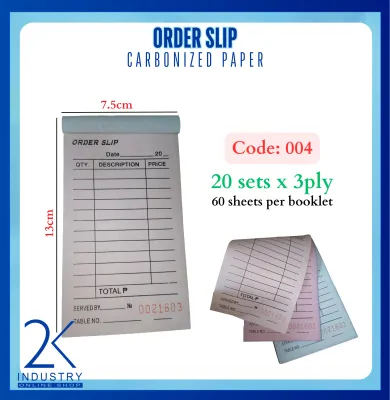
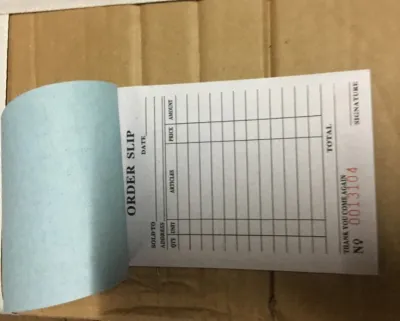
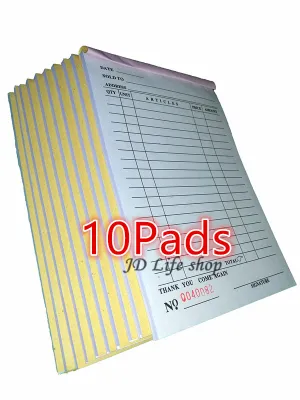
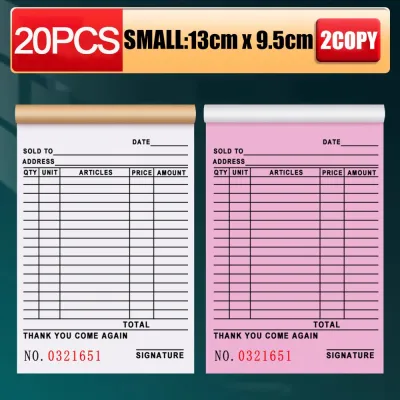
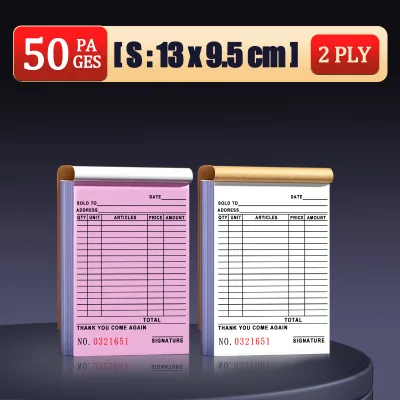
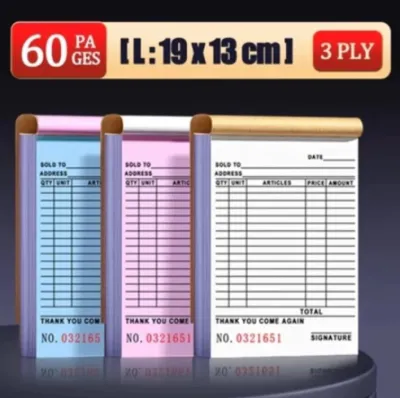
Prices are valid at publication and may change. Please refer to the product page for the latest price.

Traditional carbon copy paper relies on a purely mechanical transfer of physical pigment. This system requires a separate, loose sheet of paper that is heavily coated on one side with dry ink, wax, or carbon black pigment. You must manually place this carbon sheet between the original receipt page and the duplicate page before writing. The pressure of your pen transfers the loose pigment from the carbon sheet directly onto the page below, creating the copy.
This mechanical difference translates into a major contrast in daily handling. Carbonless receipt books come pre-collated and bound in sets, meaning they are always ready for immediate writing. Traditional carbon copy books require the user to manually insert, align, and eventually remove the loose carbon sheet for every single transaction, which adds extra steps to your checkout workflow and exposes hands to loose ink.
Comparing Carbonless and Carbon Copy Receipts for Daily Use
Evaluating how these two receipt types perform under real-world business conditions is essential for choosing the right tool for your staff and customers.
Convenience and cleanliness are where carbonless paper holds a clear advantage. Because the ink chemistry is sealed inside microcapsules, carbonless receipts do not smudge your hands, stain your clothing, or leave dark marks on your countertops. Traditional carbon paper, by contrast, easily sheds its pigment. Cashiers and servers using carbon paper often end up with stained fingers, which can then accidentally transfer dark smudges onto clean merchandise, food packaging, or the customer’s change.
Cost efficiency involves looking at both upfront purchase prices and long-term operational costs. Carbon copy books generally have a lower initial price because they are made from standard, uncoated paper. However, you must factor in the ongoing cost of buying replacement carbon sheets and the hidden cost of slower transaction times. Carbonless books carry a higher upfront price due to the specialized chemical coatings, but they eliminate the need for separate carbon sheets and significantly speed up customer service.
Legibility and archiving present distinct trade-offs for both options. Carbon copy duplicates are often very dark and highly legible immediately after writing, but the transferred pigment remains sitting on the surface of the paper, making it prone to smudging if rubbed. Carbonless duplicates are sharp, clean, and chemically bound to the paper fibers, preventing accidental smudging. However, the chemical dyes in carbonless paper are sensitive to environmental factors and can fade over time when exposed to intense heat, direct sunlight, or high tropical humidity.
| Feature | Carbonless (NCR) Receipts | Traditional Carbon Copy Receipts |
|---|---|---|
| Setup Time | Instant (pre-collated sets) | Manual (must insert carbon sheet) |
| Cleanliness | High (no ink transfer to hands) | Low (prone to finger smudging) |
| Upfront Cost | Moderate to high | Low |
| Smudge Resistance | High (chemically bound dye) | Low (loose pigment can rub off) |
| Archival Stability | Sensitive to heat, light, and humidity | Highly stable if kept dry and unrubbed |
| Multi-part Capability | Excellent (up to 4 parts easily) | Limited (gets blurry past 2 parts) |
Best Use Cases for Carbonless (NCR) Order Slips
Carbonless order slip receipt books excel in fast-paced, customer-facing environments where efficiency and professional presentation are critical to success.
High-volume retail and food service businesses benefit immensely from the speed of carbonless paper. In busy milk tea shops, bakeries, cafes, and quick-service diners, cashiers must process transactions rapidly to keep queues moving. Fumbling with loose carbon sheets for every customer is impractical and slows down service, making pre-collated carbonless books the logical choice.
Professional service providers also rely on carbonless paper to maintain a clean brand image. If you run an air conditioning repair service, a logistics courier company, or a home delivery business, presenting a clean, unsmudged receipt to your client builds trust. Handing over a messy, carbon-stained slip can make your business look unorganized and unprofessional.
Multi-part administrative workflows are much easier to manage with carbonless systems. If your business requires three or four copies of a single transaction—such as one copy for the customer, one for accounting, one for warehouse dispatch, and one to remain in the book—managing multiple loose carbon sheets is incredibly tedious. Carbonless paper allows you to write once and instantly create up to four clean, color-coded copies.
Best Use Cases for Traditional Carbon Copy Receipts
While carbonless paper is highly popular, traditional carbon copy receipts still have a practical place in specific business models and working environments.
Micro-businesses, startups, and hobbyist crafters with very low daily transaction volumes can benefit from the lower upfront cost of carbon copy books. If you run a small neighborhood retail store, a weekend market stall, or only write a few receipts a day, the manual setup time is negligible. In these scenarios, saving money on your initial stationery budget outweighs the convenience of carbonless paper.
Heavy-duty, dusty, or greasy environments are also well-suited for traditional carbon copy paper. In outdoor hardware yards, mechanical workshops, or wet markets, workers’ hands are often covered in grease, water, or dirt. The chemical coatings on carbonless paper can react unpredictably when exposed to moisture or chemical solvents, whereas traditional carbon paper relies on a heavy physical pigment transfer that remains highly visible even on soiled paper.
Simple two-part record keeping is another area where carbon copy remains viable. If you only need a single duplicate copy for your records and your workflow allows for a slower, more deliberate writing pace, inserting a single carbon sheet is a simple task that ensures a dark, long-lasting physical copy.
Essential Specifications When Ordering Receipt Books
When purchasing or customizing your order slip receipt books, you must verify several physical and structural specifications to ensure they fit your daily workflow.
Size and Format Standard sizes like A5, A6, or DL (one-third of an A4 sheet) are widely available. Choose a size that fits comfortably on your service counter, inside your cash drawer, or on a standard clipboard if your staff is mobile. Ensure the writing area provides enough lines for your typical order size.
Number of Parts Decide how many copies you need for your workflow. You can choose duplicate (2-part: typically white and yellow), triplicate (3-part: white, pink, and yellow), or quadruplicate (4-part: white, pink, blue, and yellow). Standard color-coding helps your staff quickly route the correct copy to the customer, accounting, or inventory.
Binding and Perforation Look for receipt books with clean, micro-perforated top sheets so they tear out smoothly without ripping the receipt. The bottom copy should remain firmly bound in the book to serve as your permanent, sequential business record.
Paper Weight and Printer Compatibility If you plan to write your receipts by hand, standard paper weights are perfectly fine. However, if you plan to run these forms through a dot-matrix impact printer, you must verify that the paper weight is compatible with your printer’s tractor-feed mechanism and that the printer’s impact force is strong enough to transfer the image clearly through all parts.
Frequently Asked Questions (FAQ)
Do carbonless receipts fade over time?
Yes, carbonless receipts can fade over time because the image is created by a chemical reaction rather than permanent ink. In tropical climates with high humidity and intense heat, this fading process can happen more quickly if the paper is left exposed. To preserve your business records, store completed carbonless books in a cool, dry, and dark place, away from direct sunlight and plastic folders containing PVC, which can degrade the chemical image. For long-term legal archiving, scanning a digital copy of the receipt is highly recommended.
What type of pen works best with carbonless paper?
A standard ballpoint pen with a medium or fine tip is the best choice for carbonless paper. The firm, rolling metal ball concentrates your hand pressure onto a tiny point, which is necessary to burst the microcapsules and transfer the image clearly to the lower sheets. Avoid using gel pens, rollerballs, fountain pens, or felt-tip markers. These pens glide too smoothly, distribute pressure too widely, and use liquid inks that do not apply the physical force required to trigger the chemical reaction on the duplicate pages.
Community discussion
Share your experience or ask a question. Comments are reviewed before publication.