
Choosing the right receipt for business transactions is a small operational decision that has a significant impact on your daily workflow, brand image, and record-keeping efficiency. The ideal choice depends on your daily transaction volume, customer interaction style, and physical working environment.
Carbonless (NCR) receipt books are generally the superior choice for modern, high-volume, and customer-facing businesses due to their cleanliness, speed, and professional presentation. Traditional carbon copy books remain a highly viable, budget-friendly option for rugged environments, low-volume operations, or situations where absolute copy darkness is prioritized over neatness.
The following sections break down the underlying mechanics, performance differences, and cost factors of both options to help you select the ideal receipt book for your business.
Products mentioned in this guide
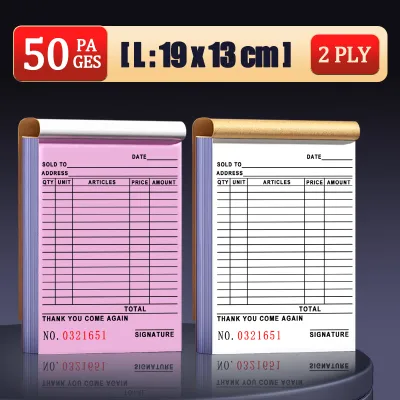
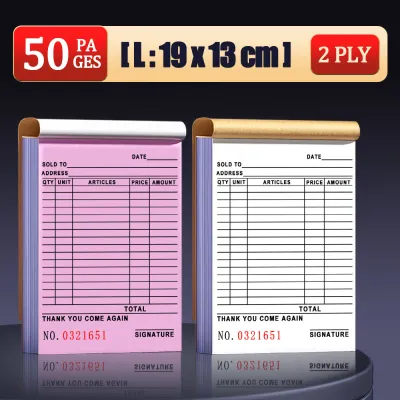
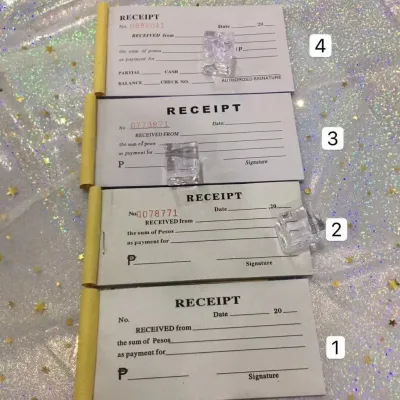
Prices are valid at publication and may change. Please refer to the product page for the latest price.
How Carbonless and Carbon Copy Receipts Work
Understanding the physical and chemical differences between these two paper types explains why they perform so differently during daily transactions.
Traditional carbon copy systems rely on physical pigment transfer. These books require a separate sheet of paper coated with a dark, wax-based carbon layer placed directly between the original receipt and the duplicate sheet. When you write on the top sheet, the physical pressure of your pen tip transfers the dark wax from the carbon sheet onto the page below. This requires you to manually insert, align, and move the carbon sheet for every single transaction.
Carbonless paper, often referred to as NCR (No Carbon Required) paper, replaces messy carbon sheets with a chemical reaction. The paper is manufactured with micro-coatings on the front and back of the sheets. The back of the top sheet is coated with microscopic dye capsules, while the front of the bottom sheet is coated with a reactive clay. When you apply pressure with a pen, the microcapsules rupture, releasing a colorless dye that reacts with the clay on the sheet below to instantly form a sharp, visible image.
In multi-part forms, such as three-ply or four-ply books, the middle sheets are coated with clay on the front to receive the image and microcapsules on the back to pass the image to the next layer. This self-contained chemical design eliminates the need for loose carbon inserts entirely.
Key Comparison Dimensions for Daily Transactions
To determine which format fits your daily operations, it is essential to evaluate how both receipt books perform across critical practical dimensions.

Legibility and Copy Quality
Traditional carbon copy books excel at producing highly visible, dark, and high-contrast duplicates. The physical transfer of carbon wax creates a bold line that is easy to read immediately, even when written with light hand pressure or under poor lighting conditions. However, because the carbon sits on the surface of the paper, the duplicate image is highly susceptible to smudging and fading over time if the pages rub against each other in a filing cabinet.
Carbonless receipts produce clean, precise blue or black lines that are embedded directly within the paper fibers. While highly legible, the darkness of the copy depends heavily on the pressure applied and the quality of the chemical coating. If a cashier writes with a very light touch, the lower plies of a three-ply or four-ply carbonless book may appear faint.
To ensure long-term archival legibility for tax audits or business records, you should verify the paper grade before purchasing. Conduct a simple trial by writing a test receipt with your standard business pen and checking the clarity of the bottom-most copy. High-quality carbonless paper will resist fading for years when stored away from direct light and heat.
Cleanliness and Smudge Resistance
Cleanliness is the most significant differentiator between the two systems in daily use. Carbon copy paper is notorious for transferring black or blue residue onto the hands of your employees, the clothing of your customers, and the edges of the original receipt. In retail, food service, or professional office settings, handing a customer a smudged receipt can detract from a polished brand image.
Carbonless paper is completely clean to handle. Because the chemical reaction is self-contained within the paper layers, there is no loose pigment to rub off on fingers or counter surfaces. This makes carbonless books the clear winner for hospitality, boutique retail, salons, and any business where staff interact directly with clients.
Furthermore, carbonless paper offers superior smudge resistance. Once the chemical reaction is complete, the image is dry and permanent, meaning it will not smear when touched or stacked immediately after writing.
Cost Efficiency and Long-Term Value
Traditional carbon copy books generally have a lower upfront purchase price. A standard carbon copy receipt book can cost between ₱30 and ₱60, making it an attractive option for startups, micro-enterprises, or low-volume operations looking to minimize initial stationery expenses.
Carbonless receipt books carry a higher initial price tag, often ranging from ₱80 to ₱150 or more depending on the size, ply count, and customization. This price premium is due to the specialized chemical coatings and manufacturing processes required to produce NCR paper.
However, evaluating cost efficiency requires looking beyond the initial purchase price to calculate the cost per clean, usable transaction. With carbon copy books, employees lose valuable seconds aligning carbon sheets, cleaning their hands, or rewriting receipts that became illegible due to carbon slippage. When you factor in the labor time saved and the reduction in wasted paper, carbonless books often deliver better long-term value for active businesses.
Writing Experience and Tool Compatibility
Both receipt types require physical pressure to create a duplicate, but they interact differently with various writing instruments. Carbon copy paper is highly forgiving and works reliably with almost any standard pen, pencil, or stylus, as long as enough physical force is applied to transfer the wax pigment.
Carbonless paper requires a firm, consistent writing stroke to ensure the microscopic capsules rupture through multiple paper plies. Consequently, pen compatibility is highly specific. Standard medium-point ballpoint pens are the ideal tool because the hard, rolling ball concentrates your hand pressure onto a tiny point, maximizing capsule rupture.
Conversely, gel pens, rollerballs, fountain pens, and felt-tip markers are highly unsuitable for carbonless paper. Their liquid, water-based inks pool on the chemically treated paper surface, dry slowly, and fail to transfer enough physical pressure to the lower layers. Additionally, always ensure you use a hard writing surface, such as a clipboard or the fold-over cardboard divider included with the book, to prevent the pressure from transferring to subsequent receipt sets underneath.
Decision Framework: Matching the Receipt Book to Your Business
To finalize your decision, match your specific business profile and operational environment to the strengths of each receipt book type.
Choose Carbonless (NCR) Receipt Books if:
- You run a customer-facing business: Retail boutiques, cafes, salons, and professional offices benefit from the clean, professional, and smudge-free presentation of carbonless paper.
- You have a high volume of transactions: Eliminating the step of manually moving carbon sheets speeds up checkout times and reduces customer wait lines.
- You require multi-part forms: If you need three-ply or four-ply copies (e.g., original for the customer, duplicate for accounting, triplicate for inventory), carbonless paper handles this seamlessly without bulky carbon inserts.
- You prioritize clean record-keeping: Carbonless duplicates remain clean and readable in files without transferring dark smudges to adjacent documents.
Choose Traditional Carbon Copy Receipt Books if:
- You operate in rugged environments: Warehouses, construction sites, automotive repair shops, and wet market stalls where hands are already dirty and absolute neatness is secondary to utility.
- You need maximum copy contrast: If your staff must read duplicate receipts in dim, outdoor, or variable lighting conditions, the dark lines of carbon copy paper are highly visible.
- Your transaction volume is low: If you only write a few receipts a day, the lower upfront cost of carbon copy books makes them a highly economical choice.
Verify First if:
- Your business operates in a highly humid or tropical climate: In regions with high relative humidity, such as the Philippines, environmental moisture can affect both paper types. High humidity can cause traditional carbon sheets to become tacky and stick to the paper, while low-grade carbonless coatings can degrade or lose chemical reactivity over time. Always store your receipt books in a cool, dry place and test a small sample in your actual working environment before buying in bulk.
What to Verify Before Buying a Receipt Book
Before purchasing your receipt books, use this checklist to verify the technical specifications and ensure they fit your business workflow.
- Size and Format: Verify the dimensions of the book to ensure it fits your workspace. Common sizes include pocket-sized (4×6 inches) for mobile delivery riders, medium (5×8 inches) for standard counter use, and A5 size for detailed service invoices.
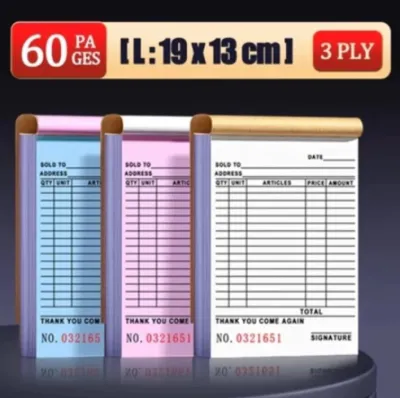
- Ply Count: Determine how many copies you need per transaction. Choose 2-ply (original and duplicate) for simple retail sales, or 3-ply (original, duplicate, and triplicate) if you need separate copies for the customer, accounting, and warehouse tracking.
- Binding Type: Check how the pages are secured. Glue-bound books allow you to tear out all copies easily, which is ideal if no sheets need to remain in the book. Stub-bound or perforated books keep the duplicate copy permanently bound in the book for your physical audit trail while allowing you to tear out the original.
- Sequential Numbering: Ensure the books feature pre-printed, sequential serial numbers. This is critical for internal accounting controls, preventing fraud, and tracking missing transactions.
- Paper Weight (GSM): Look for the paper thickness specified in GSM (grams per square meter). Thicker paper (typically 60 to 80 GSM for carbonless) offers better smoothness, superior bleed resistance, and prevents the pen tip from tearing the sheet under firm writing pressure.
Frequently Asked Questions (FAQ)
Can I use any pen on carbonless receipt paper?
No, you should avoid using gel pens, rollerballs, or markers on carbonless paper. Standard medium-point ballpoint pens are the best choice because they feature a hard, rolling ball that concentrates writing pressure onto a very small area, which is necessary to rupture the microscopic dye capsules and transfer the image to the lower plies. Gel and liquid inks do not dry quickly on the chemically treated clay coating of carbonless paper, leading to smearing, and they do not provide the sharp, focused physical pressure required for multi-ply transfer.
Does high humidity affect carbonless or carbon copy receipts?
Yes, extreme humidity and heat can impact the performance and lifespan of both receipt types. In tropical climates, high humidity can make traditional carbon paper tacky, causing the carbon sheet to stick to the receipt pages or transfer pigment prematurely. For carbonless paper, prolonged exposure to moisture and heat can degrade the chemical coatings, leading to fainter copies or premature yellowing of the paper. To preserve quality, store your receipt books in a cool, dry cabinet, keep them sealed in plastic wrap until ready for use, and avoid leaving them in hot vehicles or damp storage areas.
Community discussion
Share your experience or ask a question. Comments are reviewed before publication.