
When managing a business, choosing the right format for your resibo sales invoice is a practical decision that directly impacts daily operations, customer satisfaction, and long-term record-keeping. The choice between carbonless (NCR) and traditional carbon copy sales invoice books often comes down to balancing upfront costs against daily convenience and professional presentation.
For high-volume, customer-facing businesses that prioritize clean, fast, and clear transactions, carbonless (NCR) books are generally the preferred option. These books eliminate the mess and hassle of handling loose carbon sheets, allowing staff to write out transactions quickly and move on to the next customer.
Conversely, traditional carbon copy books remain a viable choice for low-volume or budget-constrained operations where minor ink smudging is acceptable and lower upfront costs are a priority. Both types can serve as legally compliant sales invoices, provided they are printed and registered in accordance with local tax authority regulations.
Products mentioned in this guide
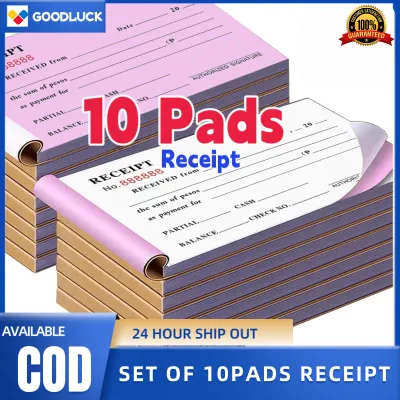
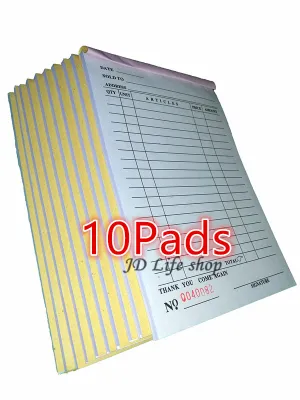
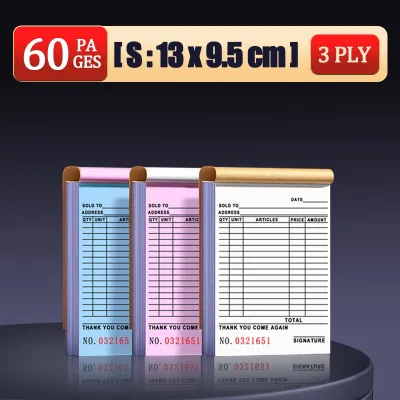
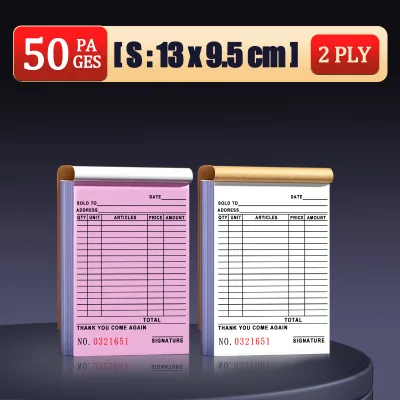
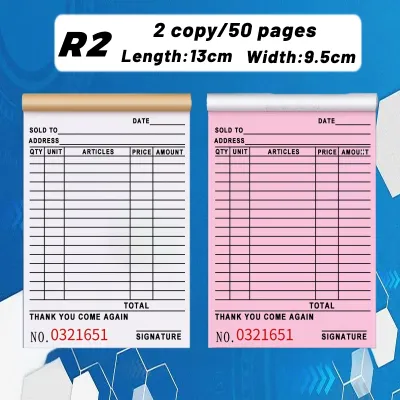
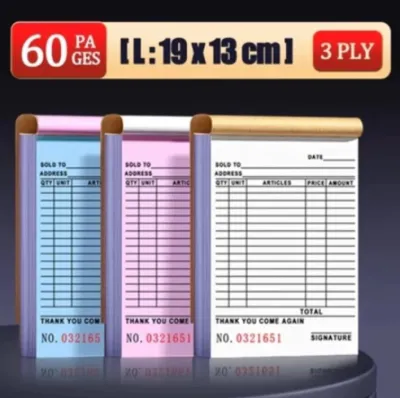
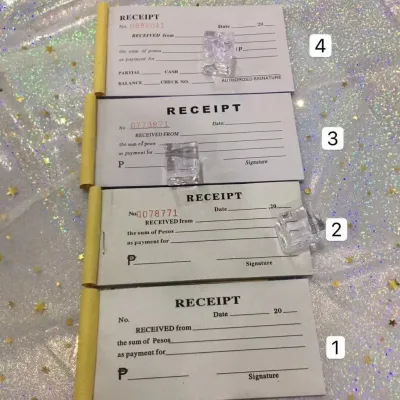
Prices are valid at publication and may change. Please refer to the product page for the latest price.
How Carbonless and Carbon Copy Mechanisms Differ
Understanding the underlying technology of these two invoice types helps clarify why they perform differently in daily business environments. Traditional carbon copy books rely on a physical transfer sheet coated with a layer of dry ink or wax-bound pigment. This carbon sheet must be manually placed between the original white page and the duplicate page below. When a pen writes on the top sheet, the physical pressure transfers the pigment from the carbon sheet onto the page underneath, creating a copy.
Carbonless paper, often referred to as NCR (No Carbon Required) paper, uses a chemical process to achieve the same result without any separate sheets. The paper is manufactured with microscopic dye capsules on the underside of the top sheet and a reactive clay coating on the top side of the receiving sheet. When writing pressure is applied to the top page, these microcapsules rupture, releasing a colorless dye that reacts with the clay coating below to form a highly visible, sharp image.
For multi-part forms, such as triplicate or quadruplicate books, intermediate sheets are coated with clay on the front and microcapsules on the back. This allows the pressure to cascade through multiple layers, creating several copies simultaneously. The physical handling of carbonless books is entirely seamless, requiring no manual insertion or disposal of messy carbon sheets, whereas traditional carbon copy books require constant adjustment and disposal of worn-out carbon paper.
Comparing Value, Convenience, and Professionalism
Selecting the right invoice book involves evaluating how each option affects your daily workflow, your brand image, and your bottom line. While both formats serve the same basic administrative function, they offer vastly different user experiences.

To make an informed decision, businesses must weigh three primary factors: daily handling convenience, copy legibility, and overall cost efficiency. Each of these dimensions plays a critical role in how smoothly your transactions proceed and how your business is perceived by clients.
Convenience and Cleanliness in Daily Use
In a busy retail or service environment, speed and cleanliness are essential for maintaining a professional workspace. Traditional carbon paper is notorious for leaving ink stains on fingers, clothing, and countertops. In tropical climates with high humidity, the wax-based ink on carbon sheets can become soft and sticky, increasing the likelihood of accidental smudges and messy transfers onto blank invoice pages.
Carbonless invoice books completely eliminate this issue because the dye chemistry is dry and self-contained within the paper fibers. There are no loose sheets to lose, tear, or misalign during a transaction. Staff can simply open the book, place a cardboard divider under the current set to prevent write-through to subsequent pages, and begin writing immediately.
This streamlined process saves valuable seconds during peak business hours. It also keeps the checkout counter clean and organized, as there is no need to store or discard used carbon sheets, which can accumulate dust and clutter the workspace.
Legibility and Professional Appearance
An invoice is often the final physical touchpoint a customer has with your business, making its appearance a key factor in professional branding. Carbonless copies typically deliver much sharper, cleaner lines because the chemical reaction occurs precisely where the pen tip applies pressure. This high level of contrast makes the duplicate copy easy to read for both the customer and your accounting team.
Traditional carbon copies, on the other hand, are highly susceptible to blurring and double-imaging if the carbon sheet slips even slightly during writing. Over time, as a single carbon sheet is reused across multiple invoices, the transferred image can become faint, patchy, and difficult to decipher. This can lead to disputes over prices, quantities, or terms written on the receipt.
Achieving clear copies in both book types requires a firm writing hand and the right writing instrument. However, because carbonless paper relies on microcapsule rupture rather than physical wax transfer, it generally requires slightly less physical effort to produce a legible duplicate across three or four copies.
Cost Considerations and Long-Term Value
From a purchasing perspective, traditional carbon copy books usually feature a lower upfront price tag. For a startup or a micro-business operating on a very tight budget, this lower initial cost can make carbon copy books seem like the more economical choice.
However, a true cost analysis should look beyond the initial purchase price and consider the cost per usable, legible invoice set. Traditional carbon copy books often suffer from wasted pages due to misaligned carbon sheets, accidental write-throughs, or smudged copies that must be voided and rewritten. These errors consume extra time and waste paper, quietly eroding the initial savings.
Carbonless books, while requiring a higher initial investment, offer superior long-term value by reducing transaction times and minimizing errors. The absence of manual setup means fewer ruined pages and a faster checkout process, which translates to improved staff productivity and a more professional customer experience.
Compliance and Record-Keeping Requirements
When purchasing a resibo sales invoice book, compliance with local tax regulations is paramount. In the Philippines, the Bureau of Internal Revenue (BIR) mandates strict guidelines for official receipts and sales invoices. It is important to note that tax authorities do not regulate the physical copying mechanism itself; both carbonless and carbon copy books are legally acceptable.
Instead, compliance depends entirely on the printed format, the inclusion of required fields, and official registration. Your invoice books must feature your registered business name, taxpayer identification number (TIN), branch address, and the approved serial numbers. They must also be printed by a tax-authority-accredited printer who issues an official Authority to Print (ATP).
Another critical compliance factor is the durability of your records. Tax regulations often require businesses to preserve their accounting records, including duplicate sales invoices, for a designated period of several years.
Because carbonless paper relies on chemical dyes, these copies can fade over time if they are exposed to direct sunlight, high temperatures, or extreme humidity. Traditional carbon copies can also degrade if the wax transfers or bleeds under heavy pressure or heat. To ensure long-term compliance, businesses must store their completed invoice books in a controlled environment that protects the paper from environmental degradation.
Decision Framework: Which Invoice Book Should You Choose?
To finalize your purchasing decision, evaluate your specific business profile and operational needs against the characteristics of each invoice book type.
Choose Carbonless (NCR) if…
- You operate a high-volume retail store, restaurant, or service business where transaction speed is critical.
- Your staff interact directly with customers and need to maintain a clean, professional, and smudge-free appearance.
- You require multi-part copies (such as triplicate or quadruplicate sets) where precise alignment across all sheets is necessary.
- You want to minimize administrative errors and avoid the hassle of managing loose carbon sheets.
Choose Carbon Copy if…
- You run a low-volume, back-office business with only a few transactions per day.
- You are operating on a highly restricted startup budget and need to keep initial supply costs as low as possible.
- Your invoices are filled out in a controlled environment where staff have the time to carefully align and insert carbon sheets.
- You do not mind the occasional ink smudge on hands or paper.
- You have a reliable system for storing and disposing of used carbon sheets securely.
Verify First if…
- Before placing a bulk order with any supplier or print shop, verify that the paper weight, sheet dimensions, and color-coding options meet your operational preferences.
- Ensure that the printer is fully accredited by your local tax authority and that the invoice layout complies with all current registration and formatting mandates.
Frequently Asked Questions (FAQ)
Can I use a standard pen with carbonless invoice books?
Yes, standard ballpoint pens are the ideal choice for both carbonless and carbon copy invoice books. Ballpoint pens feature a hard, rolling metal tip that applies concentrated physical pressure to the paper as you write. This pressure is necessary to rupture the microcapsules in carbonless paper or to transfer the wax-based ink in carbon copy books. Avoid using gel pens, fountain pens, or soft felt-tip markers, as these instruments glide too smoothly across the surface and do not apply enough downward force to create a clear, legible duplicate on the lower pages.
Do carbonless copies fade faster than carbon copies over time?
Both carbonless and carbon copy papers can fade or degrade if they are subjected to poor storage conditions. Carbonless paper uses chemical dyes that are sensitive to prolonged exposure to direct sunlight, high temperatures, and high humidity. Carbon copy wax can also bleed or smudge if stored under heavy pressure or in hot environments. To ensure your duplicate records remain legible for the legally mandated retention period, store all completed invoice books in a cool, dry, and dark place, such as a filing cabinet or a sealed plastic storage container away from direct heat sources.
Community discussion
Share your experience or ask a question. Comments are reviewed before publication.