
Choosing between carbonless and regular carbon copy receipt books is a fundamental operational decision for business owners. The right choice depends heavily on your daily transaction volume, budget constraints, and the physical environment where you issue receipts. Locally referred to as a resibo receipt, this simple document serves as the primary record of your sales and customer agreements.
In the tropical climate of the Philippines, factors like high humidity and heat also play a subtle role in how these paper types perform over time. Selecting the wrong format can lead to slow customer service, messy ink stains, or faded records that fail to meet your internal auditing needs. By understanding the mechanical and practical differences, you can establish a smooth transaction workflow that keeps your business organized.
How Carbonless and Regular Receipt Books Work
To make an informed choice, it helps to understand the physical science behind how each paper type duplicates your writing. Traditional regular receipt books rely on a physical sheet of carbon paper placed between the original page and the duplicate copy. When you write on the top sheet, the pressure of your pen transfers the dark carbon pigment from the loose sheet onto the page below. This mechanical transfer is simple and reliable, but it requires you to manually move the carbon sheet every time you write a new receipt.
Products mentioned in this guide
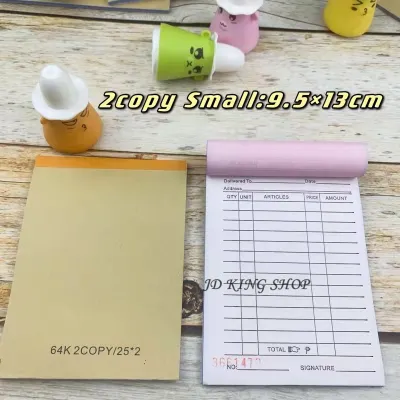
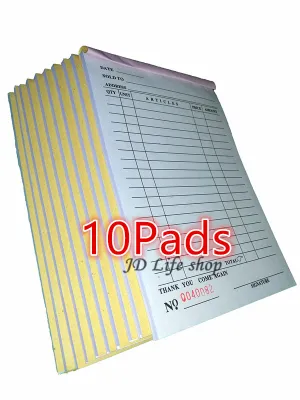
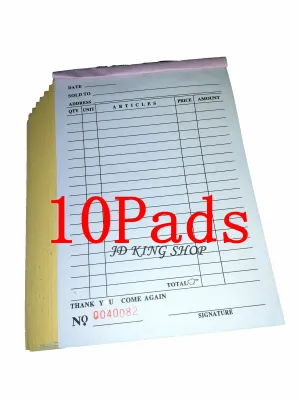
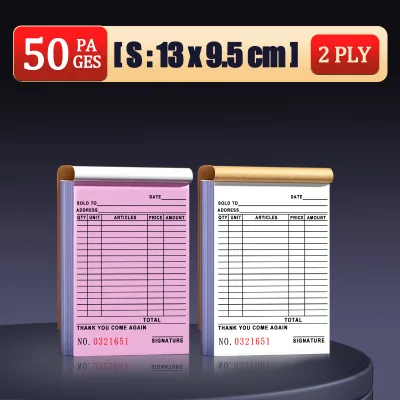
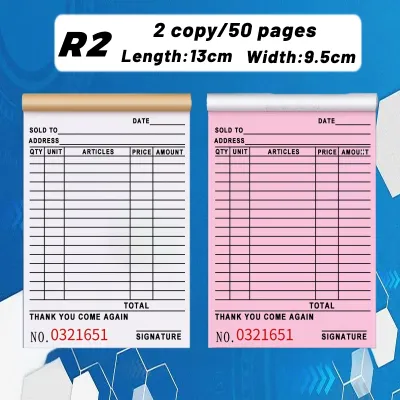
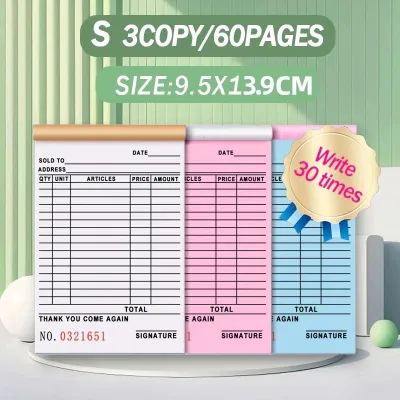
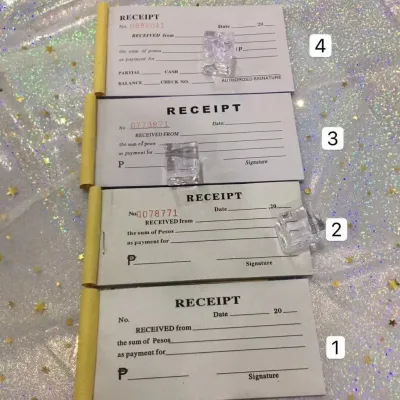
Prices are valid at publication and may change. Please refer to the product page for the latest price.
Carbonless paper, often referred to as NCR (No Carbon Required) paper, uses a chemical reaction instead of a physical pigment sheet. The back of the top sheet is coated with micro-encapsulated dye, while the front of the bottom sheet is coated with a reactive clay or developer. When you apply pressure with a pen, the tiny capsules rupture, releasing the dye to react with the chemical developer on the sheet below, instantly creating a visible image.
Both systems require a firm, stable writing surface to function correctly. Without a hard backing board inserted behind the current set of pages, the writing pressure will bleed through to multiple pages underneath, ruining subsequent receipts. For carbonless books, this pressure is what ruptures the micro-capsules, while for regular books, it is what releases the carbon wax.
Handling multi-ply copies reveals another major mechanical difference. Traditional carbon books require you to insert a separate carbon sheet for every single duplicate layer, which can easily lead to alignment slips and smudged fingers. Carbonless books are pre-collated in two-part (duplicate) or three-part (triplicate) sets, eliminating the need to handle loose sheets and ensuring perfect alignment for every copy.
Comparing Cost, Volume, and Daily Usability
When evaluating the financial impact on your business, you must look beyond the initial purchase price. Regular receipt books generally feature a lower upfront unit cost, making them highly attractive for startups or micro-businesses operating on a tight budget. However, this initial saving is often offset by the hidden costs of operational efficiency. The time spent manually repositioning carbon sheets, replacing worn-out carbon paper, and dealing with slow transaction times can add up significantly for a busy retail store or food stall.

Carbonless books carry a higher initial price tag due to the specialized chemical coatings used in their manufacturing. Despite this higher upfront cost, they offer superior daily usability and speed. Transactions are completed much faster because the cashier can simply open the book, write the details, and tear out the customer copy immediately. There is no downtime spent adjusting loose sheets, and the risk of smudging ink onto hands, clothing, or the customer’s merchandise is virtually eliminated.
The choice of writing instrument also directly affects the clarity of your duplicates. Carbonless paper requires a firm, pointed tip—such as a standard ballpoint pen—to apply the concentrated pressure needed to rupture the chemical micro-capsules. Soft felt-tip pens or light gel pens often fail to trigger the chemical reaction, resulting in faint or invisible duplicate copies. Regular carbon paper is slightly more forgiving of different pen types, but still requires decent physical pressure to transfer the carbon wax effectively.
Legibility over time is another critical factor for business record-keeping. While carbonless technology has advanced significantly, the chemical images can be sensitive to prolonged exposure to direct sunlight, high heat, and certain plasticizers found in plastic folders. Traditional carbon transfers are highly stable under normal storage conditions but can smudge if the pages rub against each other over years of storage. Business owners should check manufacturer specifications regarding archival stability and fade resistance to ensure their records remain readable for the required retention period.
Decision Framework: Matching the Book to Your Business Needs
To determine which format fits your daily operations, you can use a simple decision framework based on your business volume and physical environment. If your business processes dozens of transactions daily, such as a busy convenience store, a bustling cafe, or a fast-paced service center, carbonless books are the practical choice. The speed of writing and tearing without handling loose carbon sheets keeps customer queues moving quickly and maintains a clean, professional presentation.
Carbonless formats are also highly recommended for mobile or field environments. Delivery drivers, field technicians, and outdoor market vendors often work in windy, dusty, or cramped spaces where managing loose carbon sheets is highly impractical. A self-contained carbonless book allows these workers to issue clean receipts on the go without worrying about losing their carbon paper or staining their hands in front of clients.
Conversely, traditional regular receipt books are highly suitable for low-volume businesses operating from a fixed, stationary desk. If you only issue a few receipts a day—such as a professional consultancy, a specialized repair shop, or a private landlord collecting monthly rent—the manual step of inserting a carbon sheet is a minor inconvenience. In these scenarios, the cost savings of buying regular books outweigh the need for high-speed transactions.
Environmental conditions in the Philippines, particularly high humidity and tropical heat, must also be factored into your decision. Excessive moisture in the air can soften the paper fibers, reducing the crispness of both carbon transfers and chemical reactions. Furthermore, storing carbonless books in extremely hot environments, such as unventilated metal shipping containers or delivery vehicles parked under the sun, can prematurely degrade the chemical coatings. Always verify the storage recommendations and climate suitability with your stationery supplier before purchasing in bulk.
Essential Specifications to Verify Before Purchasing
Before finalizing your purchase of a resibo receipt book, you must verify several physical and formatting specifications to ensure they meet your operational needs. Start by checking the paper weight, measured in grams per square meter (GSM). Higher GSM paper feels more substantial and resists tearing during writing, which is especially important for the top sheet of a carbonless set where heavy pen pressure is applied.
Next, consider the ply count required for your accounting workflow. A standard 2-ply book provides an original copy for the customer and a duplicate copy for your business records. If your workflow requires separate copies for inventory management, accounting, and delivery verification, you should opt for a 3-ply or 4-ply book. Ensure the binding is durable enough to hold the remaining copies securely in place, and check that the perforation lines are clean and deep enough to allow easy tearing without ripping the duplicate pages.
Sequential numbering is another vital feature for maintaining a secure audit trail and preventing fraud. Ensure the books you purchase have clear, pre-printed serial numbers on every page of the set. Finally, verify that the standard sizes and pre-printed fields align with local business recording practices in the Philippines. The fields should provide adequate space for writing customer details, item descriptions, unit prices, tax breakdowns, and authorized signatures, ensuring your transactions are documented clearly and professionally.
Frequently Asked Questions (FAQ)
Are carbonless receipts legally valid for business records in the Philippines?
Yes, carbonless receipts are widely accepted for business record-keeping, internal auditing, and customer transactions. From a legal and regulatory standpoint, the legibility, completeness, and accuracy of the transaction details matter far more than the specific paper technology used to create the duplicate. However, businesses must ensure that their receipt books comply with the formatting, registration, and serial numbering guidelines set by local tax authorities. Always consult with a certified accountant or your local tax office to verify the specific registration requirements for official receipts and invoices.
Can I use any pen with a carbonless receipt book?
No, not all pens are suitable for carbonless paper. Standard ballpoint pens with medium or fine metal tips are the best choice because they focus your writing pressure onto a very small area, which easily ruptures the micro-encapsulated dye on the back of the sheet. Gel pens, rollerballs, and felt-tip pens tend to distribute ink with very little physical pressure, which often results in faint, incomplete, or entirely blank duplicate copies. It is always a good practice to test a new pen on a spare page or the edge of the receipt book to ensure it creates a clear, legible transfer on all underlying plies before using it for customer transactions.
Community discussion
Share your experience or ask a question. Comments are reviewed before publication.