
Choosing between a Carson and a CASIO scientific calculator for senior high school comes down to balancing your academic strand’s technical demands against your budget. CASIO remains the benchmark for classroom demonstrations and standardized exam compliance, offering advanced natural textbook displays and robust build quality. Carson serves as a highly accessible, budget-conscious alternative that covers fundamental algebraic and trigonometric operations, making it a practical choice for students who do not require highly specialized computing features.
Exam Compliance and School Requirements
Before purchasing any scientific calculator, your first step must be reviewing your school’s student handbook or consulting your mathematics department’s syllabus. Many senior high schools and national testing boards enforce strict regulations regarding which electronic devices are permitted in examination rooms. Specifically, programmable models, graphing calculators, and devices equipped with a Computer Algebra System (CAS) are widely prohibited during quizzes, quarterly exams, and college entrance tests to ensure academic integrity.
Proctors and teachers are highly trained to recognize standard calculator layouts quickly during timed assessments. Because CASIO is the industry standard, its classic chassis designs and model numbers are instantly recognizable to exam supervisors, minimizing any friction or delays at the testing room door. If you opt for an alternative brand like Carson, you must verify that its layout and model number do not mimic prohibited programmable features, and you should be prepared to show your teacher that the device complies fully with classroom rules before exam day.
Products mentioned in this guide
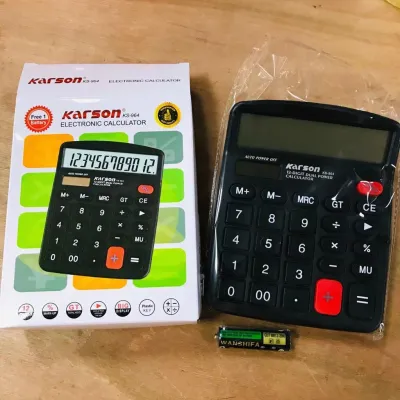
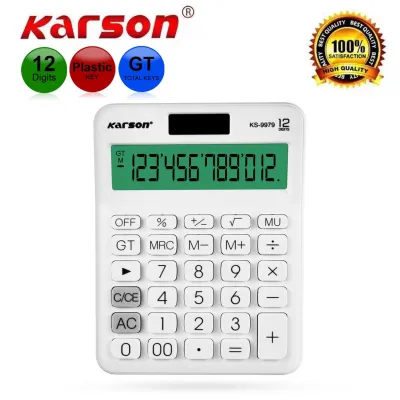


Prices are valid at publication and may change. Please refer to the product page for the latest price.
Core Features for Senior High Math and Science
The academic demands of senior high school vary significantly depending on your chosen track, such as the Science, Technology, Engineering, and Mathematics (STEM) strand or the Accountancy, Business, and Management (ABM) strand. Subjects like Pre-Calculus, Basic Calculus, General Mathematics, and Probability and Statistics require specific computational tools that standard basic calculators cannot provide. Matching your calculator’s feature set to your specific curriculum ensures you do not struggle with manual multi-step calculations when a dedicated function could solve the problem in seconds.

Display and Interface Navigation
Screen readability and intuitive menu layouts are critical when you are working under the strict time limits of a classroom quiz or a major exam. High-quality scientific calculators feature natural mathematical formatting, often referred to as a natural textbook display, which allows you to input fractions, exponents, square roots, and integrals exactly as they are printed in your textbooks. This visual alignment reduces input errors significantly, as you do not have to translate complex equations into single-line linear syntax.
When comparing displays, look closely at the screen resolution and the dot-matrix capabilities of each model. A higher-resolution screen can display multiple lines of data simultaneously, allowing you to view your input expression and the final output at the same time, or even compare previous calculations. The learning curve of the menu structure is equally important; buttons should be logically grouped, with secondary functions clearly labeled above the keys, allowing you to access advanced menus without memorizing complicated keystroke sequences.
Advanced Math and Statistics Functions
For advanced senior high school mathematics, your calculator must be capable of handling complex operations beyond basic trigonometry. Ensure the model you select supports simultaneous equation solving, matrix calculations up to a 3×3 grid, vector operations, and numerical integration or differentiation. These features are indispensable for STEM students who need to verify their manual calculus steps during homework and exam preparation.
Statistical analysis is another core component of the senior high curriculum, requiring robust support for standard deviation, variance, linear regression, and normal distribution tables. While standard CASIO models typically offer dedicated statistics modes with multi-variable data entry grids, alternative models like Carson must be checked to ensure they can store statistical data points without clearing the memory when you switch modes. Verify the device’s variable storage capacity, as the ability to save intermediate values to variables (such as A, B, C, or X) is vital for preventing rounding errors in multi-step physics and chemistry problems.
Build Quality, Battery Life, and Daily Usability
A scientific calculator is a daily companion that must survive being stuffed into a crowded backpack, commuted with in tropical humidity, and dropped occasionally on hard classroom floors. Inspect the physical casing of the calculator; high-quality models feature impact-resistant plastics and come with a rigid, slide-on protective cover that shields the liquid crystal display (LCD) and the key matrix from scratches and pressure. In the humid climate of the Philippines, a sturdy protective cover also helps prevent moisture from seeping into the internal circuitry during sudden downpours.
Power management is another critical factor for uninterrupted study sessions. Dual-power models, which combine solar panels with a backup button battery, offer the greatest reliability because they draw power from ambient classroom lighting and only rely on the battery in dim environments. If you choose a single-battery model, check the manufacturer’s specifications for expected battery life and ensure the battery compartment is easy to access with a standard screwdriver. Additionally, pay attention to the tactile feedback of the keys; buttons should have a distinct, springy press to prevent double-entry errors, and the printed labels on the keycaps must be durable enough to resist fading from finger oils over years of constant use.
Price and Value Comparison
In the local market, pricing for scientific calculators varies widely, with entry-level alternative models starting around ₱300 to ₱600, while advanced, industry-standard CASIO models generally range from ₱1,000 to over ₱2,000. This price premium reflects not only the brand’s established reputation but also the advanced display technology, faster processing speeds, and extensive quality control standards. Investing in a higher-tier model can be highly cost-effective if the calculator lasts through both senior high school and your subsequent college degree.
When evaluating value, consider the warranty terms and the availability of customer support. Established brands often provide official warranties that protect against manufacturing defects, whereas budget-friendly alternatives may offer limited or no post-purchase support. Furthermore, the popularity of scientific calculators has led to a surge in counterfeit products on online marketplaces and informal retail stalls. To protect your investment, avoid suspiciously low-priced listings that promise premium features for a fraction of the standard retail price, and always purchase your device from official brand stores, authorized school supplies retailers, or verified department stores.
How to Choose: Decision Framework
To make your final decision, evaluate your academic path, your school’s specific regulations, and your financial flexibility.
Choose CASIO if your school or specific strand teachers strictly recommend it, as this ensures your device will match the step-by-step instructions demonstrated on the whiteboard. It is also the ideal choice if you plan to pursue engineering, actuarial science, or advanced mathematics in college, where a highly reliable, feature-rich, and officially recognized calculator is mandatory for board examinations.
Choose Carson if you are working within a strict budget, your senior high school strand (such as HUMSS or GAS) only requires basic to intermediate algebraic calculations, and your school explicitly permits alternative brands. This option allows you to save money while still acquiring the essential trigonometric and statistical functions needed to pass your general education math courses.
Before making any purchase, always verify your specific senior high school strand’s curriculum requirements, as specialized tracks may demand advanced matrix or calculus functions that are only present in mid-to-high-tier scientific calculator models.
Frequently Asked Questions (FAQ)
Can I use an alternative brand calculator for college entrance exams?
You must check the specific guidelines issued by each university’s testing office or the national regulatory board, as rules vary significantly. While some testing centers permit any non-programmable scientific calculator regardless of the brand, others maintain a strict, pre-approved list of specific model numbers and may confiscate unlisted alternative brands at the door.
Is it difficult to switch calculator brands mid-semester?
Yes, switching brands mid-semester can introduce a challenging learning curve because key layouts, secondary function shifts, and menu navigation paths differ between manufacturers. While basic arithmetic remains identical, muscle memory plays a major role during timed exams, so changing your device mid-way can slow down your input speed and lead to avoidable formatting errors.

Community discussion
Share your experience or ask a question. Comments are reviewed before publication.