
If you are searching for a genuine Casio calculator equipped with a built-in ultraviolet (UV) money detector, the direct answer is simple: Casio does not manufacture or distribute any calculator models with integrated counterfeit money detectors. While you may frequently encounter online listings or market stalls advertising a “Casio calculator with money detector,” these products are either counterfeit items falsely using the Casio trademark or generic, unbranded calculators. Authentic Casio devices are engineered strictly for mathematical accuracy, scientific computation, and professional business accounting, without secondary novelty features like UV lights.
Understanding this distinction is crucial for business owners, cashiers, and retail operators who rely on accurate calculations and secure cash handling. Purchasing a counterfeit calculator under the impression that it is a genuine Casio product can lead to calculation errors, rapid hardware failure, and a false sense of security regarding counterfeit currency. This guide clarifies the reality of Casio’s product lineup, explains how to identify misleading product listings, and offers practical, professional alternatives for your retail setup.
The Reality of Casio Calculators and UV Money Detectors
Casio has established a global reputation over decades for producing highly reliable, durable, and precise calculating instruments. The brand’s engineering focus remains dedicated to computational integrity, ergonomic design, and energy efficiency. Their genuine product lines are strictly categorized into scientific calculators, standard desktop calculators, heavy-duty printing calculators, and specialized financial or graphic models. None of these official categories include auxiliary tools such as UV lamps or magnetic ink sensors.
Products mentioned in this guide
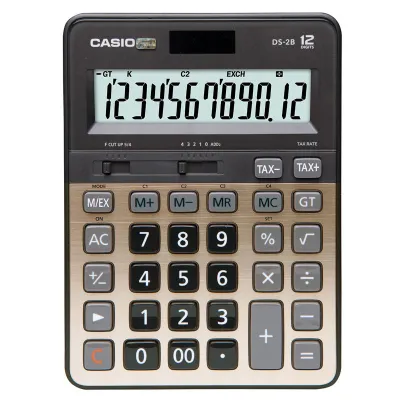
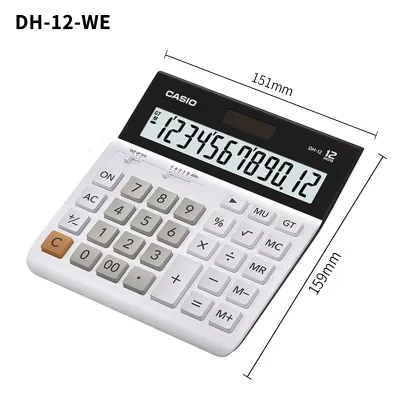
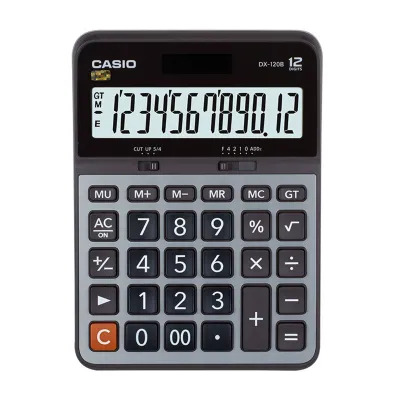
Prices are valid at publication and may change. Please refer to the product page for the latest price.
The widespread confusion regarding these devices stems from generic manufacturing practices. Many unbranded factories produce low-cost desktop calculators and add a small, purple light-emitting diode (LED) to the chassis, marketing the device as a multi-functional tool for small retail shops and market stalls. To make these generic items more appealing, unscrupulous sellers often print counterfeit Casio logos onto the plastic casings. This practice exploits the high brand recognition of Casio while delivering a product that does not meet any of the brand’s quality or safety standards.
Buying or relying on these counterfeit hybrid devices poses significant risks to daily business operations. Authentic Casio calculators undergo rigorous quality control to ensure that every keystroke registers correctly and that rounding functions comply with international accounting standards. Counterfeit models often use inferior microchips that can produce subtle rounding errors, which accumulate over time and disrupt your bookkeeping. Furthermore, the low-quality purple LEDs built into these fakes do not emit the correct ultraviolet wavelength required to reliably reveal the security features of genuine currency.
How to Spot Misleading Product Listings
Navigating online marketplaces requires a critical eye, especially when searching for office and retail supplies. To protect your business from purchasing counterfeit calculators, you should always cross-reference any product claims with official Casio catalogs and specifications. Authorized distributors in the Philippines maintain updated lists of active model numbers, and any model featuring a “money detector” or “UV light” will be conspicuously absent from these official records.

Price is one of the most reliable indicators of a counterfeit product. Genuine Casio commercial desktop calculators are precision instruments built with high-grade components, and their retail prices reflect this engineering. If an online listing offers a “heavy-duty Casio calculator” bundled with a UV money detector for an exceptionally low price—often matching the cost of a basic ballpoint pen—it is almost certainly a counterfeit. Authentic models are priced consistently across authorized physical stationery stores and official online flagship stores.
Examine the product photos and descriptions closely for common red flags. Counterfeit listings often use generic stock photos where the Casio logo appears digitally altered, slightly crooked, or misspelled. Additionally, pay attention to the model numbers listed in the description; fakes often use non-existent codes or mimic popular model names with slight variations. Genuine Casio packaging also includes specific security features, such as high-quality holographic stickers and clearly printed warranty information, which are typically missing or poorly replicated on counterfeit boxes.
Physical build quality offers final confirmation of authenticity. Genuine Casio calculators feature crisp, clear key legends that are often double-injection molded so they never fade with use. The plastic casing feels solid, rigid, and balanced, with rubber feet that prevent the unit from sliding across a counter. In contrast, counterfeit hybrid calculators are typically lightweight, made of thin, brittle plastic that emits a strong chemical odor, and feature keys that feel mushy or register double-entries during rapid typing.
Practical Alternatives for Cash Handling and Verification
For retail environments where both rapid calculation and currency verification are essential, separating these tasks into dedicated, professional tools is the most effective strategy. Relying on a single, low-quality hybrid gadget compromises both accuracy and security. By investing in specialized equipment for each task, you ensure that your business operations remain smooth and protected against counterfeit losses.
Dedicated UV Money Detectors Standalone ultraviolet money detectors are designed specifically to emit the precise wavelength of light—typically around 365 nanometers—needed to illuminate the fluorescent security fibers and watermarks embedded in genuine banknotes. These devices feature proper UV-A tubes or high-powered, calibrated LEDs that are bright enough to be clearly visible under standard retail shop lighting. Using a dedicated desktop UV lamp allows cashiers to verify bills quickly and confidently without squinting or guessing.
Counterfeit Detector Pens For a highly portable and cost-effective verification method, counterfeit detector pens offer an excellent secondary line of defense. These pens contain a specialized iodine solution that reacts chemically with the starch present in ordinary wood-pulp paper, turning dark brown or black. Because genuine banknotes in the Philippines are printed on a unique polymer or a cotton-abaca fiber blend that contains no starch, the pen mark remains pale yellow or clear, allowing for instant physical verification.
Genuine Commercial Desktop Calculators To handle the mathematical side of your transactions, pair your verification tools with an authentic Casio commercial desktop calculator. Models from Casio’s heavy-duty or standard desktop series are built to withstand millions of keystrokes over years of continuous use. These calculators provide the reliable tactile feedback, fast input response, and accurate decimal rounding that professional cashiers require to keep checkout lines moving efficiently.
Integrated Cash Drawers and POS Systems In larger or more formal retail settings, integrating your cash handling workflow is highly beneficial. Modern point-of-sale (POS) systems can be paired with secure cash drawers that feature dedicated slots for sliding high-denomination bills directly into a secure compartment. Placing a compact, professional UV detector or a counterfeit pen directly adjacent to the cash drawer establishes a seamless, secure routine for every cash transaction.
Key Features to Prioritize in a Commercial Desktop Calculator
When selecting a genuine desktop calculator for a retail or business environment, focusing on specific, high-performance features will yield much better long-term value than chasing novelty add-ons. A reliable calculator is an investment in your daily productivity and financial accuracy.
- Display Quality and Ergonomics: Look for a large, high-contrast liquid crystal display (LCD) that allows you to read numbers clearly at a glance. A tilted screen angle is highly beneficial in retail spaces, as it minimizes glare from overhead fluorescent shop lights and reduces eye strain during long shifts.
- Dual-Power Reliability: A dependable commercial calculator should feature a dual-power system, utilizing both a solar panel and a backup button-cell battery. In well-lit store environments, the solar panel powers the device, conserving the battery. The backup battery ensures the calculator remains active when shadows block the light or during evening shifts, preventing sudden shutdowns that could erase your current calculations.
- Durable Key Construction: Prioritize models with sturdy plastic keys rather than soft rubber ones. High-quality keys with molded-in legends resist wear from fingernails and constant friction, ensuring the numbers remain legible for years. The key switches should offer a crisp, tactile click so you can feel when a stroke has registered.
- Dedicated Business Functions: Look for calculators equipped with dedicated keys for tax calculations (such as adding or subtracting local VAT) and currency conversion. These specialized keys save time by allowing you to perform complex, repetitive retail calculations with a single keystroke rather than entering multi-step formulas.
- Long-Term Value and Warranty: While a genuine Casio commercial calculator requires a higher initial investment—typically ranging from ₱500 to ₱1,500 depending on the size and feature set—it offers far greater value than cheap alternatives. Genuine models are backed by manufacturer warranties and local service centers, ensuring that your investment is protected against manufacturing defects.
Frequently Asked Questions (FAQ)
Does any major calculator brand make a model with a UV light?
No major, reputable stationery or electronics manufacturer integrates UV counterfeit detectors into standard desktop calculators. Reputable brands focus entirely on computational accuracy, build quality, and safety compliance. Combined calculator-detector gadgets are produced exclusively by generic, unbranded manufacturers and are frequently sold under counterfeit brand names to attract buyers.
How can I test if a UV money detector is working properly?
To verify that a standalone UV money detector is functioning correctly, test it using a genuine banknote of known authenticity. Under the UV light, specific security features—such as fluorescent security threads, glowing fibers embedded in the paper, or glowing numerical values—should become clearly visible. If the light is merely purple and does not reveal these hidden security elements, the device is likely using a standard purple LED rather than a true ultraviolet light source.
Are solar-powered desktop calculators reliable for daily retail use?
Yes, genuine dual-powered desktop calculators are exceptionally reliable for daily retail operations. The solar panel is highly sensitive and can operate the calculator under standard indoor retail lighting. The internal backup battery seamlessly takes over in low-light conditions, ensuring that the screen never fades and your calculation memory is preserved during transactions.
Community discussion
Share your experience or ask a question. Comments are reviewed before publication.