
Choosing the right scientific calculator is a critical decision for students and board exam reviewees in the Philippines. The Casio fx-570ES Plus and the Casio fx-991ES Plus are two of the most widely used models in classrooms and lecture halls across the country. At first glance, these two devices look almost identical, sharing the same button layout, casing design, and internal mathematical capabilities. However, a closer look reveals key differences in how they are powered and how they fit into your daily academic budget.
If you need a quick decision, the primary difference lies in the power source. The Casio fx-991ES Plus features a dual-power system that utilizes both solar energy and a backup battery, making it highly reliable for long exam sessions under bright classroom lights. The Casio fx-570ES Plus relies solely on a single battery, which makes it a slightly more budget-friendly option upfront. Both calculators offer the exact same mathematical functions, meaning your choice will ultimately depend on your preferred power reliability and your current budget.
Key Differences to Verify on the Packaging
When shopping at a local school supply store or browsing authorized online marketplaces, the packaging is your first line of defense in identifying which model you are holding. The most obvious visual distinction on the box is the power supply label. The packaging for the fx-991ES Plus will prominently display a “Two-Way Power” or solar panel icon, indicating its dual-power capability. In contrast, the fx-570ES Plus packaging will indicate that it runs on battery power alone, typically showing a single battery icon.
Products mentioned in this guide
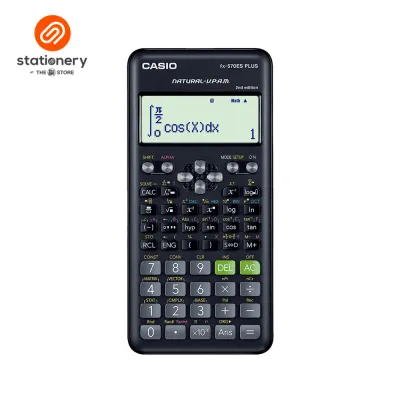

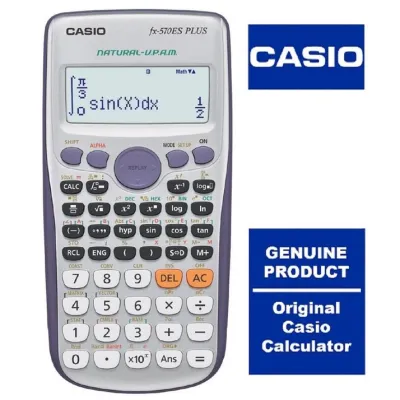
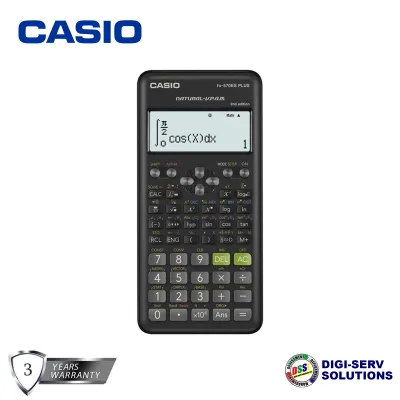
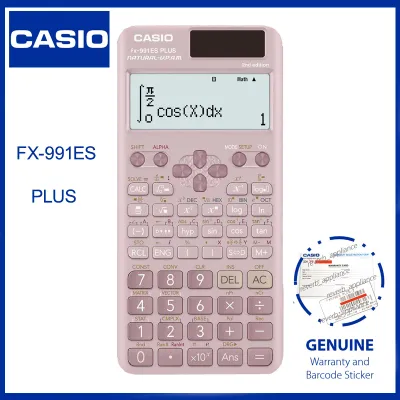
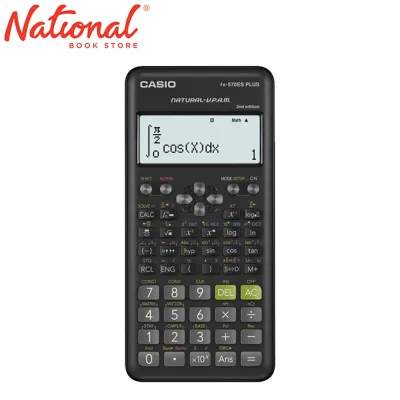
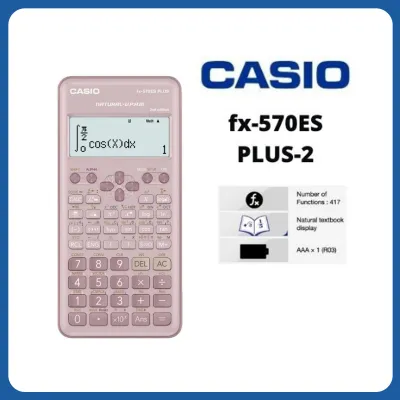
Prices are valid at publication and may change. Please refer to the product page for the latest price.
Another detail to verify on the packaging is the listed function count. While both models generally offer 417 built-in functions, Casio occasionally updates these models with “2nd Edition” releases or regional variations. Checking the exact number of functions printed on the front of the box ensures you are getting the specific version required for your coursework. These functions include advanced calculations such as matrix operations, vector calculations, equation solvers, and statistical analysis.
You should also pay attention to the physical dimensions and weight specifications listed on the back of the box. Because the fx-991ES Plus integrates a solar cell panel above the screen, its internal circuitry and front-panel layout differ slightly from the fx-570ES Plus. This solar integration can result in minor differences in weight, though both models remain highly portable and fit easily into a standard school backpack or pencil case. The fx-570ES Plus may also feature a slightly different battery compartment cover on the back to accommodate its primary battery cell.
Feature and Usability Comparison
Both the fx-570ES Plus and the fx-991ES Plus utilize Casio’s Natural Textbook Display technology, also known as Natural V.P.A.M. This feature is incredibly helpful for students because it displays mathematical expressions exactly as they appear in textbooks. Fractions, square roots, derivatives, integrals, and exponents are rendered clearly on the screen, reducing the likelihood of input errors during complex multi-step calculations. Under the bright, fluorescent lighting of typical classrooms or the natural light of study areas, both screens offer adjustable contrast to maintain readability.

The key layout on both models is designed for high-speed tactile input. The plastic keys are color-coded and logically grouped, with scientific functions positioned on the upper half and the standard numeric keypad on the lower half. The keys offer a distinct tactile click, which is essential when you are rushing to finish a timed exam. Over time, the printed labels on the keys are designed to resist wear, though keeping the calculator in its protective slide-on hard case when not in use will prevent the markings from fading due to friction and humidity.
Before making your purchase, it is absolutely vital to verify the exam compliance of these calculators with your specific academic institution or regulatory board. In the Philippines, the Professional Regulation Commission (PRC) maintains strict guidelines regarding which calculator models are permitted during national licensure exams, such as those for engineering, architecture, and accountancy. While both the fx-570ES Plus and fx-991ES Plus have historically been popular choices, the list of allowed models can change. Furthermore, some specific high school or college exams may have rules regarding solar-powered screens or specific model variations, so always consult your course syllabus or exam administrators first.
Price and Value Assessment
When evaluating the cost of these two calculators, you will want to check current prices at authorized local stationery shops and official online brand stores using ₱. Generally, the fx-991ES Plus commands a higher price tag than the fx-570ES Plus. This price premium is directly attributed to the inclusion of the solar panel and the dual-power management system. For many students, paying a bit more upfront for the fx-991ES Plus is a worthwhile investment because it minimizes the risk of the calculator dying in the middle of a crucial exam.
To determine the true value of each model, consider the long-term cost of ownership. The fx-570ES Plus relies entirely on its internal battery. Depending on how frequently you use the calculator, you will eventually need to purchase replacement batteries and open the casing to install them. In the humid tropical climate of the Philippines, batteries left inside unused devices for long periods can sometimes leak, potentially damaging the internal circuitry. The dual-power system of the fx-991ES Plus reduces battery drain by utilizing ambient room light, which can significantly extend the lifespan of the backup battery and save you money on replacements over your high school or college years.
Because both of these models are incredibly popular, the local market has unfortunately seen an influx of counterfeit Casio calculators. These fake devices often look nearly identical to the genuine models but suffer from poor build quality, inaccurate calculation results, and unreliable solar panels. To protect your investment, avoid purchasing calculators that are priced suspiciously low compared to the standard rates at major department stores. Always buy from official brand stores, authorized school supply chains, or highly rated online sellers with official authenticity guarantees.
Final Decision Framework
To finalize your decision, it helps to align your choice with your specific student profile and academic path.
Choose the Casio fx-991ES Plus if:
- You are enrolled in a demanding STEM strand, engineering program, or science major that requires hours of daily calculator use.
- You want the peace of mind that comes with a dual-power system during long, high-stakes exams where a battery failure is not an option.
- You have the budget to pay a slightly higher upfront price in exchange for long-term convenience and fewer battery replacements.
Choose the Casio fx-570ES Plus if:
- You are on a tight budget and need a highly capable scientific calculator at the lowest possible initial cost.
- Your coursework only requires occasional calculator use, such as in general mathematics or basic statistics classes.
- You do not mind keeping a spare battery in your bag and performing manual battery replacements when the screen contrast begins to fade.
Verify first if:
- Your school, university, or the Professional Regulation Commission (PRC) has recently updated its list of approved calculators for your specific field of study.
- The local retail store provides a warranty or an official receipt, which is crucial for verifying authenticity and securing a replacement if any manufacturing defects arise.
Frequently Asked Questions (FAQ)
How do I know if my Casio calculator is authentic?
Authenticating your Casio calculator is essential to ensure accurate calculations and reliable performance. First, look for the official hologram sticker on the packaging, which shifts colors when tilted under the light. Many genuine Casio calculators also feature a QR code on the box or on the screen when you access the menu, allowing you to verify the serial number online. Additionally, you can perform a hardware self-test by pressing the Shift, 7, and On keys simultaneously; genuine models will display a diagnostic screen that lets you test the LCD pixels and key responsiveness. Finally, check the overall build quality: counterfeit models often have mushy keys, uneven screen backlighting, and cheap-feeling plastic casings.
What type of battery does the single-power model use?
The Casio fx-570ES Plus typically runs on a single AAA battery, though you should always check the battery compartment cover on the back of your specific unit or consult the included user manual to confirm the exact battery size. When replacing the battery, ensure the calculator is turned off and use a small screwdriver to carefully remove the back cover screws. It is highly recommended to use high-quality alkaline batteries to prevent leakage, especially in warm and humid environments. Always dispose of the old battery safely at a local electronic waste collection point, and avoid mixing old and new batteries or using different brands simultaneously.
Community discussion
Share your experience or ask a question. Comments are reviewed before publication.