
Quick Answer: Which Casio Model Matches Your Needs?
Selecting a scientific calculator is a critical academic decision for students in the Philippines. The right tool simplifies complex problem-solving, while an incompatible model can lead to confusion, wasted money, or even disqualification from crucial school and national examinations.
Your ideal choice depends entirely on your current grade level, academic track, and the specific rules of your school or future professional board exams. For junior high school students tackling general mathematics and introductory science, the Casio fx-82 offers the perfect balance of simplicity and essential functions. If you are in senior high school and require advanced statistical analysis but do not need complex calculus tools, the Casio fx-350 provides a specialized feature set.
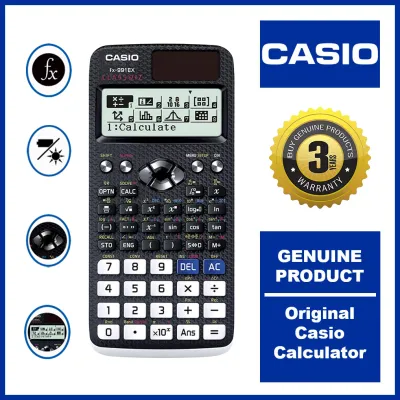
For senior high school STEM students, college engineering majors, and aspiring professionals, the Casio fx-991 is the ultimate powerhouse. It comes equipped with matrix, vector, and calculus capabilities. Before purchasing this advanced model, you must verify your specific school or board exam regulations regarding permitted calculator features, as certain advanced tools are restricted in specific testing environments.
Products mentioned in this guide


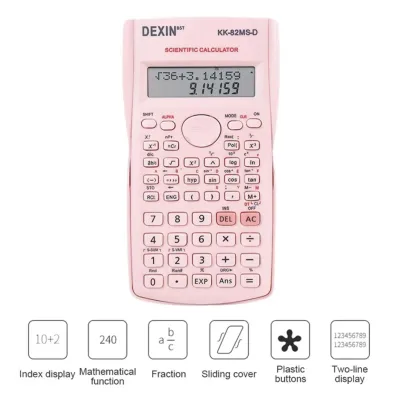
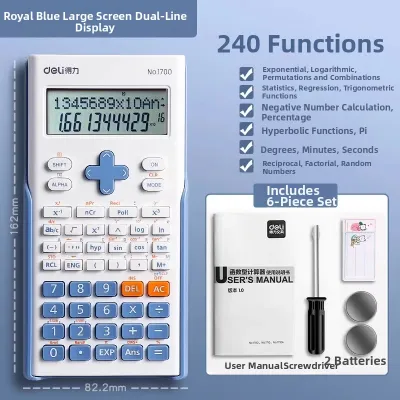
Prices are valid at publication and may change. Please refer to the product page for the latest price.
Feature Comparison: fx-82 vs fx-350 vs fx-991
To understand which calculator suits your daily academic tasks, it is helpful to look at how these three models compare across key functional dimensions. While they may look similar at a glance, their internal processing power, mathematical capabilities, and display technologies differ significantly.

The following comparison highlights the primary differences between the standard configurations of these three popular series:
| Feature | Casio fx-82 | Casio fx-350 | Casio fx-991 |
|---|---|---|---|
| Primary Audience | Junior High School & General Track | Senior High (Non-STEM) & Statistics | Senior High STEM & College Engineering |
| Typical Functions | ~250 to 300+ functions | ~250 to 300+ functions (adds advanced stats) | 500+ functions |
| Calculus Operations | No | No | Yes (Numerical Integration & Derivatives) |
| Matrix & Vector Math | No | No | Yes (Up to 4×4 matrices in newer models) |
| Equation Solver | No | No | Yes (Polynomials, Simultaneous Equations) |
| Power Source | AAA Battery or Button Cell | AAA Battery or Button Cell | Dual Power (Solar Panel + Backup Battery) |
| Display Type | Natural Textbook Display (V.P.A.M.) | Natural Textbook Display (V.P.A.M.) | High-Resolution LCD (ClassWiz/CW) |
The transition from the fx-82 to the fx-350 represents a focused upgrade in data analysis. While both models share a similar physical layout and basic mathematical foundations, the fx-350 introduces more robust statistical functions. This includes advanced probability distributions and regression calculations, which are highly beneficial for students conducting research or analyzing experimental data without needing the heavy mathematical machinery of calculus.
In contrast, the fx-991 series represents a massive technological leap. As Casio’s flagship non-programmable scientific calculator, it is designed to handle complex mathematical structures. It allows students to solve simultaneous linear equations, find the roots of high-degree polynomials, compute vector dot and cross products, and perform numerical integration and differentiation. These features are invaluable for saving time and reducing manual arithmetic errors during highly competitive exams.
When shopping in the Philippines, you must also consider the specific generation of the model you are buying. You will commonly find the older ES PLUS series, the high-resolution EX ClassWiz series, and the latest CW series. Even within the same model number (such as the fx-991), the button layout, menu navigation, and screen readability vary greatly across these generations. Always verify which version is recommended by your teachers, as classroom tutorials are often tailored to a specific interface.
Choosing by Grade Level and Academic Track
Matching your calculator to your specific academic requirements prevents you from overpaying for features you will never use, or conversely, struggling with a tool that lacks necessary capabilities. Let us look at how these models fit into the Philippine educational landscape, from junior high school to specialized college degrees.
Junior High School and General Senior High (fx-82 & fx-350)
For students in Grades 7 to 10, the Casio fx-82 is almost always the standard recommendation. The Department of Education (DepEd) curriculum at this level focuses heavily on building foundational skills in algebra, geometry, trigonometry, and basic statistics. The fx-82 handles these topics with ease, allowing students to input fractions, exponents, and trigonometric functions exactly as they appear in their textbooks.
Stepping up to the Casio fx-350 becomes highly beneficial during senior high school, particularly for students enrolled in the Accountancy, Business, and Management (ABM) or Humanities and Social Sciences (HUMSS) tracks. These tracks often require introductory statistics, data interpretation, and basic business mathematics. The fx-350 provides the necessary statistical distribution tools and regression models to complete research papers and data-driven projects efficiently, without the added expense of calculus features.
Choosing a simpler calculator like the fx-82 or fx-350 also offers a distinct psychological advantage for younger learners. The streamlined menus and straightforward button layouts minimize distractions. Students can focus entirely on learning the mathematical concepts rather than getting lost in complex sub-menus or accidentally changing the calculator’s mode to an advanced setting that yields unexpected results.
Senior High STEM and College Engineering (fx-991)
For students pursuing the Science, Technology, Engineering, and Mathematics (STEM) strand in senior high school, the Casio fx-991 is practically indispensable. The STEM curriculum introduces advanced subjects such as Pre-Calculus, Basic Calculus, General Physics, and General Chemistry. Solving complex quadratic equations, finding derivatives, or computing trigonometric identities manually can be incredibly time-consuming; the fx-991 serves as an essential tool to verify manual steps and ensure absolute accuracy.
As students transition into college programs such as Civil, Mechanical, Electrical, or Chemical Engineering, as well as Architecture and Actuarial Science, the demands on their calculator intensify. College-level coursework involves multi-step problems where a single arithmetic error in the first step can ruin an entire page of calculations. The fx-991’s ability to store values in variables, perform matrix operations, and handle complex numbers directly allows students to bypass tedious manual arithmetic and focus on the underlying engineering principles.
However, parents and students should avoid buying the fx-991 “just in case” if the student plans to pursue a non-STEM track in college. The advanced interface of the fx-991 features multiple shifts, modes, and scientific constants that can easily confuse a student who only needs basic algebraic functions. Under the high-pressure environment of an exam, an accidental keypress on an overly complex calculator can lead to errors that are difficult to troubleshoot.
Exam Compliance: Rules for Philippine Licensure and School Tests
One of the most critical risks when purchasing a scientific calculator in the Philippines is exam compliance. Bringing a non-compliant device to a major examination can result in the calculator being confiscated, leaving you to solve complex equations completely by hand.
For classroom exams in junior and senior high school, the Department of Education (DepEd) generally permits standard scientific calculators, while strictly banning graphing or programmable models. However, the rules become exceptionally strict when preparing for professional board exams administered by the Professional Regulation Commission (PRC). The PRC regulates exams for engineering, architecture, accountancy, and other specialized professions, and they maintain a highly specific list of allowed calculator models.
The general rule for PRC board exams is that calculators must be scientific, non-programmable, non-graphing, and completely devoid of any data transmission or paper-printing capabilities. Because the fx-82 and fx-350 lack advanced equation solvers, matrix memory, or formula storage, they are almost universally accepted across all local board exams and school entrance tests. They represent the safest, most risk-free options from a compliance standpoint.
The fx-991 series, due to its advanced capabilities, has historically faced closer scrutiny. The PRC occasionally updates its list of prohibited calculators, and certain variants of the fx-991 have been temporarily or permanently restricted in specific board exams to ensure a level playing field. For example, some proctors may closely inspect an fx-991 to ensure it does not contain stored formulas or custom programs.
Therefore, if you are an engineering or architecture student preparing for your board exams, you must perform an active verification check. Do not rely solely on the advice of peers or older product listings. Always visit the official PRC website to download the latest resolution on permitted calculators, or consult your university’s department head or review center instructors before bringing an fx-991 to a professional licensure exam.
Budget and Value: Should You Pay for the Upgrade?
When evaluating these three models, it is important to view the purchase as a long-term academic investment. While pricing can fluctuate based on local supply and demand, these calculators generally fall into distinct price brackets in the Philippine market.
The Casio fx-82 is the most budget-friendly option, typically costing well under ₱1,000. This makes it highly accessible for families looking for a reliable, durable calculator for junior high school. The Casio fx-350 sits comfortably in the middle, usually priced slightly higher than the fx-82, representing a modest upgrade for students who specifically need its statistical capabilities. The Casio fx-991 is the premium model of the group, commanding a higher price that often ranges from ₱1,500 to over ₱2,200 depending on the generation and specific retailer.
To make the most cost-effective decision, consider your academic timeline. If a student is currently in Grade 7 and expects to pursue engineering or science in the future, buying an fx-82 now and upgrading to an fx-991 in Grade 11 or college means spending money on two devices. In this scenario, purchasing an intermediate model or planning for a future upgrade is a natural path. Conversely, if a student has no plans to enter a STEM field, spending extra on the fx-991 is a waste of resources that could be better spent on other school supplies.
Another critical factor in the Philippine market is the prevalence of counterfeit calculators. Fake Casio units are widely distributed in local markets and unauthorized online listings. These counterfeit devices often look remarkably authentic, but they suffer from poor build quality, unresponsive keys, fragile solar panels, and—most dangerously—inaccurate calculation algorithms that can lead to incorrect answers. To protect your investment, always purchase your calculator from authorized office supply chains, reputable department stores, or official brand stores on major e-commerce platforms.
Final Decision Guide: Choose A, B, or C
To help you make an immediate, confident choice, use this simple decision matrix based on your current academic situation and future goals.
Choose the Casio fx-82 if:
- You are currently in junior high school (Grades 7 to 10) or taking general high school subjects.
- You want a straightforward, distraction-free interface with virtually zero learning curve.
- You are working within a strict budget and want the most cost-effective, highly durable option.
Choose the Casio fx-350 if:
- You are in senior high school, particularly in non-STEM tracks like ABM or HUMSS, where data analysis and statistics are required.
- You need advanced probability distributions and regression models for research papers.
- You do not require calculus, matrix, or vector operations and prefer to avoid the complexity of an engineering calculator.
Choose the Casio fx-991 if:
- You are a senior high school STEM student or a college student majoring in engineering, architecture, computer science, or mathematics.
- You regularly solve systems of linear equations, matrices, vectors, quadratic formulas, and calculus problems.
- You want a dual-power calculator with a high-resolution display that can handle complex multi-step calculations efficiently.
Verify first if:
- You are preparing for a professional licensure exam administered by the PRC. Always cross-reference your specific model and its exact generation (such as ES PLUS, EX, or CW) with the latest official PRC guidelines to ensure absolute compliance on exam day.
Frequently Asked Questions (FAQ)
What is the difference between the ES PLUS, EX, and CW versions?
The letters following the model numbers represent different product generations, each featuring distinct screen technologies and user interfaces. The ES PLUS (often sold as the Second Edition) is the classic generation, utilizing a standard dot-matrix display; it is highly durable and familiar to many teachers, but its menus require more button-pressing to navigate. The EX (ClassWiz) generation introduced a high-resolution LCD screen with a natural textbook display, allowing fractions and formulas to look exactly like printed textbook equations, alongside a much faster internal processor. The CW series is the newest generation, featuring a completely redesigned, minimalist interface with circular keys and simplified menus designed to make navigation more intuitive for modern students. Because classroom demonstrations and online tutorials are highly specific to the button layout of a particular generation, it is highly recommended to check which version your teacher or review center uses before buying.
Do these scientific calculators require battery replacements?
Yes, though the frequency of battery replacements depends heavily on the specific model and your usage environment. The fx-82 and fx-350 typically run solely on a single AAA battery or a small button cell battery, depending on the exact generation you purchase. These batteries generally last for several years under normal school use, but they will eventually run out and require physical replacement. The fx-991 features a dual-power system, combining a solar panel with a backup button cell battery. In well-lit classrooms or study areas, the calculator runs entirely on solar power, switching to the backup battery only in low-light conditions, which makes battery replacements extremely rare. To ensure longevity in the tropical Philippine climate, always store your calculator in a cool, dry place inside your bag, as prolonged exposure to high humidity or extreme heat can lead to battery leakage or permanent LCD screen damage.
Community discussion
Share your experience or ask a question. Comments are reviewed before publication.