
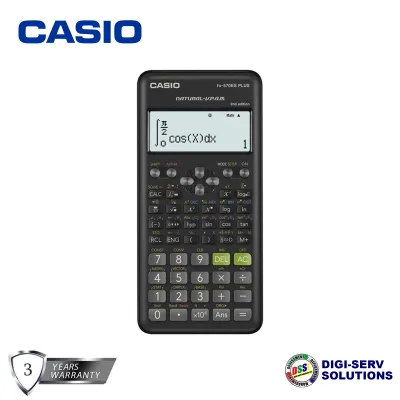
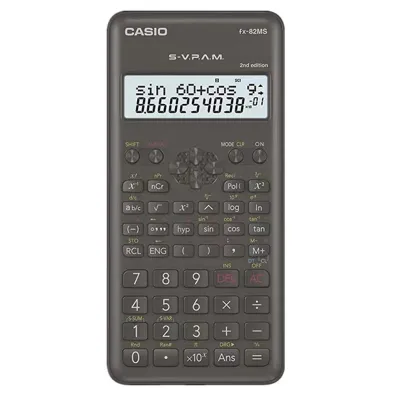
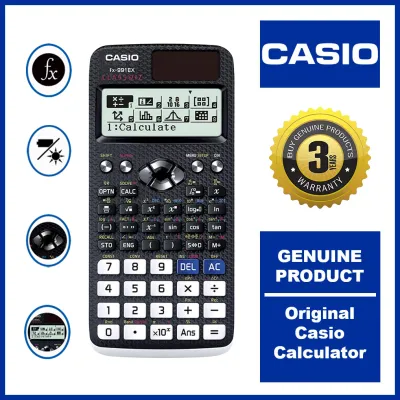
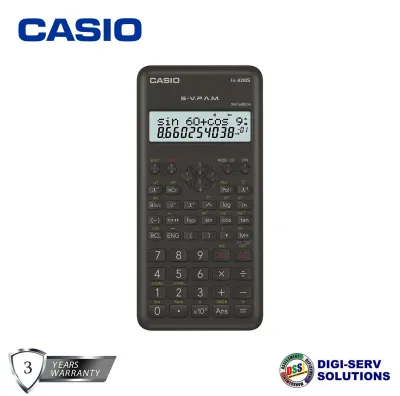
Choosing between the Casio fx-991 and fx-570 series for your college coursework comes down to one primary hardware difference: how they are powered. Within the same generation—such as the ClassWiz EX or the newer CW series—both calculators share the exact same internal processor, mathematical functions, and menu layouts. This means that whether you are solving complex integrals, computing matrices, or running statistical regressions, both models will deliver identical computing power and results. The decision ultimately hinges on whether you require the dual-power solar reliability of the fx-991 or prefer the cost savings of the battery-only fx-570, alongside verifying your specific department’s exam guidelines.
Core Similarities: What Both Calculators Share
Both the Casio fx-991 and fx-570 series are built on a shared technological foundation, meaning you do not sacrifice mathematical capability by choosing one over the other within the same product generation. They both feature Casio’s natural textbook display, which renders fractions, exponents, logarithms, and derivatives exactly as they appear in your college textbooks. This visual consistency is incredibly helpful during fast-paced lectures and high-pressure exams, reducing transcription errors when copying formulas from the board to your paper.
In terms of mathematical scope, both series handle standard scientific calculations, multi-variable statistics, matrix operations, vector calculations, and numerical calculus. They also share the same durable plastic keys and protective slide-on hard cases. This robust build quality is essential for surviving the daily college commute, resisting the high humidity of tropical study spaces, and enduring years of heavy use in lecture halls.
Products mentioned in this guide
Prices are valid at publication and may change. Please refer to the product page for the latest price.
Furthermore, the internal processing speeds and memory capacities are identical when comparing models from the same generation. For instance, an fx-991 ClassWiz and an fx-570 ClassWiz will solve a system of linear equations or calculate a definite integral in the exact same amount of time. The button layout, menu navigation, and shift-key shortcuts are also completely mirrored, meaning that learning to use one model makes you instantly proficient with the other.
Key Specification Differences to Verify Before Buying
The most significant physical distinction is the power supply system. The fx-991 models feature a dual-power system, combining a built-in solar panel with a backup button battery. This design ensures that the calculator remains functional even under dim classroom lighting, automatically switching power sources to prevent sudden shutdowns during an exam. In contrast, the fx-570 models rely entirely on a single battery—typically a standard AAA or a button cell, depending on the specific sub-model—without any solar assist.

Because of this power difference, the physical profiles of the calculators vary slightly. The solar-equipped fx-991 is often slightly thinner and lighter, whereas the battery-only fx-570 may have a slightly thicker battery compartment on the back. When shopping, you must also verify the exact generation of the model you are purchasing. For example, the older ClassWiz EX models feature a high-resolution spreadsheet-style grid menu, while the newer CW series introduces a redesigned, simplified key layout and an updated menu navigation system that changes how you access advanced functions.
Additionally, you should check the specific model suffix, such as “ES Plus” versus “EX” or “CW,” as these letters denote different hardware generations. Older generations may have lower screen resolutions and lack advanced features like 4×4 matrix calculations or spreadsheet functions, which are standard on newer generations. Always verify these specifications on the manufacturer’s official datasheet or the product packaging before making your purchase.
Matching the Calculator to Your College Major
Your choice of major should heavily influence which model you bring to campus. For engineering, physics, and chemistry students, the dual-power reliability of the fx-991 is highly advantageous. Long laboratory sessions and multi-hour technical exams demand a device that will not fail due to a dying battery. Engineering coursework also frequently requires advanced matrix calculations and complex number manipulations, making the seamless, uninterrupted operation of a solar-assisted device a worthy investment.
For business, finance, and statistics majors, both models offer identical statistical distribution tables, regression analysis tools, and list-based data editors. If your classes are primarily held in well-lit computer labs or modern lecture halls, the battery-only fx-570 will perform these tasks just as quickly as its solar counterpart. The choice here depends entirely on your personal preference for battery maintenance versus the convenience of solar power.
If you are taking general education math courses or basic science electives, the advanced capabilities of both models may exceed your daily needs. In this scenario, choosing the more budget-friendly fx-570 allows you to save money while still retaining a highly capable scientific calculator that can handle any unexpected advanced math requirements later in your college journey.
It is also worth considering your study habits and environment. If you prefer studying late at night in dimly lit dorm rooms or outdoor study areas where ambient light is low, the battery-powered fx-570 provides consistent screen contrast without relying on overhead light. Conversely, if you spend most of your time in bright classrooms or library study halls, the fx-991 will run almost exclusively on solar energy, preserving its backup battery for years.
Price, Value, and Where to Buy Safely
When evaluating the price difference in Philippine Pesos (₱), the fx-991 generally commands a premium over the fx-570 due to its solar integration. While this price gap is typically only a few hundred pesos, it represents a meaningful choice for budget-conscious college students. You must decide if the convenience of never worrying about battery replacements during a mid-term exam justifies the extra upfront cost.
To ensure you are purchasing an authentic Casio calculator, always buy from authorized office supply stores, reputable department stores, or official brand stores on major online marketplaces. Counterfeit calculators are common and often suffer from poor screen contrast, inaccurate calculations, and fragile buttons. Look for official security holograms on the packaging and verify that the seller offers a valid manufacturer’s warranty.
Before finalizing your purchase, check the return policy of the retailer. A reliable seller should provide a clear window for returns or exchanges in case of manufacturing defects. Additionally, inspect the packaging to confirm that the slide-on hard cover and the English user manual are included, as these accessories are vital for protecting your investment and learning the calculator’s advanced shortcuts.
Final Decision Framework: Which Model Fits Your Needs?
To make your final decision, start by checking the official calculator guidelines of your university department or the relevant professional regulatory body. In the Philippines, licensing boards for engineering, accountancy, and other professions maintain strict whitelists of permitted calculator models for board exams. Ensuring your calculator is compliant from day one of college will save you from having to learn a completely new device layout right before graduation.
If your exams permit both models and your budget allows for a slightly higher upfront cost, choose the fx-991 series. The dual-power solar system provides invaluable peace of mind during long study sessions and high-stakes exams where a battery failure is not an option.
If you are looking to maximize your savings and do not mind carrying a spare battery in your backpack, the fx-570 series is an excellent, highly capable alternative. It delivers the exact same mathematical performance, processing speed, and functional depth as the fx-991, ensuring you are fully equipped for any academic challenge your college courses present.
Frequently Asked Questions (FAQ)
Are Casio fx-991 and fx-570 allowed in professional board exams?
Calculator compliance varies strictly by the specific professional regulatory commission and the type of licensure exam you are taking. Some boards explicitly ban programmable or high-tier scientific calculators, while others maintain a dynamic list of approved models. Always consult the latest official guidelines published by your profession’s regulatory board in the Philippines before bringing either model to an exam center.
What is the difference between the EX and CW series?
The EX (ClassWiz) and CW series represent different hardware generations of these calculators. The older EX series uses a traditional key layout with printed secondary functions above the keys, while the newer CW series features a modernized, minimalist button design with a simplified menu system. While both generations perform the same core mathematical calculations, the CW series offers a different user interface and navigation flow, so it is best to compare models within the same generation.

Community discussion
Share your experience or ask a question. Comments are reviewed before publication.