
Selecting the right scientific calculator is a critical decision for students and professionals alike. In the Philippines, where academic curricula and board exam guidelines strictly regulate the tools you can bring into the testing room, choosing between the CASIO fx-82, fx-570, and fx-991 series requires careful consideration. Each of these series serves a distinct educational tier, offering a specific balance of mathematical functions, power options, and interface designs.
Finding a scientific calculator original is equally important to ensure accuracy during high-stakes exams and daily classroom activities. Counterfeit devices often suffer from poor build quality, incorrect mathematical outputs, and sudden battery failures. By understanding the functional boundaries of each series, you can make an informed investment that aligns with your academic journey and complies with local exam regulations.
Core Feature Boundaries: fx-82 vs fx-570 vs fx-991
To choose the correct tool, you must first understand what each calculator series is designed to do. While all three share a foundation of basic mathematical operations, their capabilities diverge significantly when handling advanced algebraic, statistical, and calculus problems.
Products mentioned in this guide
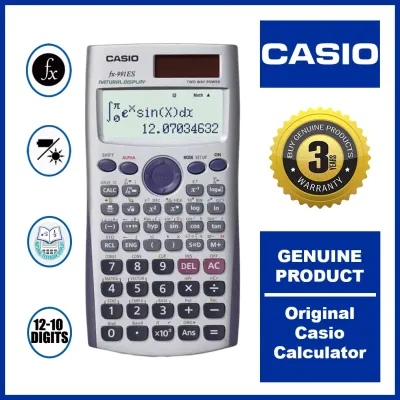
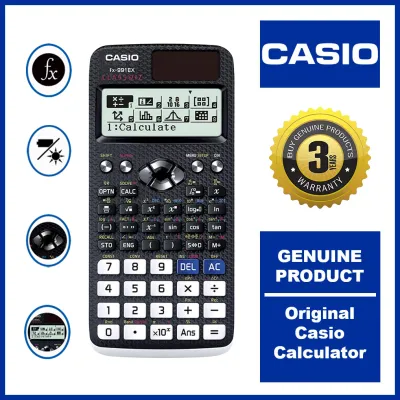
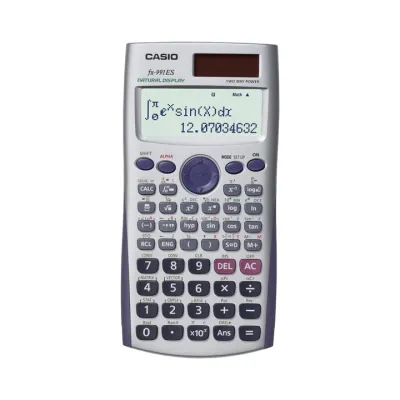
Prices are valid at publication and may change. Please refer to the product page for the latest price.
The fx-82 series is the entry-level standard for secondary education. It is designed to handle fundamental scientific calculations, including basic trigonometry, logarithms, exponents, and single-variable statistics. It lacks the advanced processing power and internal programming required for complex matrix algebra or calculus, making it a highly reliable, distraction-free tool for younger students.
The fx-570 series serves as the intermediate workhorse. It introduces advanced mathematical capabilities such as equation solving, matrix calculations, vector operations, and numerical integration or differentiation. This series is engineered for students transitioning into advanced algebra, physics, and introductory engineering courses where manual calculation of these complex systems becomes too time-consuming.
The fx-991 series represents the premium tier of CASIO’s non-programmable scientific calculators. It typically includes all the features of the fx-570 series but adds dual power sources (solar and battery) and, in newer generations, advanced features like spreadsheet functions, probability distribution calculations, and high-resolution displays. These additions make it highly suitable for university-level engineering, advanced statistics, and professional technical work.
Below is a comparison framework to help you visualize these functional boundaries. Because features can vary based on the exact model suffix and generation, always verify the specific capabilities in the official product manual.
| Feature Category | fx-82 Series | fx-570 Series | fx-991 Series |
|---|---|---|---|
| Basic Math & Trig | Supported | Supported | Supported |
| Equation Solving | Not supported | Supported (Check manual) | Supported (Check manual) |
| Matrix & Vector | Not supported | Supported (Check manual) | Supported (Check manual) |
| Calculus Operations | Not supported | Supported (Check manual) | Supported (Check manual) |
| Spreadsheet Functions | Not supported | Not supported | Supported on select models |
| Primary Power Source | Battery only | Battery only | Solar & Battery (Check manual) |
Matching Calculator Features to Your Academic Level
Selecting a calculator is not just about buying the model with the most features; it is about matching the device to your current educational stage and the specific rules of your school or testing authority.

For junior high school and basic senior high school tracks, the fx-82 series is generally the most appropriate choice. Many schools in the Philippines mandate this series for lower-grade mathematics to ensure students master foundational algebraic and trigonometric concepts manually. Using a calculator with built-in equation solvers or calculus functions during these formative years can hinder learning and may even be classified as an unauthorized aid during exams.
As students progress into advanced senior high school tracks—such as Science, Technology, Engineering, and Mathematics (STEM)—and early college courses, the fx-570 series becomes highly beneficial. The introduction of calculus and complex numbers in these curricula requires a tool that can quickly verify integration, differentiation, and matrix operations. The fx-570 bridges this gap perfectly, offering advanced computational power without the higher cost associated with premium dual-power models.
For university engineering, advanced statistics, and professional board exam preparation, the fx-991 series is often the standard recommendation. The ability to perform matrix calculations up to 4×4, solve complex quadratic equations, and utilize spreadsheet functions directly on the device saves invaluable time during timed exams. Furthermore, the dual-power system provides peace of mind during long exam sessions under bright classroom lights.
Before making any purchase, it is crucial to verify the permitted calculator list provided by your specific school department or national testing boards, such as the Professional Regulation Commission (PRC) for board exams. Some exams strictly prohibit specific series or require models with visible, non-programmable labels. Checking these guidelines beforehand prevents the costly mistake of purchasing a device you cannot use in the exam room.
Key Specifications to Verify Before Purchase
Once you have identified the series that matches your academic needs, you must evaluate the specific model variants available in the market. CASIO frequently updates these series with different suffixes and physical designs, which can affect usability.
First, examine the power source configuration. The fx-991 series is famous for its dual-power system, featuring a prominent solar panel on the upper right corner of the faceplate alongside an internal battery. The fx-82 and fx-570 series typically rely solely on battery power. When inspecting a device, check the physical solar panel; on original models, this panel is integrated seamlessly into the casing and reacts dynamically to changes in ambient light.
Second, evaluate the screen resolution and display technology. Modern generations of these calculators feature high-resolution displays that support Natural Textbook Display, which renders fractions, square roots, and formulas exactly as they appear in textbooks. Older generations or lower-tier variants may use lower-resolution segment displays that represent formulas in a single line, which can be harder to read and interpret during fast-paced exams.
Third, inspect the physical build quality and ergonomics. The buttons should offer clear tactile feedback without sticking, and the printed labels on the keys must be sharp and perfectly aligned. Additionally, check the fit of the protective slide-on hard case. An original case should slide on and off smoothly, locking securely into place to protect the screen and keyboard from the high humidity and daily wear typical of tropical school environments.
Remember that exact specifications, button layouts, and available functions can vary significantly depending on the model suffix (such as ES Plus, EX, or CW) and the target region. Always cross-reference the model number with the official CASIO manual or authorized distributor documentation in the Philippines to ensure the variant you are buying contains the exact features you expect.
How to Ensure You Are Buying an Original Scientific Calculator
Due to the high demand for these essential academic tools, counterfeit scientific calculators are common in online marketplaces and unverified physical shops. Purchasing a counterfeit not only risks sudden failure during an exam but also violates school policies. Ensuring you obtain a scientific calculator original requires a systematic inspection.
Start by examining the packaging and security features. Original CASIO calculators sold in the Philippines typically come in high-quality cardboard packaging with crisp, clear printing. Look for official holographic security stickers on the box. These holograms should shift colors and display distinct security patterns when tilted under light. The included user manual should be printed on high-quality paper with clear, legible text, rather than poorly photocopied sheets.
Next, perform a physical inspection of the device itself. Counterfeit calculators often feel unusually light, use cheap-feeling plastic, and have keys with uneven or blurry printing. The screen on a genuine calculator will have high contrast and wide viewing angles, whereas fake screens often appear washed out, suffer from ghosting, or show faint numbers even when the device is turned off.
You can also perform a standard diagnostic test using the calculator’s built-in self-test mode. While the exact key combination can vary by model generation, many models enter this diagnostic state by holding down specific keys (such as Shift, 7, and On simultaneously) while turning the device on. This mode allows you to test the LCD screen pixels, button responsiveness, and internal ROM version. Consult the official manual for your specific model to verify the correct diagnostic procedure.
To minimize risk, always purchase your calculator from authorized office supply dealers, official brand stores, or reputable physical stationery shops. Avoid buying from unverified third-party sellers on e-commerce platforms who offer prices that seem too good to be true, as these are often indicators of counterfeit goods.
Final Decision Framework
To finalize your decision, apply these straightforward, condition-based rules to match your academic requirements with the correct calculator series:
- Choose the fx-82 series if you are in junior high school, require only basic algebraic and trigonometric functions, or must comply with strict exam rules that prohibit advanced equation solvers.
- Choose the fx-570 series if you are a senior high school STEM student or early college student who needs calculus, matrix operations, and equation solving, but does not require solar power or advanced spreadsheet functions.
- Choose the fx-991 series if you are pursuing a university degree in engineering, advanced mathematics, or statistics, require dual-power reliability, and need advanced features like spreadsheets and probability distributions.
Regardless of the series you select, always verify the exact model suffix, inspect the physical build quality to ensure authenticity, and confirm compliance with your specific exam board’s rules before completing your purchase.
Frequently Asked Questions (FAQ)
Can I use a higher-tier calculator like the fx-991 for basic math exams?
Whether you can use a higher-tier calculator like the fx-991 for basic math exams depends entirely on the rules set by your school or testing authority. Many exam boards strictly prohibit calculators that feature advanced equation solving, matrix operations, or programmable capabilities to ensure a level playing field and test core mathematical understanding. Always consult your teacher, professor, or the official exam guidelines before bringing an advanced calculator into an exam room.
What is the difference between the EX, CW, and ES Plus suffixes?
The suffixes on CASIO calculators indicate different product generations, user interface designs, and display technologies within the same functional series. For example, the ES Plus series features a traditional menu system, the EX ClassWiz series introduces higher-resolution screens and spreadsheet functions, and the newer CW series features a redesigned, simplified button layout and menu-driven navigation. To understand the precise feature set and interface of a specific suffix, check the official CASIO website or authorized dealer specifications for the models available in your local market.
Community discussion
Share your experience or ask a question. Comments are reviewed before publication.