
The Short Answer: Which CASIO Calculator Should You Choose?
When preparing for demanding high school math classes, university engineering courses, or professional board exams in the Philippines, choosing the right tool is critical. The CASIO fx-991ES PLUS and the CASIO fx-570ES PLUS are two of the most popular scientific calculators on the market. While they look almost identical and share the same internal mathematical engine, their primary difference lies in how they are powered.
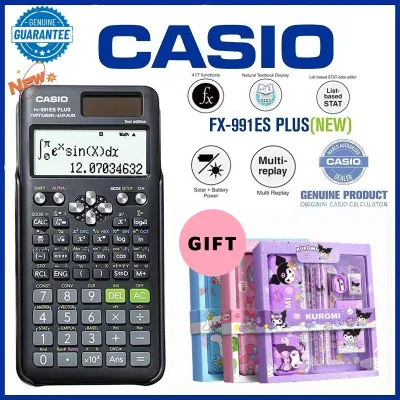
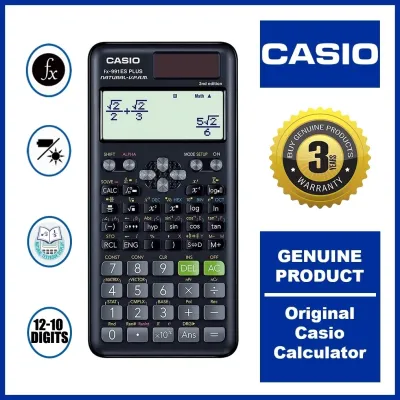
If you want a reliable, long-term investment and have a slightly higher budget, the CASIO fx-991ES PLUS is the recommended choice. It features a dual-power system that combines solar energy with a backup battery, ensuring the device never dies during a crucial exam.
Conversely, if you are on a tighter budget and do not mind replacing the battery every few years, the CASIO fx-570ES PLUS offers the exact same mathematical capabilities at a lower price point. It relies solely on a single AAA or button cell battery, depending on the specific hardware revision.
Products mentioned in this guide
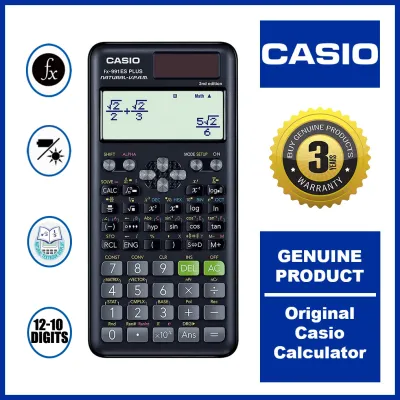
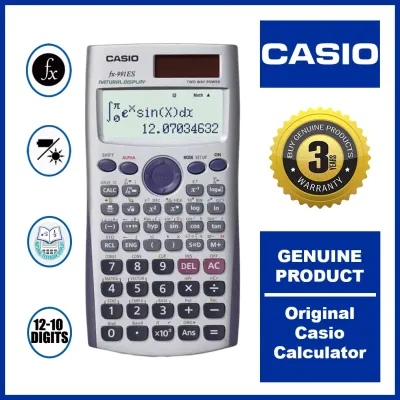
Prices are valid at publication and may change. Please refer to the product page for the latest price.
Before making your final purchase, always check the specific calculator guidelines issued by your school or professional licensure board. Some academic institutions and national exam proctors restrict specific models based on their formula-saving capabilities, making verification your very first step.
Power Source and Portability: Solar vs. Battery
The defining distinction between these two models is the power delivery system. The CASIO fx-991ES PLUS utilizes CASIO’s signature Two-Way Power system. This setup integrates a small solar panel on the upper right corner of the faceplate alongside a standard button cell battery. Under sufficient lighting conditions, the calculator draws its power directly from the ambient light, preserving the internal battery for low-light environments.

There is a common misconception online regarding these devices. Some product listings use confusing search terms such as “portable rechargeable calculator” or “generation solar rechargeable.” It is important to clarify that neither the fx-991ES PLUS nor the fx-570ES PLUS features a USB port, a lithium-ion battery, or any form of rechargeable power. They do not plug into a wall outlet or a power bank. Instead, they rely on standard, replaceable primary batteries that must be swapped out manually when they drain.
For the battery-only CASIO fx-570ES PLUS, the lack of a solar panel means the device draws power continuously from its internal battery whenever it is turned on. While a quality battery can last for several thousand hours of continuous use, a sudden battery failure during a mid-term exam or a licensure test can be highly disruptive. With the fx-570ES PLUS, you must remain mindful of the screen contrast; if the numbers begin to fade, it is an immediate sign that the battery needs replacement.
In the tropical climate of the Philippines, high humidity can occasionally cause battery contacts to oxidize over time. If you store your calculator in a damp backpack or a desk drawer during the rainy season, a battery-only model is slightly more vulnerable to complete power loss if the single battery leaks or drains. The fx-991ES PLUS offers an extra layer of security in these conditions, as the solar panel can keep the device running in bright classrooms even if the backup battery is completely dead.
Core Features, Display, and Academic Compatibility
Beyond the power source, these two calculators are identical in their mathematical capabilities. Both models offer over 400 built-in functions, covering basic arithmetic, algebra, trigonometry, calculus, statistics, and matrix calculations. Whether you are solving complex quadratic equations or performing integration for an advanced physics class, both units will deliver the exact same computational performance.
Both calculators utilize CASIO’s Natural V.P.A.M. (Visually Perfect Algebraic Method) display. This technology allows you to input and view fractions, exponents, square roots, calculus limits, and other mathematical formulas exactly as they are printed in standard textbooks. This visual layout reduces input errors and makes it much easier to verify your steps during multi-stage calculations.
The physical build, slide-on hard case, and button layout are also virtually identical. Both models feature durable plastic keys with clear, color-coded labeling for secondary functions accessed via the Shift and Alpha keys. The slide-on hard cover protects the screen and keys from scratches and impacts when tossed into a crowded school bag.
Academic compatibility is another area where these two models stand on equal footing, but local regulations require careful attention. In the Philippines, professional licensure boards maintain strict lists of allowed calculators for civil engineering, electrical engineering, and other board exams. Because both the fx-991ES PLUS and the fx-570ES PLUS are non-programmable scientific calculators, they are historically permitted in many testing centers. However, because rules can change annually, you must verify the latest official list of approved calculators before bringing either model to a national exam.
Price, Value, and Avoiding Counterfeits in the Philippines
Because the CASIO fx-991ES PLUS includes a solar panel and a dual-power circuit, it generally commands a higher price than the fx-570ES PLUS. When shopping in local stationery stores, university bookstores, or online marketplaces in the Philippines, you will typically notice a price difference of a few hundred pesos. For many students, paying the premium for the solar-powered model is a worthwhile investment for the peace of mind it provides during major exams.
Due to the high demand for these calculators, the local market has seen an influx of counterfeit units. These fake calculators often mimic the packaging and physical appearance of genuine CASIO models but fail quickly, display incorrect mathematical results, or lack proper solar functionality.
To ensure you are purchasing an authentic unit, use this quick verification checklist:
- Check the Hologram Sticker: Genuine CASIO calculators sold in the Philippines feature a distinct holographic security sticker on the packaging. The hologram should shift colors and display the official logo clearly when tilted under light.
- Inspect the Build Quality: Counterfeit models often have mushy keys, misaligned text, and a lightweight, flimsy plastic shell. Genuine units have crisp, tactile keys and a solid, well-balanced weight.
- Verify the Screen Contrast: Fake calculators often have poor viewing angles, with numbers that fade or disappear when viewed from the side. Genuine Natural V.P.A.M. screens remain legible from multiple angles.
- Run the Diagnostic Test: You can access the built-in diagnostic menu on a genuine unit by pressing the Shift, 7, and ON keys simultaneously. This test allows you to verify the screen pixels and the internal ROM version, a feature that counterfeit models rarely replicate successfully.
- Test the Solar Panel: On the fx-991ES PLUS, cover the solar panel completely with your thumb while in a moderately lit room. If the screen contrast drops significantly or the calculator turns off immediately, the solar panel may be a fake plastic insert, indicating a counterfeit device.
Final Decision Framework
To make your final decision, evaluate your specific academic environment, budget, and personal preferences against these scenario-based guidelines.
Choose the CASIO fx-991ES PLUS if:
- You want the peace of mind that comes with a dual-power system during long, high-stakes exams.
- You frequently study in well-lit classrooms, libraries, or study halls where solar power can actively preserve battery life.
- You have the budget to pay a slight premium for a long-term tool that can last throughout your entire high school and college career.
Choose the CASIO fx-570ES PLUS if:
- You are on a stricter budget and want the exact same mathematical features at the lowest possible price.
- You do not mind carrying a spare battery or replacing the internal cell every few years.
- You primarily study in low-light environments where a solar panel would rarely be active anyway.
Regardless of which model you choose, always prioritize purchasing from authorized stationery stores, official university distributors, or highly rated, verified sellers on local ecommerce platforms to guarantee you receive a genuine, reliable instrument.
Community discussion
Share your experience or ask a question. Comments are reviewed before publication.