
Choosing the right scientific calculator is one of the most critical decisions for students and professionals, especially those pursuing engineering, sciences, mathematics, or accounting. In the classroom and the examination hall, your calculator is more than just a tool; it is an extension of your analytical mind. Among the most popular options on the market are the Casio ClassWiz models, specifically the Casio fx-991EX and the Casio fx-570EX. Both models are legendary for their speed, high-resolution displays, and extensive mathematical capabilities, but they cater to slightly different user needs and environments.
At their core, the Casio fx-991EX and the Casio fx-570EX are built on the exact same internal architecture. They share the same high-speed processor, the same high-resolution display, and the exact same library of 552 mathematical functions. The primary, defining difference between these two models lies entirely in their hardware power delivery: the fx-991EX features a Two-Way Power system utilizing both a solar panel and a primary button cell battery, whereas the fx-570EX relies solely on a single standard AAA battery.
For most buyers, the decision comes down to exam reliability, local retail availability, and battery maintenance preferences. If you are preparing for long, high-stakes board exams where a sudden power failure could be catastrophic, the solar-supplemented fx-991EX offers unmatched peace of mind. Conversely, if you prefer the convenience of using standard AAA batteries that can be purchased at any local convenience store or neighborhood sari-sari store, or if you find the fx-570EX at a significant discount, it serves as an equally powerful computational companion.
Products mentioned in this guide
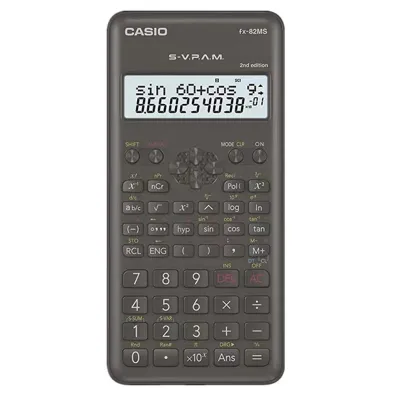
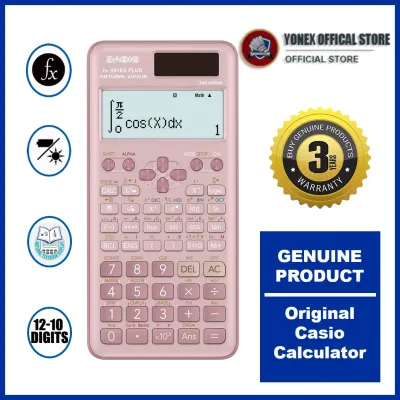
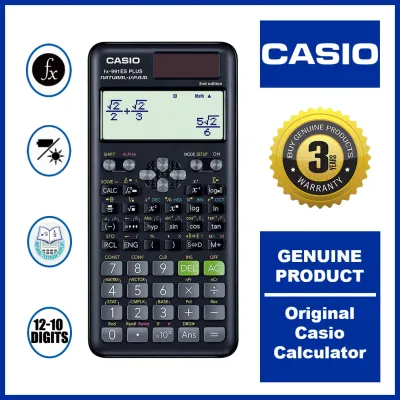
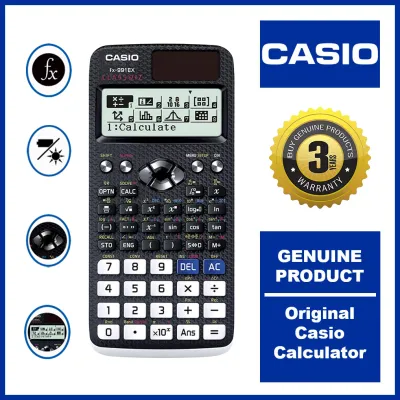
Prices are valid at publication and may change. Please refer to the product page for the latest price.
Quick Answer: Which Casio Calculator Should You Buy?
If you need an immediate recommendation, the Casio fx-991EX is the superior choice for the vast majority of students and board exam reviewees. The inclusion of the solar panel strip on the top right of the calculator face ensures that the device draws power from ambient light whenever possible, preserving the internal button cell battery for years. This dual-power design is highly valued in the Philippines, where long licensing exams administered by the Professional Regulation Commission (PRC) require hours of continuous, high-intensity calculations.
However, the Casio fx-570EX remains an outstanding alternative if the fx-991EX is out of stock or priced significantly higher. Because the internal computing engine, menu layouts, and mathematical formulas are identical, you will not lose any analytical capability by choosing the fx-570EX. You simply must be more diligent about monitoring your battery life, as the single AAA battery will require replacement sooner than the dual-power setup of the fx-991EX. If you already own a stock of rechargeable or high-quality alkaline AAA batteries, the fx-570EX offers the exact same mathematical performance at what is often a more accessible price point.
Shared Capabilities: What Both ClassWiz Models Offer
To appreciate these calculators, it helps to understand the massive leap forward the ClassWiz series represents compared to older scientific models. Both the fx-991EX and the fx-570EX feature a high-resolution LCD screen boasting 192×63 dots. This is approximately four times the resolution of previous models, such as the older ES Plus series. This high pixel density allows for the integration of Natural V.P.A.M. (Visually Perfect Algebraic Method), which displays fractions, exponents, logarithms, derivatives, and integrals exactly as they appear in standard academic textbooks. This minimizes input errors and makes complex multi-step equations much easier to read and verify.

Beyond basic arithmetic, both models pack an incredibly robust suite of 552 functions designed to carry students from senior high school through advanced university coursework and professional practice. For engineering students, the advanced matrix calculator supports up to 4×4 matrices, which is highly beneficial for solving simultaneous linear equations in structural analysis or electrical circuit design. Vector calculations up to three dimensions, complex number calculations, and numerical integration and differentiation are all handled swiftly by the high-speed internal processor.
Statistical analysis is another area where both calculators shine. They feature dedicated modes for probability distributions, including normal, binomial, and Poisson distributions, eliminating the need for students to carry printed statistical tables into exams. Additionally, both calculators include a built-in spreadsheet function. This basic spreadsheet allows users to input up to 5 columns and 45 rows of data, perform basic calculations, and utilize formulas directly on the calculator screen—a feature rarely found in non-programmable scientific calculators.
Another innovative feature shared by both models is the QR Code generator. By pressing a simple key combination, the calculator converts a displayed table, statistical summary, or mathematical result into a high-density QR code on the LCD screen. By scanning this QR code with a smartphone or tablet, you can visualize your data as graphs, charts, or geometric representations on a web browser. This bridge between offline calculation and online visualization is an exceptional study aid for algebra, calculus, and statistics classes.
Finally, because they share the same physical button layout and menu navigation, any tutorial, textbook guide, or online video explaining how to perform a calculation on the fx-991EX applies perfectly to the fx-570EX. You can sit next to a classmate using the other model and follow along step-by-step without translating menus or looking for different buttons. This standardization makes group study sessions and classroom instruction seamless.
The Core Difference: Power Source and Daily Reliability
While the internal specifications are identical, the way these two calculators manage power has a significant impact on their physical design, weight, and long-term reliability. The Casio fx-991EX utilizes Casio’s trusted Two-Way Power system. This system pairs a small solar panel strip, located on the upper right side of the calculator’s face, with a single LR44 button cell battery. In well-lit classrooms, study areas, or outdoor environments, the calculator runs entirely on solar energy. When the light levels drop, the device automatically and seamlessly transitions to drawing power from the LR44 battery. This dual-source configuration ensures that the primary battery is rarely drained, often lasting several years before requiring a replacement.
In contrast, the Casio fx-570EX relies solely on a single AAA (R03) battery. Because it lacks a solar panel, the calculator must draw power from this battery for every single operation, calculation, and screen refresh. While AAA batteries have a much higher capacity than tiny LR44 button cells, the constant power draw means you will need to replace the battery more frequently. Furthermore, the physical size of a AAA battery requires a larger battery compartment on the back of the calculator, making the fx-570EX slightly thicker and heavier at the base compared to the slim, uniform profile of the fx-991EX.
This physical difference also affects how you prepare for high-stakes exams. With the fx-991EX, the solar panel acts as an emergency backup. Even if the internal button cell battery dies completely, you can still operate the calculator under adequate lighting, such as the bright fluorescent lights of a university lecture hall or a professional testing center. With the fx-570EX, if the single AAA battery fails during an exam, the calculator will shut down instantly. To mitigate this risk, users of the fx-570EX must be proactive about carrying spare AAA batteries and a small screwdriver to open the battery compartment door in case of an emergency.
Additionally, the tropical climate of the Philippines introduces environmental factors to consider. High humidity can accelerate battery corrosion and leakage, particularly in devices that use standard alkaline or zinc-carbon AAA batteries. If a AAA battery leaks inside the fx-570EX, the acidic residue can ruin the battery contacts and permanently damage the calculator’s internal circuitry. The button cell battery in the fx-991EX is much more securely sealed, reducing the risk of devastating battery leaks over years of storage in humid conditions.
To quickly identify which model you are looking at in a retail store or online marketplace, look at the top right corner of the device face. The fx-991EX will clearly display the dark, reflective glass strip of the solar cell. The fx-570EX will have a solid, textured plastic faceplate in that exact spot, with no glass window. Additionally, the model numbers are printed clearly on the front faceplate and engraved on the plastic casing on the back of the device.
Side-by-Side Specification Comparison
To help you visualize the exact technical differences and similarities between these two ClassWiz models, the table below outlines their physical and functional specifications side-by-side.
| Feature | Casio fx-991EX ClassWiz | Casio fx-570EX ClassWiz |
|---|---|---|
| Total Functions | 552 | 552 |
| Display Resolution | High-Resolution LCD (192 x 63 dots) | High-Resolution LCD (192 x 63 dots) |
| Input Logic | Natural V.P.A.M. | Natural V.P.A.M. |
| Power Source | Two-Way Power (Solar + LR44 Button Cell) | Single AAA Battery (R03) |
| Approximate Weight | ~90 grams (including battery) | ~100 grams (including battery) |
| Thickness | ~11.1 mm (uniform) | ~13.8 mm (thicker at the battery base) |
| QR Code Function | Yes | Yes |
| Spreadsheet Mode | Yes (5 columns x 45 rows) | Yes (5 columns x 45 rows) |
| Slide-on Hard Case | Included | Included |
When shopping for either of these calculators, especially on online marketplaces or third-party retail platforms, buyers must exercise extreme caution. Because the ClassWiz series is highly sought after by students, counterfeit units are incredibly common. These fake calculators often mimic the physical appearance of the fx-991EX or fx-570EX but utilize inferior, slow processors, low-contrast screens, and lack advanced mathematical functions or the spreadsheet mode entirely.
To verify that your calculator is a genuine Casio product, perform the following quality checks:
- Check the Holographic Sticker: Genuine Casio retail packaging in the Philippines features an official holographic security sticker. When tilted under light, the hologram should shift colors and reveal detailed security patterns, including the Casio logo.
- Run the Diagnostic Test: Turn on the calculator and press the Shift, 7, and On keys simultaneously. This will initiate the diagnostic menu. Pressing 9 will allow you to cycle through screen pixel tests and display the official firmware version. Fake models usually cannot enter this diagnostic mode or will display non-standard test patterns.
- Generate a QR Code: Input a simple calculation or data table, then press Shift and Option (QR) to generate a QR code. Scan the code with your smartphone. A genuine Casio calculator will generate a clean, high-density code that redirects you to a verified, official Casio website showing the graphical representation of your data. Fake models often fail to display a QR code, show a corrupted image, or link to an unverified third-party domain.
- Inspect the Build Quality: Genuine Casio calculators feature crisp, perfectly aligned key labels, responsive buttons with a distinct tactile click, and a matte, high-quality textured finish on both the calculator body and the slide-on protective hard case.
Decision Framework: Matching the Calculator to Your Coursework
To make your final purchasing decision simple and stress-free, ask yourself a few practical questions about your academic path, study habits, and where you plan to use the device.
Choose the Casio fx-991EX if:
- You are preparing for board exams: If you are studying for licensure exams in engineering, architecture, or other professional fields, the dual-power system of the fx-991EX is an invaluable safety net. You will never have to worry about your calculator dying in the middle of a critical, multi-hour exam session.
- You prefer a slim, lightweight design: The fx-991EX is noticeably thinner and lighter because it does not require a bulky AAA battery compartment. It slides easily into tight pockets, pencil cases, or binder organizers without adding unnecessary bulk.
- You want low-maintenance power: If you do not want the hassle of buying, carrying, or replacing AAA batteries every year, the solar-supplemented design of the fx-991EX is the perfect "set-and-forget" solution.
- It is readily available: The fx-991EX is the standard scientific calculator stocked by major Philippine bookstore chains and authorized school supply distributors, making it easy to find and purchase locally with a valid warranty.
Choose the Casio fx-570EX if:
- You are on a strict budget: The fx-570EX is often priced slightly lower than the fx-991EX because it lacks the solar panel hardware. If you are looking to save money while still getting top-tier ClassWiz computational power, the fx-570EX is an incredibly cost-effective choice.
- You prefer standard, easily replaceable batteries: If you live or study in an area where specialized button cell batteries (like the LR44) are difficult to find, the fx-570EX is highly practical. AAA batteries are sold almost everywhere, from large supermarkets to small local shops, ensuring you can always find a replacement in minutes.
- The fx-991EX is out of stock: During peak back-to-school seasons or right before major national board exams, stock of the fx-991EX can deplete rapidly. The fx-570EX serves as a perfect, fully featured backup that ensures you do not have to compromise on your academic tools.
Verify first if:
- Your school or testing board has specific rules: Before purchasing either model, always verify the calculator guidelines issued by your specific university department or the Professional Regulation Commission (PRC). While both models are non-programmable and widely accepted across most academic institutions, rules can occasionally change, or proctors may have specific lists of approved model numbers that they check at the door.
Keep in mind that neither the fx-991EX nor the fx-570EX features programmable memory or a Computer Algebra System (CAS). While this means they cannot store custom text, formulas, or perform symbolic algebraic manipulation, it is actually a major advantage for students. Because they lack these advanced, potentially exam-compromising features, both models are widely permitted in standard high school, college, and professional licensing exams where programmable or graphing calculators are strictly prohibited.
Frequently Asked Questions (FAQ)
Is the the Casio fx-570EX allowed in Philippine professional board exams?
Yes, both the Casio fx-991EX and the Casio fx-570EX are non-programmable scientific calculators, which generally align with the safety and security guidelines established by the Professional Regulation Commission (PRC) for various licensure examinations. However, because proctors inspect the exact model numbers printed on the calculator casing, students must always check the most recent, official PRC memorandum for their specific board exam (such as Civil Engineering, Electrical Engineering, or CPA exams). These lists are updated periodically, and verifying your specific model number beforehand is the best way to avoid any last-minute issues at the testing center.
Can I upgrade the fx-570EX firmware to get solar power?
No, it is not possible to upgrade the firmware of the fx-570EX to enable solar power. While the internal processing chips and software programming are identical between the two models, solar power is a physical, hardware-based feature. The fx-991EX contains a physical silicon solar panel, specialized internal wiring, and dedicated power-management circuitry designed to handle dual power inputs. Because the fx-570EX lacks these physical components, no software modification or firmware update can duplicate the solar charging capability.
Should I buy the newer Casio fx-991CW instead of the EX series?
The Casio fx-991CW is the direct successor to the fx-991EX and features a redesigned user interface, circular keys, and a simplified menu system. While the fx-991CW offers a modern aesthetic and a few minor software updates, many students, teachers, and board exam review centers in the Philippines still strongly prefer the older EX series. The traditional key layout of the EX series is highly optimized for rapid, muscle-memory calculations during timed exams, and the majority of local educational materials, review books, and online tutorials are written specifically for the EX interface. If you prefer a familiar, highly documented system with extensive peer support, sticking with the EX series is an excellent decision.
Community discussion
Share your experience or ask a question. Comments are reviewed before publication.