
Choosing the right scientific calculator is one of the most important academic decisions a student in the Philippines will make. A reliable calculator is a constant companion through daily quizzes, long exams, and standardized tests. For high school students, a basic to mid-range model is usually sufficient to navigate algebra and geometry. For college students—especially those in engineering, architecture, and advanced sciences—a high-powered, non-programmable model is an absolute necessity for handling complex calculus, matrices, and statistical analysis.
The best CASIO scientific calculator student model depends entirely on your current academic level, your course curriculum, and local exam regulations. High school students generally benefit most from standard scientific models like the CASIO fx-82EX or the newer fx-82CW, which offer essential functions without unnecessary complexity. College students, particularly those in STEM and engineering majors, should opt for advanced ClassWiz models like the CASIO fx-991EX or fx-991CW to handle advanced mathematical computations while remaining compliant with board exam guidelines. Always verify your specific school syllabus or professional board rules before making a final purchase.
Core Curriculum Needs: High School vs. College STEM
To make an informed purchase, you must first understand how mathematical demands shift between secondary and higher education. High school mathematics in the Philippines, covering Junior High School (JHS) and Senior High School (SHS), focuses on building foundational skills. Students encounter General Mathematics, Statistics and Probability, Pre-Calculus, and Basic Calculus. The primary requirements at this stage are algebraic functions, basic trigonometry, fractions, and single-variable statistics.
Products mentioned in this guide
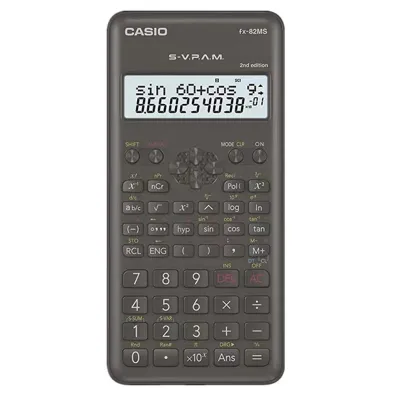

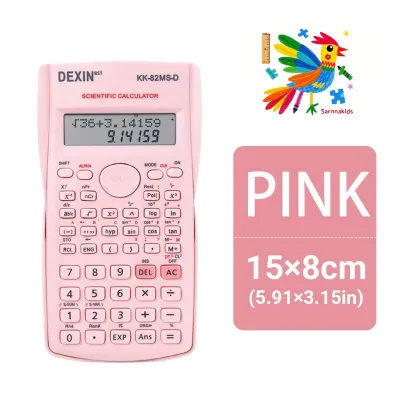
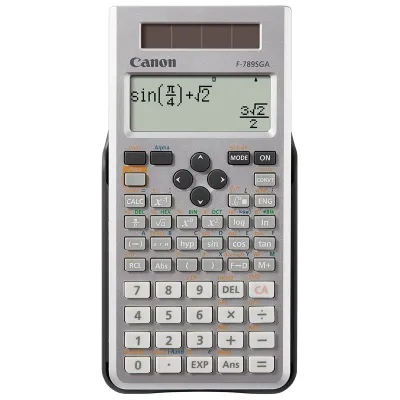
Prices are valid at publication and may change. Please refer to the product page for the latest price.
For these foundational topics, a clear and intuitive display is highly beneficial. A natural textbook display, which shows fractions, square roots, and formulas exactly as they appear in textbooks, helps students grasp concepts without getting confused by syntax. High school students also require a durable device. Calculators are often tossed into crowded backpacks alongside heavy textbooks, metal rulers, and water bottles, meaning a robust protective cover and impact-resistant keys are essential for surviving the daily commute.
In contrast, college STEM and engineering programs demand immense computational power. Students in fields like Civil, Mechanical, Electrical, or Chemical Engineering, as well as those in Physics and Mathematics, deal with multi-step problems that require advanced mathematical tools. Daily coursework involves solving simultaneous equations, calculating matrix determinants, performing vector dot and cross products, and evaluating numerical derivatives and integrals.
At the college level, processing speed and memory capacity become critical. When you are solving a complex electrical circuit or analyzing structural loads during a timed midterm exam, waiting several seconds for a calculator to compute a matrix can cause unnecessary stress. College students need multi-line displays that can show entire tables of data, along with advanced menu systems that allow quick transitions between computation modes.
Best CASIO Options for High School Math and Science
For Junior High School and non-STEM Senior High School tracks (such as ABM, HUMSS, or GAS), the CASIO fx-82 series is the industry standard. The older fx-82EX ClassWiz and the newer fx-82CW are designed specifically for these levels. These models provide over 270 built-in functions, which easily cover basic algebra, trigonometry, percentages, and statistical calculations like standard deviation.

One of the main advantages of the fx-82 series is its simplicity. By omitting advanced functions like matrix calculations and complex numbers, the interface remains uncluttered. This prevents younger students from getting lost in advanced menus or accidentally changing settings that could affect their calculations during an exam. The keys are made of durable plastic, offering a tactile response that helps prevent typing errors during fast-paced quizzes.
For Senior High School students enrolled in the STEM strand, a slightly more capable model serves as an excellent bridge to college. The CASIO fx-350 series or the entry-level fx-570 series offers a middle ground. These models provide additional scientific functions that assist with pre-calculus and basic calculus, allowing students to familiarize themselves with advanced layouts before entering university.
When choosing a high school calculator, prioritize practical physical features. Look for models that feature a dual power source—combining solar panels with a backup battery. This design ensures the calculator will not die during a crucial exam, even in dimly lit classrooms. A sturdy, slide-on hard case is also a vital accessory, shielding the liquid crystal display (LCD) from pressure and preventing accidental key presses while packed in a bag.
Best CASIO Options for College and Engineering Courses
For college students, particularly those in engineering, science, and mathematics, the CASIO fx-991 series is the undisputed gold standard. The previous-generation fx-991EX ClassWiz and the newer fx-991CW are engineered to handle the rigorous demands of higher education. These models feature over 540 functions, allowing students to solve complex equations, perform matrix calculations up to 4×4, compute vector operations, and work with complex numbers.
The high-resolution LCD screen on these advanced models is a major asset. It allows for a spreadsheet-like interface, where students can input data sets and view multiple rows and columns simultaneously. This is incredibly useful for college-level statistics, physics lab reports, and numerical methods coursework.
Another innovative feature found in the ClassWiz series is QR code integration. By pressing a specific key combination, the calculator can generate a QR code on its screen. Students can scan this code with a smartphone or tablet to visualize their calculations as graphs, charts, or detailed tables on a web browser. This bridges the gap between a standard scientific calculator and a graphing calculator, providing visual learning tools without violating exam rules.
While dedicated graphing calculators like the CASIO fx-9860GIII or the color-screen fx-CG50 exist, they are rarely the best choice for the average Filipino college student. Graphing calculators are significantly more expensive and are almost universally banned in formal university examinations and professional licensure exams. Investing in a high-end, non-programmable scientific calculator like the fx-991CW is a far more practical, cost-effective, and compliant decision for daily academic life.
Feature and Value Comparison by Student Level
To help you visualize how these models compare, the table below breaks down the primary calculator tiers, their target audiences, key capabilities, and relative price points. This structure allows you to quickly identify which category matches your academic path.
| Calculator Tier | Target Audience | Key Functions | Display Type | Power Source | Relative Price Tier |
|---|---|---|---|---|---|
| Basic Scientific (e.g., fx-82 series) | Junior High, Non-STEM Senior High | Basic Algebra, Trigonometry, Single-Variable Stats | Natural Textbook Display (High Resolution) | Battery Only or Dual Power | Budget-friendly |
| Mid-Range Scientific (e.g., fx-350 / fx-570 series) | STEM Senior High, General College Courses | Advanced Algebra, Basic Calculus, Multi-Variable Stats | Natural Textbook Display | Battery or Dual Power | Mid-range |
| Advanced Scientific (e.g., fx-991 series) | College STEM, Engineering, Architecture | Calculus, Matrices (4×4), Vectors, Complex Numbers, QR Codes | High-Resolution Icon Menu Display | Solar & Battery Dual Power | Mid-to-Premium |
| Graphing / Programmable (e.g., fx-CG50 series) | Advanced Research, Specialized Math Majors | Dynamic Graphing, Programming, 3D Vector Plots | Color LCD Display | Battery Only | Premium |
Because retail prices can fluctuate due to shipping, local demand, and regional promotions, we recommend checking authorized department stores, official office supply retailers, or verified online brand stores to view current pricing and warranty options.
Exam Compliance: DepEd Policies and PRC Board Rules
In the Philippines, buying a calculator is not just about finding the one with the most features; it is about ensuring that your device is legally permitted in the exam room. Using an unauthorized calculator can result in immediate disqualification, making compliance a top priority for every student.
For high school students, the Department of Education (DepEd) and individual school boards set the rules. Generally, standard classrooms permit basic and mid-range scientific calculators. However, programmable calculators—which allow users to store formulas, text, or custom code—are strictly prohibited during quarterly exams and national assessments. This rule ensures that students are graded on their actual mathematical understanding rather than their ability to program formulas into a device.
For college students and recent graduates, the rules enforced by the Professional Regulation Commission (PRC) are incredibly strict. The PRC oversees licensure examinations for engineering, architecture, accountancy, and other technical fields. To prevent cheating, the PRC maintains a specific list of allowed calculator models. This list is updated periodically via official memorandums.
Historically, the PRC has banned or restricted certain advanced calculators that were deemed too powerful or capable of storing text. Non-programmable, non-graphing scientific calculators are the baseline requirement for these board exams. Before purchasing a high-end calculator for college, it is highly recommended to read the latest PRC memorandum or consult your university professors. Buying a model that is explicitly permitted on the board exams ensures that you can use the exact same device for your daily college practice and your final licensure test.
Final Decision Framework: Which Model Should You Buy?
To make your final decision as straightforward as possible, use this simple, condition-based framework to guide your purchase:
- Choose a basic model (such as the CASIO fx-82CW or fx-82EX) if: You are currently in Junior High School, enrolled in a non-STEM Senior High School strand (like ABM or HUMSS), or pursuing a college degree that only requires general mathematics, basic statistics, and introductory college algebra.
- Choose an advanced ClassWiz model (such as the CASIO fx-991CW or fx-991EX) if: You are in the Senior High School STEM strand, enrolled in a college engineering, physics, or mathematics program, and require advanced calculus, matrix, and vector functions for your daily coursework.
- Verify school and board rules first if: You are actively preparing for a PRC board exam, a highly competitive university admission test, or specialized science high school exams. Ensure your chosen model is explicitly permitted on their latest official guidelines.
- Neither may fit if: Your specific academic course or laboratory requires dedicated computer algebra systems (CAS) or advanced programming capabilities. In these rare cases, you must consult your instructor to see if a specialized graphing calculator or computer software is required for your class.
Frequently Asked Questions (FAQ)
Are CASIO graphing calculators allowed in Philippine board exams?
No, CASIO graphing calculators are generally not allowed in Philippine board exams. The Professional Regulation Commission (PRC) strictly prohibits programmable and graphing calculators to maintain exam integrity and prevent candidates from storing formulas or notes in the device’s memory. For board exams, candidates must use approved, non-programmable, non-graphing scientific calculators. Always consult the latest official PRC memorandum for the exact list of allowed models before your exam.
What is the difference between the fx-991EX and the newer fx-991CW?
The CASIO fx-991CW is the direct successor to the popular fx-991EX. The primary differences lie in the user interface and physical design. The fx-991CW features a redesigned circular key layout, a simplified menu-driven navigation system, an improved high-contrast display, and updated QR code integration. While both models offer the same core mathematical capabilities—such as calculus, matrix, and vector calculations—the fx-991CW is the current model in active production, making it easier to find at authorized retailers.
How can I spot a fake CASIO calculator?
To spot a counterfeit CASIO calculator, begin by checking the physical build quality. Genuine CASIO calculators have crisp, clear key printing, responsive plastic keys that do not wiggle excessively, and a secure battery compartment. Next, look for official security features on the packaging, such as holographic stickers and QR codes that link to CASIO’s verification website. Finally, you can perform a built-in diagnostic test. On most models, pressing the Shift, 7, and On keys simultaneously will launch a diagnostic screen that allows you to test the LCD, solar panel, and button responses. To guarantee authenticity and secure a valid warranty, always purchase your calculator from official brand stores or authorized office supply retailers.
Community discussion
Share your experience or ask a question. Comments are reviewed before publication.