
Selecting the right charcoal pencil is the key to mastering value, texture, and depth in your artwork. The ideal choice depends entirely on your drawing style and the specific stage of your creative process. Soft grades deliver rich, dramatic blacks for deep shadows and expressive shading, while hard grades offer the control and light value needed for fine details and initial guidelines. Medium grades serve as the versatile middle ground for general sketching and mid-tones.
Understanding how these tools behave on paper prevents unnecessary frustration and elevates your finished pieces. Whether you are drawing a highly detailed portrait or capturing a rapid landscape sketch, matching your technique to the correct core hardness will make your medium work with you rather than against you.
Decoding Charcoal Pencil Hardness Grades
At its core, a charcoal pencil consists of a mixture of powdered charcoal and a clay or wax binder encased in wood. The ratio of these ingredients determines the hardness of the core. When a manufacturer increases the proportion of clay or wax binder, the core becomes harder and more cohesive. Conversely, a higher concentration of powdered charcoal with less binder results in a softer, more crumbly core that releases pigment easily onto your drawing surface.
Products mentioned in this guide
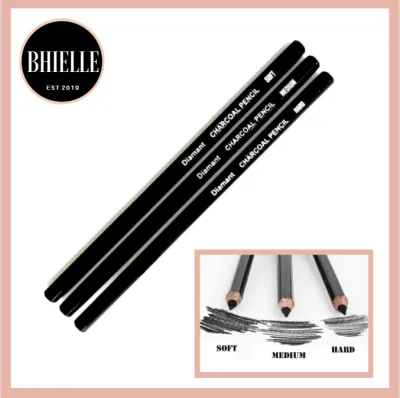
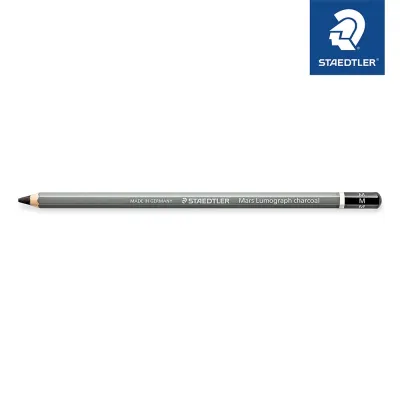
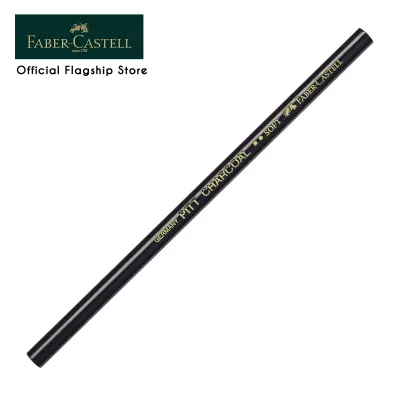
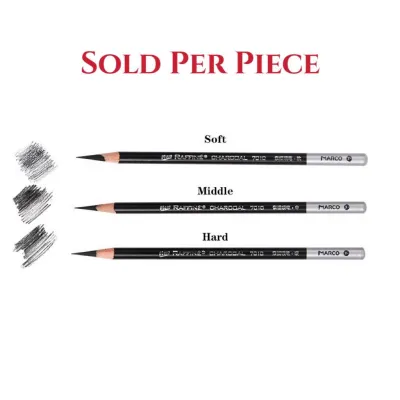
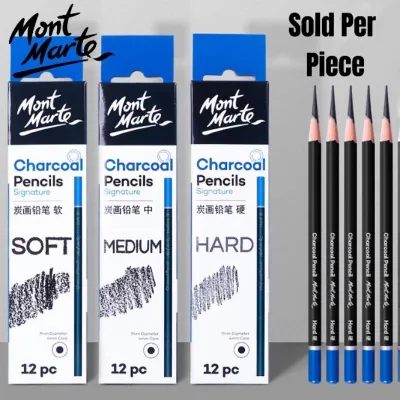
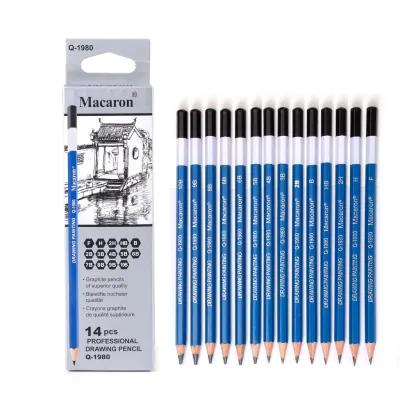
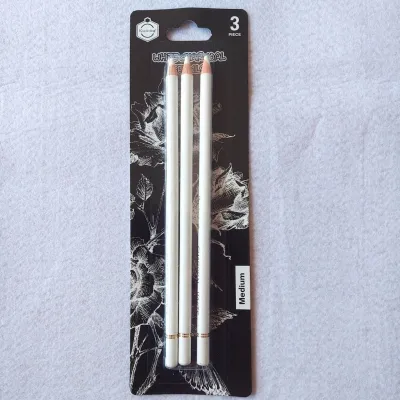
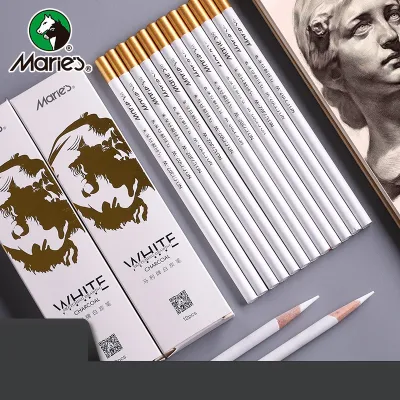
Prices are valid at publication and may change. Please refer to the product page for the latest price.
Most manufacturers categorize their pencils into simple grades: Hard, Medium, and Soft. Some brands expand this range to include Extra Soft or Extra Hard to offer artists more precise control over their values. Unlike graphite pencils, which follow a strict, highly standardized scale ranging from 9H to 9B, charcoal pencil grading is much simpler and varies significantly between manufacturers.
Because of this lack of a universal standard, a “Medium” pencil from one brand might feel as soft as a “Soft” pencil from another. You should treat the printed grade on the casing as a reliable relative indicator within that specific brand’s product line rather than an absolute measurement across the industry. When switching brands, always expect a slight adjustment period to get used to the new formula’s texture and value range.
How Hardness Translates to Line Quality and Shading
Understanding the physical properties of each grade helps you predict how they will perform when tip meets paper. Each hardness level produces distinct visual effects and requires different handling techniques.

- Hard Grades (Light and Controlled): Pencils with a hard core contain more binder, which keeps the charcoal particles held tightly together. This results in lighter, grayer marks that are excellent for precise work. Hard pencils produce clean, fine lines, resist accidental smudging, and hold their point much longer than softer alternatives. However, because the binder seals the charcoal particles, these marks are more difficult to blend with a paper stump, tortillon, or your finger.
- Medium Grades (Balanced and Versatile): Offering a balanced tone and exceptional versatility, medium pencils are the workhorses of the sketching world. They provide a comfortable middle ground, yielding decent darkness while retaining enough structural integrity to hold a relatively fine point. They smudge and blend with moderate ease, making them highly adaptable for both structural sketching and gradual mid-tone building.
- Soft Grades (Dark and Expressive): Soft pencils feature a high concentration of charcoal and minimal binder, allowing the core to crumble easily under light pressure. This yields rich, deep, velvety blacks and thick, highly expressive lines. Because the pigment sits loosely on the paper, soft charcoal smudges effortlessly, making it the perfect choice for smooth transitions, gradients, and broad shading. The trade-off is that soft cores wear down quickly, require frequent sharpening, and can easily make a mess if handled carelessly.
The final visual result also depends heavily on the paper’s texture, commonly referred to as the tooth. Smoother papers, like bristol board, yield finer, more uniform lines across all grades but cannot hold many layers of charcoal. Heavily textured papers, such as cold-press watercolor paper or medium-tooth sketchbooks, grab and hold onto the loose particles of softer grades, dramatically enhancing the depth of your darkest shadows.
Matching Hardness Grades to Your Drawing Techniques
Selecting the right tool for the job streamlines your workflow and keeps your artwork clean. You can divide your drawing process into specific tasks that align perfectly with different hardness levels.
- Detailed Realism and Fine Outlines: For initial light sketching, layout guidelines, and intricate details like individual hair strands or fine fabric textures, reach for a Hard pencil. The light value allows you to map out your proportions without committing to dark, permanent lines. Additionally, using a hard grade for crisp edges prevents the surrounding areas from becoming muddy as you work.
- General Sketching and Portraiture: Medium pencils are ideal for establishing structural forms, blocking in basic values, and rendering the soft transitions of human skin. If you are a beginner, starting your drawing journey with a medium pencil is highly recommended. It teaches you how to control your hand pressure to achieve a wide range of values without the risk of making your paper irreversibly black too quickly.
- Expressive Shading and Deep Shadows: When it is time to push the contrast and create dramatic depth, the Soft pencil is irreplaceable. Use it to fill large background areas quickly, render the darkest recesses of a subject, or create smooth, smoky gradients. The rich pigment allows for effortless blending, giving your shadows a velvety, professional finish.
- A Simplified Starting Kit: You do not need to purchase a massive, expensive set of pencils to get started. For most drawing styles, a simplified kit consisting of one Medium and one Soft pencil will cover roughly 80% of your creative needs. This combination allows you to sketch, blend, and establish deep contrast easily. You can always add a Hard pencil to your collection later if you find yourself focusing on highly detailed, fine-line realism.
Testing, Sharpening, and Storing Your Charcoal Pencils
Proper maintenance ensures your pencils perform consistently and last as long as possible. Because charcoal is a delicate medium, it requires more care than standard graphite.
The Scrap Paper Test Before applying any new pencil to your final artwork, always perform an observable trial on a scrap piece of the exact same drawing paper. Use this test to verify the pencil’s actual darkness, check its smoothness, and see how easily it blends or erases. Since erasability and smudge resistance depend entirely on the specific combination of your pencil’s binder and your paper’s tooth, this quick test prevents unexpected mistakes on your masterpiece.
Safe Sharpening Techniques Charcoal cores are incredibly brittle compared to graphite. Standard mechanical rotary or electric sharpeners exert too much lateral pressure, which almost always snaps the delicate core inside the casing. Instead, use a sharp craft knife to carefully shave the wood casing away from the tip. Always check the knife’s safety instructions and shave away from your body to prevent injury. Once the charcoal core is exposed, gently rub the tip against a fine-grit sandpaper block to shape it into a sharp point or a flat chisel edge.
Humidity Control and Storage Charcoal is highly sensitive to environmental conditions. In tropical climates like the Philippines, high humidity can cause the wood casing to warp, which puts internal stress on the core and causes it to fracture before you even sharpen it. To prevent this, store your charcoal pencils in a sealed, hard-shell pencil case. Adding a few silica gel packets inside the case will absorb excess moisture, keeping your tools dry, stable, and ready for your next studio session. Prices for quality pencils range from budget-friendly options starting around ₱50 to premium artist-grade pencils exceeding ₱200 each, making proper storage a smart way to protect your investment.
Frequently Asked Questions (FAQ)
Are charcoal pencil grades the same as graphite pencil grades?
No, charcoal and graphite pencil grades are not equivalent. While both systems rely on a binder-to-pigment ratio, graphite pencils use a highly standardized scale (such as 2B, HB, or 2H) to deliver precise, predictable values across different brands. Charcoal pencils use a much simpler scale (Soft, Medium, Hard) because natural charcoal particles are larger, more irregular, and behave differently on paper, making strict standardization impractical.
What is the best way to sharpen a charcoal pencil without breaking it?
The safest method is to avoid mechanical sharpeners entirely. Use a sharp craft knife to slowly shave away the wood casing, pointing the blade away from your body at a shallow angle. Once about half an inch of the charcoal core is exposed, rub the tip gently against a sandpaper block. This allows you to customize the point to your exact drawing preference without putting any snapping pressure on the brittle core.

Community discussion
Share your experience or ask a question. Comments are reviewed before publication.