
Choosing the right double line marker depends entirely on the scale, precision, and paper surface of your project. Double line markers—which lay down a unique dual-color stroke, typically featuring a metallic silver center outlined by a vibrant colored border—are highly popular for creative writing, journaling, and academic note-taking. If your primary task involves detailed writing, intricate drawing, or filling in tight planner grids, a fine tip is the default choice. Conversely, if you need to create bold headers, highlight text, or cover large areas with expressive, variable-width strokes, a chisel tip is far superior.
While many creative sets feature twin-tip designs that offer both options, understanding the physical and behavioral differences of each tip style is crucial. The tip shape directly dictates how the ink flows, how the colors separate on the page, and how the marker performs under different environmental conditions. By selecting the correct tip style for your specific workflow, you can prevent common stationery frustrations like bleed-through, paper tearing, and ink smudging.
The Anatomy of Chisel and Fine Tips
To understand why these two tips perform so differently, it helps to examine their physical construction and how they deliver ink to the page. The design of a marker nib influences not only the line width but also the capillary pressure that pulls ink from the internal reservoir.
Products mentioned in this guide
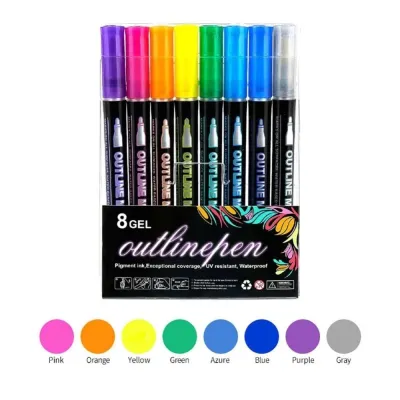
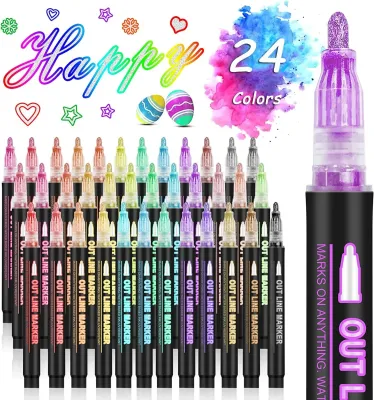
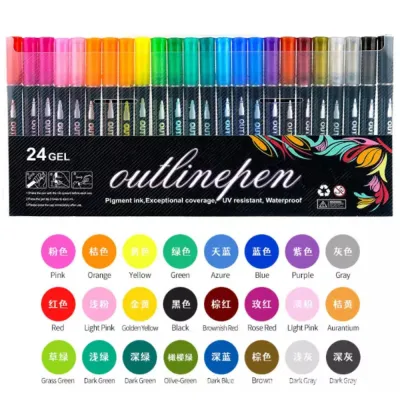
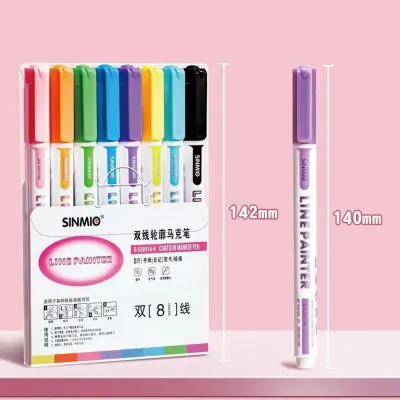
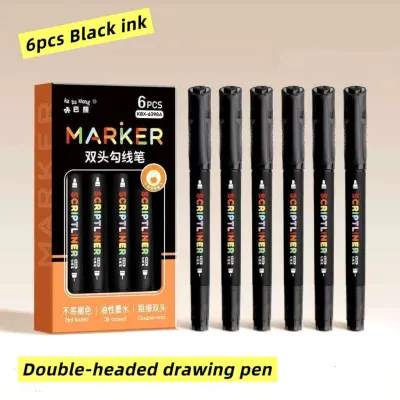
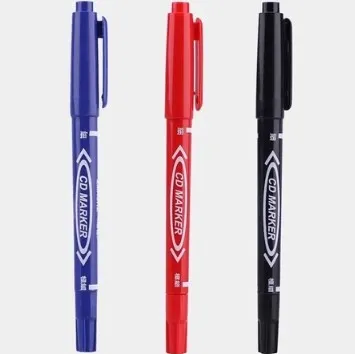
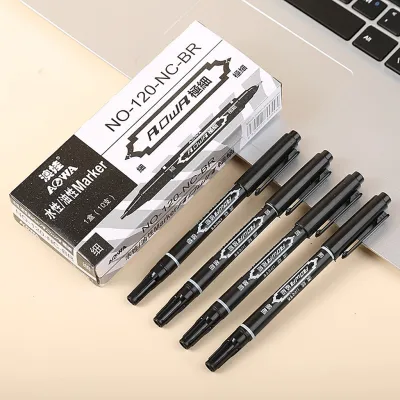
Prices are valid at publication and may change. Please refer to the product page for the latest price.
Chisel Tip Characteristics
A chisel tip features a broad, flat, and angled edge, usually cut at a 45-degree angle. Typically manufactured from dense polyester or acrylic fibers, this tip style acts as a wide conduit for ink. The physical surface area of a chisel tip is significantly larger than that of a fine tip, allowing it to make contact with a greater portion of the paper fibers simultaneously.
Because of this broad surface area, the line width produced by a chisel tip varies dynamically based on how you hold the marker. Drawing with the flat, wide edge produces a broad stroke (often between 4.0mm and 6.0mm), which is ideal for covering large areas or creating thick downstrokes. Rotating the marker to write with the sharp, pointed corner of the chisel edge produces a much narrower line (around 1.0mm to 1.5mm). This physical versatility makes the chisel tip a highly adaptable tool, though it requires deliberate wrist rotation and hand stability to control the line transitions effectively.
Fine Tip Characteristics
A fine tip, often referred to as a bullet or needle tip, features a pointed, narrow, or gently rounded profile. These nibs are typically constructed from highly compressed felt, sintered plastics, or encased in a protective metal collar to maintain their structural integrity. The tip diameter usually ranges from 0.5mm to 1.5mm, delivering a highly consistent and uniform line regardless of the angle at which you hold the pen.
Because the contact point with the paper is highly concentrated, a fine tip exerts greater localized pressure on the paper fibers during use. This concentrated pressure point restricts the volume of ink deposited at any given millisecond, resulting in a controlled, thin stream of ink. The physical design of a fine tip prevents the ink from flooding the page, which is essential for preserving the legibility of small handwriting and preventing the dual-color outline effect from bleeding together into a single, dark blur.
Key Differences: Line Width, Precision, and Durability
When deciding between these two tip styles, you must evaluate how their physical characteristics translate into daily performance. Line width consistency, hand control, paper interaction, and long-term wear are the primary practical dimensions that differentiate chisel and fine tips.

Line Width and Variability
The most obvious point of contrast is the stroke output. A fine tip delivers a static, predictable line width. This predictability is highly beneficial when you are drafting uniform text, sketching precise geometric patterns, or outlining drawings. You do not have to adjust your grip or worry about accidental line thickening.
In contrast, the chisel tip offers a dynamic, adjustable stroke. This variability is excellent for creative lettering, but it introduces a learning curve. If your hand pressure or writing angle shifts mid-stroke, the line width will fluctuate. For double line markers, this variability also affects how the outline effect appears. A broader chisel stroke provides more physical space for the metallic pigment to settle in the center while the colored dye bleeds to the outer edges. On a very thin fine-tip stroke, this separation is much more subtle and requires close inspection to appreciate.
Precision and Control
Fine tips offer superior precision, making them the ideal choice for working in restricted spaces. If you are annotating the margins of a textbook, writing in a compact 5mm grid planner, or drawing detailed illustrations, the fine tip allows you to place ink exactly where you want it. The narrow profile of the nib ensures your line of sight remains unobstructed as you write.
Chisel tips require much more physical space and hand control. Attempting to write small, cursive letters with a broad chisel tip usually results in the loops of letters like “e,” “a,” and “o” filling in with ink, destroying legibility. The wide nib also blocks your view of the paper directly beneath it, making precise starting and stopping points more difficult to execute without practice.
Ink Flow and Paper Compatibility
Double line markers rely on a heavy saturation of specialized ink to achieve their signature dual-color outline effect. This ink typically consists of a water-based dye blended with suspended metallic pigments. When deposited on paper, the paper fibers absorb the water-based colored dye, pulling it outward, while the heavier metallic particles remain trapped on the surface, creating a silver center with a colorful border.
Because a chisel tip has a large surface area, it deposits a high volume of ink onto the page. In humid climates, such as during the rainy season in the Philippines, high ambient humidity slows down the evaporation rate of water-based inks. This prolonged drying time increases the risk of accidental smudging if you close your notebook too quickly. Furthermore, on standard school notebook paper (typically 70 GSM to 80 GSM), the heavy ink flow from a chisel tip will cause significant ghosting or bleed-through to the reverse side of the page.
Fine tips deposit a much lower volume of ink, which dries significantly faster even in humid conditions. This makes fine tips much more compatible with lighter paper weights, though we always recommend testing your markers on a scrap piece of paper or an inconspicuous back page before starting a major project.
Durability and Tip Fraying
Over time, the friction of writing on paper alters the shape of any marker nib. Fine tips are particularly vulnerable to bending, splitting, or fraying if you apply excessive downward pressure. Once a fine tip frays, it loses its precision, and the dual-line effect can become distorted as the split fibers distribute ink unevenly.
Chisel tips are physically sturdier due to their broad base, making them more resistant to bending. However, they are prone to losing their sharp, crisp corners over time. Constant friction against rough paper fibers will gradually round out the sharp edges of a chisel tip. When this happens, the distinction between your broad strokes and thin strokes becomes less defined, resulting in a more uniform, medium-width line.
Best Use Cases: Journaling, Note-Taking, and Crafts
Visualizing how these markers perform in real-world scenarios can help you determine which tip style aligns with your creative or academic routine.
Journaling and Planner Decoration
For bullet journal enthusiasts and planner users, both tips serve distinct decorative purposes:
- Fine Tip: This is the superior choice for daily logging, habit tracking, and writing within compact weekly layouts. If you use a dotted or grid journal, the fine tip allows you to write neat, legible tasks within a single grid row. It is also excellent for adding delicate, hand-drawn doodles, borders, and small icons to your weekly spreads.
- Chisel Tip: The chisel tip excels at creating bold, eye-catching visual elements. Use it to write large monthly headers, draw decorative banners, or color-block specific sections of your layout. The broad edge allows you to fill in decorative shapes quickly without leaving visible stroke lines.
Note-Taking and Studying
If you are a student preparing for exams or a professional organizing meeting notes, visual hierarchy is key to information retention:
- Fine Tip: Use the fine tip to underline key terms directly within printed textbook paragraphs or to write detailed margin notes. The narrow line ensures you do not accidentally obscure adjacent lines of text. It is also highly effective for creating detailed mind maps and diagrams where space is limited.
- Chisel Tip: The chisel tip is the classic choice for highlighting entire lines of text. By drawing the flat edge across a sentence, you can instantly emphasize key formulas or definitions. It is also highly useful for creating prominent title blocks and section dividers in your study guides, helping you scan your notes quickly during active recall sessions.
Art, Crafting, and Calligraphy
For hands-on craft projects, DIY gifts, and hand-lettering, the physical properties of the nibs dramatically alter the final aesthetic:
- Fine Tip: Essential for intricate illustration work, mandalas, and adding fine outlines to larger, colored letters. If you are working on handmade greeting cards with small, detailed cardstock cutouts, the fine tip allows you to add precise decorative accents without overwhelming the design.
- Chisel Tip: This is the fundamental tool for modern calligraphy and hand-lettering. By adjusting your hand pressure and the angle of the pen, you can easily create the classic contrast between thick downstrokes and thin upstrokes. It is also highly efficient for filling in large background areas on posters, labels, or gift tags.
Decision Framework: Which One Should You Buy?
To make your final decision, evaluate your primary tasks, your paper collection, and your writing style against this structured framework.
Choose a Fine Tip if:
- Your primary goal is writing long-form text, detailed notes, or small-scale planning.
- You regularly work with standard notebook paper (70 GSM to 90 GSM) and want to minimize the risk of ink bleeding through the page.
- You require absolute precision for intricate drawings, small doodles, or tight margin annotations.
- You prefer a fast-drying ink application that minimizes smudging, especially in warm, humid environments.
Choose a Chisel Tip if:
- You want to create bold, dramatic hand-lettering, modern calligraphy, or large decorative headers.
- You plan to use the markers primarily for highlighting text, color-blocking, or filling in large shapes.
- You work on heavy-duty paper (120 GSM to 160 GSM, or coated cardstock) that can handle high ink saturation without warping or bleeding.
- You want to maximize the visual separation of the dual-color outline effect, which is much more pronounced on broader strokes.
Verify First if:
Before purchasing a large set of double line markers, verify the specifications of your existing stationery collection. Check the paper weight of your favorite notebooks. If you are using thin or uncoated wood-free paper commonly found in budget-friendly school notebooks, a high-flow chisel tip will likely bleed through.
Additionally, check the ink formulation of the markers you are considering. Water-based dye inks are generally safer for a wider variety of paper types, while alcohol-based inks offer superior blendability but bleed through almost all standard paper types. If you are working in a highly humid environment, always conduct a quick scratch-pad test on a spare page to gauge the drying time and bleed resistance of your specific marker and paper combination.
If your creative projects require a mix of detailed writing and bold decoration, look for sets that offer a twin-tip or double-ended design. These markers provide the ultimate versatility, giving you a fine tip on one end and a chisel tip on the other. When opting for twin-tip markers, ensure you store them horizontally; this keeps the ink distributed evenly to both ends, preventing one tip from drying out while the other becomes oversaturated.
Frequently Asked Questions (FAQ)
Can I use both tips on the same double line marker?
Yes, if you purchase a twin-tip or double-ended double line marker, both tips draw from the same internal ink reservoir. This design allows you to switch seamlessly between fine detailing and broad strokes while maintaining perfect color consistency across your project. To keep both tips performing optimally, it is essential to store these markers horizontally when not in use. Storing them vertically will cause gravity to pull the ink toward the bottom tip, leaving the top tip dry and prone to scratching, while the bottom tip becomes oversaturated and prone to leaking.
How do I prevent my marker tips from fraying?
To maximize the lifespan of your marker tips, always write with light to moderate hand pressure. Let the capillary action of the nib draw the ink onto the page rather than forcing it by pressing down hard. Avoid dragging fine tips backward against the direction of your stroke, as this can catch and split the delicate fibers. Additionally, avoid using your markers on highly abrasive surfaces like rough watercolor paper or coarse cardboard, which act like sandpaper on fiber nibs. Always snap the caps back on tightly immediately after use to prevent the tips from drying out, which makes the fibers brittle and highly susceptible to fraying.
Community discussion
Share your experience or ask a question. Comments are reviewed before publication.