
Finding the right all-in-one art supply set for a school art class can save hours of shopping and prevent the frustration of missing a crucial medium mid-semester. A comprehensive kit provides a ready-to-use collection of basic mediums—ranging from pencils and markers to watercolors and safety scissors—allowing students to focus on learning techniques rather than managing individual purchases. For parents and educators alike, the ideal set balances media variety, safety certifications, and durability within a portable container that easily fits into a school backpack.
When selecting these kits, the primary goal is to match the student’s grade level and curriculum requirements with a set that offers reliable performance. High-quality arts and crafts supplies should not only spark creativity but also withstand the daily wear and tear of a classroom environment. By evaluating key factors like tool durability, safety seals, and how easily the consumables can be refilled, you can ensure that a single purchase will support a student’s artistic growth throughout the entire academic year.
What Defines a Quality All-in-One School Art Kit?
An all-in-one art kit should be more than a collection of colorful items in a plastic box. To serve as a functional tool for a school curriculum, it must meet specific standards of utility, safety, and physical design.
Products mentioned in this guide
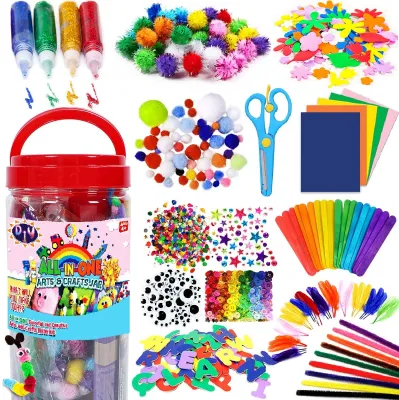
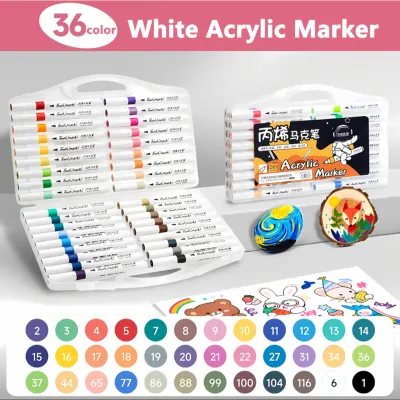
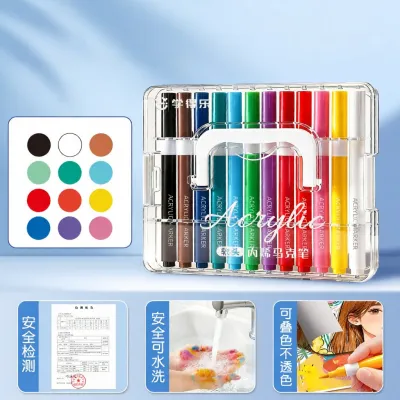
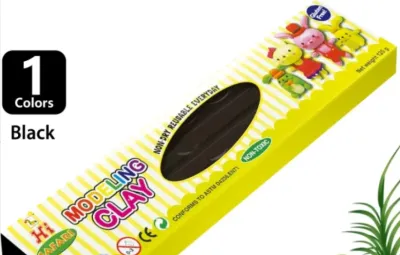
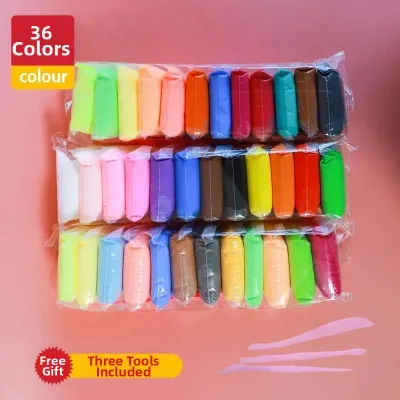
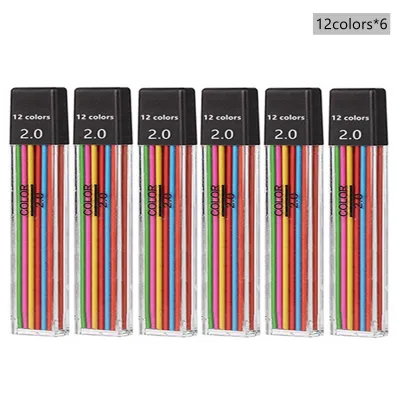
Prices are valid at publication and may change. Please refer to the product page for the latest price.
Core Media Variety A well-rounded kit must provide a balanced selection of drawing, painting, and crafting mediums. Drawing components typically include graphite pencils, colored pencils, crayons, and markers. Painting mediums should feature water-soluble paints, such as watercolor pans or washable tempera cakes, accompanied by at least two or three brush sizes. Crafting essentials, such as child-safe paper scissors, non-toxic glue sticks, and a basic ruler, complete the set. A true all-in-one kit avoids filler items, ensuring that every tool directly supports standard classroom projects rather than leaving students with surplus novelties they will never use.
Safety and Compliance Safety is paramount when choosing consumables that children will handle daily. Look for explicit safety certifications on the packaging rather than vague marketing claims. Reputable manufacturers display non-toxic labels such as the AP (Approved Product) seal from the Art and Creative Materials Institute (ACMI) or compliance with EN71 European toy safety standards. These certifications verify that the markers, paints, and adhesives are free from harmful quantities of toxic substances, making them safe for prolonged skin contact and accidental ingestion.
Portability and Storage The physical container of the kit must be durable enough to survive a school year of commuting. A flimsy cardboard sleeve will quickly tear, leaving loose pencils and paint pans scattered at the bottom of a school bag. Opt for cases made of impact-resistant molded plastic or heavy-duty canvas with secure latches. The interior layout should feature molded slots or elastic straps that hold each item firmly in place. This organization prevents damage to delicate pencil tips and wet paint brushes while making it easy for students to perform a quick inventory before packing up at the end of class.
Refillability and Standardization A common pitfall of budget art kits is the use of proprietary or non-standard sizes for consumables. If a kit features ultra-thin colored pencils or uniquely shaped glue stick slots, replacing those items once they run out becomes highly difficult. Prioritize kits that accommodate standard-sized consumables. For instance, ensure the pencil slots fit standard-diameter colored pencils, and the glue compartment fits standard 8-gram or 15-gram glue sticks. This design allows you to purchase inexpensive individual replacements at any local stationery store without needing to buy an entirely new kit.
Types of All-in-One Arts and Crafts Sets by Skill Level
School art curricula evolve rapidly as students progress through different grade levels. To ensure the kit remains a helpful resource rather than a source of frustration, the tools must align with the student’s motor skills and technical requirements.

Foundational Mixed-Media Kits for Early Grades
For young learners in kindergarten and early elementary school, art classes focus on developing fine motor skills, color recognition, and sensory exploration. Kits designed for this stage must prioritize physical safety, ease of use, and quick cleanup.
These foundational sets typically feature jumbo-sized crayons and thick, triangular colored pencils. The larger barrels are engineered for developing hand muscles, allowing young children to grip the tools comfortably without experiencing hand fatigue. Washable markers with broad, conical tips are standard, enabling students to draw both fine lines and broad strokes simply by changing the angle of the marker. Additionally, safety is reinforced through the inclusion of blunt-tip plastic or metal scissors that only cut paper, alongside washable glue sticks that apply smoothly without clumping.
A critical consideration for this age group is the washability of the formulas. Young artists frequently apply paint and ink to their skin, desks, and school uniforms. High-quality early-grade kits use ultra-washable inks and water-based paints that release easily from cotton fabrics and non-porous surfaces with standard soap and warm water. This feature minimizes permanent staining on white school uniforms and classroom furniture, reducing stress for both parents and teachers.
Comprehensive Drawing and Painting Sets for Middle Grades
As students enter middle school, the curriculum shifts toward structured art techniques, such as basic shading, color mixing, and perspective drawing. At this stage, students require tools that offer greater precision and realistic color payoff.
These intermediate kits replace jumbo crayons with a wider spectrum of standard-diameter colored pencils and graded graphite pencils (such as HB, 2B, and 4B). The inclusion of graded pencils introduces students to the concepts of line weight and tonal value. For painting projects, these sets feature watercolor pans with multiple pigment wells and a selection of brushes, including round brushes for detail work and flat brushes for washes.
To verify the bleed resistance, drying speed, and erasability of the kit’s drawing tools, perform a quick trial on a scrap piece of the sketchbook paper. Draw a solid block of color with a marker to check for bleed-through on the reverse side, paint a small stroke to observe the drying speed, and test the erasability of the graphite pencils to ensure they lift cleanly without smudging the paper surface. Standard printer paper or thin sketchpads (under 100 GSM) will warp, pill, or bleed when exposed to watercolors. Intermediate kits should ideally be paired with a dedicated sketchbook featuring heavy-weight paper (at least 150 to 200 GSM) to handle wet-on-wet painting techniques. Furthermore, these supplies feature higher pigment concentrations, moving away from purely washable formulas to semi-professional mediums that teach students the importance of proper brush care and workspace cleanup.
Advanced Multi-Discipline Crafting Kits
Older students in high school or specialized art electives explore advanced mediums that bridge the gap between classroom supplies and professional hobbyist tools. These kits are designed for detailed illustrations, 3D modeling, and mixed-media crafting.
Advanced kits often include acrylic paint tubes, which offer rich opacity and the ability to paint on various surfaces like canvas, wood, or heavy cardboard. Modeling clay, precision metal rulers, and fine-tip technical drawing pens are also common. These tools allow students to experiment with texture, sculpting, and high-contrast line work.
Because these kits contain more sophisticated materials, safety boundaries must be carefully observed. Advanced sets may include sharp utility knives, precision metal scissors, or stronger adhesives like liquid craft glue. Before allowing a student to use these tools, always check the applied product’s label and the treated item’s manufacturer instructions. If safety instructions conflict, or if the student is working with unfamiliar solvents, stop and consult the manufacturer or a qualified professional. These advanced kits require a higher level of maturity and proper classroom supervision to prevent accidents.
Aligning the Kit with School Curriculum and Supply Lists
Before purchasing an all-in-one set, it is essential to verify that the bundle actually matches the specific requirements of the school’s art syllabus. A kit that looks impressive on a store shelf can still leave a student unprepared if it lacks key items.
Cross-Referencing the Syllabus Art teachers often have highly specific preferences based on the projects planned for the school year. Some curricula focus heavily on sketching and shading, while others emphasize watercolor painting or paper crafting. Before buying, print out the teacher’s official supply list and cross-reference it line-by-line with the kit’s inventory. Pay close attention to quantities and specifications—for example, if the syllabus requests a 24-pack of colored pencils, a kit containing only 12 pencils will not suffice.
Identifying Gaps and Redundancies Even the most comprehensive arts and crafts supplies bundles rarely cover every single item on a school list. Common omissions include specific sizes of sketchbooks (such as standard A4 or Letter sizes), specialized kneaded erasers, pencil sharpeners with dual-hole diameters, or long metal rulers. Identify these gaps early so you can purchase the missing items individually. Conversely, note any redundant items in the kit that the student already owns from previous years, ensuring you are not paying extra for duplicates.
Evaluating Cost-Effectiveness To determine if an all-in-one kit is a smart financial decision, compare its overall price against the cost of buying the individual components separately. In the Philippines, a standard all-in-one school art kit typically ranges from ₱300 for basic elementary sets to ₱1,500 or more for advanced mixed-media cases. Calculate the individual retail prices of the core items: the colored pencils, watercolor set, markers, and case. If the bundled price offers a discount of 15% or more compared to individual purchases, the kit is highly cost-effective. However, if the kit lacks several mandatory items that you must buy separately, the initial savings may be negated by the cost of the add-ons.
Essential Quality and Safety Checks Before Purchase
A successful purchase relies on verifying the physical quality and environmental suitability of the art supplies. Performing a few quick checks can prevent premature product failure and ensure a safe crafting experience.
Verifying Safety Seals Do not rely on generic marketing phrases like “100% safe” or “child-friendly” printed on the box. Instead, inspect the packaging for official certification marks. Look for the ACMI “AP Non-Toxic” seal, which guarantees the product has been toxicologically evaluated. For products imported from Europe, check for the CE mark and the EN71 certification. These seals are especially critical for liquid items like paints, markers, and glues, which have a higher likelihood of skin contact or accidental ingestion.
Checking Tool Durability The utility of an art kit is only as good as its weakest tool. If possible, examine the physical construction of the non-consumable items. Check the metal crimping on the paintbrushes (the ferrule); a loose or poorly crimped ferrule will shed bristles onto the canvas, ruining wet paint layers. Test the tension of the scissors to ensure they cut smoothly without binding or tearing the paper. If the kit includes a plastic ruler, ensure it is flexible enough to bend slightly without snapping, which is a common hazard in crowded student backpacks.
Understanding Washability Limits It is important to understand that “washable” is a relative term. Most washable markers and paints are formulated with water-soluble binders designed to release from human skin and standard cotton fabrics during a normal wash cycle. However, these pigments can still permanently stain porous surfaces like untreated wood, matte walls, and synthetic fibers such as polyester or nylon blends. When students are working with highly pigmented materials, it is wise to protect their school uniforms by using an art apron or wearing older clothing designated for messy activities.
Climate Considerations In tropical, high-humidity environments like the Philippines, art supplies are highly susceptible to climate-induced degradation. Excess moisture in the air can cause paper sketchpads to warp, modeling clay to become sticky or moldy, and wooden colored pencils to swell or split. When purchasing a kit, ensure that the individual components—especially clays, doughs, and papers—are sealed in airtight plastic packaging inside the main case. Inspect the kit upon arrival for any signs of moisture compromise, and store the set in a cool, dry place away from direct sunlight to maintain the integrity of the materials.
Frequently Asked Questions (FAQ)
Can I substitute dedicated art supplies with standard office stationery?
While it is tempting to use standard office stationery for art class, these items are rarely suitable for creative projects. Office glue sticks are formulated for lightweight printer paper and often fail to bond heavier crafting materials like construction paper, cardstock, felt, or cardboard. Similarly, standard 80 GSM office copy paper is too thin to handle wet media. When exposed to watercolor paint or heavy ink markers, office paper will immediately warp, pill, and tear, leading to ruined projects and student frustration. Investing in dedicated art-grade papers and adhesives ensures that the materials can support the physical demands of the curriculum.
How should I maintain and organize an all-in-one art kit?
Proper maintenance is key to extending the life of an art kit throughout the school year. Always clean paintbrushes immediately after use with mild soap and cool water, shaping the bristles back to a point before letting them dry flat. Ensure that markers and pens are capped tightly until you hear a distinct clicking sound, which prevents the solvent from evaporating and drying out the tips. Wipe down watercolor palettes with a damp cloth before closing the case to prevent dry paint from transferring and staining other tools. Additionally, store the entire kit in a dry, well-ventilated area away from direct sunlight to prevent crayons from melting, clay from drying out, or mold from developing on paper and wooden components during the humid wet season.
Are washable arts and crafts supplies less vibrant than professional ones?
Yes, there is a direct chemical trade-off between washability and color vibrancy. Washable school-grade supplies are formulated with water-soluble dyes and binders that are designed to release easily from fabrics and skin. These binders limit the concentration of pigment that can be suspended in the medium. In contrast, professional-grade art supplies use dense, archival pigments and permanent binders designed to resist fading and water damage. While washable supplies may appear slightly less vibrant or harder to blend than professional alternatives, they are specifically engineered to prioritize student safety, easy cleanup, and affordability, making them the ideal choice for classroom learning environments.
Community discussion
Share your experience or ask a question. Comments are reviewed before publication.