
To find the perfect aesthetic transparent bag for school, you must look beyond pure visual appeal and prioritize structural durability, ergonomic support, and weather resistance. A great clear backpack balances its minimalist, modern look with heavy-duty materials like thick thermoplastic polyurethane (TPU), padded shoulder straps, and smart internal organization. In tropical climates like the Philippines, where sudden downpours and high humidity are daily realities, verifying these functional features ensures your bag remains comfortable, dry, and clear throughout the school year.
Choosing a transparent bag involves understanding how different plastics behave under daily stress and environmental exposure. By focusing on material quality, load distribution, and smart packing strategies, you can carry your school essentials safely without sacrificing your personal style.
Balancing Visual Appeal and Material Transparency
When shopping for an aesthetic transparent school bag, the choice of plastic material is the most critical decision you will make. Most clear bags on the market are made from either Polyvinyl Chloride (PVC) or Thermoplastic Polyurethane (TPU). While they may look identical on an online marketplace listing, their performance, longevity, and feel differ significantly over a school term.
Products mentioned in this guide
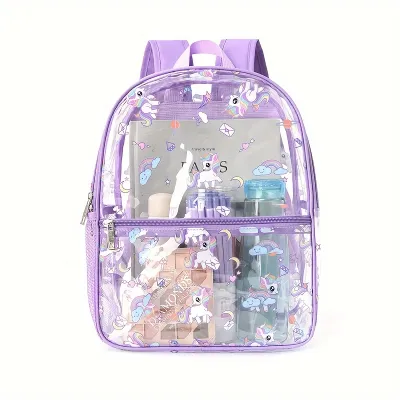
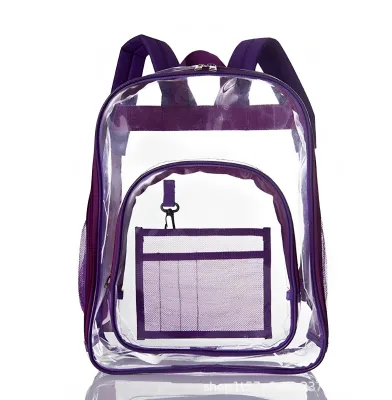
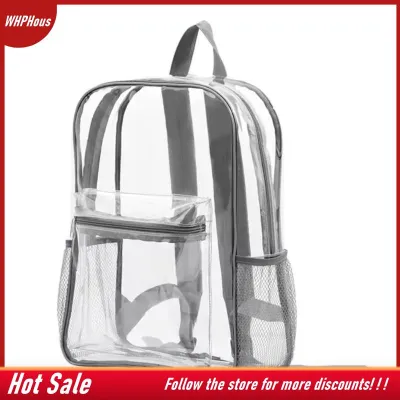
Prices are valid at publication and may change. Please refer to the product page for the latest price.
PVC is a common, budget-friendly option, but it has several distinct drawbacks in a daily school environment. It tends to be stiff, especially in air-conditioned classrooms, and can develop a strong, unpleasant chemical odor when new. More importantly, PVC is highly susceptible to UV degradation. Under the intense tropical sun, PVC panels can quickly lose their clarity, turning a cloudy yellow and becoming brittle over time, which eventually leads to cracking along the fold lines.
TPU, on the other hand, is a much more resilient and premium alternative. It is inherently more flexible, lighter, and possesses excellent resistance to abrasions and punctures. TPU remains supple across a wide range of temperatures and does not emit the harsh chemical smell associated with PVC. Most importantly for an aesthetic bag, high-quality TPU is highly resistant to UV radiation, meaning it will retain its crystal-clear transparency much longer without yellowing.
To maintain a clean, curated aesthetic, look for design elements that frame the transparent panels. Bags featuring colored fabric binding, pastel piping, or reinforced canvas borders help define the bag’s shape even when it is empty. Some aesthetic designs incorporate frosted or semi-transparent panels on the sides or back, which adds visual texture and offers a subtle degree of privacy for your belongings.
Before purchasing, perform a close visual inspection of the bag’s construction. Check the thickness of the plastic panels; a thickness of at least 0.5mm is recommended for daily school use to withstand the weight of heavy binders. Examine the seams carefully. Because plastic can tear easily if stitched too tightly, high-quality bags use thick fabric edge piping to sandwich the plastic panels together, distributing the tension evenly along the seams.
Evaluating Spine Support and Ergonomic Comfort
Transparent bags are inherently unstructured because plastic sheets lack the natural rigidity of traditional canvas or nylon backpacks. Without proper structural support, a clear bag loaded with heavy textbooks will sag, pulling backward on your shoulders and forcing your spine into an uncomfortable, unnatural posture. This makes ergonomic features essential for preventing back strain during long school days.

To compensate for the lack of built-in structure, look for a transparent bag that integrates a padded, breathable mesh back panel. Some clever designs feature a hybrid construction where the back panel is made of padded fabric while the front and sides remain completely transparent. This design provides the necessary cushioning against your spine, prevents sharp book corners from poking you, and allows for airflow to reduce sweat in hot, humid weather.
The shoulder straps are another critical comfort factor. Avoid bags with thin, unpadded plastic straps, as they will dig painfully into your shoulders under the weight of your school supplies. Instead, prioritize wide, S-shaped shoulder straps padded with high-density foam and lined with breathable mesh. The S-shape contours naturally around your chest and shoulders, distributing the weight more evenly across your upper body.
An adjustable sternum strap is another valuable ergonomic feature to look for. By fastening across your chest, a sternum strap secures the shoulder straps in place, preventing them from slipping off your shoulders and shifting the bag’s center of gravity. This is particularly helpful when walking long distances or commuting to school.
It is also important to recognize the physical limits of transparent materials. Even the most well-constructed TPU bag cannot support the same extreme weight loads as a heavy-duty tactical nylon backpack. If your daily school schedule requires carrying multiple thick textbooks, a laptop, and a heavy water bottle, consider using your transparent bag for your daily essentials and carrying a secondary, lightweight canvas tote bag for your heaviest books to avoid overstressing the plastic.
Verifying Waterproofing and Weather Resistance
In tropical regions prone to sudden, heavy downpours, keeping your school papers, notebooks, and electronics dry is a major concern. While the transparent plastic panels of your bag are completely waterproof, the bag as a whole is often only water-resistant. Understanding how water enters a bag will help you choose a model that offers genuine protection against the elements.
Water typically enters a backpack through the stitched seams and the zipper tracks. Standard sewing needles create tiny holes in the plastic panels as they stitch them together, and these holes can allow water to seep in during a heavy storm. For superior weather resistance, look for bags that feature welded seams, where the plastic panels are fused together using heat or radio frequency waves, creating a completely seamless, waterproof bond.
If welded seams are not available, inspect the stitching quality and look for internal seam tape or fabric binding that covers the stitched edges. This binding acts as a secondary barrier against water ingress. Additionally, check the base of the bag; a reinforced, water-resistant fabric or rubberized bottom panel helps protect your belongings when you set the bag down on wet surfaces.
Zippers are another common entry point for rainwater. Standard nylon coil zippers allow water to pass easily between the teeth. To prevent this, look for bags equipped with water-repellent coated zippers, which feature a polyurethane layer over the zipper track to seal out moisture. Alternatively, look for design features like protective fabric flaps or plastic hoods that fold down over the zipper tracks to shed rainwater away from the openings.
Always check the manufacturer’s labels for any specific water resistance claims or ratings. While formal IP (Ingress Protection) ratings are rare for school fashion bags, some brands may specify water-repellent coatings on the fabric portions. Keep in mind that no fashion backpack is fully submersible; during extreme weather, it is always wise to pack your laptop and sensitive paper notebooks in additional waterproof sleeves inside your transparent bag.
Assessing Capacity and Daily Organization
An aesthetic bag is only useful if it can comfortably hold all your daily school gear. Before making a purchase, it is essential to measure your standard school items and compare them to the internal dimensions of the bag to ensure a proper fit without stretching or distorting the plastic.
A standard A4 binder or a 15-inch laptop requires specific clearance to slide in and out easily. Ensure the main compartment of the bag is at least 11 inches wide, 16 inches tall, and 5 inches deep. If the bag is too narrow, the rigid corners of your binders will push against the plastic panels, creating high-stress points that can lead to premature tearing or zipper failure.
Because transparent bags reveal everything inside, a lack of internal organization can quickly turn your aesthetic bag into a cluttered, messy jumble of loose pens, keys, and papers. Look for bags that feature built-in organization panels, such as dedicated pen loops, slip pockets for your phone, and a secure key leash. External mesh side pockets are also highly practical for holding water bottles or a compact umbrella, keeping wet items separated from your dry schoolwork.
Privacy is another important consideration when using a clear backpack. Since your personal items, electronics, and wallet are visible to everyone, you will need a strategy to maintain privacy and security. Many students pair their transparent bags with a set of smaller, opaque pouches or pencil cases.
Using color-coordinated canvas, nylon, or mesh pouches allows you to organize your items by category—such as stationery, cables, cosmetics, and personal hygiene products—while keeping them hidden from public view. This “bag-in-bag” organization method not only protects your privacy but also enhances the overall curated, aesthetic look of your transparent backpack.
Your Pre-Purchase Inspection Checklist
To ensure you are investing in a durable, high-quality transparent bag that will last the entire school year, use this physical inspection checklist before finalizing your purchase, whether you are shopping in-store or evaluating detailed photos on an online marketplace.
First, test the hardware. Pull all the zippers back and forth several times. They should glide smoothly along the tracks without catching, stuttering, or snagging on the adjacent plastic panels or fabric binding. Check that the plastic adjustment buckles on the shoulder straps feel thick and sturdy, and verify that any metal D-rings or clips are free of sharp edges that could scratch the plastic.
Second, inspect the high-stress points. The areas where the shoulder straps and top handle attach to the main body of the bag bear the brunt of the weight. Look for reinforced stitching patterns, such as a box-with-an-X stitch, heavy-duty bar tacks, or metal rivets. If the straps are stitched directly into a single layer of thin plastic without any fabric reinforcement, the bag is highly likely to tear at those connection points under a normal school load.
Third, review the care label and manufacturer instructions. Look for specific cleaning guidelines and temperature limits. Avoid bags that require complex chemical cleaners. High-quality TPU and PVC bags should be easy to clean with simple soap and water. Be aware of temperature warnings; extreme heat, such as leaving your bag in a hot car or direct sunlight for extended periods, can cause the transparent panels to warp, soften, or crack.
Frequently Asked Questions (FAQ)
How do I clean a transparent school bag without scratching it?
To clean your transparent bag safely, use a soft microfiber cloth, lukewarm water, and a few drops of mild dish soap. Gently wipe down both the interior and exterior surfaces to remove dust, fingerprints, and smudges. Avoid using abrasive sponges, scrub brushes, paper towels, or harsh chemical solvents like acetone, bleach, or alcohol, as these can permanently scratch, cloud, or chemically damage the plastic panels. Once clean, dry the bag thoroughly with a clean, dry microfiber cloth to prevent water spots from forming.
Are transparent bags allowed in all schools?
Not all schools allow transparent bags, and those that do may have very specific guidelines. While some schools mandate clear backpacks for safety and security reasons, others may ban them entirely or restrict certain styles, such as heavily tinted, frosted, or colored plastics. Before purchasing, always consult your school’s student handbook, dress code, or administrative guidelines to ensure the bag meets all size, material, and transparency requirements. Additionally, consider how comfortable you are with the visibility of your personal items in your specific school environment.
Community discussion
Share your experience or ask a question. Comments are reviewed before publication.