
Selecting the right origami paper plane set for a child’s school art class requires looking beyond vibrant cover designs and flashy packaging. In a bustling classroom, especially under the warm and humid conditions typical of tropical environments like the Philippines, the physical properties of the paper and the clarity of the instructions can make the difference between an engaging, educational lesson and a room full of frustrated students. A well-designed set does not just provide sheets of paper; it serves as a hands-on tool for exploring geometry, spatial reasoning, and the fundamentals of aerodynamics.
To find a set that supports independent learning and stands up to active handling, parents and educators must evaluate several critical factors. These include paper weight, diagram clarity, model variety, and classroom safety. By focusing on these practical quality markers, you can ensure that the chosen materials deliver genuine educational value and folding success.
Evaluating Paper Quality for Smooth Folding and Flight
Paper weight and thickness are the most critical factors in determining how well a paper plane folds and flies. Standard origami paper is typically lightweight, but for paper planes, the paper needs a specific balance between foldability and structural rigidity. Paper that is too thin lacks the structural integrity to withstand the aerodynamic forces of flight, causing the wings to collapse or warp mid-air. Conversely, paper that is too thick is incredibly difficult for young hands to fold precisely, resulting in bulky, misaligned creases that disrupt the plane’s balance.
Products mentioned in this guide
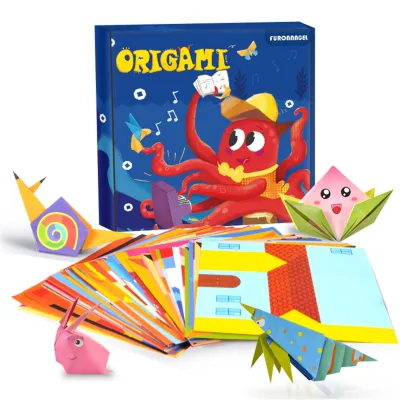
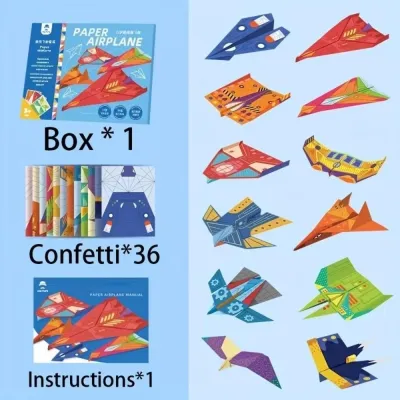
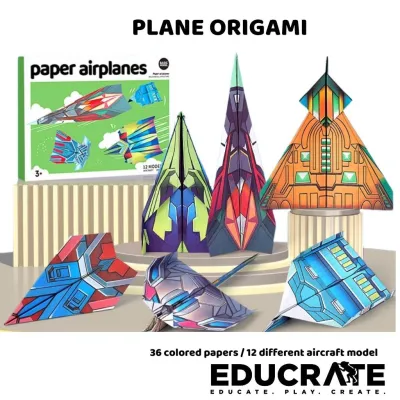
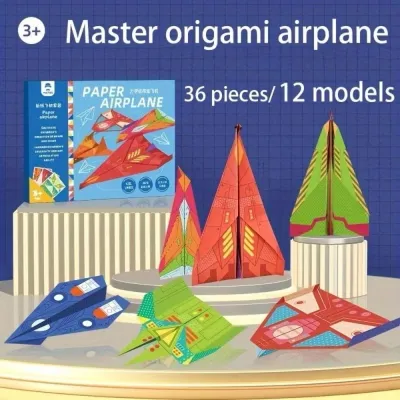
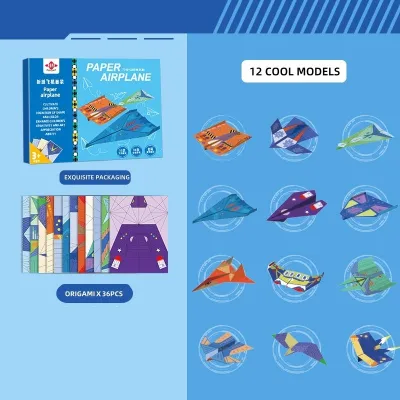
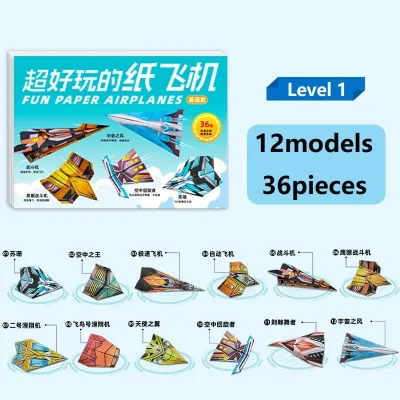
Prices are valid at publication and may change. Please refer to the product page for the latest price.
Examine the surface texture and finish of the sheets. High-quality origami paper should have a smooth, slightly matte texture that provides enough grip for small fingers without being slippery. Avoid glossy or heavily coated papers, as they tend to resist sharp creasing and can easily crack or fray along the fold lines. A clean, sharp crease is essential for maintaining the aerodynamic profile of the aircraft; if the paper fibers break or tear during folding, the plane will lose its structural rigidity and fail to glide properly.
Color fastness and print quality are equally vital, particularly in warm classrooms where students’ hands may become damp or sweaty. Lower-quality sets often use cheap inks that smudge or bleed when exposed to moisture, staining fingers and ruining the visual appeal of the finished models. Look for sets that use high-quality, water-resistant inks, and check that the printed patterns align perfectly with the edges of the sheet to ensure symmetrical folds.
Consider how the paper reacts to ambient humidity. High humidity can quickly soften paper fibers, making the sheets limp and reducing their folding memory—the ability of the paper to hold its shape after being bent. When evaluating a set, look for paper that feels crisp and resilient. Storing the paper in a resealable plastic bag or an airtight container before the art class can help preserve its stiffness, ensuring that the planes maintain their sharp edges and optimal flight performance even on rainy afternoons.
Assessing Instruction Clarity for Independent Learning
The success of a classroom origami project depends heavily on whether students can follow the instructions without constant adult intervention. When reviewing a set, analyze the balance between visual diagrams and text explanations. For younger children, text-heavy instructions are often overwhelming and ignored. The best sets rely on clear, sequential, and color-coded illustrations where each step shows both the action to be taken and the resulting shape of the paper.

Look for standardized origami symbols, which are crucial for developing spatial literacy. The instructions should clearly distinguish between a valley fold, indicated by a dashed line, and a mountain fold, indicated by a chain line of alternating dots and dashes. Arrows should clearly show the direction of the fold, whether the paper needs to be turned over, or if a fold needs to be unfolded to create a crease line. A helpful key explaining these symbols at the beginning of the instruction booklet is a strong indicator of a well-thought-out set.
In modern classrooms, digital integration can greatly assist students who struggle to interpret two-dimensional diagrams. Many high-quality origami sets now include QR codes that link directly to step-by-step video tutorials. These videos allow students to pause, rewind, and view the folding process from different angles, accommodating diverse learning styles and reducing the teaching burden on the instructor.
Finally, check if the instructions include a troubleshooting section. Common mistakes, such as asymmetrical wings or nose-heavy folds, can prevent a plane from flying. A guide that explains how to adjust the wing flaps or correct a spiraling flight path teaches children the scientific method of trial and error, turning a folding failure into a valuable lesson in aerodynamics.
Checking Design Variety for Creative and Educational Goals
A great origami paper plane set should offer a progressive learning curve. Look for sets that categorize their designs by difficulty level, starting with simple, classic darts that require only five or six folds, and advancing to complex stunt planes or gliders with ten or more steps. This progression ensures that beginners can experience immediate success, while more advanced students remain challenged and engaged throughout the art session.
The educational value of the set is significantly enhanced when it connects folding techniques to real-world science. High-quality sets often integrate brief, age-appropriate explanations of aerodynamic principles into their design descriptions. For instance, the guide might explain how a wide wing surface creates more lift for slow, graceful gliding, while a narrow, swept-back wing reduces drag for high-speed darts. This cross-curricular connection turns a simple art craft into a practical science and engineering activity.
Customization is another key feature to evaluate. While pre-printed patterns resembling fighter jets, fantasy dragons, or futuristic spaceships are highly appealing, the set should also include sheets with blank spaces or minimalist designs. This allows students to use colored pencils, markers, or stickers to personalize their aircraft. Personalization fosters creative expression and helps students easily identify their own planes during group flight tests.
Ensure the designs included are structurally distinct and produce different flight behaviors. A good set should feature a mix of distance flyers, long-duration gliders, and acrobatic stunt planes that perform loops or barrel rolls. Comparing how different folds affect flight paths encourages students to observe, hypothesize, and experiment with wing adjustments, turning the classroom or school yard into a mini wind tunnel.
Verifying Age-Appropriateness and Classroom Safety
Manufacturers often print a broad age recommendation on the box, but you should cross-reference this with the actual fine motor skills required for the projects. For children in early primary grades, look for sets that focus on simple, symmetrical folds and larger paper sizes, which are easier to manipulate. Older students can handle smaller sheets and complex maneuvers like reverse folds or sink folds, which require precise finger coordination.
Pay close attention to any included accessories. Some premium origami plane sets come with plastic launchers, rubber bands, nose weights, or paper clips to improve flight performance. While these tools can be exciting, evaluate their safety for an indoor classroom environment. High-powered launchers can turn paper planes into hazardous projectiles, especially in crowded spaces. If launchers are included, ensure they are low-tension and that the classroom layout allows for a safe, designated launch zone away from other students’ faces.
Classroom safety also extends to the chemical composition of the materials. Ensure that the paper, inks, and any included adhesives or stickers carry recognized non-toxic certifications, such as the EN71 or ASTM D-4236 standards. This is particularly important for younger children who might habitually put their fingers in their mouths after handling the colored sheets.
Consider the practicalities of classroom management and storage. Sets that come in a sturdy, resealable folder or a rigid cardboard box are highly preferable to those in flimsy plastic wrap that tears upon opening. A durable storage solution helps students keep their unused sheets flat, clean, and organized, preventing clutter on art desks and making it easy to pack away leftover materials for the next lesson.
Building Your Shortlist: Comparing Sets Before Purchase
When comparing different origami paper plane sets on online marketplaces or in local stationery stores, start by calculating the cost per sheet. To do this, divide the total price of the set in ₱ by the number of folding sheets included. Keep in mind that premium sets may have a higher cost per sheet because they include high-quality instruction booklets, stickers, or specialized accessories. Weigh whether these extras add genuine educational value or if you are paying a premium for unnecessary plastic novelties.
Compare the total sheet count against your classroom requirements. A standard art class of 30 students will need significantly more than 30 sheets of paper. Children frequently make mistakes, tear paper, or want to fold more than one design. A good rule of thumb is to allocate at least three to four sheets per student. Therefore, look for bulk sets containing 100 to 120 sheets, or consider purchasing multiple smaller packs to ensure you have an adequate buffer of spare paper.
Before making a final decision, read user reviews on e-commerce platforms, focusing specifically on feedback regarding paper durability and instruction clarity. Look for common complaints such as paper tearing easily when creased, instructions being too confusing for kids, or missing components. Real-world feedback from parents and teachers is invaluable for identifying sets that look great online but fail to perform in a practical classroom setting.
Finally, create a conditional shortlist based on your specific educational goals. If your primary objective is a quick, budget-friendly craft activity for a large group, prioritize bulk utility sets that offer a high sheet count of basic, easy-to-fold designs. If you are planning a comprehensive, multi-week art and science project, invest in a premium set that features detailed aerodynamic guides, high-grade textured paper, and a wide variety of advanced stunt plane models.
Frequently Asked Questions (FAQ)
Can regular printer paper replace the paper in an origami plane set?
While standard printer paper can be used to fold basic paper planes, it is not an ideal substitute for specialized origami paper in a classroom setting. Printer paper typically weighs around 70 to 80 gsm but is designed for rigidity in office machines rather than pliability. It lacks the folding memory of origami paper, making it harder to achieve sharp, lasting creases. Additionally, printer paper is usually cut to rectangular sizes, whereas many origami plane designs require perfectly square sheets, meaning you would need to spend valuable class time measuring and cutting the paper before folding can begin.
How many planes should a set include for a standard classroom activity?
For a standard classroom activity, the set should provide enough paper for each student to make multiple attempts. As a general guideline, multiply the number of students by three. For a class of 30 students, you should aim for a set—or a combination of sets—that contains at least 90 to 100 sheets of paper. This buffer ensures that if a student makes a mistake on their first attempt or accidentally tears the paper, they can start over without feeling left out or disrupting the flow of the lesson.
Are paper plane launchers safe for indoor classroom use?
Mechanical paper plane launchers, such as those powered by rubber bands or plastic spring mechanisms, require careful supervision and may not be suitable for indoor classroom use. In a confined space, these launchers can propel planes at high speeds, posing a risk of eye injuries if a plane is aimed incorrectly. If your chosen set includes launchers, it is best to save them for outdoor testing on the school field. For indoor testing, rely on gentle hand-launches and establish clear safety rules, such as requiring all students to stand behind a designated launch line and aiming only toward empty spaces.
Community discussion
Share your experience or ask a question. Comments are reviewed before publication.