
Finding the right markers for bullet journaling and everyday creative projects requires balancing ink performance with local environmental factors. In tropical climates like the Philippines, high relative humidity can significantly affect how ink dries, how paper absorbs moisture, and how different nibs perform over time. Artful markers offer a versatile range of creative tools, but selecting the ideal set depends on matching their nib designs and ink formulations to your specific paper and project goals. Whether you are mapping out weekly grids or blending vibrant illustrations, understanding how these markers interact with your notebook pages ensures clean, smudge-free results.
Choosing the wrong marker can lead to bleeding, ghosting, or frayed tips that ruin your carefully planned layouts. By focusing on key features such as ink base, nib durability, and paper compatibility, you can build a reliable collection that elevates your daily journaling and sketching. This guide will help you navigate the selection process, test your markers effectively, and maintain them for long-lasting use.
Understanding Your Creative Needs
Before investing in a new set of markers, it is essential to distinguish between the specific demands of bullet journaling and casual art. Bullet journaling is primarily a structured, organizational task that relies on clean lines, precise grids, and legible handwriting. Because you will be writing on both sides of a single page, your primary concern is minimizing bleed-through and ghosting. A marker that lays down too much wet ink will quickly ruin the subsequent pages of your notebook, making your layouts difficult to read.
Products mentioned in this guide
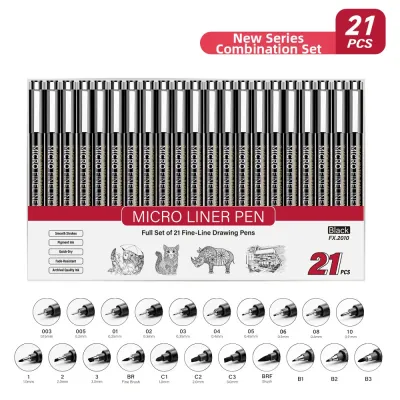
Prices are valid at publication and may change. Please refer to the product page for the latest price.
Casual art and coloring, on the other hand, require markers that can cover larger areas smoothly and blend colors seamlessly. For these projects, you want rich color payoff and the ability to layer shades without tearing the paper fibers. These artistic applications often demand different paper types, such as heavy cardstock or mixed-media paper, which can handle wetter ink formulations without warping.
Your personal comfort during long creative sessions is another crucial factor. If you spend hours drawing intricate mandalas or setting up monthly spreads, the ergonomics of the marker barrel become highly important. A comfortable grip prevents hand fatigue, while a well-balanced marker allows for better control over your strokes. Additionally, consider your color palette preferences; some creators prefer muted, pastel tones for a minimalist journal aesthetic, while others require a vibrant, diverse spectrum for bold illustrations.
Finally, paper compatibility is the ultimate deciding factor in how your markers perform. Standard notebooks in the local market vary widely in paper weight, typically ranging from thin 80 gsm (grams per square meter) to ultra-thick 160 gsm. High humidity can cause paper to absorb ambient moisture, making it more porous and susceptible to ink feathering. Matching your marker choice to the specific weight and coating of your journal paper is essential for achieving crisp, professional-looking pages.
Key Features to Check When Selecting Artful Markers
When browsing Artful marker options, evaluating the physical and functional attributes of each pen will help you make an informed decision. The first feature to examine is the nib type. Markers generally come with brush, fine, or chisel tips, each serving a distinct purpose. Brush tips are highly flexible, allowing you to create varied line weights based on the pressure you apply. Fine tips are designed for precision, making them ideal for writing and detailed linework, while chisel tips are perfect for broad strokes and filling in large shapes.

Ink formulation is another critical specification to check on product labels. Water-based inks are the standard choice for bullet journaling because they rarely bleed through medium-weight paper and do not emit strong odors. However, they can dry slightly slower in humid conditions, requiring a brief waiting period before you close your journal. Alcohol-based inks offer incredibly smooth blending and vibrant color, but they are highly prone to bleeding through standard notebook paper, meaning they are best reserved for single-sided art projects on specialized marker paper.
Ergonomics and build quality should not be overlooked. Look for barrel shapes that suit your writing style; triangular or hexagonal barrels prevent the markers from rolling off your desk, while round barrels offer a classic feel. The security of the cap is also vital, especially in warm climates where dry air from air conditioning or natural heat can accelerate ink evaporation. A cap that snaps or clicks firmly into place ensures an airtight seal, preserving the life of the ink.
Matching Artful Marker Types to Your Projects
Selecting the right marker configuration depends entirely on the task at hand. By aligning the physical characteristics of the marker with your primary creative activities, you can avoid common frustrations like smudged layouts or ruined paper.
Fine Liners and Brush Pens for Bullet Journaling
For structured bullet journal spreads, fine liners and brush pens are the most reliable tools. Fine liners with a tip size of 0.4mm or smaller allow you to draw precise grid lines, write daily tasks, and create micro-doodles without the risk of the ink spreading or feathering on standard journal pages. The consistent ink flow of a quality fine liner ensures that your handwriting remains neat and legible, even in tight spaces.
Brush pens complement fine liners by adding artistic flair to your headers and weekly themes. A flexible brush tip allows you to practice modern calligraphy, creating thick downstrokes and thin upstrokes with ease. When choosing brush pens for journaling, look for nylon tips rather than felt tips, as nylon retains its springiness and resists fraying on slightly textured paper. Quick-drying water-based ink is essential here, as it prevents accidental smudging when you run a plastic ruler over your lines or turn the page quickly.
Dual-Tip and Chisel Markers for Casual Art and Coloring
If your creative work leans more toward illustration, sketching, and coloring, dual-tip markers offer excellent versatility. These markers typically feature a flexible brush tip or fine liner on one end and a broad chisel tip on the other. This design allows you to switch seamlessly between outlining fine details and filling in large background areas without needing to swap pens mid-session.
Chisel tips are particularly useful for creating dynamic, graphic lettering and covering wide spaces quickly with consistent color. When working on casual art projects, the ability to layer and blend colors is key to creating depth and shading. Alcohol-based dual-tip markers excel in this area, allowing you to blend two shades together smoothly on the page. Just ensure you are using a heavy-duty sketchbook or a protective blotter sheet to protect the pages underneath from ink bleed.
How to Test and Verify Marker Performance Before Committing
To avoid disappointing results on your final projects, always test your markers on a scrap piece of the exact paper you plan to use. Start by creating a simple swatch test on a back page of your journal or sketchbook. Draw solid blocks of color, thin lines, and overlapping strokes. Observe how the ink behaves: does it spread outward (feathering), show through the other side of the page (ghosting), or physically soak through to the next sheet (bleed-through)? This simple test will tell you exactly how much ink your paper can handle.
Next, evaluate the drying time of the ink, which can vary depending on local humidity levels. Draw a thick line of ink and swipe your finger across it immediately, then repeat the test after two seconds, and again after five seconds. Note how long it takes for the ink to set completely dry. This test is crucial for left-handed writers or anyone who likes to work quickly, as it helps you adjust your writing speed to prevent smudging.
Finally, test the color payoff and blending capabilities of the markers. Layer two or three colors on top of each other to see if the paper fibers begin to pill or tear under the wet friction. A high-quality marker should lay down smooth, even color without damaging the paper surface. If you are using water-based markers, try blending them with a damp brush to see if they reactivate smoothly for watercolor-like effects.
Where to Buy and Verify Authenticity in the Philippines
To ensure you are purchasing genuine Artful markers, it is best to buy from authorized stationery retailers, official brand stores on major e-commerce platforms, or well-established local craft shops. Purchasing from reputable sources guarantees that you receive fresh stock with optimal ink levels, rather than older markers that may have dried out on warehouse shelves.
When buying in person, perform a quick visual inspection of the packaging. Genuine markers feature crisp, high-quality printing on the box and the marker barrels, with no blurry text or misaligned logos. Look for official holographic seals, batch codes, or manufacturer stamps on the packaging. The caps should fit tightly and require a distinct click to open or close, indicating a proper airtight seal.
Be cautious of online listings offering large marker bundles at suspiciously low prices. If a set of premium markers is priced significantly below standard retail benchmarks—such as a large set sold for under ₱150—it is highly likely to be a counterfeit product. Counterfeit markers often use low-grade inks that bleed excessively, dry out rapidly, or contain harsh chemical solvents that can damage your paper and emit unpleasant odors. Investing in authentic markers ensures a safer, more enjoyable creative experience.
Frequently Asked Questions (FAQ)
How do I prevent my Artful markers from drying out?
To maximize the lifespan of your markers, always store dual-tip markers horizontally. Horizontal storage ensures that the ink remains evenly distributed to both ends of the pen, preventing one tip from drying out while the other becomes oversaturated. Additionally, always listen for the distinct click when capping your markers to ensure they are sealed completely, and keep them away from direct sunlight or hot areas in your room.
Can I use Artful markers on regular printer paper?
Standard printer paper is typically thin, ranging from 70 to 80 gsm, and is highly absorbent. If you use wet markers on this type of paper, you will likely experience severe feathering and bleed-through. If you must use printer paper for sketching, place a thick cardstock blotter sheet underneath your page to protect your desk, or upgrade to a heavier, marker-friendly paper of at least 120 gsm for better results.
Community discussion
Share your experience or ask a question. Comments are reviewed before publication.